Bombay High Court judgments

2132 Bombay High Court judgments explained in plain English: what was decided, the law applied and why it matters. Page 39 of 89.

Civil Contempt for Breach of Solvent Surety Undertaking | Sale of Court-Pledged Property Without Permission Violates Judicial Order : Bombay HC
Case Law Analysis
|Bombay High Court

Civil Contempt for Breach of Solvent Surety Undertaking | Sale of Court-Pledged Property Without Permission Violates Judicial Order : Bombay HC

The Bombay High Court holds that selling property pledged as solvent surety without court permission constitutes willful civil contempt, regardless of an unconditional apology. This ruling reinforces that court undertakings are binding obligations, not negotiable concessions, affecting litigants who seek conditional leave to defend in civil suits.

Land Acquisition Notification Defect | Compensation Must Reflect Possession Date Market Value & Parity with Adjacent Landowners : Bombay HC
Case Law Analysis
|Bombay High Court

Land Acquisition Notification Defect | Compensation Must Reflect Possession Date Market Value & Parity with Adjacent Landowners : Bombay HC

The Bombay High Court ruled that a defective land acquisition notification lacking precise land description does not automatically invalidate the entire process, but mandates compensation based on market value at the date of possession and equal treatment with similarly situated landowners, as demonstrated by the Rs. 4,240/sq.m. rate paid to neighboring plots. This sets a critical precedent for equitable compensation in flawed acquisitions under the National Highways Act, 1956.

Superseded Defence NOC Circulars Cannot Revive Extinguished Rights | Bombay HC Quashes Stop Work Notice for Lack of Legal Grounding
Case Law Analysis
|Bombay High Court

Superseded Defence NOC Circulars Cannot Revive Extinguished Rights | Bombay HC Quashes Stop Work Notice for Lack of Legal Grounding

Bombay High Court rules that rights crystallized under a superseded Ministry of Defence circular cannot be undone by its subsequent abeyance. The court quashed a stop work notice and denial of an occupation certificate, emphasizing that Defence NOC demands must be legally grounded and uniformly applied, not retroactively enforced.

Implied Consent to Arbitration | Payment Against Tax Invoices with Arbitration Clause Binds Parties Under Section 11, Arbitration Act : Bombay HC
|Bombay High Court

Implied Consent to Arbitration | Payment Against Tax Invoices with Arbitration Clause Binds Parties Under Section 11, Arbitration Act : Bombay HC

Bombay High Court rules that parties accepting tax invoices containing arbitration clauses and making payments without objection constitute implied consent to arbitrate, even if purchase orders are silent. The judgment reinforces the Supreme Court’s Concrete Additives precedent, impacting commercial contracts where arbitration clauses are introduced post-agreement.

Section 11A Land Acquisition Act | Delay Beyond Two Years Without Award Lapses Acquisition; Owner Entitled to 2013 Act Compensation : Bombay HC
|Bombay High Court

Section 11A Land Acquisition Act | Delay Beyond Two Years Without Award Lapses Acquisition; Owner Entitled to 2013 Act Compensation : Bombay HC

Bombay HC rules that land acquisition proceedings automatically lapse under Section 11A of the 1894 Act if no award is declared within two years, even if the land is later developed. The owner retains rights under the Right to Fair Compensation Act 2013, reinforcing constitutional protections under Article 300-A against procedural delays.

Hindu Marriage Act Section 13 | Right to Cross-Examine Cannot Be Denied Due to Medical Incapacity: Bombay HC Orders Remand for Fair Hearing
Case Law Analysis
|Bombay High Court

Hindu Marriage Act Section 13 | Right to Cross-Examine Cannot Be Denied Due to Medical Incapacity: Bombay HC Orders Remand for Fair Hearing

The Bombay High Court has ruled that a divorce decree must be set aside when a spouse is medically incapacitated - such as by a paralytic stroke - and denied the opportunity to cross-examine the petitioner. This violates Article 21 and the foundational principle of natural justice, requiring remand to ensure a meaningful hearing. The ruling binds Family Courts to prioritize procedural fairness over procedural expediency in matrimonial disputes.

Obstructionists in Execution Proceedings Cannot Challenge Decree Validity Without Independent Right | Bombay HC Upholds Possession Decree
Case Law Analysis
|Bombay High Court

Obstructionists in Execution Proceedings Cannot Challenge Decree Validity Without Independent Right | Bombay HC Upholds Possession Decree

Bombay High Court rules that obstructionists in execution proceedings cannot challenge the validity of a decree unless they prove an independent right to occupy the premises. Licensees of tenant-constructed structures hold no protection against a landlord’s possession decree, and slum notification defenses fail without proof of location within the notified area.

Mediation Cannot Be Compelled Without Consent | Section 89 CPC & Mediation Act, 2023 Apply to Civil Suits : Bombay HC
Case Law Analysis
|Bombay High Court

Mediation Cannot Be Compelled Without Consent | Section 89 CPC & Mediation Act, 2023 Apply to Civil Suits : Bombay HC

The Bombay High Court has ruled that courts cannot mandate mediation in civil suits under Section 89 CPC even when family disputes are involved, affirming that the Mediation Act, 2023 requires unanimous consent. This clarifies that consensual mediation is a procedural right, not a judicial tool to be imposed - impacting litigants, mediators, and courts across India handling civil disputes with familial overtones.

Section 31 JJ Act | Transfer of Adoption Authority from Court to District Magistrate Not Violative of Article 14, 21 or Separation of Powers : Bombay HC
Case Law Analysis
|Bombay High Court

Section 31 JJ Act | Transfer of Adoption Authority from Court to District Magistrate Not Violative of Article 14, 21 or Separation of Powers : Bombay HC

The Bombay High Court upheld the 2021 amendment shifting adoption authority from courts to District Magistrates under the Juvenile Justice Act, finding that CARA’s 2022 Rules provide sufficient procedural safeguards to protect child welfare and maintain constitutional balance. This ruling reinforces the executive’s role in child adoption processes while affirming that delegation of quasi-judicial functions does not inherently breach separation of powers or fundamental rights.

Unexplained 10-Year Delay in Departmental Inquiry Vitiates Proceedings | ONGC Manager’s Reduction in Rank Quashed : Bombay HC
Case Law Analysis
|Bombay High Court

Unexplained 10-Year Delay in Departmental Inquiry Vitiates Proceedings | ONGC Manager’s Reduction in Rank Quashed : Bombay HC

The Bombay High Court has quashed disciplinary action against an ONGC manager after a decade-long delay in inquiry, holding that such prolonged inaction violates natural justice and renders the order non-speaking. All service benefits, including back wages and seniority, must be restored within six weeks, setting a clear precedent for timely administrative justice in public sector employment.

SICA Rehabilitation Failure | Contractual Pendente Lite Interest Prioritized Over Principal: Bombay HC
|Bombay High Court

SICA Rehabilitation Failure | Contractual Pendente Lite Interest Prioritized Over Principal: Bombay HC

After a SICA rehabilitation scheme collapses, creditors may claim pendente lite interest from the date of suit filing at the contractual rate, with all recoveries first applied to interest before principal. This clarifies the repayment hierarchy for banks and financial institutions pursuing legacy debt recovery under the now-repealed SICA framework, reinforcing contractual rights in insolvency aftermaths.

Section 263 IT Act | Revisionary Power Requires Proof of Legal Error or Non-Application of Mind, Not Mere Disagreement with AO's Plausible View : Bombay HC
Case Law Analysis
|Bombay High Court

Section 263 IT Act | Revisionary Power Requires Proof of Legal Error or Non-Application of Mind, Not Mere Disagreement with AO's Plausible View : Bombay HC

The Bombay High Court has ruled that the Commissioner of Income Tax cannot invoke Section 263 to revise an assessment order merely because he disagrees with the Assessing Officer's plausible interpretation of income utilization. The revisionary power is only valid if the original order suffers from a legal error, failure to inquire, or non-application of mind - not because the view was suboptimal or inconvenient to the revenue.

Unlawful Subletting as Continuing Wrong | 12-Year Limitation Period Under Section 22, Limitation Act Applies Until Possession Ceases : Bombay HC
Case Law Analysis
|Bombay High Court

Unlawful Subletting as Continuing Wrong | 12-Year Limitation Period Under Section 22, Limitation Act Applies Until Possession Ceases : Bombay HC

The Bombay High Court has ruled that unlawful subletting constitutes a continuing wrong under Section 22 of the Limitation Act, 1963, meaning the 12-year limitation period for eviction begins only when the subtenant vacates the premises. This empowers landlords to pursue eviction even decades after initial unauthorized occupation, provided possession persists, and reshapes strategy in long-standing tenancy disputes.

Natural Justice in Teacher Appointments | Post-Hoc Rejection Without Notice Violates Service Law : Bombay HC
Case Law Analysis
|Bombay High Court

Natural Justice in Teacher Appointments | Post-Hoc Rejection Without Notice Violates Service Law : Bombay HC

Bombay HC quashes rejection of Shikshan Sewak appointments, ruling that administrative authorities cannot invalidate appointments years later on grounds of excess teachers or roster violations without prior notice or due process. The judgment reaffirms that consequential benefits like seniority and increments cannot be denied arbitrarily, impacting thousands of government-appointed teachers.

Caste Certificate Validity | Blood Relative Certificates Create Presumptive Proof of ST Status Unless Fraud Proven : Bombay HC
Case Law Analysis
|Bombay High Court

Caste Certificate Validity | Blood Relative Certificates Create Presumptive Proof of ST Status Unless Fraud Proven : Bombay HC

The Bombay High Court has ruled that validity certificates issued to blood relatives establish a rebuttable presumption of Scheduled Tribe status, shifting the burden to scrutiny committees to prove fraud-not mere inconsistency-to reject a claim. This sets a critical precedent for thousands of applicants relying on familial documentation in caste verification processes across Maharashtra.

Section 36 Bombay Public Trusts Act | Purchasers Entitled to Refund of Proven Payments Only, Not Speculative Claims : Bombay HC
Case Law Analysis
|Bombay High Court

Section 36 Bombay Public Trusts Act | Purchasers Entitled to Refund of Proven Payments Only, Not Speculative Claims : Bombay HC

Bombay High Court clarifies that while charity commissioners may refuse sale sanction for procedural lapses under Section 36 of the Bombay Public Trusts Act, purchasers are entitled to a refund limited to proven payments made, excluding speculative or unproven claims. The ruling balances trust property protection with equitable relief for bona fide purchasers.

Section 30 Copyright Act | Unauthorized Public Performance of Sound Recordings Triggers Prima Facie Injunction : Bombay HC
Case Law Analysis
|Bombay High Court

Section 30 Copyright Act | Unauthorized Public Performance of Sound Recordings Triggers Prima Facie Injunction : Bombay HC

Bombay High Court grants ad-interim injunction restraining unauthorized broadcasting of copyrighted sound recordings, holding that prima facie infringement under Section 30 of the Copyright Act, 1957 is established when license is not obtained. The ruling reinforces the exclusive rights of copyright owners over public performance of their works, impacting broadcasters, event organizers, and commercial establishments.

1870 Indenture Grants Proprietary Rights, Not Leasehold | Bombay HC Settles Title Dispute Over Alienated Land Under Land Revenue Laws
Case Law Analysis
|Bombay High Court

1870 Indenture Grants Proprietary Rights, Not Leasehold | Bombay HC Settles Title Dispute Over Alienated Land Under Land Revenue Laws

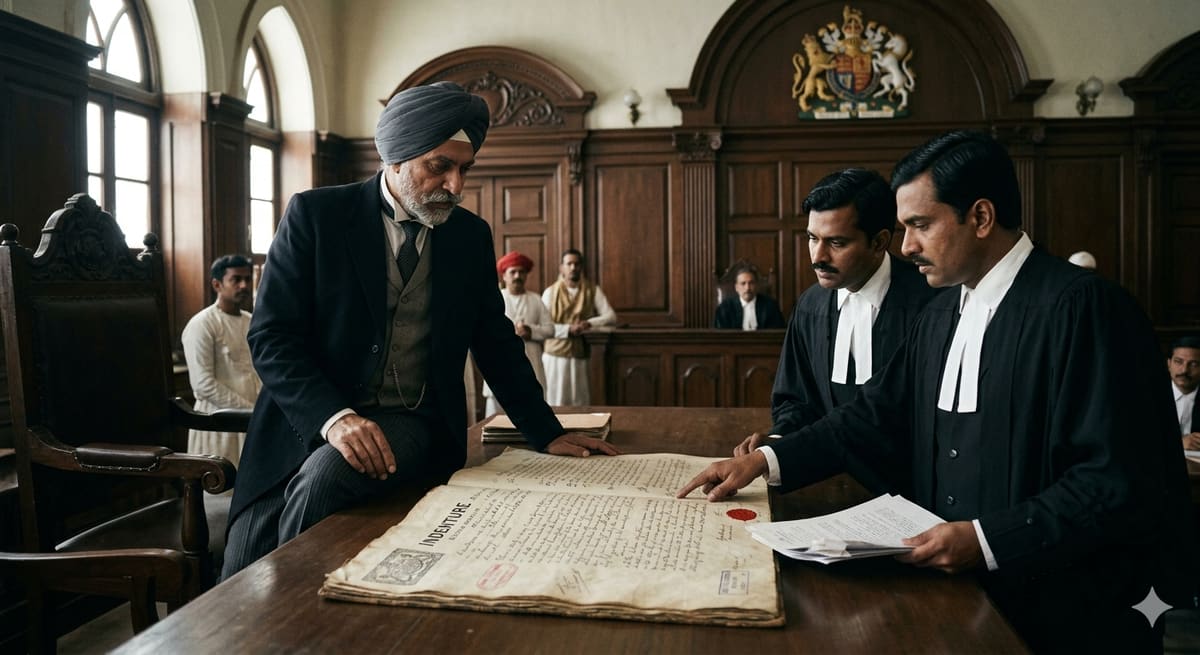
Bombay High Court rules that the 1870 Indenture conferred absolute proprietary rights, not a lease, on the grantee, defeating the Union of India’s claim over salt works land. The judgment reaffirms that government grants under colonial-era indentures must be interpreted as conveying full title unless expressly limited.

Specific Performance Under Section 16(c) SRA | Readiness & Willingness Proven Despite Adjacent Land Price Disparity: Bombay HC Nagpur Bench
Case Law Analysis
|Bombay High Court

Specific Performance Under Section 16(c) SRA | Readiness & Willingness Proven Despite Adjacent Land Price Disparity: Bombay HC Nagpur Bench

Bombay HC Nagpur Bench rules that a plaintiff's readiness and willingness to perform a sale agreement is established by demonstrating funds availability, filing an affidavit, and issuing timely notices-even if the plaintiff purchased adjacent land at a lower price. The ruling reinforces that equitable relief under the Specific Relief Act hinges on substantive compliance, not minor price discrepancies.

Section 7 IBC | Delay in Reserved Orders Violates Timely Disposal Mandate: Bombay HC Directs Special NCLT Bench for 7-Year-Old Petition
Case Law Analysis
|Bombay High Court

Section 7 IBC | Delay in Reserved Orders Violates Timely Disposal Mandate: Bombay HC Directs Special NCLT Bench for 7-Year-Old Petition

Bombay High Court holds that prolonged delays in reserved IBC matters undermine the Code's statutory timelines, directing constitution of a special NCLT bench to dispose of a Section 7 petition pending since 2019. The ruling reinforces the judiciary's intolerance for procedural stagnation in insolvency proceedings, impacting creditors and corporate debtors awaiting resolution.