The Bombay High Court has reaffirmed that an obstructionist in execution proceedings cannot use the guise of challenging the validity of a decree to resist possession. The Court emphasized that such parties must establish an independent legal right to occupy the premises, distinct from the judgment debtor’s interest, and cannot reopen issues already decided in the original suit.
Background & Facts
The Dispute
The dispute arose from a decree for possession passed in T.E. & R. Suit No. 263/284 of 2002, filed by the plaintiffs seeking recovery of 18,000 sq.ft of land in Cadastral Survey No. 6/172, Parel Sewree Division, Mumbai. The land was leased to a tenant who subsequently constructed structures and inducted third parties, including the Applicant, into Gala Nos. 8 and 9. After the decree for possession was passed on 04.04.2005, the plaintiffs filed Execution Application No. 259 of 2017. The bailiff discovered multiple unauthorized structures on the land, with the Applicant in possession of two. The Applicant refused to vacate, prompting the plaintiffs to file Obstruction Notice No. 233 of 2018.
Key Facts
- The suit plot was part of CTS No. 6/172, originally leased for open land use
- The tenant constructed structures on the land without the landlord’s consent
- The Applicant claimed possession through induction by the tenant, not through any direct title
- The Applicant never impleaded himself in the original suit
- The Applicant did not contest the validity of the lease or the decree during the trial
- The Applicant raised the defense of slum notification for the first time in reply to the Obstruction Notice
- The Notification dated 16.02.1979 under the Maharashtra Slum Areas Act declared only 3,468.26 sq.m of CTS No. 6/172 as slum, explicitly excluding the suit premises
Procedural History
- 04.04.2005: Trial Court decreed suit for possession of land
- 2017: Execution Application No. 259 of 2017 filed
- 2018: Obstruction Notice No. 233 of 2018 filed by plaintiffs
- 30.11.2024: Trial Court made Obstruction Notice absolute, directed Applicant to vacate
- 10.06.2025: Appellate Bench of Small Causes Court dismissed Execution Appeal No. 21 of 2025
- 04.05.2026: Present Civil Revision Application No. 464 of 2025 decided by Bombay High Court
The Parties' Positions
Applicant (Obstructionist): Claimed that the land was declared slum under Notification dated 16.02.1979, invoking Section 22 of the Maharashtra Slum Areas (Improvement, Clearance, Redevelopment) Act, 1971, which allegedly bars execution without prior permission of the Competent Authority. Also alleged suppression of facts and that the decree was passed against a dead person (irrelevant, as the decree was against the tenant, not the Applicant). Argued that the decree is null and void.
Respondents (Decree Holders): Contended that the decree was for possession of land, not structures. The Applicant had no independent right to occupy the premises. The slum notification did not cover the suit plot, as it was explicitly excluded. The Applicant’s claim was a collateral attack on a valid decree.
Relief Sought
The Applicant sought setting aside of the Trial and Appellate Courts’ orders directing him to vacate, and a declaration that the decree is unenforceable due to slum declaration and suppression. No monetary relief was claimed.
The Legal Issue
Can an obstructionist in execution proceedings challenge the validity of a decree on grounds such as slum notification or suppression of facts, or is their scope limited to proving an independent right to occupy the premises?
Arguments Presented
For the Appellant
The Applicant relied on Laxmi Ram Pawar v. Sitabai Balu Dhotre to argue that Section 22 of the Slum Act creates a complete bar to execution without prior permission of the Competent Authority. He further relied on S.P. Chengalvaraya Naidu v. Jagannath to contend that the decree was obtained by suppression, as the plaintiffs allegedly concealed the slum notification. He argued that the execution proceedings were time-barred (beyond 12 years) and that the suit was filed against a deceased person, rendering the decree a nullity.
For the Respondent
The respondents countered that the Applicant never raised the slum defense during the original suit and failed to prove that the structures were located on the notified slum area. They emphasized that the Notification explicitly excluded the suit plot. They relied on Darryl D’Monte v. Vadilal Kunverji Gada and Jamnadas Dharamdas v. Dr. J. Joseph to argue that persons inducted by a tenant into structures on leased land have no independent right beyond license, and cannot resist execution of a decree for possession of the land.
The Court's Analysis
The Court conducted a meticulous review of the legal principles governing execution proceedings under Order 21, Rules 97 and 101 of the Code of Civil Procedure, 1908. It held that the role of an obstructionist is strictly limited to establishing an independent right to possession, dehors the judgment debtor. The Court emphasized:
"The obstructionist cannot seek to establish as to how the Defendant in the Suit could have raised a particular defence and prevented the decree from being passed. All that an obstructionist can do under Rules 97 and 101 of Order 21 of the Code is to establish his independent right, dehorse the judgment debtor, to occupy the premises."
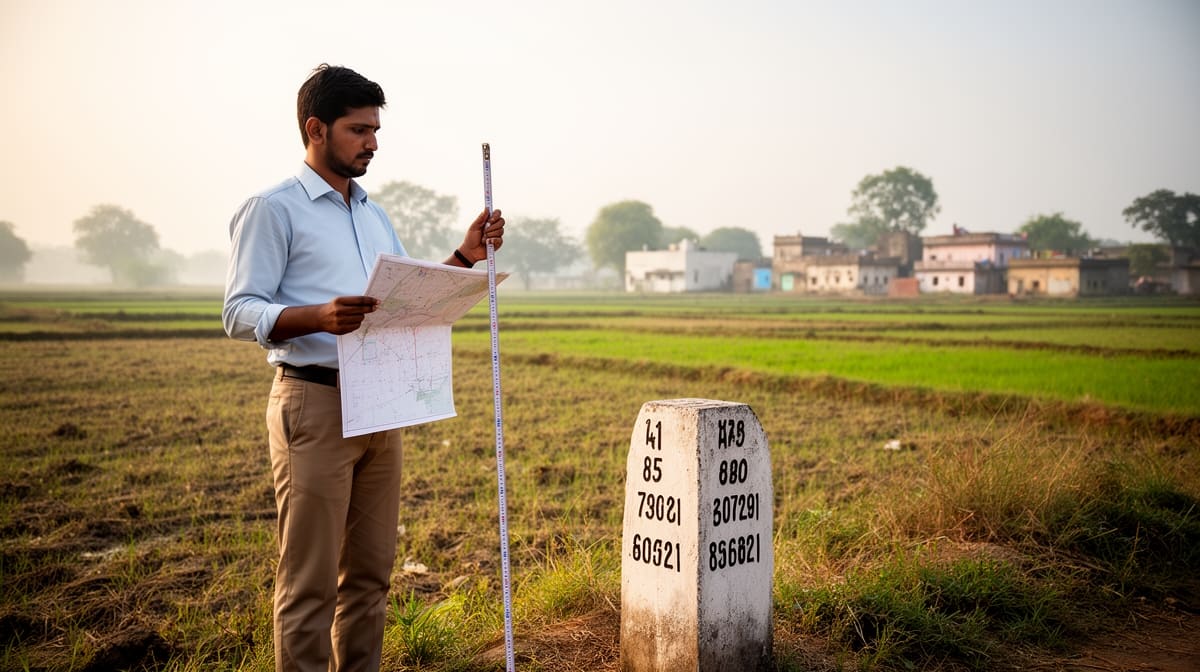
The Court rejected the Applicant’s reliance on Laxmi Ram Pawar, noting that Section 22 of the Slum Act applies only if the property in question falls within the notified slum area. The Notification dated 16.02.1979 explicitly excluded the suit plot, and the Applicant failed to provide any survey or measurement evidence to prove that his structures lay within the notified portion. The burden of proof lay on the Applicant, which he entirely failed to discharge.
The Court also dismissed the claim of suppression, holding that the Applicant was not a party to the original suit and had no locus to raise such an allegation. The decree was against the tenant, not the Applicant, and the Applicant’s failure to intervene in the original proceedings could not be used to invalidate the decree.
The Court then examined the nature of the Applicant’s possession. Citing Jamnadas Dharamdas v. Dr. J. Joseph, Sanjay Ramchandra Parab v. Darryl D’Monte, and Virji Nathuram v. S. R. Shetty, the Court held that when a lease is granted for open land and the tenant constructs structures and inducts third parties, those parties acquire no more than a license to occupy the structures. Their rights are derivative and terminate upon eviction of the tenant. The Court stated:
"Their status vis-a-vis the land is necessarily that of licensees and not any higher status. Such licence must necessarily come to an end when the landlord obtains a decree for eviction of his tenant and the occupants have got to be evicted from the land which could not be done unless they are also evicted from the structures which stand on the land."
The Court concluded that the concurrent findings of the Trial and Appellate Courts were neither perverse nor erroneous, and that the Applicant’s attempt to challenge the decree’s validity was an impermissible collateral attack.
The Verdict
The Civil Revision Application was dismissed. The orders of the Trial Court dated 30.11.2024 and the Appellate Bench dated 10.06.2025 were upheld. The Applicant was directed to vacate possession of Gala Nos. 8 and 9 within 30 days from the date of the judgment. No order as to costs was made.
What This Means For Similar Cases
Obstructionists Cannot Re-litigate Decree Validity
- Practitioners must advise clients that objections to decree validity (e.g., fraud, suppression, jurisdictional defects) must be raised in the original suit or via appeal, not in execution proceedings
- Execution courts are not forums to challenge the merits of a decree; their jurisdiction is confined to enforcing it
- Any attempt to use obstructionist proceedings to reopen final judgments will be summarily dismissed
Burden of Proof Lies with Obstructionist on Slum Claims
- When a slum notification is invoked, the obstructionist must prove by precise survey or documentation that the structure falls within the notified area
- General assertions about land being "part of a slum area" are insufficient; exclusion clauses in notifications must be specifically addressed
- Failure to lead evidence on location and boundaries will result in dismissal of the defense
Licensees Have No Protection Against Landlord’s Possession Decree
- Tenants who construct on leased land and induct third parties create only licensee rights
- These rights are extinguished upon termination of the lease or eviction of the tenant
- The Bombay Rent Act, 1947, does not protect such occupants unless they are direct tenants of the landlord
- Practitioners should advise landlords to seek possession of land directly, not structures, to avoid ambiguity in execution