Bombay High Court judgments

2132 Bombay High Court judgments explained in plain English: what was decided, the law applied and why it matters. Page 37 of 89.

External Political Pressure Vitiates Co-op Committee Disqualification Under Section 75(5) MCS Act | Bombay HC
Case Law Analysis
|Bombay High Court

External Political Pressure Vitiates Co-op Committee Disqualification Under Section 75(5) MCS Act | Bombay HC

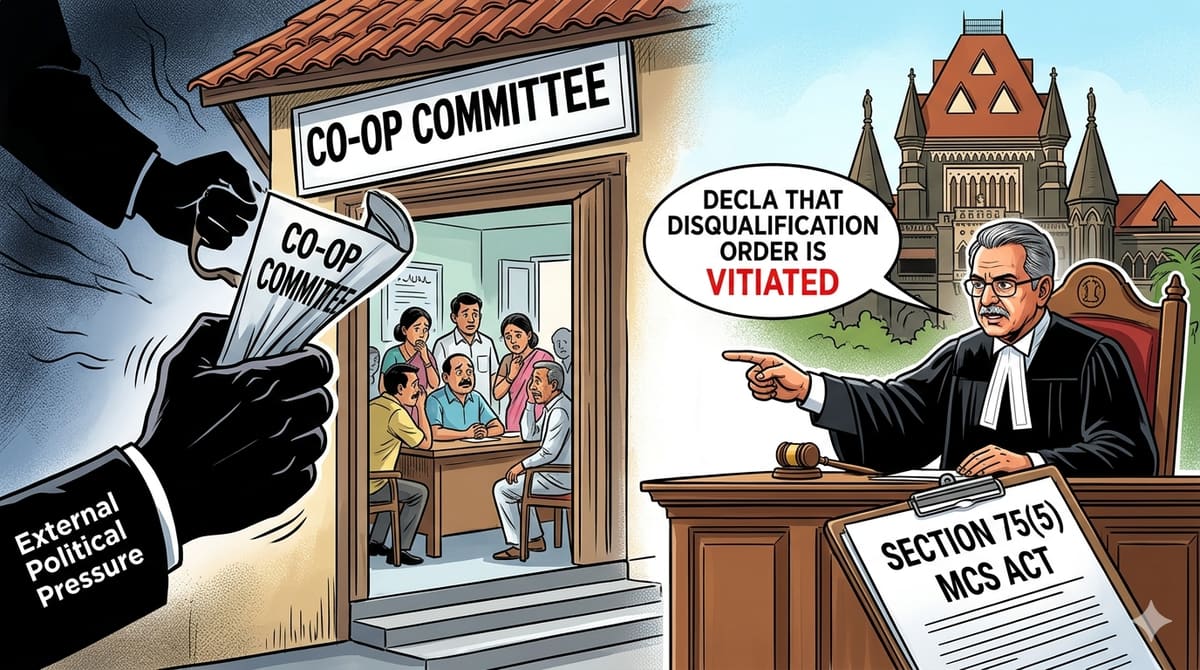
The Bombay High Court has ruled that statutory disqualification of a co-operative society’s managing committee, ordered under Section 75(5) of the MCS Act, is invalid if influenced by external political pressure through elected representatives. This reinforces that statutory authorities must act independently, safeguarding co-operative governance from undue interference by public officials or political actors.


Section 306 IPC | Mere Loan Recovery Pressure Without Overt Instigation Insufficient for Abetment of Suicide: Bombay HC Quashes FIR
Case Law Analysis
|Bombay High Court

Section 306 IPC | Mere Loan Recovery Pressure Without Overt Instigation Insufficient for Abetment of Suicide: Bombay HC Quashes FIR

Bombay High Court rules that financial pressure from loan recovery, without direct instigation or conduct driving the deceased to suicide, does not constitute abetment under Section 306 IPC. The judgment sets a threshold for proving active abetment, impacting criminal liability in similar cases involving financial disputes.

Mesne Profits Valuation | Must Reflect Actual Property Use, Not Prime Commercial Comparables : Bombay HC
Case Law Analysis
|Bombay High Court

Mesne Profits Valuation | Must Reflect Actual Property Use, Not Prime Commercial Comparables : Bombay HC

The Bombay High Court struck down an inflated mesne profits award that relied on rental rates from premium commercial zones, ruling that valuation must be grounded in the actual nature, condition, and locality of the disputed property. This sets a critical precedent for landlords and tenants in rent-controlled areas, ensuring mesne profits are calculated based on realistic market conditions, not speculative benchmarks.

Article 14 & Natural Justice | State Cannot Recover Excess Salary Paid Due to Administrative Error Without Employee Fault : Bombay HC Aurangabad Bench
Case Law Analysis
|Bombay High Court

Article 14 & Natural Justice | State Cannot Recover Excess Salary Paid Due to Administrative Error Without Employee Fault : Bombay HC Aurangabad Bench

Bombay High Court rules that recovery of excess salary paid due to administrative error violates Article 14 and principles of natural justice if the employee is not at fault. The judgment protects retired government employees from financial hardship caused by state errors, setting a precedent for equitable treatment in public employment disputes.

Natural Justice in ST Certification | Bombay HC Mandates Scrutiny of Maternal-Side Evidence Before Rejection : Bombay HC Nagpur Bench
Case Law Analysis
|Bombay High Court

Natural Justice in ST Certification | Bombay HC Mandates Scrutiny of Maternal-Side Evidence Before Rejection : Bombay HC Nagpur Bench

Bombay HC sets aside a caste certificate rejection for failing to consider school records proving Halba tribe affiliation via maternal lineage. The court directed issuance of the certificate within four weeks, reinforcing that administrative bodies cannot dismiss evidence without proper evaluation, safeguarding constitutional rights under Articles 14 and 16.

MPID Act | Inability to Furnish Two Sureties Cannot Justify Continued Detention After Bail Grant; One Solvent Surety Suffices: Bombay HC
Case Law Analysis
|Bombay High Court

MPID Act | Inability to Furnish Two Sureties Cannot Justify Continued Detention After Bail Grant; One Solvent Surety Suffices: Bombay HC

The Bombay HC has ruled that requiring two solvent sureties for bail under the MPID Act cannot be used to keep an accused in custody if they are unable to comply - a single solvent surety in the required amount is sufficient to satisfy bail conditions. This reinforces that personal liberty cannot be denied due to economic hardship, aligning bail enforcement with constitutional guarantees under Article 21.

Section 379 IPC | Conviction Invalidated When Recovery Witness Lacks Independence: Bombay HC Establishes Evidentiary Threshold for Stolen Property Cases
Case Law Analysis
|Bombay High Court

Section 379 IPC | Conviction Invalidated When Recovery Witness Lacks Independence: Bombay HC Establishes Evidentiary Threshold for Stolen Property Cases

The Bombay High Court overturned a theft conviction under Section 379 IPC after finding the sole recovery witness was not independent, rendering the chain of evidence unreliable. This ruling reinforces that corroboration by a neutral panch witness is indispensable in recovery-based prosecutions, affecting how police and prosecutors must structure evidence in property theft cases across India.

SC/ST Act Section 3(2)(va) | Bail Cannot Be Denied Solely on Victim’s Caste Without Evidence of Caste-Based Motive : Bombay HC
|Bombay High Court

SC/ST Act Section 3(2)(va) | Bail Cannot Be Denied Solely on Victim’s Caste Without Evidence of Caste-Based Motive : Bombay HC

The Bombay High Court held that invoking the SC/ST Act requires more than the victim’s caste identity - prosecutors must demonstrate a specific caste-based motive behind the offense. This ruling prevents mechanical application of the Act and reinforces that bail decisions must be grounded in evidentiary proof of discriminatory intent, not presumption.

MRTU & PULP Act Section 28 | Employer Must Prove Gainful Employment to Deny Back Wages After Illegal Termination : Bombay HC
Case Law Analysis
|Bombay High Court

MRTU & PULP Act Section 28 | Employer Must Prove Gainful Employment to Deny Back Wages After Illegal Termination : Bombay HC

After illegal termination is proven, the employer bears the burden to demonstrate the workman was gainfully employed elsewhere during the period of unemployment; failure to do so renders denial of back wages unsustainable. This clarifies the evidentiary standard for employers and strengthens remedies for wrongfully dismissed workers under labour jurisprudence.

Section 302 IPC | Single Stab Wound in Sudden Altercation Negates Intent to Kill, Reduces Offence to Section 304 Part II : Bombay HC
Case Law Analysis
|Bombay High Court

Section 302 IPC | Single Stab Wound in Sudden Altercation Negates Intent to Kill, Reduces Offence to Section 304 Part II : Bombay HC

The Bombay High Court held that a single stab wound to the back, inflicted during a sudden scuffle without additional blows or targeting vital organs, does not establish intention to kill under Section 302 IPC. This ruling brings the conviction under Section 304 Part II, affirming that the absence of premeditation or multiple injuries shifts the legal characterization from murder to culpable homicide not amounting to murder, significantly impacting bail and sentencing outcomes in similar cases.

MOFA Section 2(1)(e) | Landowner Deemed Promoter for Enabling Development, Granting FSI & Facilitating Sales Without Cash or Formal Agreement : Bombay HC
Case Law Analysis
|Bombay High Court

MOFA Section 2(1)(e) | Landowner Deemed Promoter for Enabling Development, Granting FSI & Facilitating Sales Without Cash or Formal Agreement : Bombay HC

The Bombay High Court has ruled that a landowner who enables housing development, transfers FSI rights, and facilitates flat sales - even without a formal development agreement or direct cash payment - qualifies as a 'promoter' under MOFA. This triggers mandatory conveyance obligations to housing societies, reshaping how landowners structure joint development arrangements across Maharashtra.

CrPC 340 | Filing False Affidavit in Disposed Petition to Evade Court Undertaking Constitutes Fraud, Warrants Prosecution & Salary Penalty: Bombay HC
Case Law Analysis
|Bombay High Court

CrPC 340 | Filing False Affidavit in Disposed Petition to Evade Court Undertaking Constitutes Fraud, Warrants Prosecution & Salary Penalty: Bombay HC

The Bombay High Court has ruled that submitting a fabricated affidavit in a concluded petition to circumvent a judicial undertaking amounts to fraud on the court, triggering prosecution under CrPC 340. The Tehsildar responsible was penalized with a six-month salary deduction, setting a precedent for holding public officials accountable for undermining judicial orders through procedural deceit.

MPID Act Section 4 | Investigating Officers Cannot Freeze Property Without Competent Authority Order: Bombay HC
Case Law Analysis
|Bombay High Court

MPID Act Section 4 | Investigating Officers Cannot Freeze Property Without Competent Authority Order: Bombay HC

The Bombay High Court has ruled that investigating officers under the MPID Act have no power to direct sub-registrars to freeze property transfers absent a formal order from a competent authority. This protects bona fide purchasers from arbitrary restrictions, reinforcing that property freezes under the Act require explicit statutory authorization and due process, not mere investigative discretion.

MRTU & PULP Act | Dominant Nature of Duties, Not Designation, Determines Workman Status: Bombay HC
Case Law Analysis
|Bombay High Court

MRTU & PULP Act | Dominant Nature of Duties, Not Designation, Determines Workman Status: Bombay HC

The Bombay High Court ruled that an employee’s classification as a 'workman' under the MRTU & PULP Act hinges on the actual functions performed, not job title. A Commercial Officer exercising supervisory and operational control, even while performing incidental clerical tasks, is excluded from workman status - clarifying the scope of protection for managerial-tier employees in industrial disputes.

Section 475A MMC Act | Mens Rea Absent When Repair Efforts Initiated and Notice Issued at Defaulting Member’s Behest: Bombay HC Acquits Society Office-Bearers
Case Law Analysis
|Bombay High Court

Section 475A MMC Act | Mens Rea Absent When Repair Efforts Initiated and Notice Issued at Defaulting Member’s Behest: Bombay HC Acquits Society Office-Bearers

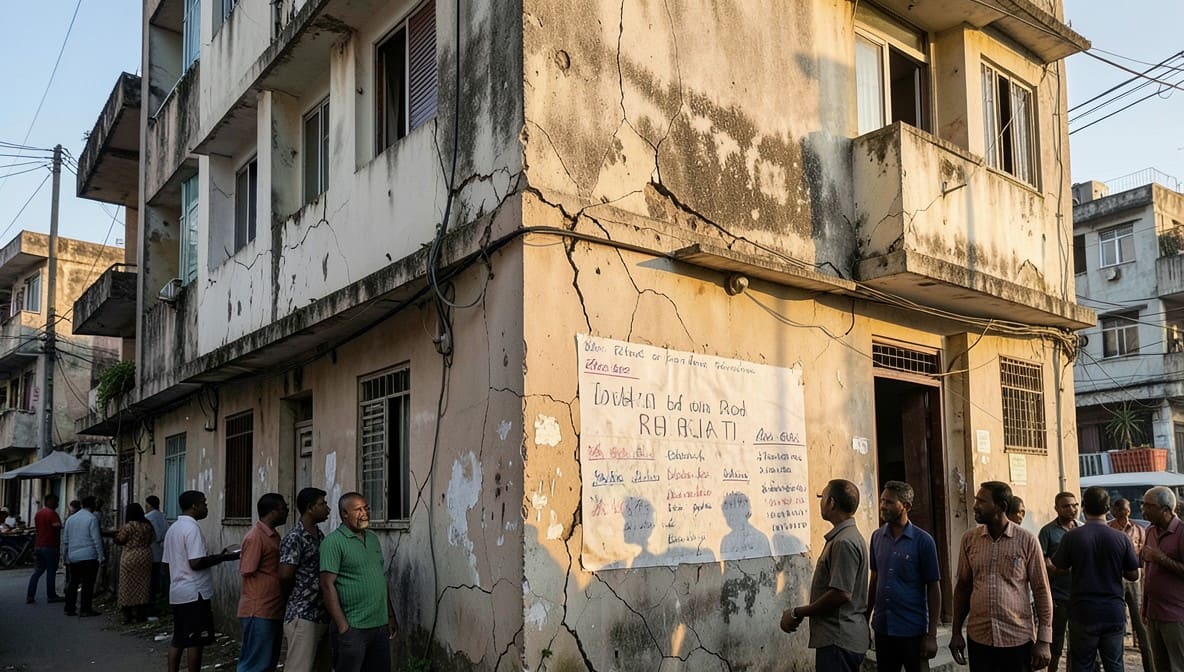
Bombay HC ruled that absence of mens rea under Section 475A of the Mumbai Municipal Corporation Act shields office-bearers from criminal liability if repair efforts were underway and the notice was issued at the instigation of a defaulting member. The judgment underscores that statutory offences require proof of culpable intent, not mere procedural non-compliance, offering relief to housing society officials facing similar prosecutions.

Locus Standi in Service Appointments | Unsuccessful Candidate Lacks Right to Challenge Appointment Under Quo Warranto: Bombay HC
Case Law Analysis
|Bombay High Court

Locus Standi in Service Appointments | Unsuccessful Candidate Lacks Right to Challenge Appointment Under Quo Warranto: Bombay HC

Bombay High Court rules that an unsuccessful candidate in a recruitment process has no legal standing to challenge the appointment of another candidate unless they demonstrate a personal legal right or public duty violation. The court dismissed the writ petition, reinforcing that mere eligibility does not confer locus standi to seek replacement of the appointed candidate.

BNSS Section 479 Proviso | First-Time Undertrials Entitled to Bail After Serving One-Third of Maximum Sentence : Bombay HC
Case Law Analysis
|Bombay High Court

BNSS Section 479 Proviso | First-Time Undertrials Entitled to Bail After Serving One-Third of Maximum Sentence : Bombay HC

Bombay High Court rules that first-time undertrials are entitled to bail under BNSS Section 479 proviso after serving one-third of the maximum possible sentence, emphasizing that trial delays cannot justify prolonged detention. The ruling sets a precedent for bail jurisprudence in economic offences where the accused has no prior criminal record.

Section 9 Arbitration Act | Unsuccessful Party Can Seek Post-Award Bank Guarantee Extension: Bombay HC Follows SC’s Home Care Retail Ruling
Case Law Analysis
|Bombay High Court

Section 9 Arbitration Act | Unsuccessful Party Can Seek Post-Award Bank Guarantee Extension: Bombay HC Follows SC’s Home Care Retail Ruling

Bombay High Court rules that an unsuccessful party in arbitration can seek interim relief under Section 9 to extend a bank guarantee securing awarded liquidated damages, aligning with the Supreme Court’s recent precedent in Home Care Retail Marts. The decision clarifies that post-award relief is not barred merely because the applicant lost the arbitration, expanding access to protective measures during challenge proceedings.

SARFAESI Act Section 11 | Statutory Arbitration Permissible Between Financial Institution and Bank Even Without Security Interest Creation : Bombay HC
Case Law Analysis
|Bombay High Court

SARFAESI Act Section 11 | Statutory Arbitration Permissible Between Financial Institution and Bank Even Without Security Interest Creation : Bombay HC

Bombay High Court rules that statutory arbitration under Section 11 of the SARFAESI Act can proceed between a financial institution and a bank over loan transfer disputes, even if the institution has not yet acquired secured creditor status. The judgment clarifies that arbitration is permissible despite the absence of a formal security interest, impacting loan takeover transactions and dispute resolution mechanisms in banking.

Interim Injunction in Family Harassment Cases | Bombay HC Restrains Father from Contact, Threats, or Defamation of Applicants & Minor Child : Bombay HC
Case Law Analysis
|Bombay High Court

Interim Injunction in Family Harassment Cases | Bombay HC Restrains Father from Contact, Threats, or Defamation of Applicants & Minor Child : Bombay HC

Bombay HC grants an ad-interim injunction restraining a father from contacting, approaching within 50 meters, or defaming his estranged family, including a minor child, pending suit disposal. The ruling underscores courts' willingness to protect victims of familial harassment through urgent injunctive relief, even in non-domestic violence contexts.

MRTU & PULP Act | Statutory Settlement Clauses Binding on All Employees Regardless of Union Membership Strength: Bombay HC
Case Law Analysis
|Bombay High Court

MRTU & PULP Act | Statutory Settlement Clauses Binding on All Employees Regardless of Union Membership Strength: Bombay HC

Bombay HC rules that a recognised union’s right to deduct 5% of wage arrears as union fund under a statutory settlement is enforceable across the entire workforce, even if only 36% of employees are members. The court holds that non-financial clauses in settlements under the MRTU & PULP Act cannot be vetoed by the State without explicit statutory authority, reinforcing industrial jurisprudence on collective bargaining.