Bombay High Court judgments

2128 Bombay High Court judgments explained in plain English: what was decided, the law applied and why it matters. Page 26 of 89.

Government Resolution Pay Protection Limited to Same-Management Absorption | Bombay HC Denies Service Continuity for Surplus Lecturer Under Article 14 : Bombay HC
|Bombay High Court

Government Resolution Pay Protection Limited to Same-Management Absorption | Bombay HC Denies Service Continuity for Surplus Lecturer Under Article 14 : Bombay HC

Bombay High Court rules that service protection under Government Resolutions applies only if a surplus lecturer is absorbed within the same management. The judgment underscores that pay-scale benefits and continuity rights under educational reforms are not extended to lecturers shifting to different managements, even if declared surplus.
Section 34 Arbitration Act | Damages Cap Unenforceable for Fundamental Breach of EPC Contract: Bombay HC
Case Law Analysis
|Bombay High Court

Section 34 Arbitration Act | Damages Cap Unenforceable for Fundamental Breach of EPC Contract: Bombay HC

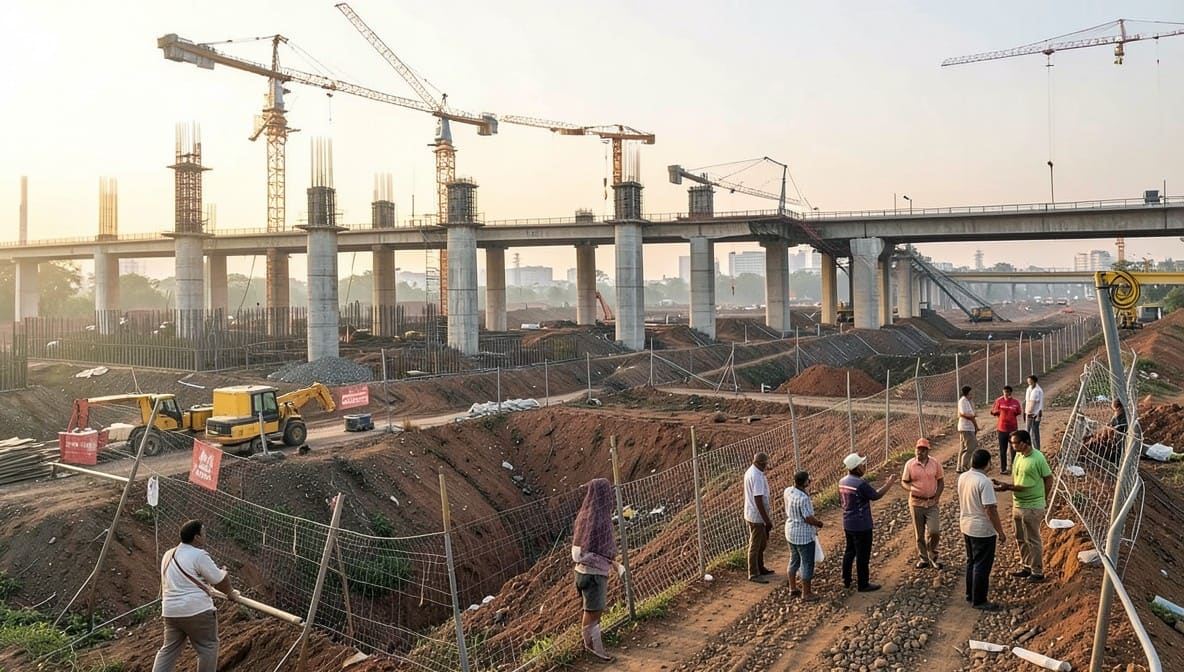
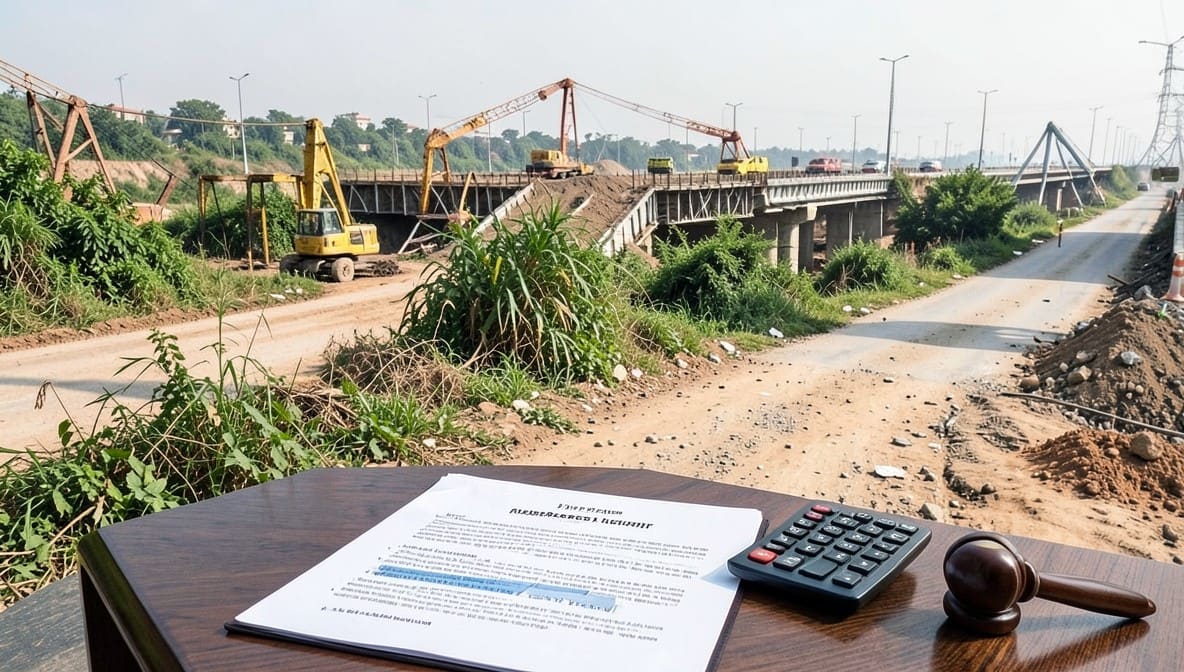
Bombay High Court rules that a 1% damages cap in an EPC contract cannot limit liability when the employer fails to provide critical right-of-way, constituting a fundamental breach. The judgment reinforces the business efficacy test and restricts judicial interference under Section 34 to only patent illegality, while setting aside compounded interest for violating contractual terms.

Section 28(3) Arbitration Act | Damages Cap Unenforceable for Foundational Breach of EPC Contract: Bombay HC
|Bombay High Court

Section 28(3) Arbitration Act | Damages Cap Unenforceable for Foundational Breach of EPC Contract: Bombay HC

Bombay High Court rules that a 1% contractual damages cap cannot limit liability when a party fails to fulfill foundational obligations, such as providing 90% Right of Way within 15 days. The Court applied the business efficacy test under Section 28(3) of the Arbitration Act, reinforcing that rigid contractual limits do not survive fundamental breaches. However, the 18% compounded interest awarded was set aside as contrary to the contract terms.

Section 6(2) MRTP Act | Strict Procedural Compliance Mandatory for Land Acquisition, But Actual Knowledge Cures Defects: Bombay HC
Case Law Analysis
|Bombay High Court

Section 6(2) MRTP Act | Strict Procedural Compliance Mandatory for Land Acquisition, But Actual Knowledge Cures Defects: Bombay HC

Bombay High Court rules that while strict adherence to Section 6(2) notification procedures under the MRTP Act is mandatory, landowners' actual knowledge of acquisition proceedings can remedy procedural lapses. The judgment underscores the balance between procedural rigor and substantive justice in land acquisition disputes, impacting state authorities and property owners alike.

Right to Cross-Examine in Civil Suits | Pandemic Absence Cannot Justify Denial of Defence Rights : Bombay HC
Case Law Analysis
|Bombay High Court

Right to Cross-Examine in Civil Suits | Pandemic Absence Cannot Justify Denial of Defence Rights : Bombay HC

The Bombay High Court has ruled that defendants' inability to appear for cross-examination due to pandemic constraints cannot be grounds for shutting down their defence entirely. This reaffirms that natural justice under Article 14 and the principle of audi alteram partem require courts to accommodate legitimate disruptions, not penalize litigants for circumstances beyond their control.

NDPS Act Section 22 | Bail Granted Where No Prima Facie Link to Drug Distribution or Conspiracy in Commercial Event: Bombay HC
Case Law Analysis
|Bombay High Court

NDPS Act Section 22 | Bail Granted Where No Prima Facie Link to Drug Distribution or Conspiracy in Commercial Event: Bombay HC

The Bombay High Court granted bail to NESCO executives accused in a drug-related death at a music concert, holding that supplying a single pill without evidence of distribution network, intent to profit, or conspiracy does not satisfy the threshold for denial of bail under Section 22 of the NDPS Act. This clarifies that commercial scale allegations require more than isolated, non-commercial acts to justify pre-trial detention.

Section 34 Arbitration Act | MOU Without NOC or Registration Cannot Vest Development Rights in Government Land : Bombay HC
Case Law Analysis
|Bombay High Court

Section 34 Arbitration Act | MOU Without NOC or Registration Cannot Vest Development Rights in Government Land : Bombay HC

The Bombay High Court has ruled that a Memorandum of Understanding lacking a No Objection Certificate from the Collector and formal registration cannot create any vested interest in government land for redevelopment, even if partial payment has been made. This clarifies that mere intent to enter a future development agreement does not equate to enforceable contractual rights under the Arbitration Act, impacting developers and housing societies relying on informal arrangements.

Section 17 Arbitration Act | Partner’s Statutory Right to Access Partnership Records Cannot Be Suspended Pending Arbitration : Bombay HC
Case Law Analysis
|Bombay High Court

Section 17 Arbitration Act | Partner’s Statutory Right to Access Partnership Records Cannot Be Suspended Pending Arbitration : Bombay HC

The Bombay High Court has affirmed that partners retain their statutory right under partnership law to inspect books and records even when arbitration is pending, and an arbitral tribunal may enforce this right under Section 17. This ruling reinforces that commercial transparency cannot be withheld under the guise of procedural delay, protecting minority partners from information asymmetry in ongoing disputes.

Order VII Rule 11 CPC | Fraud Allegations Cannot Revive Time-Barred Property Claim Where Revenue Records and Registered Deed Confirm Title: Bombay HC
Case Law Analysis
|Bombay High Court

Order VII Rule 11 CPC | Fraud Allegations Cannot Revive Time-Barred Property Claim Where Revenue Records and Registered Deed Confirm Title: Bombay HC

The Bombay High Court rejected a 39-year-delayed suit for declaration of title, holding that unsubstantiated fraud claims cannot override clear revenue records and a registered sale deed to circumvent limitation. This reinforces that Order VII Rule 11 CPC permits early rejection of plaints where limitation is evident on face of pleadings, even in property disputes with emotional or equitable overtones.

Section 115 Multi-State Co-operative Societies Act | Recovery of Professional Fees for Valuation Services Does Not 'Touch Business of Society' : Bombay HC
Case Law Analysis
|Bombay High Court

Section 115 Multi-State Co-operative Societies Act | Recovery of Professional Fees for Valuation Services Does Not 'Touch Business of Society' : Bombay HC

The Bombay High Court holds that a co-operative bank’s dispute over professional fees paid to an empanelled valuer does not fall under Section 115’s mandatory notice requirement, as such services are ancillary to, not integral to, the society’s core business. This shields service providers from procedural hurdles in fee recovery suits, clarifying the boundary between commercial contracts and statutory governance of co-operative societies.

Motor Vehicles Act | Bombay HC Enhances Compensation with 40% Future Prospects & Rs. 40,000 Consortium per Dependent : Bombay HC
Case Law Analysis
|Bombay High Court

Motor Vehicles Act | Bombay HC Enhances Compensation with 40% Future Prospects & Rs. 40,000 Consortium per Dependent : Bombay HC

Bombay High Court mandates inclusion of 40% future prospects and Rs. 40,000 consortium per dependent in motor accident compensation, setting a precedent for dependents' claims under the Motor Vehicles Act. The ruling directs MSRTC to pay Rs. 4,97,200 within 12 weeks, reinforcing Pranay Sethi and Magma General Insurance standards.

Section 31(5) Arbitration Act | Signed Certified Copy of Arbitral Award Sufficient for Validity: Bombay HC Remands Property Dispute for Injunction Reconsideration
Case Law Analysis
|Bombay High Court

Section 31(5) Arbitration Act | Signed Certified Copy of Arbitral Award Sufficient for Validity: Bombay HC Remands Property Dispute for Injunction Reconsideration

Bombay High Court rules that a signed certified copy of an arbitral award meets the validity requirement under Section 31(5) of the Arbitration Act, eliminating the need for additional formalities. The court remanded a property dispute for fresh consideration of an injunction application, emphasizing the sufficiency of the certified award copy as prima facie evidence of validity.

Section 13(1)(e) PCA | Second FIR for Disproportionate Assets Maintainable If Distinct Offence Alleged : Bombay HC
Case Law Analysis
|Bombay High Court

Section 13(1)(e) PCA | Second FIR for Disproportionate Assets Maintainable If Distinct Offence Alleged : Bombay HC

Bombay High Court holds that a second FIR under Section 13(1)(e) of the Prevention of Corruption Act is valid if it alleges a separate offence with distinct ingredients, even if arising from the same investigation. The ruling clarifies that discharge applications cannot succeed merely on the ground of a prior FIR, reinforcing the need for specific evidence in disproportionate assets cases against public servants.

Section 154(2A) MCS Act | Deposit Not Required for Delay Condonation in Recovery Proceedings : Bombay HC
|Bombay High Court

Section 154(2A) MCS Act | Deposit Not Required for Delay Condonation in Recovery Proceedings : Bombay HC

The Bombay High Court has ruled that requiring a 50% deposit of the recovery certificate amount under Section 154(2A) of the Maharashtra Co-operative Societies Act is not a mandatory condition for condoning delay in filing revision petitions. This removes a procedural barrier for cooperative society members challenging recovery orders, reinforcing that substantive justice outweighs rigid compliance in appellate remedies.

Temporary Bail Conditional on Medical Board Verification | Chronic Sub-Dural Hematoma Treatment Requires Judicial Oversight: Bombay HC
Case Law Analysis
|Bombay High Court

Temporary Bail Conditional on Medical Board Verification | Chronic Sub-Dural Hematoma Treatment Requires Judicial Oversight: Bombay HC

The Bombay High Court has ruled that temporary bail for an accused with a chronic neurological condition cannot be extended without independent medical verification by a designated hospital board. This sets a precedent for judicially supervised medical continuity in bail cases, ensuring that claims of ongoing treatment are substantiated by impartial evaluation-not just private care assertions-protecting both undertrial rights and public interest in due process.

Section 480 BNSS | Woman Entitled to Bail Despite Heinous Offence If Investigation Complete and Co-Accused Granted Parity: Bombay HC
Case Law Analysis
|Bombay High Court

Section 480 BNSS | Woman Entitled to Bail Despite Heinous Offence If Investigation Complete and Co-Accused Granted Parity: Bombay HC

The Bombay High Court granted bail to a woman accused under Section 103(1) and 3(5) BNSS, holding that completion of investigation and parity with a co-accused who received bail override the gravity of the offence. This reinforces that Section 480 BNSS’s gender-based bail protection is not negated by the nature of the crime, setting a clear precedent for female accused in complex criminal cases.

Section 103(1), 115(2), 118(1) BNS | Unexplained 5-Day FIR Delay and Lack of Premeditation Justify Bail: Bombay HC
Case Law Analysis
|Bombay High Court

Section 103(1), 115(2), 118(1) BNS | Unexplained 5-Day FIR Delay and Lack of Premeditation Justify Bail: Bombay HC

The Bombay High Court granted bail in a homicide case under the Bharatiya Nyaya Sanhita, holding that an unexplained five-day delay in filing the FIR, coupled with no evidence of premeditation, undermines the prosecution's credibility and negates the risk of evidence tampering. This sets a critical precedent for bail jurisprudence in BNS cases where procedural lapses cast doubt on the integrity of the complaint.

Six-Week Deadline for Compensation Applications | Administrative Inaction Violates Procedural Fairness Under Writ Jurisdiction : Bombay HC
Case Law Analysis
|Bombay High Court

Six-Week Deadline for Compensation Applications | Administrative Inaction Violates Procedural Fairness Under Writ Jurisdiction : Bombay HC

The Bombay High Court has mandated that competent authorities must decide pending compensation applications within six weeks of closure for orders, treating prolonged administrative silence as a violation of procedural fairness. This binding timeline empowers claimants facing indefinite delays in state-led compensation processes and sets a new benchmark for accountability in public administration.

RTE Act | Unregistered Leave & License Agreement Suffices as Residence Proof for SC/ST Admission : Bombay HC
Case Law Analysis
|Bombay High Court

RTE Act | Unregistered Leave & License Agreement Suffices as Residence Proof for SC/ST Admission : Bombay HC

The Bombay High Court has ruled that a registered leave-and-license agreement is not mandatory to prove residence under the Right to Education Act; an unregistered agreement, coupled with long-term occupancy and supporting documents, satisfies the 1-km radius requirement for Scheduled Caste admissions. This clarifies a critical barrier for low-income families and reinforces substantive rights over procedural formalities in access to education.

40% Future Prospects + Rs. 40,000 Consortium Award | Motor Accident Compensation Adjusted for Four Dependents: Bombay HC
Case Law Analysis
|Bombay High Court

40% Future Prospects + Rs. 40,000 Consortium Award | Motor Accident Compensation Adjusted for Four Dependents: Bombay HC

The Bombay High Court has set a clear precedent by awarding 40% future prospects to the deceased’s dependents and fixed consortium damages at Rs. 40,000 each, while reducing personal expense deductions to one-fourth for four dependents. This ruling strengthens claimants’ entitlements in wrongful death cases under the Motor Vehicles Act, offering a measurable benchmark for tribunals across India.

Court-Deposited Funds Under Consent Terms Remain Accessible to Creditors Post-Liquidation | Bombay HC
Case Law Analysis
|Bombay High Court

Court-Deposited Funds Under Consent Terms Remain Accessible to Creditors Post-Liquidation | Bombay HC

The Bombay High Court has ruled that funds deposited by a corporate debtor under court-approved consent terms remain available to creditors even after the company’s dissolution, as the deposit constitutes a secured claim protected by judicial oversight. This clarifies that court-monitored deposits are not extinguished by corporate winding-up, reinforcing creditor protections in insolvency proceedings.

Circumstantial Evidence Alone Insufficient for Denial of Regular Bail Under BNS Section 103(1) | No Flight Risk or Antecedents Established: Bombay HC
Case Law Analysis
|Bombay High Court

Circumstantial Evidence Alone Insufficient for Denial of Regular Bail Under BNS Section 103(1) | No Flight Risk or Antecedents Established: Bombay HC

The Bombay High Court granted regular bail to an accused in a murder case where the prosecution relied solely on circumstantial evidence, with no proof of flight risk or criminal history. This reinforces that gravity of offense cannot override the presumption of innocence when direct evidence is absent and bail conditions are met, setting a critical precedent for pre-trial liberty under the Bharatiya Nyaya Sanhita.