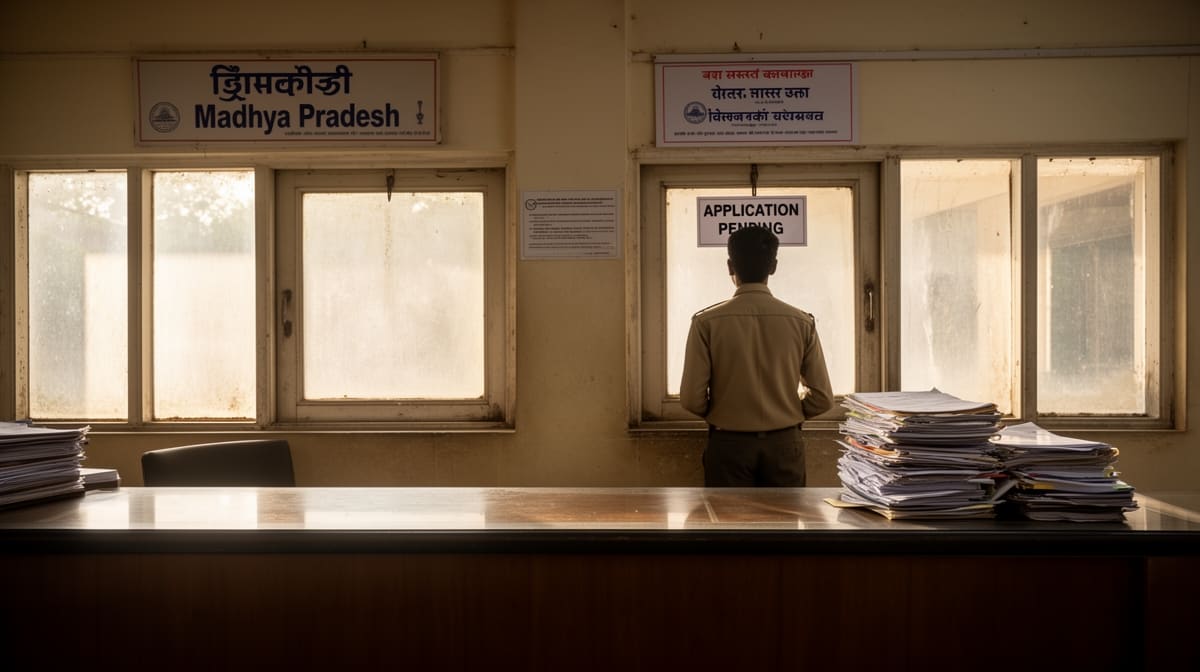
In a significant ruling on administrative accountability, the Bombay High Court has directed a Sub-Divisional Officer to decide a pending compensation application within six weeks, underscoring the consequences of prolonged inaction by public authorities. The judgment serves as a reminder that procedural fairness and timely adjudication are non-negotiable obligations under administrative law.
Background & Facts
The Dispute
The petitioner, Nagesh Haribhau Patil, filed a writ petition seeking directions to the Sub-Divisional Officer (Respondent No. 1), the Competent Authority for Bhiwandi Division, Thane, to decide an application/objection he had raised on 09.08.2018 regarding the disbursal of compensation. The petitioner alleged that despite the matter being closed for orders on 18.07.2019, no effective order had been passed, and a communication dated 03.02.2026 from the Respondent No. 1’s office confirmed that no order was found in the relevant file.
Key Facts
- The petitioner filed an application/objection on 09.08.2018 seeking disbursal of compensation
- The matter was heard and closed for orders on 18.07.2019
- A communication dated 03.02.2026 from Respondent No. 1’s office stated that no order was found in the file
- The petitioner approached the High Court via Writ Petition No. 6836 of 2026
Procedural History
- 09.08.2018: Petitioner filed an application/objection before Respondent No. 1
- 18.07.2019: Matter closed for orders by Respondent No. 1
- 03.02.2026: Respondent No. 1’s office confirmed absence of any order in the file
- 2026: Petitioner filed Writ Petition No. 6836 of 2026 before the Bombay High Court
- 11.06.2026: High Court disposed of the writ petition with directions
Relief Sought
The petitioner sought a direction to Respondent No. 1 to pass appropriate orders on his application dated 09.08.2018, ensuring timely adjudication and disbursal of compensation.
The Legal Issue
The central question was whether administrative authorities can indefinitely delay deciding pending applications, and if so, what remedies are available to aggrieved parties under writ jurisdiction.
Arguments Presented
For the Petitioner
The petitioner’s counsel highlighted the unreasonable delay by Respondent No. 1 in deciding the application, despite the matter being closed for orders as far back as 18.07.2019. The counsel relied on the communication dated 03.02.2026, which confirmed the absence of any order in the file, to argue that the Respondent No. 1 had failed to discharge its statutory duty. The petitioner contended that such inaction violated principles of natural justice and procedural fairness.
For the Respondents
The learned Assistant Government Pleader (AGP) appearing for Respondent Nos. 1 and 3 did not contest the factual assertions regarding the delay. Counsel for Respondent No. 2, the contesting private party, was present but did not advance any substantive arguments against the petitioner’s plea for directions.
The Court's Analysis
The Bombay High Court observed that the petitioner’s application, filed on 09.08.2018, had been pending for an unconscionably long period without any effective adjudication. The Court noted that the matter was closed for orders on 18.07.2019, yet no order was passed, and the Respondent No. 1’s office confirmed the absence of any order in its communication dated 03.02.2026.
The Court emphasized that administrative authorities are bound by the principles of promptness and accountability, and cannot allow matters to languish indefinitely. While the Court refrained from expressing any opinion on the merits of the petitioner’s claim, it underscored the imperative of procedural fairness and the right to timely adjudication.
"It is evident that despite the application having been filed by the Petitioner as far back as in the year 2018, which was closed for orders on 18/07/2019, no effective orders have been passed till date. Even if such an order has been passed, it is not available in the relevant file maintained by the office of the Respondent No. 1."
The Court held that such administrative inaction warranted intervention under its writ jurisdiction, and directed Respondent No. 1 to pass orders within a strict timeline of six weeks.
The Verdict
The Bombay High Court disposed of the writ petition with the following directions:
- Respondent No. 1, the Sub-Divisional Officer and Competent Authority, was directed to pass appropriate orders on the petitioner’s application dated 09.08.2018 within six weeks from 11.06.2026.
- The Court clarified that it had not expressed any opinion on the merits of the matter, and the rights and contentions of both the petitioner and Respondent No. 2 were kept open.
- Respondent No. 1 was granted the discretion to grant a hearing to both parties if deemed necessary.
- Pending applications, if any, were also disposed of.
What This Means For Similar Cases
Administrative Delays Are Unacceptable
This judgment reaffirms that administrative authorities cannot evade their duty to decide pending applications within a reasonable timeframe. Practitioners can now cite this ruling to argue that:
- Indefinite delays in adjudication violate principles of natural justice and procedural fairness
- Writ jurisdiction can be invoked to compel authorities to act where there is inaction or unreasonable delay
- Courts may impose strict timelines for compliance, even in the absence of express statutory deadlines
Judicial Intervention Is a Remedy for Inaction
- The judgment underscores that writ petitions are an effective remedy for aggrieved parties where administrative authorities fail to discharge their duties
- The Court’s direction to decide the matter within six weeks sets a precedent for timely adjudication, which can be relied upon in similar cases
- Practitioners should emphasize the communication dated 03.02.2026 as evidence of administrative failure in future petitions
Procedural Fairness Is Non-Negotiable
- The Court’s observation that the petitioner’s application was closed for orders as far back as 18.07.2019 highlights the importance of procedural compliance
- Authorities must ensure that orders are passed and recorded in a timely manner to avoid judicial intervention
- The judgment serves as a warning to administrative bodies that inaction will not be tolerated, and courts will step in to enforce accountability