The Bombay High Court has reaffirmed that a Memorandum of Understanding (MOU) for property redevelopment, unaccompanied by a formal Development Agreement and lacking statutory compliance, cannot create enforceable rights in government land. This judgment clarifies the legal boundaries of preliminary agreements in real estate development under the Arbitration and Conciliation Act, 1996.
Background & Facts
The Dispute
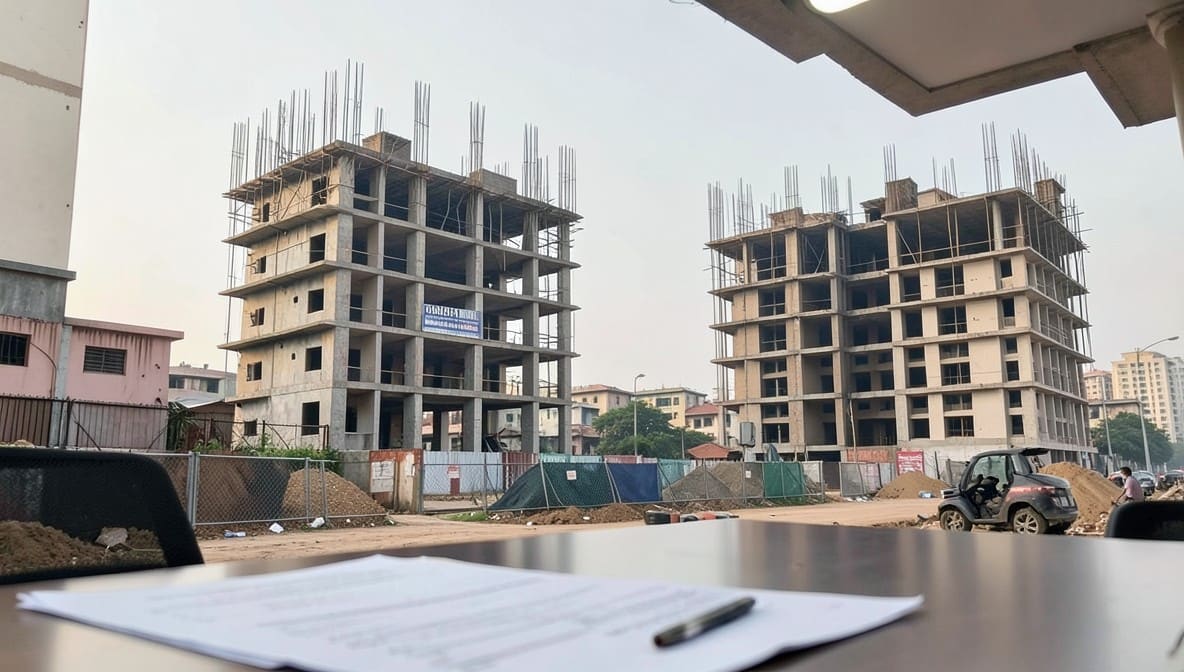
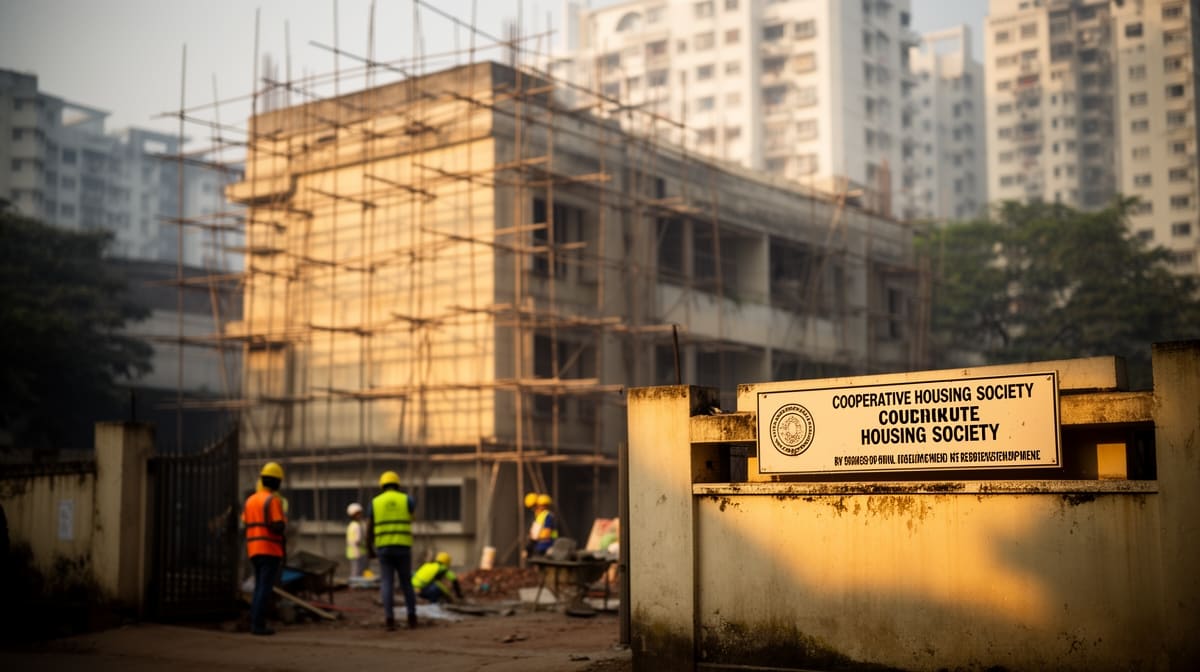
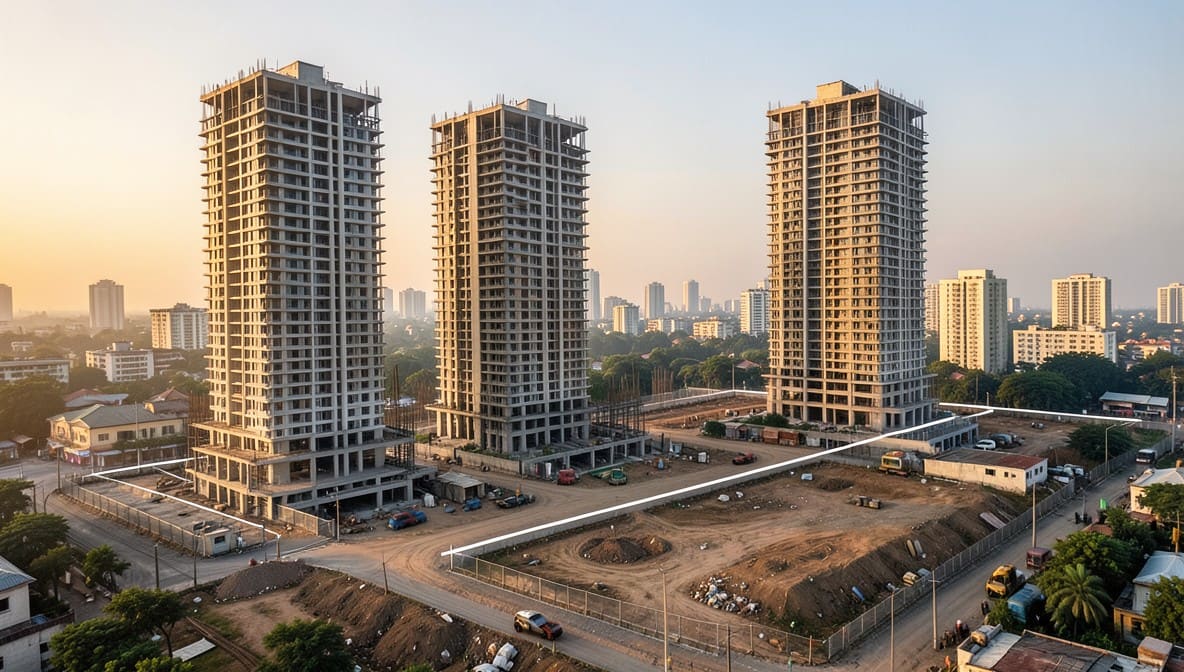
The dispute arose between M/s Akshar Properties (Developer) and Jai Himgiri Co-operative Housing Society Limited (Society) concerning a redevelopment project at Swastik Park, Chembur, Mumbai. The parties executed a Memorandum of Understanding (MOU) on 15.12.2006, under which the Developer agreed to redevelop the Society’s two buildings - Building A (12 units) and Building B (16 units) - into new structures accommodating 28 flats for existing members and additional commercial units for sale. The Developer’s compensation was to come from the sale of these additional units, along with a payment of Rs. 42,00,000 to the Society, of which Rs. 5,00,000 was paid upfront.
Key Facts
- The land on which the buildings stand is owned by the State of Maharashtra and leased to the Society under a lease dated 11.05.1983.
- The MOU stipulated that the balance Rs. 37,00,000 would be payable only upon execution of a formal Development Agreement and receipt of a No Objection Certificate (NOC) from the Additional Collector of Mumbai Suburban and Municipal Corporation of Greater Mumbai.
- The Developer submitted a request for the NOC to the Deputy Collector on 22.11.2006 but failed to secure it.
- Despite multiple extensions of the MOU, no Development Agreement was ever executed.
- The parties exchanged draft agreements between 2007 and 2011, but key commercial terms remained unresolved.
- On 27.02.2011, the Society terminated the MOU and returned the Rs. 5,00,000 via cheque, asserting that no binding agreement had been formed.
- The MOU was neither stamped nor registered.
Procedural History
- 15.12.2006: MOU executed between the parties.
- 22.11.2006: Developer requested NOC from Deputy Collector.
- 27.02.2011: Society terminated MOU and refunded Rs. 5,00,000.
- 2012: Dispute referred to arbitration under the MOU’s arbitration clause.
- 28.08.2014: Sole Arbitrator passed the Impugned Award dismissing all claims of the Developer.
- 10.03.2015: Petition under Section 34 of the Arbitration and Conciliation Act, 1996 filed before the Bombay High Court.
- 12.06.2026: Judgment delivered by Justice Somasekhar Sundaresan.
Relief Sought
The Developer sought:
- A declaration that the MOU was a valid and binding Development Agreement.
- Specific performance of the MOU, including registration of the instrument.
- In the alternative, refund of Rs. 5,00,000 with 15% per annum interest.
- Damages of Rs. 14.13 crores for loss of opportunity and investment.
The Legal Issue
The central question was whether an unregistered, unstamped Memorandum of Understanding, contingent upon a government-issued NOC and execution of a formal Development Agreement, can be enforced as a binding contract for specific performance under Section 20 of the Specific Relief Act, 1963, and whether the arbitral tribunal’s refusal to grant such relief constitutes a patent illegality warranting interference under Section 34 of the Arbitration and Conciliation Act, 1996.
Arguments Presented
For the Petitioner
The Developer contended that the MOU was a concluded contract that vested proprietary rights in the property, citing Chheda Housing Development Corporation v. Bibijan Shaikh Farid to argue that such MOUs can function as development agreements when they outline the essential terms. It was submitted that the Society’s delay in securing the NOC and subsequent termination were opportunistic and breached the implied duty of good faith. The Developer argued that the arbitral tribunal ignored the substance of the MOU and misapplied the law on specific performance.
For the Respondent
The Society countered that the MOU was expressly conditional upon obtaining the NOC and executing a formal Development Agreement, both of which never occurred. It emphasized that as a Class II lessee of government land, the Society had no power to convey land rights, and any transfer required prior government approval. The Society relied on the repeated extensions of the MOU as evidence that the parties treated it as a provisional arrangement, not a binding contract. It further argued that the Developer was fully aware of the legal constraints and voluntarily entered into a conditional arrangement.
The Court's Analysis
The Court emphasized the narrow scope of judicial review under Section 34 of the Arbitration and Conciliation Act, 1996, citing Associate Builders v. Delhi Development Authority and Ssangyong Engineering v. NHAI to underscore that courts cannot re-appreciate evidence or substitute their own interpretation of contract terms. The Court found that the arbitral tribunal had clearly articulated its reasoning: the MOU lacked the essential elements of a Development Agreement, including a definitive plan, registration, and the critical condition precedent of the NOC.
"The arrangement of the structure of the Impugned Award may have interspersed findings and contentions but it is not possible to hold that reasons that have been arrived at by the Learned Arbitral Tribunal are not discernible."
The Court agreed with the tribunal’s observation that the Society, as a lessee of government land, could not transfer or create any interest in the land itself. The MOU’s structure - where payment of the bulk consideration was contingent on the NOC and execution of a Development Agreement - demonstrated the parties’ mutual understanding that no binding obligation arose until those conditions were fulfilled. The Court also rejected the Developer’s reliance on Chheda Housing, noting that the facts in that case involved land owned by the cooperative society, not leased from the State.
The Court further held that the repeated extensions of the MOU indicated its provisional nature and negated any claim of vested rights. The tribunal’s conclusion that damages could not be awarded in the absence of a viable claim for specific performance was also upheld, as damages under contract law are not a standalone remedy where the primary obligation is unenforceable.
The Verdict
The petition under Section 34 was dismissed. The Bombay High Court upheld the arbitral award dated 28.08.2014, which rejected all claims of the Developer. The Developer is not entitled to specific performance, refund of the Rs. 5,00,000 (already returned), interest, or damages of Rs. 14.13 crores. The Court affirmed that the MOU, lacking registration, stamping, and the NOC, cannot be construed as a Development Agreement capable of creating enforceable rights in government land.
What This Means For Similar Cases
Conditional MOUs Cannot Create Vested Rights
- Practitioners must advise clients that MOUs contingent on third-party approvals (e.g., NOCs, municipal clearances) do not create enforceable interests unless those conditions are fulfilled.
- Any claim for specific performance must demonstrate that all conditions precedent have been satisfied or waived.
Registration and Stamp Duty Are Not Formalities But Substantive Requirements
- For agreements relating to immovable property, non-registration under Section 17 of the Registration Act, 1908 renders the instrument unenforceable for specific performance, regardless of commercial intent.
- Stamp duty compliance is a prerequisite for admissibility in evidence and cannot be overlooked.
Arbitral Tribunals Have Broad Discretion in Contract Interpretation
- Courts will not interfere with arbitral findings on contract construction unless they are perverse or legally untenable.
- The doctrine of implied reasons permits courts to uphold awards even if reasoning is not exhaustive, provided the outcome is logically discernible.
Developer Risk in Government Land Projects
- Developers entering into agreements on government-leased land must conduct due diligence on land tenure and approval pathways.
- Payment structures tied to government approvals carry inherent risk; advance payments should be structured as refundable deposits, not non-refundable consideration.