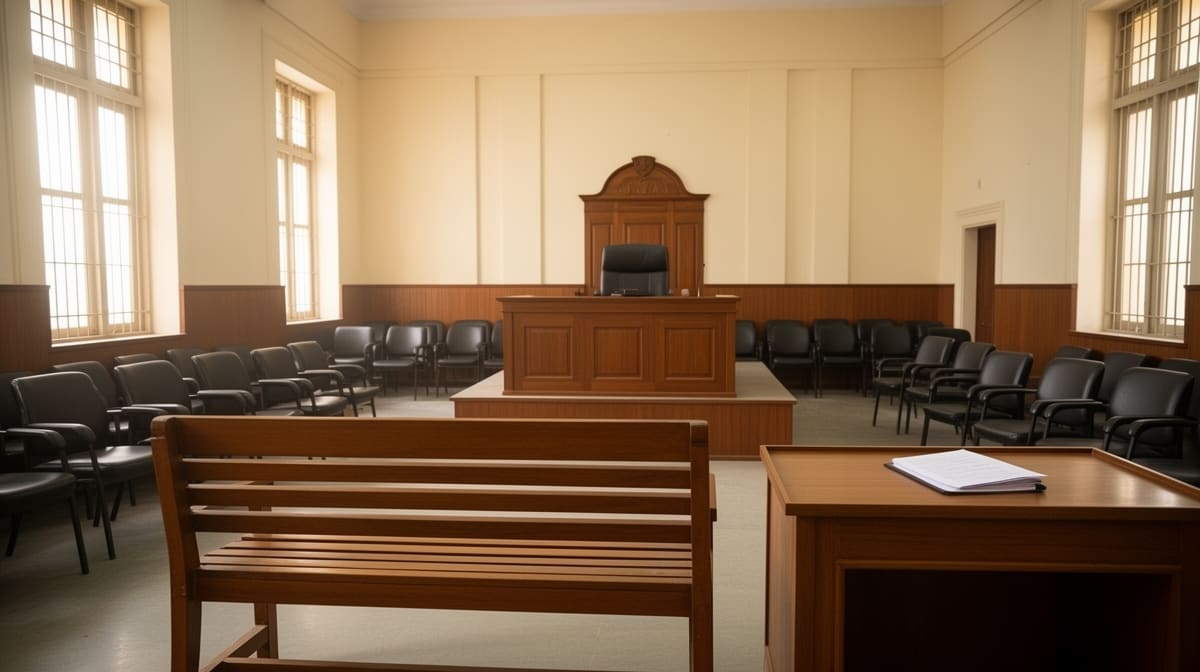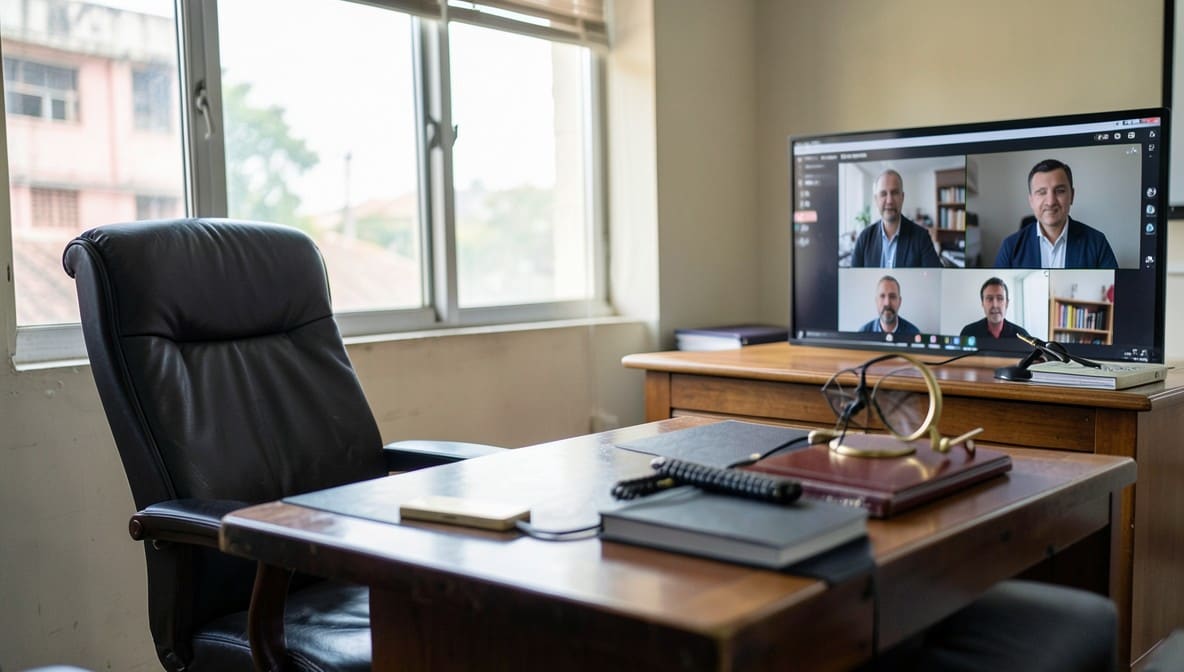
The Bombay High Court has reaffirmed that the right to cross-examine witnesses is a fundamental component of natural justice in civil litigation. In a significant ruling, the Court set aside three orders that effectively non-suited defendants due to their absence during evidence recording, emphasizing that pandemic-related disruptions cannot justify denying procedural rights.
Background & Facts
The Dispute
The petitioners, Ankit Sales Corporation & Ors., were defendants in Special Civil Suit No. 855 of 2006 filed by Akai Consumers Electronics India Ltd. for recovery of Rs. 18,00,771.72, allegedly due for electronic goods supplied. The defendants resisted the claim, asserting that the plaintiff’s evidence was fabricated and that the transaction was secured by blank cheques issued as security, which were later dishonoured. The defendants claimed to possess genuine receipts of these cheques and maintained a triable defence on merits.
Key Facts
- The suit was filed in 2006; written statement was filed by defendants contesting the claim
- Defendants alleged the plaintiff created false documentation and relied on dishonoured security cheques
- Defendants claimed their defence was undermined by the trial court’s ‘No Cross’ and ‘Evidence Closed’ orders
- One partner of Defendant No. 1 was a dormant partner with no involvement in transactions or cheque issuance
- Key documents required for cross-examination were reportedly unavailable due to logistical constraints
Procedural History
- 08.01.2020: Trial Court passed order directing ‘No Cross’ and ‘Evidence Closed’ against defendants due to absence of their advocate and parties, despite repeated calls
- 23.01.2020: Defendants became aware of the order and filed Application Exh. 140 seeking its setting aside
- 25.02.2020: Trial Court dismissed Application Exh. 140 without addressing merits
- 15.11.2021: Review Application Exh. 144 filed by defendants was dismissed
- 06.09.2022: Writ Petition No. 10390 of 2022 filed before Bombay High Court
- 10.10.2022: High Court directed deposit of Rs. 25,000 as cost for interim stay of trial proceedings; deposit was made
- 12.06.2026: Petitioners filed application seeking recall of cost deposit order and refund of Rs. 25,000 with interest
Relief Sought
The petitioners sought quashing of the three impugned orders dated 08.01.2020, 25.02.2020, and 15.11.2021; restoration of their right to cross-examine plaintiff’s witnesses; and refund of Rs. 25,000 deposited as cost with accrued interest.
The Legal Issue
The central question was whether a trial court may pass a ‘No Cross’ and ‘Evidence Closed’ order against defendants solely on account of absence during a pandemic, thereby extinguishing their right to cross-examine and effectively non-suiting them without examining the bonafides of their non-appearance.
Arguments Presented
For the Petitioner
Mr. Purushottam G. Chavan argued that the defendants’ absence was due to circumstances beyond their control during the Covid-19 pandemic, when courts operated virtually and movement was restricted. He emphasized that the trial court’s sole reason for the order was absence, without any inquiry into the cause or bonafides. He cited the defendants’ prompt filing of Application Exh. 140 on 23.01.2020 as proof of their diligence. He further contended that the defendants had a triable defence and that denying cross-examination rendered their written statement meaningless. He submitted that the deposit of Rs. 25,000 on 10.10.2022 was not a penalty but a condition for interim stay, and thus should be refunded.
For the Respondent
The respondent, Akai Consumers Electronics India Ltd., chose not to appear or file any response. The Court proceeded ex parte, noting the absence of any opposition.
The Court's Analysis
The Court examined the nature of the impugned orders and their impact on the defendants’ right to a fair hearing. It observed that the trial court’s order dated 08.01.2020 was handwritten and contained no reasoning beyond the absence of counsel and parties. The Court noted that the order effectively non-suited the defendants, rendering their entire defence nugatory.
"In the event if Defendants are not able to cross-examine the Plaintiff, defence raised by them in the written statement will get a complete walk over."
The Court emphasized that while delay and laches may affect litigation, courts must adopt a liberal approach where bonafides are demonstrated. It held that the period between 08.01.2020 and 15.11.2021 coincided with the height of the Covid-19 pandemic, during which physical appearances were severely restricted and court operations were disrupted. The defendants’ immediate filing of Application Exh. 140 on 23.01.2020 demonstrated their intent to contest the suit.
The Court further held that the dismissal of both Application Exh. 140 and the Review Application Exh. 144 without any substantive reasoning was legally unsustainable. The Court concluded that the impugned orders violated the principles of natural justice and the right to be heard under Article 21 of the Constitution.
Regarding the Rs. 25,000 deposit, the Court noted that the order dated 10.10.2022 directed the deposit solely to defer trial proceedings, with no finding of negligence or dereliction on the part of the defendants. The Court held that the deposit was not a penalty and therefore must be refunded.
The Verdict
The writ petition was allowed. The orders dated 08.01.2020, 25.02.2020, and 15.11.2021 were quashed and set aside. The trial court was directed to permit the defendants to cross-examine the plaintiff’s witnesses in accordance with law. The applications filed under Exhs. 140 and 144 were allowed. The Registry was directed to refund Rs. 25,000 along with accrued interest to the petitioners upon production of a server copy of this order.
What This Means For Similar Cases
Cross-Examination Cannot Be Denied on Procedural Grounds Alone
- Practitioners must argue that absence due to pandemic, illness, or logistical constraints cannot justify denying cross-examination without inquiry into bonafides
- Courts must record reasons for ‘No Cross’ orders and consider whether the party acted promptly to rectify the default
- Written statements must not be rendered meaningless by procedural defaults
Pandemic-Era Litigation Demands Judicial Flexibility
- Orders passed during 2020 - 2021 must be reviewed in context of restricted court access and virtual hearings
- Delay caused by systemic disruptions cannot be equated with negligence or laches
- Courts must distinguish between deliberate non-appearance and unavoidable absence
Cost Deposits Are Not Penalties Unless Explicitly Stated
- Deposits ordered for interim relief, without any finding of fault, must be refunded upon disposal
- Courts must clearly state whether a deposit is punitive or procedural
- Advocates should seek explicit clarification at the time of deposit to preserve refund rights