The Bombay High Court has delivered a nuanced judgment on the enforceability of contractual damages caps in arbitration awards. In a dispute arising from an Engineering Procurement Construction Contract, the Court refused to interfere with an arbitral award that declined to apply a 1% damages cap where the Public Works Department (PWD) had failed to provide 90% of the Right of Way (ROW) within the stipulated 15-day period. The judgment underscores the importance of Section 28(3) of the Arbitration and Conciliation Act, 1996, which mandates that arbitral tribunals take into account the terms of the contract while adjudicating disputes, rather than being bound strictly by them. However, the Court set aside the award of 18% compounded interest, holding it contrary to the contractual bargain.
Background & Facts
The Dispute
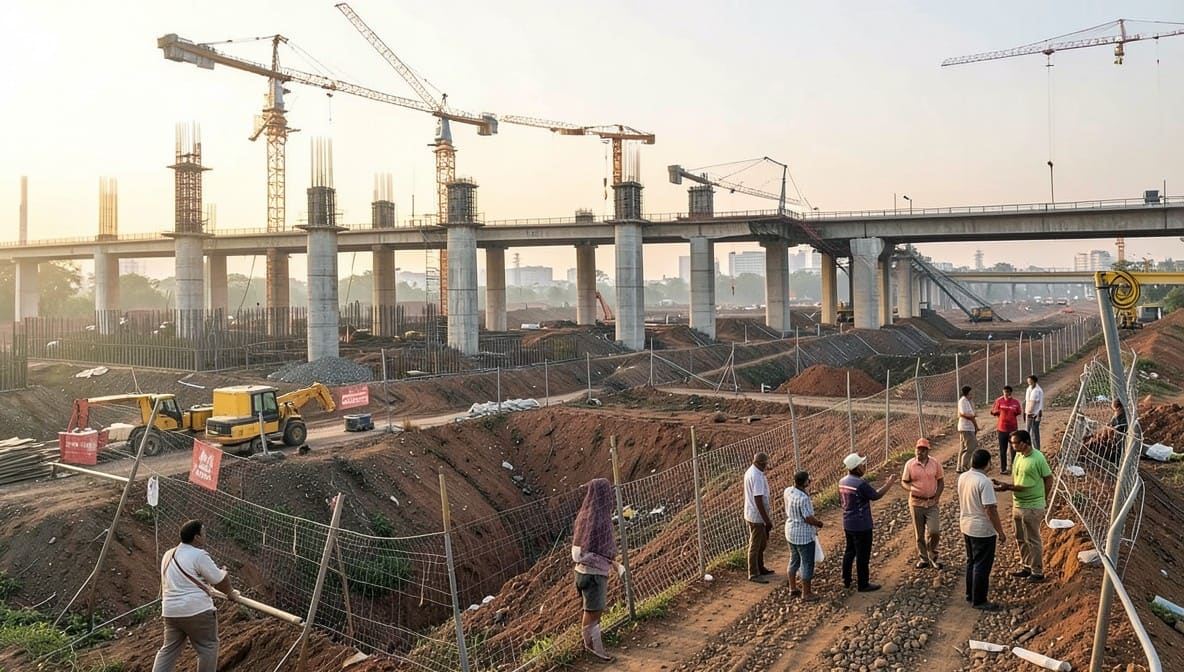
The dispute arose from three Engineering Procurement and Construction (EPC) contracts executed between the Public Works Department (PWD), Government of Maharashtra, and Khare And Tarkunde Infrastructure Pvt. Ltd. (KTIPL) on December 17, 2014, and December 24, 2014. The contracts, valued at approximately Rs. 148.51 crores, involved the construction of road infrastructure, including major and minor bridges, across three packages. The core issue revolved around delays caused by PWD’s failure to provide the Right of Way (ROW) as required under the agreements.
Key Facts
- Contract Value: Three packages aggregating Rs. 148.51 crores (Rs. 53.24 crores, Rs. 48.80 crores, and Rs. 46.46 crores respectively).
- Appointed Date: January 27, 2015, with a scheduled completion deadline of July 26, 2016 (18 months).
- ROW Obligation: PWD was required to provide 90% of the ROW within 15 days of receiving performance security (Clause 4.1.3(a)). The remaining 10% was to be handed over within 150 days of the Appointed Date (Clause 8.2).
- Damages Cap: Clause 4.1.5 capped aggregate damages at 1% of the contract price.
- Actual Performance: PWD failed to provide 90% of the ROW by the Appointed Date. Correspondence between the parties from March 9, 2015, to August 10, 2016, confirmed the non-compliance.
- Termination: PWD terminated the agreement on October 25, 2018, nearly 3.5 years after the Appointed Date.
- Arbitration: KTIPL invoked arbitration on October 1, 2018. The Arbitral Award dated April 14, 2023, awarded damages exceeding the 1% cap and 18% compounded interest.
Procedural History
- October 1, 2018: KTIPL invoked arbitration.
- April 14, 2023: Arbitral Tribunal passed the Impugned Award, holding that the 1% damages cap was inapplicable due to PWD’s breach of foundational obligations and awarded 18% compounded interest.
- 2024: PWD filed Arbitration Petition No. 262 of 2024 (and connected petitions) under Section 34 of the Arbitration Act before the Bombay High Court.
- March 30, 2026: Matter heard afresh; judgment reserved.
- June 12, 2026: Judgment pronounced.
The Parties' Positions
For the Petitioner (PWD)
- Clause 4.1.5 is a non-obstante provision that categorically caps damages at 1% of the contract price, regardless of the nature or extent of the breach.
- The Arbitral Tribunal rewrote the contract by ignoring the explicit terms of Clause 4.1.5.
- The 18% compounded interest awarded is contrary to the contractual stipulations and Section 31(7) of the Arbitration Act.
- Relied on judgments such as Bright Power Projects, Vilayati Ram, and Ssangyong to argue that arbitral tribunals cannot go beyond the terms of the contract.
For the Respondent (KTIPL)
- PWD’s failure to provide 90% of the ROW within 15 days vitiated the foundational premise of the contract, rendering the 1% cap unenforceable.
- The business efficacy test justifies the Tribunal’s interpretation, as applying the cap would lead to an absurd outcome and place a premium on non-compliance.
- The 18% interest rate was justified based on KTIPL’s borrowing costs and the contractual provisions (Clause 19.2.7).
- Cited judgments such as Simplex Concrete, G. Ramachandra Reddy, and K.N. Sathyapalan to argue that reasonable damages must be awarded where contractual limits are unconscionable or arbitrary.
Relief Sought
- PWD: Sought setting aside of the Impugned Award, particularly the damages exceeding 1% of the contract price and the 18% compounded interest.
- KTIPL: Sought upholding of the Arbitral Award, arguing that the Tribunal’s interpretation was reasonable and in conformity with law.
The Legal Issue
The central questions were:
- Whether Clause 4.1.5, which caps damages at 1% of the contract price, is enforceable where PWD failed to fulfill its foundational obligation of providing 90% of the ROW within 15 days.
- Whether the 18% compounded interest awarded by the Arbitral Tribunal is contrary to the contractual terms and Section 31(7) of the Arbitration Act.
Arguments Presented
For the Petitioner (PWD)
- Clause 4.1.5 is a non-obstante provision that explicitly caps damages at 1% of the contract price, regardless of the breach’s nature or extent.
- The Arbitral Tribunal ignored the plain language of the contract and rewrote its terms, which is impermissible under Section 34 of the Arbitration Act.
- The 18% compounded interest awarded is contrary to the contractual stipulations (Clause 19.9.2 and Clause 19.2.7) and Section 31(7) of the Act.
- Relied on judgments such as Bright Power Projects, Vilayati Ram, and Ssangyong to argue that arbitral tribunals cannot go beyond the contract’s terms.
For the Respondent (KTIPL)
- PWD’s failure to provide 90% of the ROW within 15 days undermined the foundational premise of the contract, rendering the 1% cap unenforceable.
- The business efficacy test justifies the Tribunal’s interpretation, as applying the cap would lead to an absurd outcome and reward PWD’s non-compliance.
- The 18% interest rate was justified based on KTIPL’s borrowing costs (13.8% compounded monthly, escalating to 18.8%) and Clause 19.2.7 of the contract.
- Cited judgments such as Simplex Concrete, G. Ramachandra Reddy, and K.N. Sathyapalan to argue that reasonable damages must be awarded where contractual limits are unconscionable.
The Court's Analysis
The Court conducted a detailed analysis of the contractual provisions, statutory framework, and judicial precedents to determine the validity of the Impugned Award.
Interpretation of Clause 4.1.5 and Foundational Obligations
The Court examined Clause 4.1.5, which caps aggregate damages at 1% of the contract price, and Clause 4.1.3(a), which obligates PWD to provide 90% of the ROW within 15 days of receiving performance security. The Court observed:
"A plain reading of the foregoing would indicate that PWD was obligated to provide the ROW in accordance with the Agreement, within a period of 15 days from the date of the Agreement, on no less than 90% of the total length of the project. This would indicate that the bargain entered into between the parties envisages a timeframe that would necessarily require PWD to provide the ROW well within just 15 days of receiving the performance security under the contract."
The Court noted that PWD’s failure to comply with Clause 4.1.3(a) was a chronic and clear default, as the ROW was never provided within the stipulated timeline. This default vitiated the foundational premise of the contract, rendering the 1% cap unenforceable in the peculiar facts of the case.
Section 28(3) of the Arbitration Act
The Court emphasized the statutory mandate under Section 28(3) of the Arbitration Act, which requires arbitral tribunals to take into account the terms of the contract while adjudicating disputes. This provision was amended in 2015 to replace the earlier requirement of adjudicating "in accordance with" the contract, thereby granting tribunals greater flexibility to interpret contracts in light of peculiar factual matrices.
"Section 28(3) of the Act is not a license to ignore the terms of the contract at all, but it is a statutory recognition that when parties invest their trust in an Arbitral Tribunal to adjudicate their disputes, the Arbitral Tribunal would take into account the terms of the contract as opposed to the earlier position of adjudicating only 'in accordance with' the contract."
The Court held that the Arbitral Tribunal’s interpretation of Clause 4.1.5 was reasonable and plausible, as it reconciled the contractual provisions and applied the business efficacy test to avoid an absurd outcome. The Tribunal’s finding that applying the 1% cap would place a premium on PWD’s non-compliance was upheld.
Business Efficacy Test
The Court applied the business efficacy test, as enunciated in Nabha Power, to determine whether the contractual terms could be enforced in their literal sense without leading to irrational or absurd consequences. The test requires:
- The interpretation must be reasonable and equitable.
- It must be necessary to give business efficacy to the contract.
- It must go without saying (Officious Bystander Test).
- It must be capable of clear expression.
- It must not contradict any express term of the contract.
The Court held that the Arbitral Tribunal’s interpretation satisfied these criteria, as applying the 1% cap in isolation would render the contract unworkable and reward PWD’s breach.
Judicial Precedents on Damages Cap
The Court analyzed several judgments cited by both parties:
- Simplex Concrete: Held that contractual clauses limiting damages cannot be interpreted in a manner that defeats the purpose of the Contract Act.
- G. Ramachandra Reddy: Emphasized that reasonable damages must be awarded where contractual limits are arbitrary or unconscionable.
- K.N. Sathyapalan: Held that arbitral tribunals can compensate non-defaulting parties for additional costs incurred due to the counterparty’s failure.
- Ssangyong: Analyzed the 2015 amendment to Section 28(3) and held that arbitral tribunals must take into account the terms of the contract, rather than being strictly bound by them.
The Court distinguished the judgments relied upon by PWD, such as Bright Power Projects and Vilayati Ram, on the grounds that they did not involve foundational breaches or absurd outcomes.
Award of Interest
The Court set aside the award of 18% compounded interest, holding it contrary to the contractual bargain and Section 31(7) of the Arbitration Act. The Court observed:
"The parties have consciously agreed to different rates of interest and this conscious choice cannot be wished away."
The Court relied on Gayatri Balasamy, which permits partial modification of arbitral awards where the interest awarded is contrary to contractual terms. However, the Court held that modifying only the post-award interest would not address the pendente lite interest, which was also awarded without regard to the contract. Thus, the entire interest component was set aside and referred back to arbitration.
The Verdict
The Court partly allowed the petitions under Section 34 of the Arbitration Act and partially set aside the Impugned Award while upholding it on all other aspects.
- Damages Cap: The Court upheld the Arbitral Tribunal’s refusal to enforce the 1% damages cap, holding that PWD’s breach of foundational obligations rendered the cap untenable.
- Interest Award: The 18% compounded interest awarded was set aside as contrary to the contractual terms and Section 31(7) of the Arbitration Act. The dispute over interest was referred back to arbitration for fresh adjudication.
- Costs: There was no order as to costs in the peculiar circumstances of the case.
What This Means For Similar Cases
Contractual Damages Caps Are Not Absolute
- Foundational breaches can vitiate damages caps, even if they are non-obstante provisions. Courts and arbitral tribunals will apply the business efficacy test to determine whether enforcing the cap would lead to absurd or irrational outcomes.
- Section 28(3) of the Arbitration Act empowers tribunals to take into account the terms of the contract, rather than being strictly bound by them, where peculiar factual matrices warrant such interpretation.
Arbitral Tribunals Have Leeway in Interpreting Contracts
- Tribunals can reconcile seemingly conflicting contractual clauses to give business efficacy to the agreement. Literal interpretations that lead to absurd outcomes will not be enforced.
- Judicial precedents such as Simplex Concrete and Ssangyong support the view that contractual limits on damages must be reasonable and not unconscionable.
Interest Awards Must Conform to Contractual Terms
-
Section 31(7) of the Arbitration Act mandates that interest awards must conform to the contractual bargain unless the parties otherwise agree.
-
Courts can partially modify arbitral awards where interest awarded is contrary to contractual terms, as held in Gayatri Balasamy. However, pendente lite interest that departs from the contract may necessitate setting aside the entire interest component.
-
Practitioners should ensure that interest clauses in contracts are clear and unambiguous, specifying rates, compounding periods, and applicability to avoid disputes.
-
Arbitral tribunals must scrupulously adhere to contractual interest terms while assessing damages, failing which courts may intervene under Section 34.