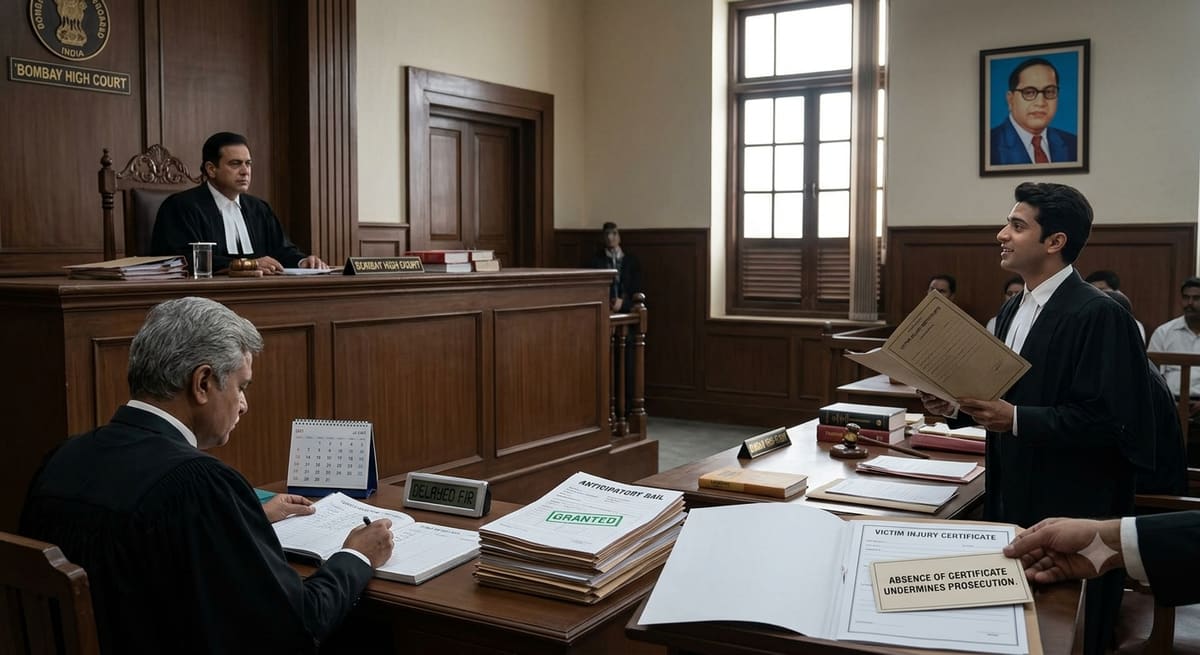
The Bombay High Court has granted regular bail to an applicant accused under Sections 103(1), 115(2), and 118(1) of the Bharatiya Nyaya Sanhita, 2023, emphasizing the unexplained delay in lodging the FIR and the absence of premeditation. The judgment underscores the importance of timely reporting in criminal cases and the need to scrutinize prosecution narratives for potential embellishments.
Background & Facts
The Dispute
The applicant, Sadhu Ramchandra Chavan, was accused of assaulting two individuals - Naim Shaikh (deceased) and Balaji Satvaji Chavan (injured) - on 09.12.2025 between 07:30 pm and 08:00 pm near Bhokar Police Station, District Nanded. The prosecution alleged that the applicant took offense to the deceased and the injured victim conversing with his sister and launched a physical assault using a stick, resulting in fatal injuries to Naim Shaikh. The applicant was subsequently arrested and charged under Sections 103(1), 115(2), and 118(1) of the Bharatiya Nyaya Sanhita, 2023.
Key Facts
- Incident Date: 09.12.2025 (alleged assault)
- FIR Date: 14.12.2025 (lodged five days after the incident)
- Crime No.: 592 of 2025, Bhokar Police Station, Dist. Nanded
- Offences Charged: Sections 103(1) (culpable homicide not amounting to murder), 115(2) (abetment of offence), and 118(1) (concealment of design to commit offence) of the Bharatiya Nyaya Sanhita, 2023
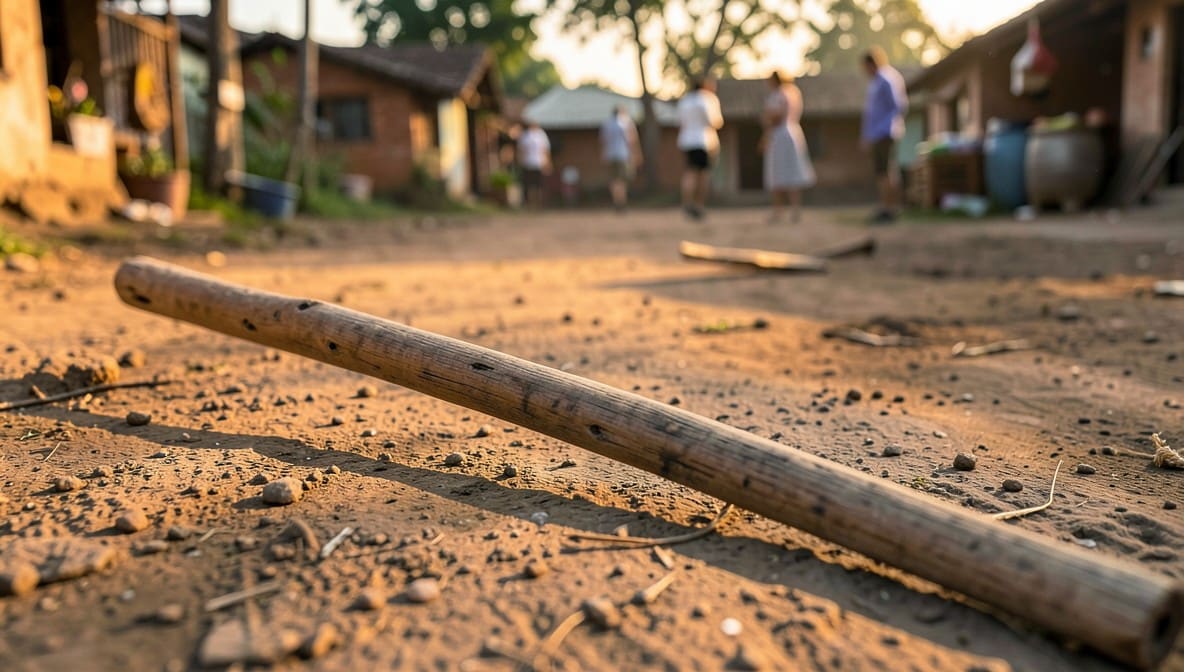
- Weapon Used: Stick (not classified as a deadly weapon)
- Medical History: Initial hospital records described the injury as a fall, raising doubts about the prosecution's narrative
- Investigation Status: Charge-sheet filed; no further recovery pending
Procedural History
- 14.12.2025: FIR lodged; applicant arrested
- Post-14.12.2025: Investigation completed; charge-sheet filed
- 2026: Bail Application (BA No. 857 of 2026) filed before the Bombay High Court, Aurangabad Bench
- 11.06.2026: Present order passed granting bail
The Parties' Positions
For the Applicant
- The FIR was lodged with a five-day delay, indicating a concocted case
- The weapon used (stick) was not a deadly weapon, suggesting absence of premeditation
- The medical records initially described the injury as a fall, contradicting the prosecution's assault narrative
- The investigation was complete, and no further recovery was pending
- Continued incarceration was unjustified as the trial was unlikely to conclude soon
For the Respondent (State)
- The offence was serious, involving loss of human life
- Sufficient material on record prima facie established the applicant's complicity
- Release on bail could lead to tampering with evidence or repetition of the offence
Relief Sought
The applicant sought regular bail on the grounds of false implication, unexplained delay in lodging the FIR, and completion of investigation.
The Legal Issue
The central question was whether the unexplained delay in lodging the FIR, the absence of premeditation, and the completion of investigation justified the grant of regular bail under Sections 103(1), 115(2), and 118(1) of the Bharatiya Nyaya Sanhita, 2023.
Arguments Presented
For the Applicant
The learned counsel for the applicant argued:
- The five-day delay in lodging the FIR (from 09.12.2025 to 14.12.2025) was unexplained and suggested a concocted case
- The weapon used (stick) was not a deadly weapon, indicating the assault was spontaneous and lacked premeditation
- The medical records initially described the injury as a fall, introducing doubt about the prosecution's narrative
- The investigation was complete, and the charge-sheet was filed; no further recovery was pending
- Continued incarceration was unjustified as the trial was unlikely to conclude within a reasonable period
For the Respondent
The learned APP for the State contended:
- The offence was serious, involving the loss of human life
- The material on record prima facie established the applicant's complicity
- If released on bail, the applicant could tamper with prosecution evidence or repeat the offence
The Court's Analysis
The Court conducted a detailed scrutiny of the prosecution's case and the material on record, focusing on the following key aspects:
-
Unexplained Delay in FIR: The Court noted that the alleged incident occurred on 09.12.2025, but the FIR was lodged only on 14.12.2025, a delay of five days. This delay remained unexplained by the prosecution, raising serious doubts about the veracity of the allegations. The Court observed:
"This long interval points toward a grave possibility of embellishment and deliberate afterthought to implicate the applicant."
The Court relied on the principle that unexplained delays in lodging FIRs can cast doubt on the prosecution's case, as established in State of H.P. v. Gian Chand and other precedents.
-
Nature of the Weapon and Absence of Premeditation: The Court emphasized that the weapon used was a stick, which is not classified as a deadly weapon. This, coupled with the spontaneous nature of the quarrel, indicated the absence of premeditation or cruelty. The Court held:
"The material on record prima facie indicates a sudden, spontaneous quarrel arising out of a chance meeting, which excludes the essential ingredients of premeditated murder."
This observation aligns with the legal principle that culpable homicide not amounting to murder under Section 103(1) of the Bharatiya Nyaya Sanhita requires proof of intention or knowledge to cause death, which was lacking in this case.
-
Medical Records and Prosecution Narrative: The Court noted that the medical records initially described the injury as a fall, which contradicted the prosecution's narrative of a physical assault. This discrepancy introduced a substantial element of doubt regarding the prosecution's case, as highlighted in the judgment:
"The medical records indicate that at the time of the initial hospitalisation, the narrated history of injury was recorded as a fall which indicates a case of over-implication and introduces a substantial element of doubt regarding the prosecution's subsequent narrative of a physical assault."
-
Completion of Investigation: The Court observed that the investigation was complete, and the charge-sheet had been filed. No further recovery was pending at the applicant's instance, which reduced the risk of tampering with evidence or influencing witnesses.
-
Trial Timeline: The Court noted that given the number of accused and witnesses, the trial was unlikely to commence or conclude within a reasonable period. Prolonged incarceration of the applicant as an undertrial prisoner was not justified in these circumstances.
-
Stringent Conditions: To address the State's apprehensions about tampering with evidence, the Court imposed stringent conditions on the bail, including the submission of Aadhar and Pan Card details and attendance at every trial date.
The Verdict
The Bombay High Court allowed the bail application and directed the release of the applicant, Sadhu Ramchandra Chavan, on furnishing a Personal Recognizance (P.R.) bond of Rs. 50,000 with one or two local solvent sureties of the like amount. The Court imposed the following conditions:
- The applicant shall attend each and every date of the Trial Court unless exempted
- The applicant shall not pressurize prosecution witnesses or tamper with evidence
- The applicant shall submit his Aadhar and Pan Card to the Investigation Officer, along with detailed addresses and phone numbers of himself and two near relatives
- Breach of any condition would entail cancellation of bail
The Court clarified that its observations were limited to the bail application and shall not influence the trial court's proceedings.
What This Means For Similar Cases
Unexplained FIR Delay Can Undermine Prosecution's Case
- Timely Reporting is Critical: Practitioners must emphasize unexplained delays in lodging FIRs as a ground for bail, especially in cases where the prosecution's narrative appears embellished. Courts are increasingly scrutinizing such delays to prevent false implications.
- Legal Precedents: The judgment reinforces the principle that delays in FIR lodging can cast serious doubt on the prosecution's case, as established in State of H.P. v. Gian Chand and other precedents.
Absence of Premeditation and Weapon Nature Matter
- Spontaneous Quarrels vs. Premeditated Offences: The Court distinguished between spontaneous quarrels and premeditated offences. Where the weapon used is not deadly (e.g., a stick), and the incident arises from a chance meeting, the absence of premeditation can be a strong ground for bail.
- Section 103(1) BNS: Practitioners should argue that culpable homicide not amounting to murder under Section 103(1) of the Bharatiya Nyaya Sanhita requires proof of intention or knowledge to cause death. Where such proof is lacking, bail should be favorably considered.
Medical Records Can Introduce Doubt
- Contradictions in Medical Evidence: The judgment highlights the importance of medical records in criminal cases. Where medical records contradict the prosecution's narrative (e.g., describing an injury as a fall instead of an assault), this can introduce a substantial element of doubt, strengthening the case for bail.
- Over-Implication: Practitioners should scrutinize medical records for discrepancies that may indicate over-implication of the accused.
Completion of Investigation Reduces Risk of Evidence Tampering
- Charge-Sheet Filed: Where the investigation is complete and the charge-sheet is filed, the risk of the accused tampering with evidence is significantly reduced. This can be a persuasive ground for bail, as the Court noted in this case.
- Stringent Conditions: Courts may impose stringent conditions (e.g., submission of identity documents, regular trial attendance) to mitigate concerns about witness tampering or repetition of the offence.