Bombay High Court judgments

2128 Bombay High Court judgments explained in plain English: what was decided, the law applied and why it matters. Page 18 of 89.

Section 3(5) BNS & Arms Act | Custodial Interrogation Unjustified Without Direct Evidence Linking Accused to Crime: Bombay HC
Case Law Analysis
|Bombay High Court

Section 3(5) BNS & Arms Act | Custodial Interrogation Unjustified Without Direct Evidence Linking Accused to Crime: Bombay HC

Bombay High Court rules that anticipatory bail under Section 438 CrPC (BNSS) cannot be denied merely based on co-accused statements if no direct evidence connects the applicant to the offence. The court emphasized that custodial interrogation is unwarranted where the FIR relies solely on hearsay, setting a precedent for bail considerations under the Bharatiya Nyaya Sanhita and Arms Act.
Functional Disability Assessment Must Be Occupation-Specific Under Pranay Sethi Guidelines : Bombay HC Enhances Compensation for Drivers
Case Law Analysis
|Bombay High Court

Functional Disability Assessment Must Be Occupation-Specific Under Pranay Sethi Guidelines : Bombay HC Enhances Compensation for Drivers

Bombay HC rules that functional disability in motor accident compensation must reflect the claimant’s occupation-specific impact, not just medical ratings. Applying the Supreme Court’s Pranay Sethi guidelines retroactively, the Court enhanced compensation for drivers, emphasizing income-based disability assessment over generic medical percentages.

Section 103(1) BNS | Mere Presence at Unlawful Assembly Without Specific Overt Act Insufficient for Denial of Regular Bail: Bombay HC Nagpur Bench
Case Law Analysis
|Bombay High Court

Section 103(1) BNS | Mere Presence at Unlawful Assembly Without Specific Overt Act Insufficient for Denial of Regular Bail: Bombay HC Nagpur Bench

The Bombay High Court grants regular bail to accused whose role in a fatal unlawful assembly is limited to presence with a weapon, holding that the Bharatiya Nyaya Sanhita requires proof of a specific overt act - not just association or general participation. This clarifies the threshold for bail in mass violence cases where individual culpability is unproven, protecting those with minimal involvement from prolonged pre-trial detention.

Article 21 & Speedy Trial | 9-Year Under-Trial Detention Violates Constitutional Right, Bombay HC Grants Bail Under MCOCA : Bombay HC Nagpur Bench
|Bombay High Court

Article 21 & Speedy Trial | 9-Year Under-Trial Detention Violates Constitutional Right, Bombay HC Grants Bail Under MCOCA : Bombay HC Nagpur Bench

Bombay High Court Nagpur Bench ruled that a 9-year incarceration without trial completion constitutes a gross violation of Article 21, granting bail despite serious charges under MCOCA and IPC. The judgment underscores the judiciary’s duty to prevent indefinite pre-trial detention, even in organized crime cases, reinforcing the right to speedy justice for under-trials.

Section 65(a) Maharashtra Prohibition Act | Habitual Offender Status Alone Insufficient to Deny Anticipatory Bail : Bombay HC Nagpur Bench
Case Law Analysis
|Bombay High Court

Section 65(a) Maharashtra Prohibition Act | Habitual Offender Status Alone Insufficient to Deny Anticipatory Bail : Bombay HC Nagpur Bench

Bombay HC Nagpur Bench reiterates that anticipatory bail under Section 65(a) of the Maharashtra Prohibition Act cannot be denied solely based on the accused's habitual offender status. The court emphasized that custodial interrogation must be justified by specific evidence, not past conduct alone, reinforcing bail jurisprudence under criminal law.

Article 14 & Reasonable Classification | Turban Exemption for Sikhs Under Section 129 MV Act Upheld as Non-Arbitrary : Bombay HC Nagpur Bench
Case Law Analysis
|Bombay High Court

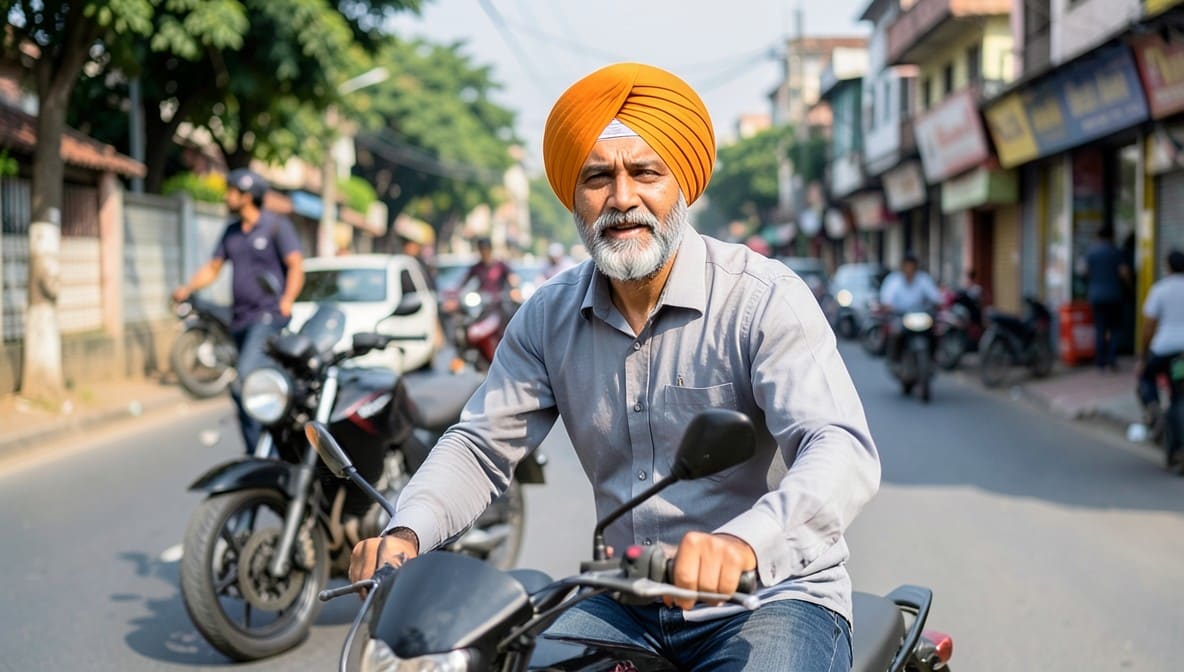
Article 14 & Reasonable Classification | Turban Exemption for Sikhs Under Section 129 MV Act Upheld as Non-Arbitrary : Bombay HC Nagpur Bench

Bombay High Court Nagpur Bench ruled that the exemption for Sikh riders from the mandatory helmet requirement under Section 129 of the Motor Vehicles Act constitutes a valid reasonable classification under Article 14, rejecting the challenge of arbitrariness. The judgment reinforces that religious accommodations in legislation do not inherently violate equality if they serve a legitimate public interest and are proportionate.

Section 6 POCSO Act | Anticipatory Bail Granted Where Victim’s Minority Unproven and Consensual Relationship Alleged: Bombay HC Aurangabad
Case Law Analysis
|Bombay High Court

Section 6 POCSO Act | Anticipatory Bail Granted Where Victim’s Minority Unproven and Consensual Relationship Alleged: Bombay HC Aurangabad

Bombay High Court Aurangabad grants anticipatory bail in a POCSO case, ruling that the prosecution failed to establish the victim’s minority through investigation, while the FIR suggested a consensual relationship. The court emphasized that liberty must be protected where allegations lack evidentiary support on critical elements like age.

Order 41 Rule 5 CPC | Stay of Money Decree Execution Without Deposit Permissible in Benami Property Disputes : Bombay HC Aurangabad
Case Law Analysis
|Bombay High Court

Order 41 Rule 5 CPC | Stay of Money Decree Execution Without Deposit Permissible in Benami Property Disputes : Bombay HC Aurangabad

Bombay High Court Aurangabad Bench allows stay of auction proceedings for a money decree without requiring deposit of decretal amount, where the property is alleged to be benami. The ruling emphasizes that courts must examine pleadings and burden of proof in benami transactions before attaching assets, offering relief to defendants in property disputes.

Maharashtra Private Schools Rules, 1981 | Termination Invalid Without Procedural Compliance Under Rule 14: Bombay HC
Case Law Analysis
|Bombay High Court

Maharashtra Private Schools Rules, 1981 | Termination Invalid Without Procedural Compliance Under Rule 14: Bombay HC

The Bombay High Court has ruled that terminating an untrained teacher under the Maharashtra Private Schools Rules, 1981 without following mandatory procedural safeguards under Rule 14 renders the order void. This reinforces that administrative convenience cannot override statutory due process for school employees, setting a binding precedent for all grant-in-aid institutions in Maharashtra.

PIL in Service Matters Barred | Bombay HC Rejects Recovery of Inadvertent Payments to Class-III/IV Employees Under Rafiq Masih Doctrine
Case Law Analysis
|Bombay High Court

PIL in Service Matters Barred | Bombay HC Rejects Recovery of Inadvertent Payments to Class-III/IV Employees Under Rafiq Masih Doctrine

Bombay High Court dismisses a PIL seeking recovery of excess payments made to retired Class-III/IV employees, reinforcing the Supreme Court's Rafiq Masih judgment that bars recovery from low-income employees for employer errors. The ruling underscores the limited scope of PILs in service matters and protects vulnerable employees from financial hardship due to administrative mistakes.

Article 300A & Section 43(c) Maharashtra Tenancy Act | Landowners Must Exhaust State Representation Before Challenging Proprietary Rights in Court : Bombay HC
Case Law Analysis
|Bombay High Court

Article 300A & Section 43(c) Maharashtra Tenancy Act | Landowners Must Exhaust State Representation Before Challenging Proprietary Rights in Court : Bombay HC

The Bombay High Court has ruled that landlords asserting proprietary rights under Article 300A must first submit a formal representation to the State under Section 43(c) of the Maharashtra Tenancy Act before seeking judicial intervention. This establishes a mandatory administrative gateway, preventing direct writ petitions and reinforcing procedural due process in land disputes involving tenancy restrictions.

Motor Accident Compensation | Medical Board Certificate Must Prevail Over Private Doctor’s Assessment: Bombay HC
Case Law Analysis
|Bombay High Court

Motor Accident Compensation | Medical Board Certificate Must Prevail Over Private Doctor’s Assessment: Bombay HC

Bombay High Court rules that functional disability in motor accident claims must align with the medical board’s certificate, not private assessments. The judgment reinforces that tribunals must accept board-certified disability percentages as conclusive evidence unless proven fraudulent, impacting compensation calculations for claimants.

Bail in Cyber Fraud | Deposit of Illicit Proceeds and Monthly Police Reporting Mandated Under BNSS & IT Act : Bombay HC
Case Law Analysis
|Bombay High Court

Bail in Cyber Fraud | Deposit of Illicit Proceeds and Monthly Police Reporting Mandated Under BNSS & IT Act : Bombay HC

The Bombay High Court granted bail to an accused in a ₹1.95 crore digital gold fraud, conditioning release on depositing ₹13 lakh of alleged proceeds and mandatory monthly police reporting. This sets a precedent for financial accountability measures in cyber fraud bail orders, reinforcing that even non-violent digital crimes may require active restitution and surveillance as bail conditions under the new BNSS framework.

Hostile Discrimination in Pension Schemes | Bombay HC Invalidates Arbitrary Denial of Pension-Cum-Gratuity Benefits to Retired Teachers
Case Law Analysis
|Bombay High Court

Hostile Discrimination in Pension Schemes | Bombay HC Invalidates Arbitrary Denial of Pension-Cum-Gratuity Benefits to Retired Teachers

Bombay High Court rules that denying pension benefits to retired teachers on financial grounds, while granting them to similarly situated employees, constitutes hostile discrimination. The judgment mandates equal treatment under the Pension-Cum-Gratuity Scheme, reinforcing that administrative convenience cannot override constitutional equality.

Section 528 BNSS | Reconciliation Between Parties Justifies Quashing of FIR Under Compounding Principles: Bombay HC
Case Law Analysis
|Bombay High Court

Section 528 BNSS | Reconciliation Between Parties Justifies Quashing of FIR Under Compounding Principles: Bombay HC

Bombay High Court quashes FIR under Sections 324 and 506 IPC after sisters reconcile, holding that compounding of offences under Section 528 BNSS applies even post-investigation. The ruling reinforces that criminal proceedings can be terminated where parties settle disputes amicably, aligning with Supreme Court precedents on victim autonomy in non-heinous offences.

Scholarship Eligibility for Distance Education | Diploma in 2D Animation Covered Under Maharashtra SC/ST Resolutions : Bombay HC
Case Law Analysis
|Bombay High Court

Scholarship Eligibility for Distance Education | Diploma in 2D Animation Covered Under Maharashtra SC/ST Resolutions : Bombay HC

The Bombay High Court has ruled that students enrolled in one-year Diploma in 2D Animation courses through Yashwantrao Chavan Maharashtra Open University are entitled to state scholarships under existing SC/ST welfare resolutions, affirming that distance education does not disqualify beneficiaries. This sets a critical precedent for vocational and creative arts students in open learning systems seeking equitable access to government aid.

Section 14 SARFAESI Act | Police Duty to Enforce Possession Orders Non-Discretionary: Bombay HC Mandates FIR for Trespass Post Possession Notice
|Bombay High Court

Section 14 SARFAESI Act | Police Duty to Enforce Possession Orders Non-Discretionary: Bombay HC Mandates FIR for Trespass Post Possession Notice

Bombay High Court rules that police must act immediately on secured creditors' possession orders under SARFAESI Act, directing FIR registration for trespass and setting a strict compliance timeline. The judgment reinforces that police assistance is a statutory obligation, not a discretionary power, ensuring swift enforcement of secured assets.