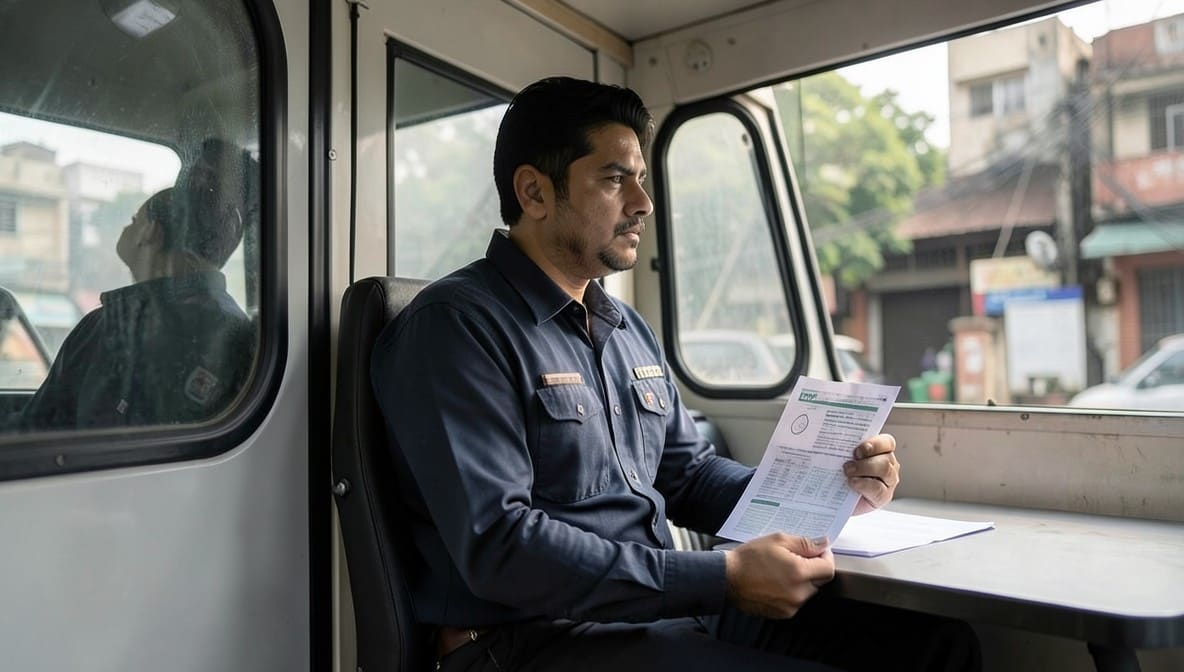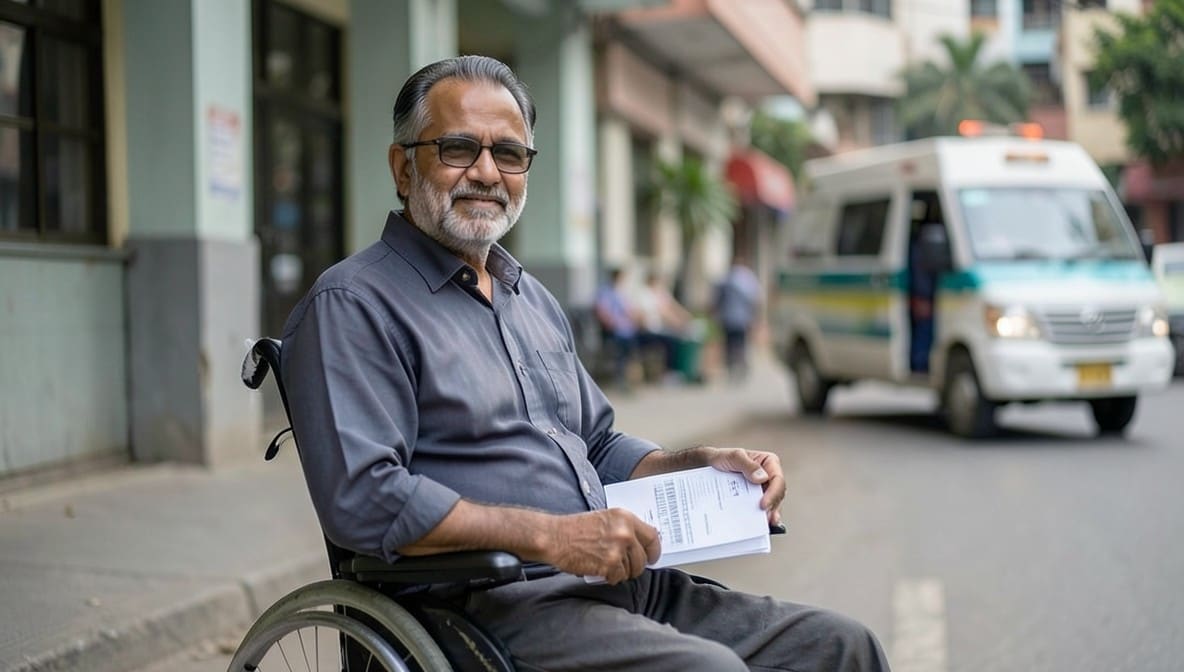
The Bombay High Court has reworked compensation in a motor accident case, emphasizing that functional disability must be determined based on the medical board's certificate rather than a private doctor's assessment. The Court enhanced the compensation by considering 100% disability, aligning with the claimant's inability to perform his job as a mechanic post-accident, and applied the principles laid down in National Insurance Company vs. Pranay Sethi & Ors.
Background & Facts
The Dispute
The appellant, Sudhir Shantaram Shinde, filed this appeal seeking enhancement of compensation awarded by the Motor Accident Claims Tribunal (MACT) for injuries sustained in a road accident on 25 December 2005. The Tribunal had awarded compensation based on a 45% disability certificate issued by a private doctor, despite a medical board certificate from J.J. Hospital certifying 90% permanent disability. The appellant, who was working as a mechanic, was terminated from his job due to his inability to perform his duties post-accident.
Key Facts
- The accident occurred on 25 December 2005
- The appellant was employed as a mechanic and suffered severe leg injuries
- A private doctor certified 55% permanent disability, while the medical board certified 90% disability
- The Tribunal considered only 45% disability for compensation calculation
- The appellant was terminated from his job due to his inability to work as a mechanic
- The appellant sought enhancement of compensation, including attendant charges and loss of amenities
Procedural History
- 22 February 2010: MACT passed the impugned judgment awarding compensation based on 45% disability
- 27 June 2011: Appeal admitted by the Bombay High Court (First Appeal No. 2153 of 2011)
- 30 June 2026: Bombay High Court delivered the present judgment, reworking compensation as per Pranay Sethi
Relief Sought
The appellant sought:
- Enhancement of compensation based on 100% functional disability
- Rs. 50,000 towards attendant charges (enhanced from Rs. 30,000 awarded by the Tribunal)
- Rs. 10,000 towards loss of amenities
- Recalculation of compensation as per the Pranay Sethi judgment
The Legal Issue
The primary legal question was whether the Tribunal erred in disregarding the medical board's disability certificate and instead relying on a private doctor's assessment, and whether the compensation should be reworked to reflect the claimant's functional disability in light of the Supreme Court's decision in National Insurance Company vs. Pranay Sethi & Ors.
Arguments Presented
For the Appellant
- The Tribunal erred in considering only 45% disability instead of the 90% certified by the medical board
- The medical board's certificate should be accepted as evidence without requiring the board's members to testify, as per Bajaj Allianz General Insurance Company Private Limited vs. Union of India & Ors.
- The appellant's termination from employment demonstrated his inability to perform his job, justifying 100% functional disability
- The attendant charges awarded (Rs. 30,000) were inadequate given the appellant's two-year incapacitation
For the Respondent
- The medical board's certificate should not be considered as none of its members were examined in court
- The Tribunal correctly relied on the private doctor's certificate, which was more reliable
- The appellant failed to provide evidence for actual attendant charges, justifying the lower award
The Court's Analysis
The Court observed that the Tribunal's decision predated the Supreme Court's judgment in National Insurance Company vs. Pranay Sethi & Ors., necessitating a reworking of compensation. The Court relied on the Supreme Court's decision in Bajaj Allianz General Insurance Company Private Limited vs. Union of India & Ors., which held that a disability certificate issued by a medical board or authorized body can be admitted as evidence without requiring the board's members to testify, unless there is reason to suspect the document.
"The consequence is that the MACT would ascertain that permanent disability certificate issued by the District Medical Board or Body authorized by it is in accordance with the Gazette Notification alone. Once the certificate is issued in this manner, the same can be marked for purposes of being taken into consideration as evidence without the necessity of summoning the concerned witness to give formal proof of the documents unless there is some reason for suspicion on the document."
Applying this principle, the Court rejected the respondent's argument that the medical board's certificate should be ignored due to the absence of testimony. The Court further noted that the appellant's termination from employment due to his inability to work as a mechanic justified considering 100% functional disability, rather than the 45% assessed by the Tribunal.
The Court also enhanced the attendant charges from Rs. 30,000 to Rs. 50,000, acknowledging the appellant's two-year incapacitation, though it noted the lack of evidence for actual expenses. The loss of amenities was estimated at Rs. 10,000.
The Verdict
The Bombay High Court allowed the appeal in part, enhancing the compensation as follows:
- Total compensation recalculated: Rs. 21,11,122 (up from Rs. 7,72,000 awarded by the Tribunal)
- Enhanced amount: Rs. 13,39,122
- Breakdown of revised compensation:
- Loss of income: Rs. 16,67,736 (based on 100% disability, multiplier 14, and future prospects)
- Medical expenses: Rs. 2,68,790
- Pain and suffering: Rs. 50,000
- Loss of amenities: Rs. 10,000
- Attendant charges: Rs. 50,000 (enhanced from Rs. 30,000)
- Interest: The enhanced compensation and the original award amount are to be deposited within twelve weeks from the date of the judgment (30 June 2026), failing which the appellant is entitled to withdraw the amount with interest.
- Direction: Records and proceedings to be transferred back to the concerned Tribunal for compliance.
What This Means For Similar Cases
Medical Board Certificates Hold Evidentiary Value
- Practitioners should argue that disability certificates issued by medical boards or authorized bodies are admissible as evidence without requiring testimony from the board's members, as per Bajaj Allianz General Insurance Company Private Limited vs. Union of India & Ors.
- Courts are likely to give greater weight to medical board certificates over private doctors' assessments, especially when the claimant's functional disability aligns with the board's findings.
Functional Disability Must Reflect Job Inability
- Compensation claims should emphasize the claimant's inability to perform their specific job functions post-accident. Mere percentage disability may not suffice; the functional impact on employment must be demonstrated.
- In this case, the appellant's termination from his job as a mechanic was a critical factor in justifying 100% functional disability, even though the medical board certified 90% disability.
Reworking Compensation Under Pranay Sethi
- Where the Tribunal's award predates the Pranay Sethi judgment, practitioners can seek reworking of compensation to include:
- Future prospects (30% addition to income for claimants under 40 years of age)
- Attendant charges (enhanced where evidence of prolonged incapacitation exists)
- Loss of amenities (nominal amounts may be awarded even without specific evidence)
- The Court's approach in this case demonstrates a willingness to enhance compensation components like attendant charges and loss of amenities based on equitable considerations, even in the absence of strict evidence.