The Bombay High Court has underscored the principle that a party should not suffer due to the mistake of their advocate, particularly when legal representation is withdrawn without notice. In a land acquisition dispute spanning over two decades, the Court set aside a lower court's dismissal of a reference application and remanded the matter for fresh adjudication, while denying interest for the prolonged delay period.
Background & Facts
The Dispute
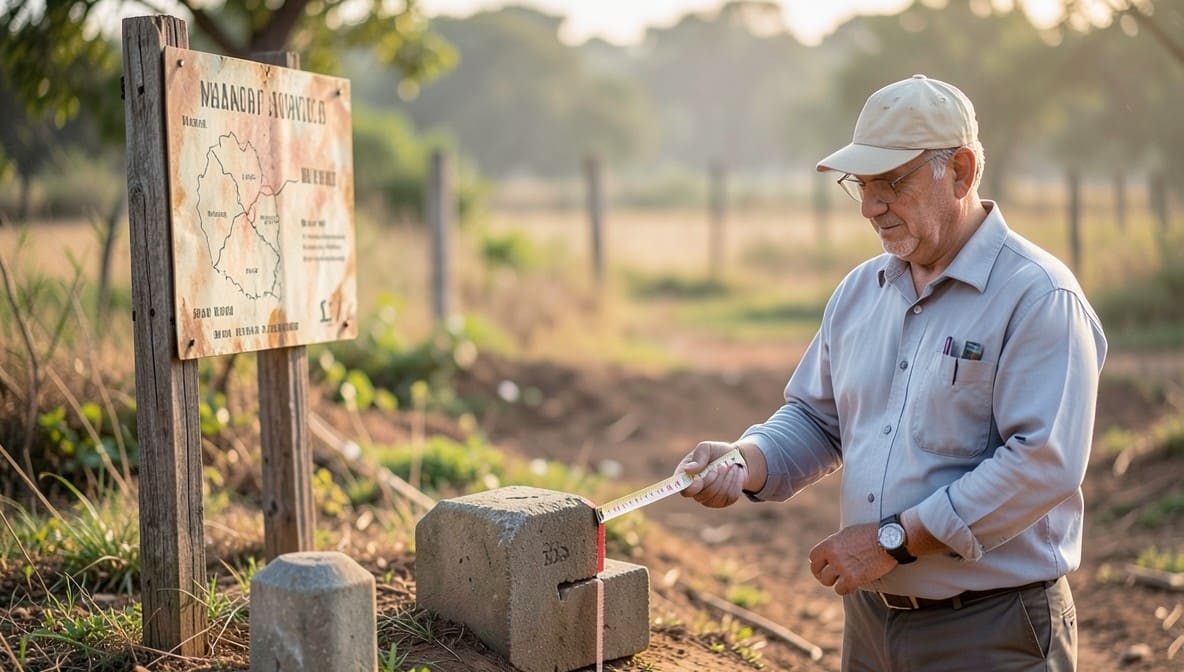
The appellants, Gabbusing Shama Pawar and another, owned land admeasuring 2 hectares 39 Ares in Gut No. 255, village Satara Tanda, Aurangabad. The land was acquired by the State of Maharashtra for constructing a percolation tank under a Section 4 notification dated 01.03.1988, with the final award passed on 13.03.1992. Dissatisfied with the compensation, the appellants filed Reference Application No. 345 of 1997 before the 6th Joint Civil Judge, Senior Division, Aurangabad, seeking enhanced compensation.
Key Facts
- Land acquisition: Notification under Section 4 of the Land Acquisition Act issued on 01.03.1988; final award passed on 13.03.1992
- Reference application: Filed in 1997 seeking enhanced compensation
- Connected references: The same Reference Court had decided Reference Applications No. 341 of 1997 (on 30.12.2015) and 344 of 1997 (on 11.09.2014), which arose from the same acquisition proceedings
- Advocate's withdrawal: The appellants' advocate filed a Purshis below Exhibit-39 withdrawing his Vakalatnama on the ground of "no instructions," without informing the appellants
Procedural History
- 13.03.1992: Final award passed by the Special Land Acquisition Officer
- 1997: Appellants filed Reference Application No. 345 of 1997 seeking enhanced compensation
- 26.10.2017: Reference Court dismissed the application due to lack of evidence
- 2018: Appellants filed First Appeal No. 1106 of 2018 before the Bombay High Court
- 29.06.2026: High Court passed the present order
Relief Sought
The appellants sought:
- Quashing of the impugned Judgment and Award dated 26.10.2017
- Remand of the matter to the Reference Court for fresh adjudication
- Opportunity to lead evidence in support of their claim for enhanced compensation
The Legal Issue
The central question was whether a party can be denied relief due to the negligence or unilateral withdrawal of their advocate, particularly when the party was unaware of such withdrawal and thus unable to present evidence.
Arguments Presented
For the Appellants
- The appellants' advocate withdrew his Vakalatnama without informing them, depriving them of an opportunity to lead evidence
- The Reference Court had already decided connected references arising from the same acquisition proceedings, which relied on similar sale instances
- The appellants were not dilatory; the delay was attributable to the advocate's conduct
- The principle of natural justice required remand to afford them a fair hearing
For the Respondent (State)
- The appellants failed to adduce evidence despite sufficient opportunities
- They did not bring the connected references to the notice of the Reference Court
- The appellants were not diligent in pursuing their claim for 23 years
- No interference was warranted in the impugned order
The Court's Analysis
The Court observed that the appellants had no knowledge of their advocate's withdrawal, which resulted in their inability to lead evidence. Relying on the settled principle that "a party should not suffer for the mistake of his/her Advocate," the Court held that the appellants were entitled to a fresh opportunity to present their case.
"It is a settled position of law that, a party should not suffer for the mistake of his/her Advocate. One of the grounds raised in the appeal memo is that, due to communication gap, the Appellants could not lead oral evidence before the learned Reference Court. Considering the facts and circumstances of the case, the appropriate course would be to remand the matter to the learned Reference Court for fresh decision after affording an opportunity to both sides in accordance with law."
The Court further noted that the appellants had relied on the same sale instances as those in the connected references, which the Reference Court had already adjudicated. However, the prolonged delay of 23 years weighed against granting interest for the entire period.
The Verdict
The Court partly allowed the appeal and passed the following directions:
- The impugned Judgment and Award dated 26.10.2017 was quashed and set aside
- The matter was remanded to the Reference Court for fresh adjudication
- The appellants were not entitled to interest for the period up to 26.10.2017
- The parties were directed to cooperate with the Reference Court
- The Reference Court was directed to decide the matter within six months from the date of the parties' first appearance
- The parties were to appear before the Reference Court on 13.07.2026
- Civil Application No. 9438 of 2024 was disposed of
- The question of court fees was left to be dealt with in accordance with law
What This Means For Similar Cases
Advocate's Conduct Cannot Prejudice the Client
- Courts will not penalize parties for the unilateral actions of their advocates, particularly when the party is unaware of such actions
- Practitioners must ensure clear communication with clients before withdrawing representation to avoid such situations
- Natural justice demands that parties be afforded a fair opportunity to present their case, even if procedural lapses occur due to counsel's conduct
Remand Is Not Automatic for Delay
- While the Court remanded the matter, it denied interest for the delay period, recognizing the 23-year pendency as a mitigating factor
- Parties must demonstrate due diligence in pursuing their claims; prolonged delays may result in denial of ancillary reliefs like interest
- The Court balanced fairness to the party with judicial efficiency, ensuring that remand did not unduly prolong the litigation