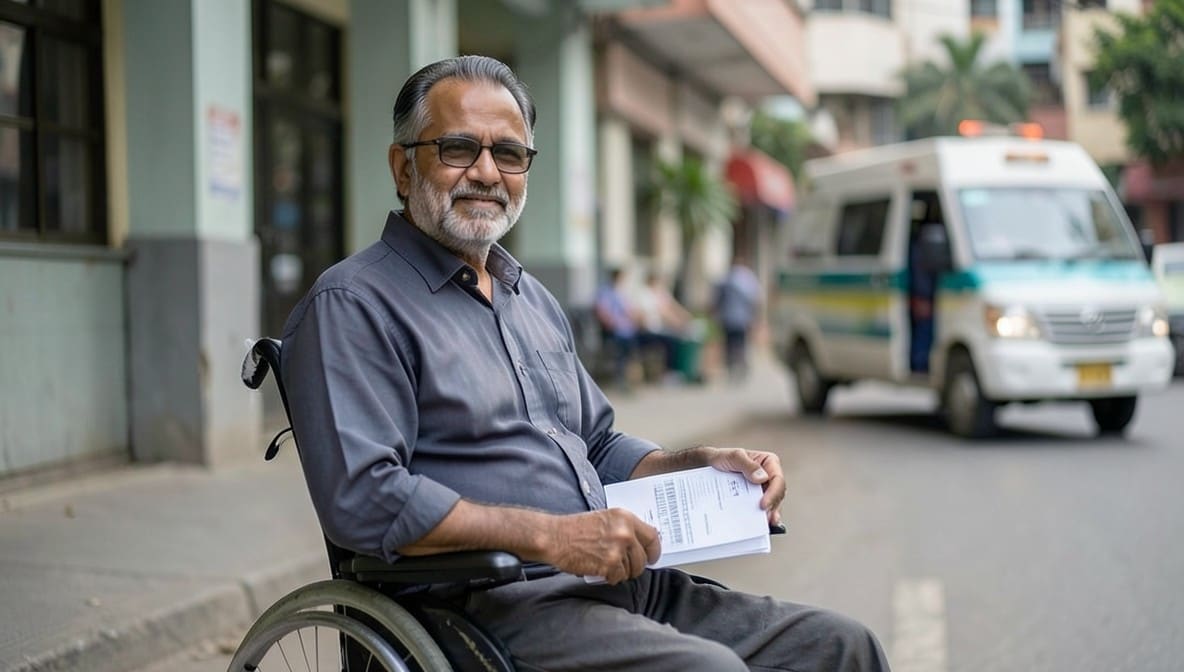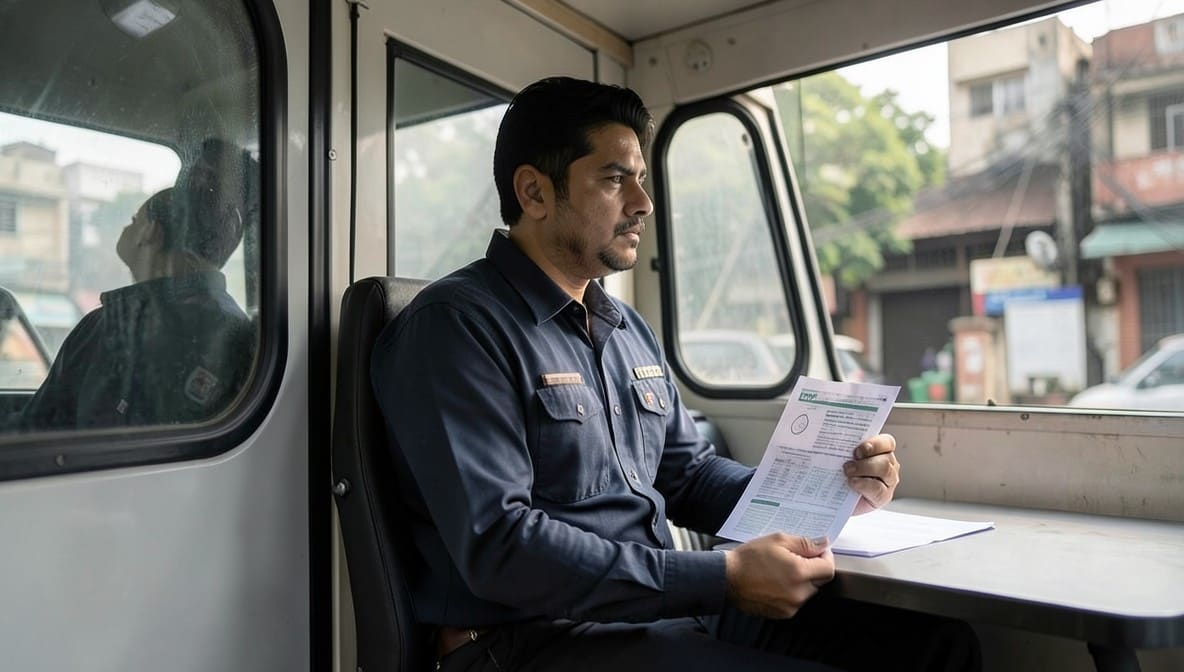
The Bombay High Court has significantly enhanced compensation in two motor accident claims by redefining how functional disability is assessed, particularly when the victim’s occupation demands specific physical capabilities. In both cases, the Court applied the Supreme Court’s ruling in National Insurance Company v. Pranay Sethi retroactively, rejecting mechanical application of medical disability percentages and mandating an occupation-centric approach to determine loss of earning capacity.
Background & Facts
The Dispute
These two appeals arise from orders passed by the Motor Accident Claims Tribunal, Mangaon, District Raigad, dated 26 August 2009. Both appellants were drivers who sustained injuries in accidents involving vehicles insured by Respondent No. 1, M/s. Excel Industries Limited, and Respondent No. 2, the owner of the offending vehicle. The Tribunal awarded compensation based on fixed percentages of medical disability without adequately considering the impact of the injuries on the claimants’ ability to continue their profession as drivers.
Key Facts
- First Appeal (No. 222 of 2014): The claimant, Rajendra Balkrishna Deshmukh, was a driver employed with Vinod Construction. He suffered a 22% permanent disability due to injuries sustained in an accident on 15 June 2007. He was out of work for six months.
- Second Appeal (No. 231 of 2014): The claimant, Arun Keshav Shirke, was also a driver. He sustained severe eye injury in an accident on 29 August 2003, resulting in loss of vision that rendered him legally unfit to drive.
- Both claimants testified that they earned Rs. 3,500 per month as drivers.
- Medical reports confirmed the injuries: 22% disability in the first case; in the second case, ophthalmologists certified that the claimant’s vision loss made it legally impossible to drive.
- The Tribunal awarded Rs. 52,900 in the first case and Rs. 67,500 in the second, using a 22% and 45% disability multiplier respectively, without accounting for the occupational impact.
- The Tribunal did not consider future prospects or adequately quantify non-monetary losses.
Procedural History
- 15 June 2007: Accident involving claimant in First Appeal
- 29 August 2003: Accident involving claimant in Second Appeal
- 26 August 2009: Tribunal delivered identical orders in both cases
- 21 March 2014: Both appeals admitted by the Bombay High Court
- 29 June 2026: Judgment delivered by Justice Jitendra Jain
The Parties' Positions
For the Appellants:
- Argued that the Tribunal erred in applying fixed medical disability percentages without considering the functional impact on their profession as drivers.
- Relied on National Insurance Company v. Pranay Sethi (2017) 16 SCC 680, which mandates that disability must be assessed in context of occupation.
- Contended that loss of eyesight for a driver equates to 100% functional disability.
- Requested enhancement of compensation under all heads: loss of income, pain and suffering, conveyance, special diet, and loss of amenity.
For the Respondents:
- Did not contest the medical facts but argued that the Tribunal’s award was within permissible limits.
- Submitted that the claimants had not proven loss of future earning capacity beyond the medical disability percentage.
- Opposed enhancement of non-economic heads, claiming they were arbitrary.
Relief Sought
The appellants sought:
- Enhancement of compensation to reflect true loss of earning capacity
- Recognition of 100% functional disability in the second case due to occupational impact
- Enhanced awards for pain and suffering, conveyance, special diet, and loss of amenity
- Interest on the enhanced amount
The Legal Issue
The central question was whether the Motor Accident Claims Tribunal erred in determining compensation based solely on medical disability percentages, without considering the functional impact of the injury on the claimant’s occupation, particularly when the injury directly impairs the ability to perform the essential duties of a driver.
Arguments Presented
For the Appellant
The appellants relied on National Insurance Company v. Pranay Sethi to argue that disability must be assessed functionally, not just medically. They contended that for a professional driver, loss of vision to the extent of legal unfitness constitutes total functional incapacity, warranting a 100% multiplier. They further argued that the Tribunal’s awards for pain and suffering, conveyance, and special diet were disproportionately low given the six-month incapacitation and permanent impairment. The Court was urged to apply the principles of Pranay Sethi even though the Tribunal’s order predated the judgment, as it clarified the correct legal standard.
For the Respondent
The respondents argued that the Tribunal had correctly applied the then-prevailing norms and that the medical disability percentages were the only objective basis for calculation. They maintained that enhancement of non-economic heads would be speculative and that the claimants had not produced sufficient evidence to justify higher awards. They also contended that Pranay Sethi should not be applied retrospectively.
The Court's Analysis
Justice Jitendra Jain held that the Tribunal’s approach was legally flawed. The Court emphasized that Pranay Sethi did not introduce a new principle but clarified the existing legal standard under the Motor Vehicles Act, 1988, which requires compensation to reflect actual loss of earning capacity. The Court observed:
"The Tribunal’s mechanical application of medical disability percentages without regard to the claimant’s occupation is contrary to the settled principle that compensation must be commensurate with the real impact of the injury on the claimant’s livelihood."
In the first appeal, the Court found no justification for accepting Rs. 3,000 as monthly income when the claimant’s own testimony and cross-examination established Rs. 3,500. The Court accepted Rs. 3,500 as the correct income and added 50% for future prospects, as mandated by Pranay Sethi. The 22% disability was retained, but the Tribunal’s awards for pain and suffering, conveyance, and special diet were found to be inadequate. The Court enhanced these to Rs. 25,000, Rs. 10,000, and Rs. 10,000 respectively, and added Rs. 10,000 for loss of amenity.
In the second appeal, the Court held that the claimant’s 100% functional disability was evident. The medical evidence established that he could no longer legally drive. The Court rejected the Tribunal’s 45% disability assessment as arbitrary and stated:
"For a professional driver, the loss of vision rendering him unfit to drive is not merely a medical statistic - it is the complete destruction of his livelihood. The functional disability must be assessed as 100%."
The Court applied a multiplier of 16 to the annual income of Rs. 5,250 (Rs. 3,500 + 50% future prospects), resulting in Rs. 6,72,000 for loss of future earnings. Additional heads were enhanced similarly to the first case, with medical expenses adjusted to Rs. 40,000 based on documentary evidence.
The Verdict
The appellants succeeded in both appeals. The Court enhanced compensation in First Appeal No. 222 of 2014 to Rs. 2,98,571, entitling the claimant to an additional Rs. 2,45,671. In First Appeal No. 231 of 2014, compensation was enhanced to Rs. 7,88,000, entitling the claimant to an additional Rs. 7,20,500. The insurance company was directed to deposit the enhanced amounts within twelve weeks from the date of judgment. The claimants are entitled to interest on the enhanced amounts from the date of filing the claims until payment. Any amounts already withdrawn shall be adjusted against the final award.
What This Means For Similar Cases
Functional Disability Must Reflect Occupational Reality
- Practitioners must now argue disability not by medical certificate alone, but by demonstrating how the injury impairs the claimant’s ability to perform their specific job
- For drivers, pilots, electricians, or surgeons, loss of vision, hearing, or limb function must be assessed as total functional disability if it renders the profession impossible
- Medical reports must be contextualized with job descriptions and expert testimony on occupational requirements
Pranay Sethi Applies Retroactively to Pending Cases
- The Pranay Sethi principles are not new law but a clarification of existing statutory obligations under the Motor Vehicles Act
- Tribunals and courts must apply these principles even to cases decided before 2017, provided the appeal is pending
- Failure to apply Pranay Sethi in pending cases constitutes a legal error warranting appellate intervention
Non-Economic Heads Require Justified Enhancement
-
Awards for pain and suffering, conveyance, and special diet must be calibrated to the severity and duration of injury
-
Six months of incapacitation and permanent disability justify substantial enhancement beyond token amounts
-
Loss of amenity is a distinct head and must be awarded separately, not subsumed under pain and suffering
-
Always submit employment records, wage slips, and employer affidavits to substantiate income
-
Obtain occupational expert opinions to link medical disability to functional incapacity
-
Demand specific enhancement of non-economic heads with reference to comparable judgments