Topic

Public Interest

Public interest in Indian law refers to legal actions or judicial decisions that prioritize societal welfare over individual interests, especially in cases involving public officials, statutory compliance, or crimes affecting community safety.

21 articlesLatest July 2026
Public Contract Payments | Undisputed Running Bills Must Be Paid Within Two Weeks Under Writ Jurisdiction: Bombay HC
Case Law Analysis
|Bombay High Court

Public Contract Payments | Undisputed Running Bills Must Be Paid Within Two Weeks Under Writ Jurisdiction: Bombay HC

The Bombay High Court has mandated that state departments must release undisputed running bills to contractors within two weeks, or face judicial consequences. This ruling reinforces contractual fairness in public infrastructure projects and protects contractors from financial collapse due to administrative delay, directly safeguarding public interest and project continuity.

FR 56(j) | Premature Retirement Permissible If Based on Entire Service Record, Even With Uncommunicated Adverse Entries, Absent Mala Fides or Non-Application of Mind : Delhi HC
Case Law Analysis
|Delhi High Court

FR 56(j) | Premature Retirement Permissible If Based on Entire Service Record, Even With Uncommunicated Adverse Entries, Absent Mala Fides or Non-Application of Mind : Delhi HC

The Delhi High Court has affirmed that compulsory retirement under FR 56(j) is lawful when grounded in a holistic assessment of an officer’s entire service record, including uncommunicated adverse entries, as long as the decision reflects reasoned application of mind and lacks mala fides. This reinforces that procedural fairness in service law does not require prior disclosure of every adverse remark, but demands substantive justification and absence of arbitrariness-critical for public sector employees facing administrative review.

MRTU & PULP Act | Promotion Before Compulsory Retirement Defeats Inefficiency Claim Without Fresh Evidence: Bombay HC
Case Law Analysis
|Bombay High Court

MRTU & PULP Act | Promotion Before Compulsory Retirement Defeats Inefficiency Claim Without Fresh Evidence: Bombay HC

Bombay High Court quashed the compulsory retirement of a municipal employee, ruling that her recent promotion undermined allegations of inefficiency unless supported by new, substantive evidence. The judgment reinforces that compulsory retirement under the MRTU & PULP Act cannot be arbitrary and must align with principles of natural justice and public interest.

Compulsory Retirement Must Follow Service Regulations & Avoid Stigmatic Language | Bombay HC Quashes Order for Violating Natural Justice
Case Law Analysis
|Bombay High Court

Compulsory Retirement Must Follow Service Regulations & Avoid Stigmatic Language | Bombay HC Quashes Order for Violating Natural Justice

The Bombay High Court has ruled that compulsory retirement of a public employee cannot be used as a disguised disciplinary measure and must strictly adhere to statutory service regulations. The use of stigmatic language in the retirement order vitiates the process, violating natural justice and entitling the employee to reinstatement with full benefits until superannuation.

Promissory Estoppel Yields to Public Interest | Calcutta HC Upholds Fly Ash Auction Revenue Over Contractual Discount Obligations : Calcutta HC
Case Law Analysis
|Calcutta High Court

Promissory Estoppel Yields to Public Interest | Calcutta HC Upholds Fly Ash Auction Revenue Over Contractual Discount Obligations : Calcutta HC

Calcutta High Court rules that promissory estoppel cannot bind the state when public interest-such as maximizing revenue from fly ash auctions-demands otherwise. The judgment clarifies that contractual obligations to supply fly ash at discounted rates must yield to broader fiscal and environmental equity considerations, setting a precedent for state contracts involving hazardous by-products.

FR 56(j) Premature Retirement | Later Outstanding APARs Override Earlier Adverse Entries : CAT Quashes Compulsory Retirement
Case Law Analysis
|Central Administrative Tribunal

FR 56(j) Premature Retirement | Later Outstanding APARs Override Earlier Adverse Entries : CAT Quashes Compulsory Retirement

The Central Administrative Tribunal ruled that outstanding Annual Performance Appraisal Reports (APARs) and subsequent promotions negate earlier adverse entries, invalidating premature retirement under FR 56(j). The officer must be reinstated with full back wages and benefits, setting a precedent for fair assessment of service records in compulsory retirement cases.

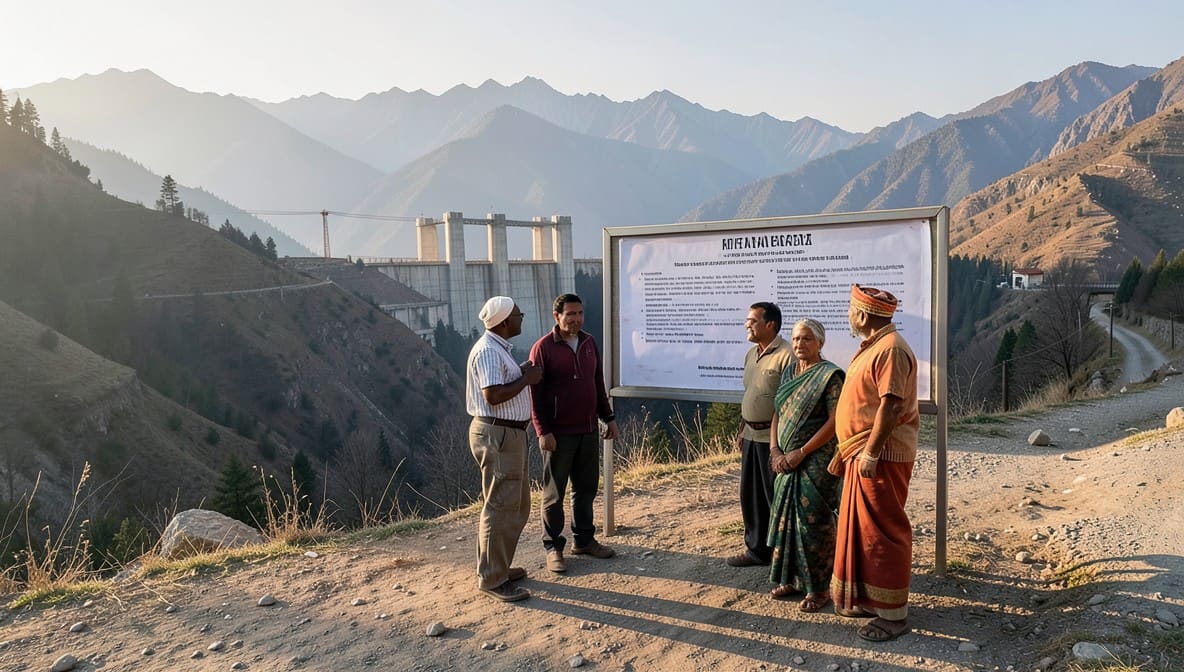
Resettlement MoUs Create Enforceable Employment Rights for Displaced Families, Including Non-Landowners : HP HC
Case Law Analysis
|Himachal Pradesh High Court

Resettlement MoUs Create Enforceable Employment Rights for Displaced Families, Including Non-Landowners : HP HC

Himachal Pradesh High Court rules that Memorandums of Understanding (MoUs) under resettlement schemes confer legally binding employment rights on displaced families, extending protections to non-landowners. The court directs the Deputy Commissioner to adjudicate claims within 12 weeks, reinforcing state accountability in rehabilitation policies.

Section 499 IPC | Truth & Public Interest as Absolute Defences in Defamation: Himachal Pradesh HC Upholds Journalist’s Right to Publish on Public Servant’s Financial Dealings
Case Law Analysis
|Himachal Pradesh High Court

Section 499 IPC | Truth & Public Interest as Absolute Defences in Defamation: Himachal Pradesh HC Upholds Journalist’s Right to Publish on Public Servant’s Financial Dealings

The Himachal Pradesh High Court reaffirmed that truth and public good are absolute defences under Section 499 IPC, dismissing a criminal defamation complaint against a journalist. The court held that publishing truthful information about a public servant’s financial dealings, in good faith and for public interest, does not constitute defamation, especially when the official withheld requested details.

Registration of Births and Deaths Act | Conclusive Evidence of Death Suffices for Death Certificate Even Without Body Recovery: Gujarat HC
Case Law Analysis
|Gujarat High Court

Registration of Births and Deaths Act | Conclusive Evidence of Death Suffices for Death Certificate Even Without Body Recovery: Gujarat HC

Gujarat High Court rules that under the Registration of Births and Deaths Act, 1969, a death certificate can be issued based on police certification and family identification alone, even if the body is not recovered. The judgment clarifies that conclusive evidence of death overrides the requirement of physical body recovery, impacting families seeking legal recognition of death for inheritance, insurance, and administrative purposes.

Article 14 & Public Procurement | Lowest Bidder Mandatory Unless Public Interest Justifies Higher Bidder : Tripura HC Quashes Arbitrary Award, Imposes Costs & Blacklisting
Case Law Analysis
|Tripura High Court

Article 14 & Public Procurement | Lowest Bidder Mandatory Unless Public Interest Justifies Higher Bidder : Tripura HC Quashes Arbitrary Award, Imposes Costs & Blacklisting

Tripura High Court reinforces that rejecting the lowest bidder in government tenders without demonstrable public interest justification violates Article 14, constituting mala fide action. The court quashed the award to a higher bidder, imposed Rs. 50,000 costs, and mandated one-year blacklisting, rejecting fabricated national emergency claims and upholding dual state enlistment as valid if tender-permitted.

MP Service Rules | Temporary Extension Beyond Retirement Age Permissible for Public Prosecutors Pending Replacement : MP HC Jabalpur Upholds Public Interest
Case Law Analysis
|Madhya Pradesh High Court

MP Service Rules | Temporary Extension Beyond Retirement Age Permissible for Public Prosecutors Pending Replacement : MP HC Jabalpur Upholds Public Interest

The Madhya Pradesh High Court ruled that a retired Additional Public Prosecutor may continue in office temporarily until a replacement is appointed, prioritizing uninterrupted criminal prosecution over rigid retirement age rules. This decision underscores the court's balancing of service rules with public interest, setting a precedent for similar vacancies in critical legal roles.

Section 3B Chhattisgarh Electricity Duty Act | Exemption Cancellation Requires Explicit Statutory Notification : CGHC
Case Law Analysis
|Chhattisgarh High Court

Section 3B Chhattisgarh Electricity Duty Act | Exemption Cancellation Requires Explicit Statutory Notification : CGHC

Chhattisgarh High Court holds that electricity duty exemptions under Section 3B of the 1949 Act cannot be revoked through tariff schedules alone; a separate, express notification is mandatory. The ruling underscores strict statutory compliance over fiscal policy flexibility, impacting power producers and state energy departments.