The Madhya Pradesh High Court has granted a temporary injunction to preserve the integrity of land designated for the Navchandi Mela, holding that construction of shops between the boundary wall and public road poses a grave threat to public safety during large-scale religious assemblies. The judgment reaffirms that when public interest and safety are at stake, temporary relief must prevail over developmental claims lacking statutory or procedural justification.
Background & Facts
The Dispute
The petitioner, Smt. Meena Verma, filed a suit seeking a temporary injunction to restrain the Municipal Corporation, Khandwa, from constructing temporary shops on a 5.05-acre plot of land acquired for the Navchandi Mela. The land, located in Khandwa city, is used annually for a major religious fair attended by thousands of devotees. The Municipal Corporation, having acquired the land for public religious purposes, now proposes to construct semi-permanent shops made of tin and steel sheets along the periphery of the Mela ground, between the boundary wall and the public road.
Key Facts
- The land measuring 5.05 acres was acquired by the State Government for the public purpose of hosting the Navchandi Mela
- A General Body Meeting of the Municipal Corporation on 31.01.1996 had stipulated that the acquired land would not be used for any permanent construction
- The Land Acquisition Officer handed over the land to the Municipal Corporation via letter dated 08.02.2000, explicitly stating the acquisition was for "public purpose" - specifically the Navchandi Mela
- A boundary wall was constructed around the Mela land approximately 12 years ago, enclosing the core fairground
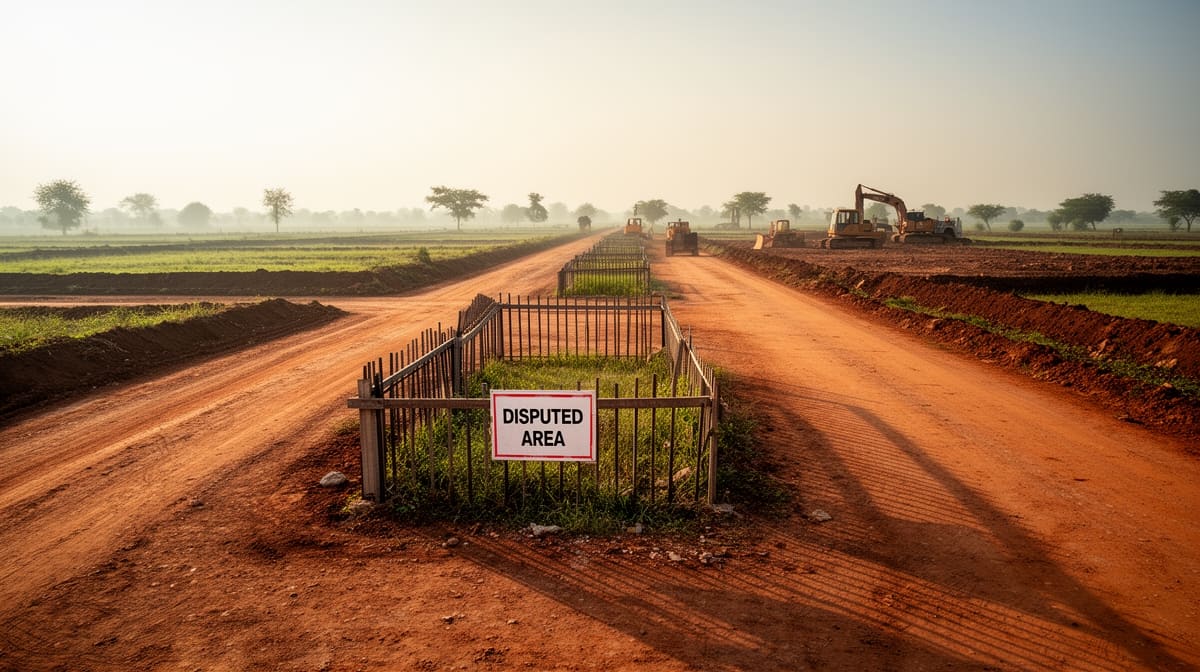
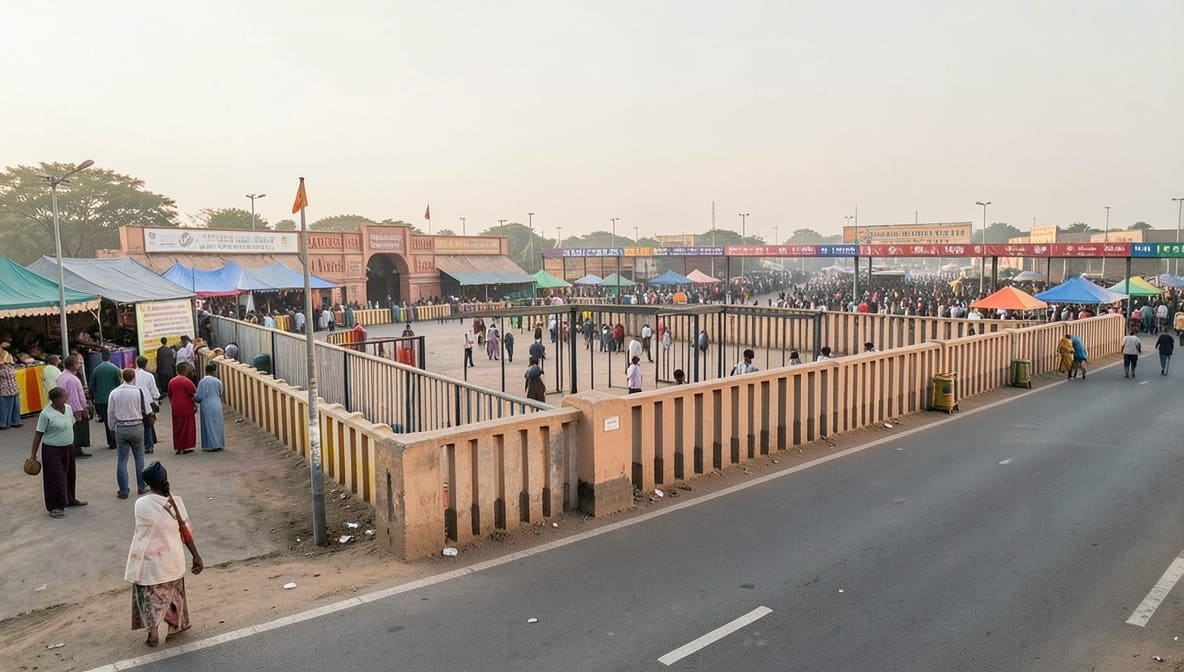
- The space between the boundary wall and the surrounding public road (approximately 20-30 feet wide) was intentionally left unconstructed to serve as a buffer zone for public parking, emergency vehicle access, and crowd management
- The Municipal Corporation now proposes to construct semi-permanent shops on this buffer zone, which falls within the 5.05-acre acquired land
- The petitioner, a regular attendee of the Mela, alleges that the construction will eliminate critical safety space and violate the original public purpose of the land
Procedural History
- 29.09.2025: Trial Court dismissed the petitioner’s application for temporary injunction under Order 39 Rules 1 and 2 CPC, holding that the project was a public one and no evidence showed it was contrary to public interest
- 08.11.2025: First Appellate Court confirmed the trial court’s order, upholding the dismissal of the injunction application
- 08.04.2026: Writ petition filed before the High Court of Madhya Pradesh at Jabalpur challenging the appellate order
- 26.03.2026: High Court directed the Commissioner of Municipal Corporation to file an affidavit regarding the use of the land
- 03.04.2026: Affidavit filed by the Commissioner admitting that the entire 5.05 acres, including the space between the boundary wall and the road, was earmarked for the Mela
Relief Sought
The petitioner sought an interim injunction restraining the Municipal Corporation from constructing any permanent, semi-permanent, or temporary shops on the strip of land between the Mela boundary wall and the public road, pending final disposal of the suit. She also sought preservation of the land for public safety purposes during the Mela.
The Legal Issue
The central question was whether a temporary injunction can be granted to restrain construction on land acquired for a public religious fair when such construction compromises public safety, emergency access, and the original public purpose of the land, despite the project being labeled as a "public initiative."
Arguments Presented
For the Petitioner
The petitioner’s counsel argued that the land was acquired exclusively for the Navchandi Mela, a public religious assembly attracting large crowds. The space between the boundary wall and the road was deliberately left vacant to serve as a safety buffer for crowd control, emergency vehicle access, and parking. Construction of shops on this strip would eliminate this buffer, creating a serious risk of stampedes, fire hazards, and obstruction of emergency services. The petitioner, as a devotee who regularly attends the Mela, suffers direct personal harm and injury to religious sentiment. The suit was maintainable under Order 1 Rule 8 CPC, as the petitioner sued on behalf of herself and others similarly situated.
For the Respondent/State
The respondents contended that the construction of semi-permanent shops was a public project funded by the Municipal Corporation to enhance public amenities and generate revenue. The shops were not within the enclosed Mela area but on the periphery, and therefore did not interfere with the fair. They argued that the suit was not maintainable under Section 91 CPC as it was filed by a single person, and that halting the project would cause undue delay to a public welfare initiative. They further claimed the shops were temporary and made of lightweight materials, posing no permanent threat.
The Court's Analysis
The Court first addressed the preliminary objection under Section 91 CPC, noting that the suit was not filed for public nuisance but as a representative suit under Order 1 Rule 8 CPC, where a single plaintiff may sue on behalf of others having the same interest. The plaint clearly stated that the petitioner herself would suffer injury and that religious sentiments of others were affected, satisfying the requirements of Order 1 Rule 8 CPC.
The Court then examined the nature of the land and the purpose of its acquisition. The Municipal Corporation’s own affidavit, filed in compliance with the Court’s order dated 26.03.2026, admitted that the entire 5.05 acres - including the area between the boundary wall and the public road - was earmarked for the Navchandi Mela. The boundary wall was constructed 12 years ago to secure the core fairground, and the space outside it was intentionally left open for ancillary public use.
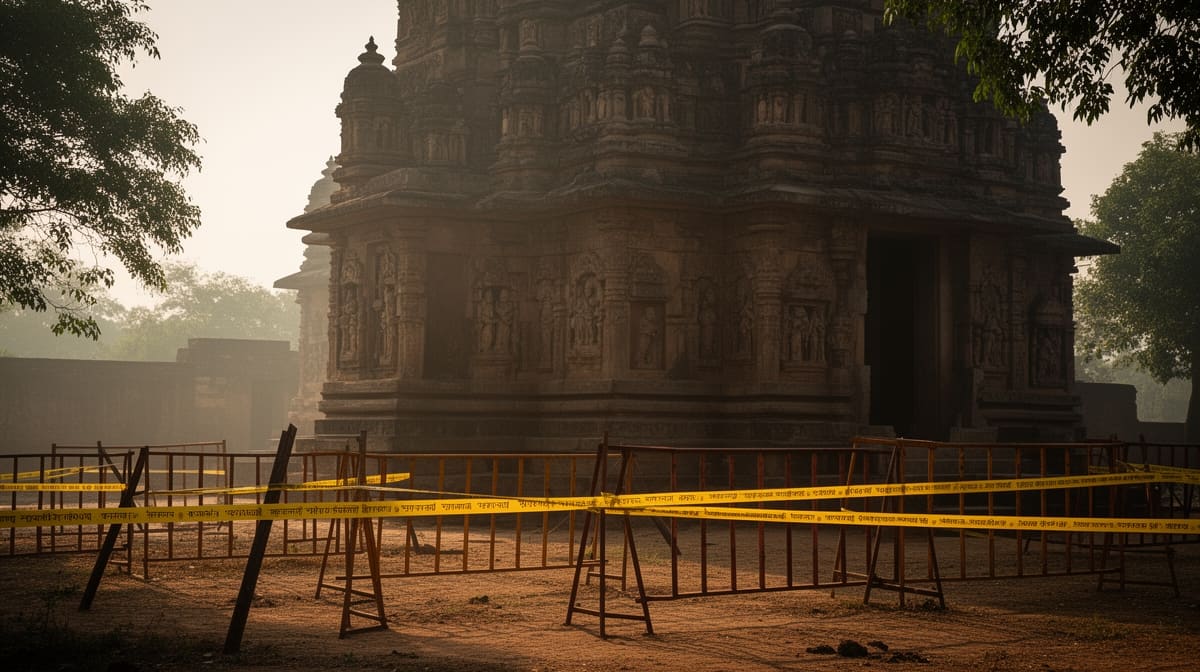
"The boundary wall of the land set apart for Mela seems to be deliberately constructed in such a manner to leave around 20-30 feet space of Mela area outside the boundary so that it can be a place for public parking, a place for public to assemble in case of stampede or overcrowding in the Mela area, for parking of fire-brigades in case of fire, posse of policemen, or for any other ancillary purposes where a huge public assembly is taking place."
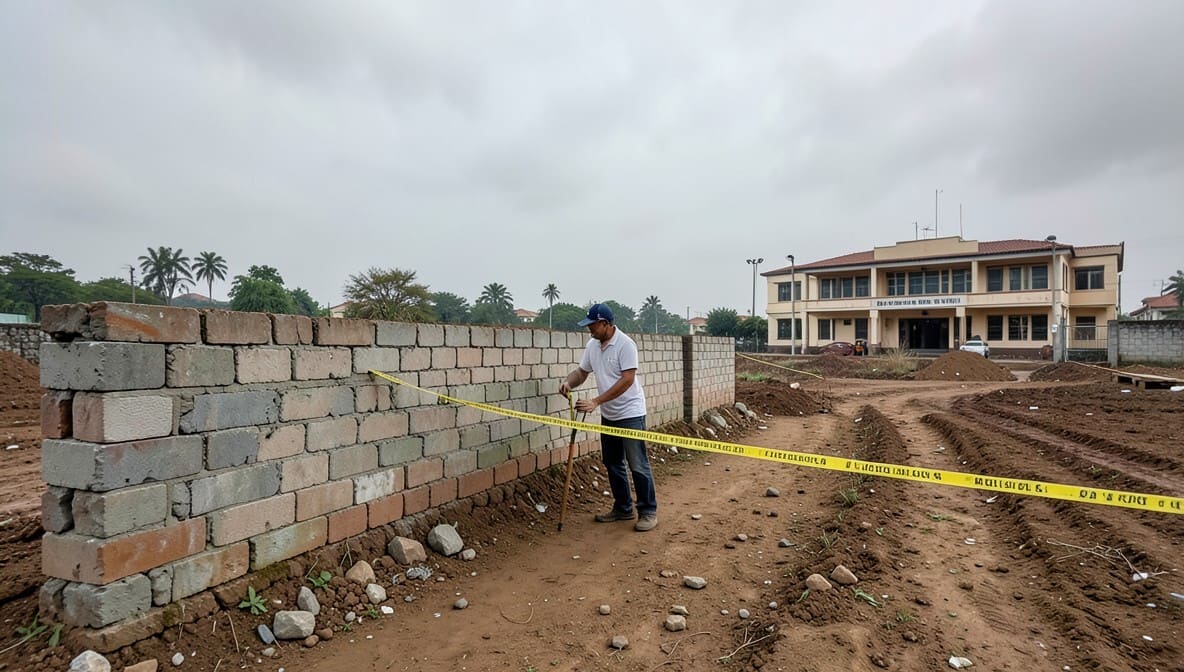
The Court reviewed photographs submitted by both parties and found that the proposed construction would completely occupy this buffer zone with concrete platforms and tin-shed shops. This would eliminate space for emergency vehicles, police deployment, and crowd dispersal - critical elements for public safety during a large-scale religious gathering.
The Court held that the Municipal Corporation’s action, though labeled "public project," was contrary to the very public interest that justified the land acquisition. The temporary nature of the shops did not mitigate the risk; the permanent occupation of safety space rendered the construction inherently hazardous.
The Court applied the three-fold test for temporary injunction under Order 39 CPC: prima facie case, balance of convenience, and irreparable injury. It found all three satisfied. The petitioner established a strong prima facie case that the construction violated the land’s designated purpose. The balance of convenience favored the petitioner, as halting construction preserved public safety, while allowing it risked lives. The irreparable injury lay in the permanent loss of a safety buffer essential for public gatherings.
The Verdict
The petition was allowed. The Court directed that no permanent, semi-permanent, or temporary construction - whether of masonry, tin, steel, wood, or any other material - shall be made on the strip of land between the public road and the Mela boundary wall. This space shall remain vacant and unobstructed for use as public parking, emergency vehicle access, police stationing, and crowd management during the Navchandi Mela. The injunction shall remain in force until final disposal of the suit.
What This Means For Similar Cases
Public Safety Trumps Developmental Claims
- Practitioners must argue that land acquired for public assembly cannot be repurposed for commercial or infrastructural use if it compromises crowd safety or emergency access
- The label "public project" does not override the original purpose of acquisition; courts will examine the substance, not the nomenclature
- Any construction on buffer zones designated for safety in public gathering spaces must be presumed prima facie injurious
Affidavits by Public Authorities Are Binding
- Admissions made in court affidavits by municipal bodies or government agencies are binding and cannot be contradicted without strong justification
- Courts will rely on official admissions to determine the true nature and purpose of land use, even if subsequent actions deviate from it
- Public authorities must ensure their affidavits align with their actions; inconsistency invites judicial intervention
Order 1 Rule 8 CPC Enables Representative Suits in Public Interest
- A single plaintiff may maintain a suit under Order 1 Rule 8 CPC if they represent a class of persons with a common interest, even if the suit touches on public rights
- Section 91 CPC is not the exclusive route for public interest litigation in civil matters involving personal injury to a class
- Plaintiffs must clearly plead personal injury alongside collective harm to satisfy Order 1 Rule 8