The Meghalaya High Court has reaffirmed that offences under Section 436 of the Indian Penal Code, involving deliberate arson endangering life or property, are too grave to be extinguished by private compromise. This ruling underscores the state’s sovereign interest in prosecuting crimes that threaten public safety, regardless of familial reconciliation between parties.
Background & Facts
The Dispute
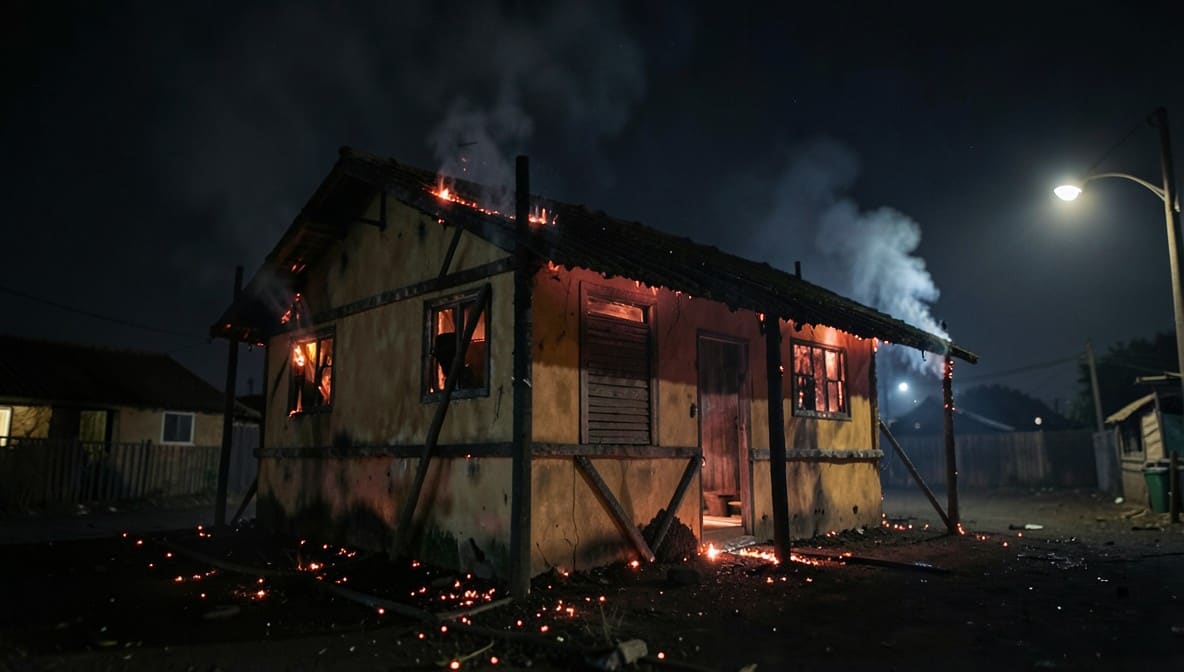
The petitioner, Shri Rangstone Kharumnuid, sought quashing of FIR No. 35(03) of 2024 registered at Madanriting Police Station under Section 436 IPC. The alleged offence arose from an incident on 23.03.2024, when the petitioner is accused of intentionally setting fire to a katcha house occupied by respondent No. 3, his wife, and owned by respondent No. 2, his brother-in-law and the original complainant.
Key Facts
- The incident occurred on 23.03.2024 at approximately 11:00 PM
- The house burnt down completely; no casualties were reported
- The property was a katcha structure, but the act was alleged to have endangered life and property
- Respondent No. 2 (brother-in-law) filed the complaint
- Respondent No. 3 (petitioner’s wife) is also named as a victim
- The parties claim to have reached an amicable settlement after the FIR was registered
Procedural History
- 23.03.2024: Alleged arson incident
- 24.03.2024: FIR No. 35(03) of 2024 registered at Madanriting Police Station
- 18.03.2026: Petitioner filed Criminal Petition No. 86/2025 before the High Court seeking quashing of the FIR
Relief Sought
The petitioner sought quashing of the FIR on the ground that the parties - petitioner, respondent No. 2, and respondent No. 3 - had mutually settled the dispute and no further prosecution was desired.
The Legal Issue
The central question was whether Section 436 of the Indian Penal Code, being a non-compoundable offence punishable with imprisonment up to ten years or life, can be quashed under the High Court’s inherent powers under Section 482 CrPC merely because the victim and complainant have reached a private settlement.
Arguments Presented
For the Petitioner
The petitioner’s counsel argued that since the parties involved - petitioner, his wife, and his brother-in-law - are closely related and have resolved their differences amicably, the continuation of criminal proceedings serves no purpose. Reliance was placed on the principle that courts should encourage reconciliation in family disputes, citing State of Haryana v. Bhajan Lal to argue that quashing is permissible where no public interest is harmed.
For the Respondent/State
The Additional Public Prosecutor contended that Section 436 IPC is a serious offence against public order and property, and its prosecution is not a private matter. The offence involves deliberate destruction of property by fire, which inherently endangers life and community safety. The state has an overriding interest in prosecuting such acts, irrespective of private settlement. The prosecution emphasized that Arnesh Kumar v. State of Bihar and State of Rajasthan v. Bhagwan Das affirm that offences affecting public order cannot be quashed on compromise.
The Court's Analysis
The Court examined the nature of Section 436 IPC, which criminalizes the act of setting fire to any building, vessel, or property with intent to destroy or damage it, and provides for punishment extending to life imprisonment or up to ten years. The Court noted that such offences are not merely civil wrongs but are classified as crimes against property with grave public consequences.
"The offence under Section 436 IPC is not a private wrong between two individuals; it is an offence against the public order and safety, and the State has a compelling interest in ensuring that such acts are prosecuted."
The Court rejected the argument that familial reconciliation negates the public interest in prosecution. It distinguished this case from those involving minor offences under Section 498A IPC or cheque bounce cases under Section 138 NI Act, where compromise is often permitted. The Court held that arson under Section 436 IPC falls squarely within the category of offences where the state’s prosecutorial authority cannot be overridden by private accord.
The Court further clarified that while settlement may be considered at the trial stage for sentencing, it cannot be used to extinguish criminal proceedings at the FIR stage. The inherent power under Section 482 CrPC cannot be invoked to circumvent the legislative intent behind non-compoundable offences.
The Verdict
The petition was dismissed. The Court held that the FIR under Section 436 IPC cannot be quashed on the ground of settlement between the parties. The trial court is directed to proceed with the case on its merits, uninfluenced by the dismissal of this petition. No monetary relief or conditional directions were issued, as the sole relief sought - quashing - was denied.
What This Means For Similar Cases
Arson Offences Are Non-Negotiable
- Practitioners must advise clients that settlements in arson cases under Section 436 IPC will not lead to quashing of FIRs, regardless of familial ties
- Applications under Section 482 CrPC seeking quashing on grounds of compromise in such cases are likely to be rejected
Public Interest Overrides Private Accord
- Courts will not permit private compromise to override the state’s duty to prosecute offences endangering public safety
- This precedent reinforces that offences under Chapter XIV of the IPC (relating to mischief by fire) are treated as crimes against society, not just individuals
Trial Courts Must Proceed Uninfluenced
- Even if parties file affidavits of compromise during trial, the court must independently assess whether the offence warrants prosecution
- Settlement may be considered during sentencing, but not as a ground for termination of proceedings