Topic

Electricity Act

The Electricity Act, 2003 governs generation, transmission, distribution, and consumption of electricity in India, including consumer rights, tariff regulation, and penalties for theft or unauthorized use.

21 articlesLatest 2 weeks ago
Dismissal Based Solely on Criminal Conviction Void Upon Acquittal; Reinstatement with Back Wages from Acquittal Date : P&H HC
Case Law Analysis
|Punjab and Haryana High Court

Dismissal Based Solely on Criminal Conviction Void Upon Acquittal; Reinstatement with Back Wages from Acquittal Date : P&H HC

Punjab & Haryana HC quashed the dismissal of a PSPCL Assistant Lineman that rested exclusively on a criminal conviction later overturned on appeal. The court ordered reinstatement with full back wages from the date of acquittal (08.06.2023) and salary for the suspension period, holding that a dismissal anchored only to a conviction loses its legal foundation once the conviction is set aside.

Electricity Act 2003 | Consumer Forums Lack Jurisdiction Over Billing Disputes When WBERC Remedies Are Available: WB SCDRC
Case Law Analysis

Electricity Act 2003 | Consumer Forums Lack Jurisdiction Over Billing Disputes When WBERC Remedies Are Available: WB SCDRC

The West Bengal State Consumer Commission holds that consumers must exhaust statutory grievance mechanisms under WBERC Regulations before approaching consumer forums for billing disputes. This clarifies the hierarchy of redressal avenues, preventing forum shopping and reinforcing regulatory exclusivity in electricity billing matters affecting millions of residential consumers.

Section 138 Electricity Act | Proforma Summoning Orders Void Without Judicial Application: Allahabad HC Quashes Mechanical Cognizance
Case Law Analysis
|Allahabad High Court

Section 138 Electricity Act | Proforma Summoning Orders Void Without Judicial Application: Allahabad HC Quashes Mechanical Cognizance

Allahabad High Court sets aside a summoning order under Section 138 of the Electricity Act, ruling that mechanical issuance on a proforma without judicial application violates due process. The decision reaffirms that courts must independently assess merits even at the cognizance stage, impacting criminal proceedings where procedural fairness is contested.

Section 14 Electricity Act 2003 | Indian Railways Not a 'Deemed Distribution Licensee'; Liable for Cross-Subsidy Surcharge Under Section 42 : SC
Case Law Analysis
|Supreme Court of India

Section 14 Electricity Act 2003 | Indian Railways Not a 'Deemed Distribution Licensee'; Liable for Cross-Subsidy Surcharge Under Section 42 : SC

The Supreme Court ruled that Indian Railways does not qualify as a 'deemed distribution licensee' under Section 14 of the Electricity Act, 2003, and is thus liable to pay Cross-Subsidy Surcharge as a consumer under Section 42. The judgment rejects Railways' claims of sovereign immunity or internal infrastructure exemptions, setting a precedent for open access electricity consumers.

Section 409 IPC | Mere Access to Property During Employment Not Criminal Breach of Trust Without Entrustment : Gujarat HC
Case Law Analysis
|Gujarat High Court

Section 409 IPC | Mere Access to Property During Employment Not Criminal Breach of Trust Without Entrustment : Gujarat HC

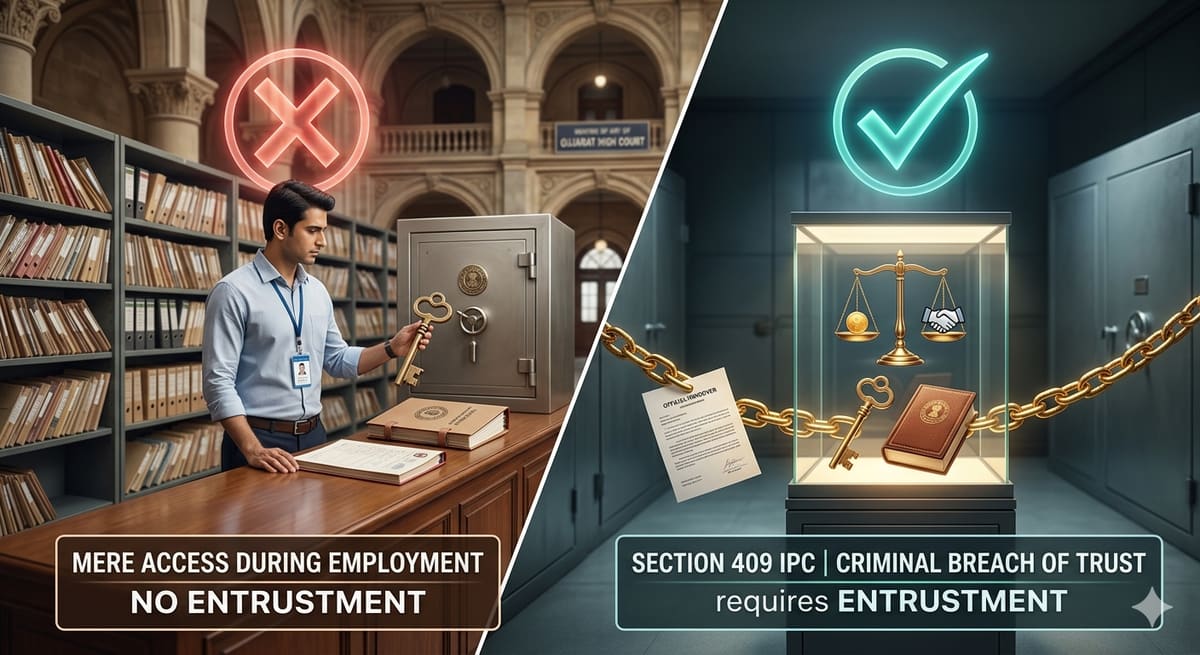
Gujarat High Court discharges an employee accused under Sections 409 and 427 IPC, ruling that criminal breach of trust requires proof of entrustment and dishonest intent-mere access to property during employment is insufficient. The judgment clarifies the essential elements of Sections 405 and 409 IPC, impacting employers and employees in similar disputes.

Criminal Acquittal Voids Civil Demand for Electricity Theft | Section 135 Electricity Act 2003: Chhattisgarh HC
Case Law Analysis
|Chhattisgarh High Court

Criminal Acquittal Voids Civil Demand for Electricity Theft | Section 135 Electricity Act 2003: Chhattisgarh HC

The Chhattisgarh High Court has ruled that when a criminal charge under Section 135 of the Electricity Act is acquitted, any civil demand for recovery of alleged theft charges must be refunded, as civil liability cannot stand without a valid criminal finding. This protects consumers from dual punishment and reinforces that unjust enrichment claims cannot survive the collapse of their criminal foundation.

Section 31 IBC | Pre-CIRP Electricity Dues Extinguished from Effective Date of Resolution Plan, Not NCLT Approval Date : Allahabad HC
Case Law Analysis
|Allahabad High Court

Section 31 IBC | Pre-CIRP Electricity Dues Extinguished from Effective Date of Resolution Plan, Not NCLT Approval Date : Allahabad HC

The Allahabad High Court has ruled that under Section 31 of the IBC, statutory electricity dues arising before the Corporate Insolvency Resolution Process are extinguished as of the Effective Date specified in the approved resolution plan - not the date of NCLT approval. This clarifies that resolution applicants inherit liability only prospectively, reinforcing the clean slate principle and shielding them from legacy dues improperly revived post-resolution.

Section 106 BNS | Accidental Electrocution During Voluntary Technical Work Not Per Se Rash or Negligent: Chhattisgarh HC
Case Law Analysis
|Chhattisgarh High Court

Section 106 BNS | Accidental Electrocution During Voluntary Technical Work Not Per Se Rash or Negligent: Chhattisgarh HC

The Chhattisgarh High Court held that when a qualified electrician dies in an accident while performing voluntary technical work, the employer’s role in providing illegal wiring does not automatically amount to rash or negligent conduct under Section 106 of the Bhartiya Nyay Sanhita. This clarifies the boundary between criminal liability and assumed occupational risk, protecting homeowners and contractors from overcriminalization of workplace accidents.

Section 127 IEA | Half Deposit of Original Assessed Amount Suffices for Appeal Revival Without Updated Payment : HP HC
Case Law Analysis
|Himachal Pradesh High Court

Section 127 IEA | Half Deposit of Original Assessed Amount Suffices for Appeal Revival Without Updated Payment : HP HC

The Himachal Pradesh High Court ruled that depositing half of the originally assessed amount under Section 127 of the Indian Electricity Act is sufficient to revive an appeal, even if the amount is not updated with interest or revised assessments. This decision clarifies procedural compliance for electricity consumers and businesses challenging assessment orders, ensuring appeal rights are not extinguished by administrative delays.

Section 126 Electricity Act | Penalty Limited to Post-Submeter Unauthorized Usage, Not Retroactive to Entire Supply Period : Bombay HC
Case Law Analysis
|Bombay High Court

Section 126 Electricity Act | Penalty Limited to Post-Submeter Unauthorized Usage, Not Retroactive to Entire Supply Period : Bombay HC

Bombay HC clarifies that penalties under Section 126 of the Electricity Act apply only to electricity consumed via unauthorized submeters after installation, excluding non-tariff components. The ruling caps liability to post-unauthorized usage, shielding consumers from retroactive penalties for the entire supply period.

Natural Justice Under Electricity Act | TANGEDCO Cannot Disconnect Agricultural Power Without Notice or Hearing : Madras HC
Case Law Analysis
|Madras High Court

Natural Justice Under Electricity Act | TANGEDCO Cannot Disconnect Agricultural Power Without Notice or Hearing : Madras HC

Madras HC quashes TANGEDCO’s arbitrary disconnection of agricultural electricity, ruling that due process-including notice, hearing, and opportunity to appeal-must precede any levy or disconnection. The court mandates instalment-based restoration of power supply pending adjudication of the disputed Rs. 4.12 lakh demand, reinforcing that public utilities cannot bypass procedural fairness even in cases of alleged unauthorized use.