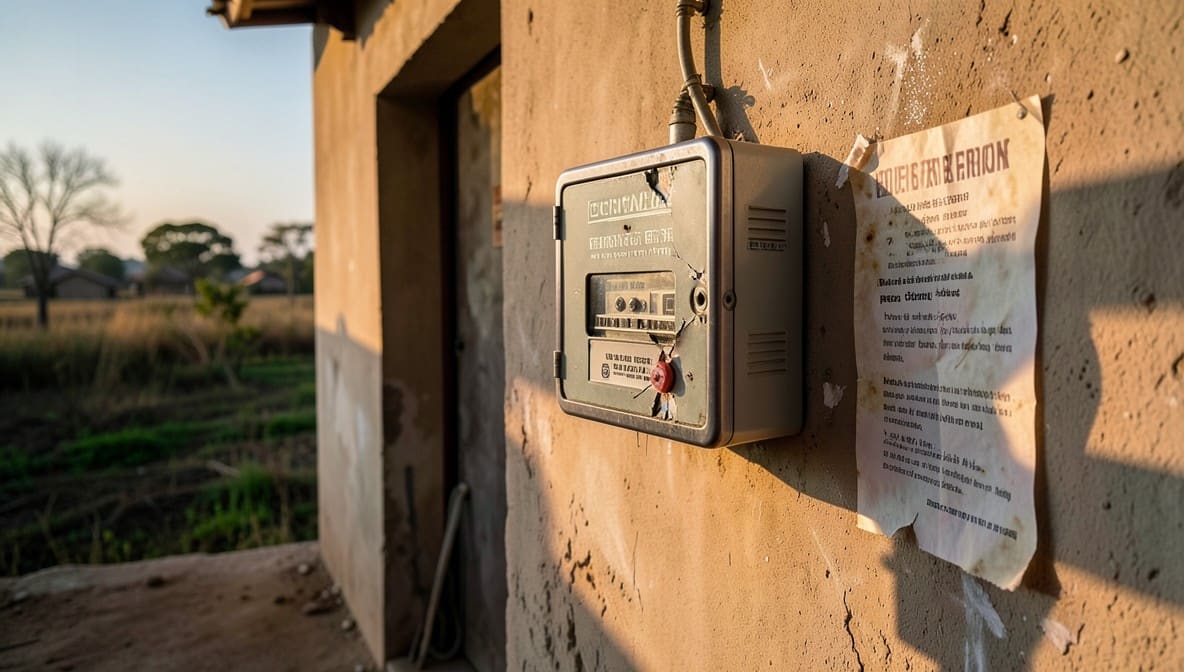
The Madras High Court has clarified that allegations of unauthorized use of free agricultural electricity cannot justify immediate disconnection without affording due process. In a significant ruling, the Court permitted an appeal mechanism and structured payment terms for restoration, reinforcing procedural fairness in utility enforcement actions.
Background & Facts
The Dispute
The petitioners, J. Benedict and Sangeetha, are the absolute owners of agricultural land in Survey No. 241/3, Vellamadai Village, Coimbatore North Taluk, Coimbatore. The free agricultural electricity service connection bearing No. 136-004-450 was originally obtained by their vendors for irrigation purposes. The petitioners continued using the same connection exclusively for agricultural irrigation.
Key Facts
- The electricity connection was established under the State’s free agricultural power scheme, intended solely for irrigation.
- On 31.01.2026, the 2nd respondent, Assistant Executive Engineer, conducted a surprise inspection of the premises.
- The inspection allegedly revealed concealed PVC pipelines diverting water for residential use, constituting unauthorized consumption.
- On the same date, a provisional assessment order was issued, demanding:
- Rs. 4,12,447/- as extra levy for unauthorized consumption
- Rs. 24,000/- as compounding charges
- Electricity supply was disconnected on 31.01.2026 without prior notice or opportunity to be heard.
- A final assessment order dated 09.02.2026 confirmed the demand of Rs. 4,12,448/-.
- A letter dated 13.02.2026 demanded full payment before restoration of supply.
Procedural History
- 31.01.2026: Surprise inspection and provisional assessment issued; electricity disconnected.
- 09.02.2026: Final Assessment Order passed by the 2nd respondent.
- 13.02.2026: Demand letter issued insisting payment for restoration.
- 17.03.2026: Writ Petition (WP No. 10285 of 2026) filed under Article 226 of the Constitution.
Relief Sought
The petitioners sought:
- Quashing of the impugned assessment order dated 09.02.2026
- Restoration of electricity supply
- Direction to the respondents to refrain from arbitrary disconnection without due process
The Parties' Positions
The petitioners contended that:
- The inspection and assessment were conducted without notice or hearing
- No opportunity was given to explain the alleged diversion
- Disconnection was punitive and disproportionate
- The connection was lawfully used for irrigation, and any alleged misuse was not proven
The respondents did not file a counter-affidavit, and the Court noted no adverse orders were passed against them.
The Legal Issue
The central question was whether a public utility like TANGEDCO can unilaterally disconnect free agricultural electricity supply and impose heavy financial penalties based on an ex parte inspection, without affording the consumer an opportunity to be heard or to appeal.
Arguments Presented
For the Petitioner
The learned counsel for the petitioners argued that:
- The disconnection and assessment violated the principles of natural justice under Article 14 and Article 21 of the Constitution
- The provisional order was issued without giving the petitioners a chance to explain the presence of PVC pipelines
- The demand of over Rs. 4 lakh without a proper inquiry or evidence recording was arbitrary
- The petitioners had used the connection for its intended purpose since acquisition, and the allegation of residential use was speculative
- The remedy of filing an appeal before the appellate authority was the only available recourse under the Electricity Act, 2003
For the Respondent
No counter-arguments were filed by the respondents. The Court proceeded on the basis of the petitioners’ submissions and the available record.
The Court's Analysis
The Court observed that while the respondents had the authority to investigate unauthorized use of electricity under the Tamil Nadu Electricity Board Act and the Electricity Act, 2003, such powers could not be exercised arbitrarily. The unilateral disconnection of supply and imposition of a substantial penalty without notice or hearing was a clear violation of the principles of natural justice.
"The right to electricity, particularly for agricultural purposes, is not merely a statutory benefit but a necessity for livelihood. Disconnection without opportunity of hearing strikes at the root of procedural fairness."
The Court noted that the petitioners had not challenged the substantive allegation of unauthorized use but sought only to preserve their right to appeal. The Court emphasized that the remedy of appeal must be meaningful and not rendered illusory by financial coercion.
The Court further held that while the utility had a legitimate interest in recovering dues for unauthorized consumption, it could not hold the petitioners’ access to essential irrigation power hostage pending full payment of a disputed amount.
The Verdict
The petitioners succeeded. The Court permitted them to file an appeal before the appellate authority within two weeks of receiving a copy of this order. The appellate authority must pass orders after affording a personal hearing within six weeks of the appeal’s filing. For immediate restoration of electricity, the petitioners are directed to pay the demanded amount of Rs. 4,12,448/- in four instalments: 40% upfront, followed by three equal instalments of 20% each on or before the 7th day of the next three successive months. The payment is subject to the outcome of the appeal. The writ petition is disposed of with no costs.
What This Means For Similar Cases
Due Process Is Non-Negotiable in Utility Enforcement
- Practitioners must now insist on notice and hearing before any disconnection or penalty imposition under the Electricity Act, even for alleged unauthorized use
- Ex parte assessments without opportunity to explain are voidable under Article 14
- Utilities cannot use disconnection as leverage to force payment of disputed amounts
Payment Conditions Must Be Proportionate and Conditional
- Courts will permit structured payment plans for disputed dues to balance utility interests and consumer rights
- Full payment should not be a precondition for restoration of essential services
- Payments made under duress remain subject to refund if the appeal succeeds
Appeal Mechanisms Must Be Meaningful
- The right to appeal is not a formality; it must include personal hearing and timely adjudication
- Delays in appellate disposal beyond six weeks may attract contempt proceedings
- Petitioners in similar cases should seek interim restoration pending appeal, not just quashing of orders