
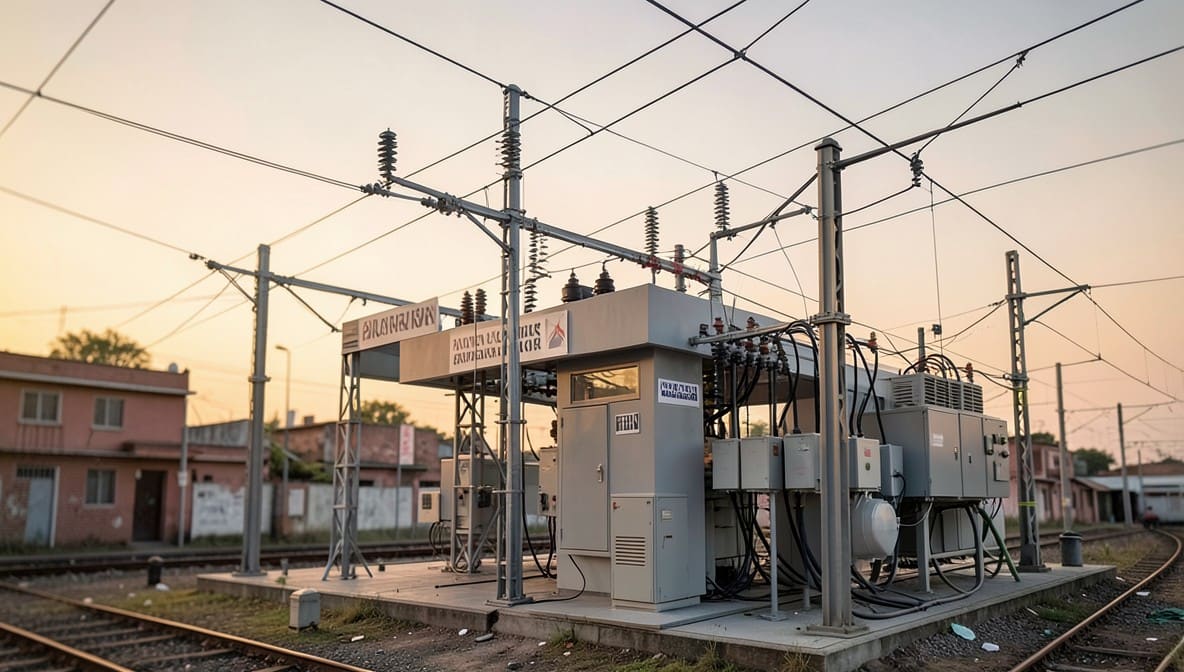
The Supreme Court has definitively held that Indian Railways does not qualify as a deemed distribution licensee under the Electricity Act, 2003, and remains liable to pay Cross-Subsidy Surcharge and Additional Surcharge when procuring electricity through open access. This judgment resolves a decade-long dispute over statutory interpretation, regulatory jurisdiction, and the limits of sovereign immunity in commercial energy transactions.
Background & Facts
The Dispute
The dispute arose over whether Indian Railways, as a central government entity, could claim the status of a deemed distribution licensee (DDL) under the third proviso to Section 14 of the Electricity Act, 2003, thereby avoiding payment of Cross-Subsidy Surcharge and Additional Surcharge for open access to electricity from generating stations across multiple states. The Railways sought non-discriminatory access to the Inter-State Transmission System (ISTS) to procure 100 MW of power for its traction substations in Maharashtra, Gujarat, Jharkhand, and West Bengal.
Key Facts
- On 17.03.2015, Indian Railways wrote to Maharashtra State Electricity Transmission Co. Ltd. (MSETCL) seeking connectivity for open access to procure 100 MW power from Gujarat Urja Vikas Nigam (GUVNL).
- MSETCL refused, directing Railways to obtain a formal determination from the Central Electricity Regulatory Commission (CERC) regarding its status as a DDL.
- On 06.05.2014, the Ministry of Power issued a clarificatory letter asserting that Railways was a deemed distribution licensee under the third proviso to Section 14 of the Electricity Act.
- Indian Railways filed Petition No. 197/MP/2015 before CERC seeking declaration of its DDL status and entitlement to open access without surcharges.
- The Railways operates 16 traction substations and an internal network of overhead catenary systems, 25 kV and 1.5 kV AC systems, and distribution installations exclusively for powering locomotives, signals, and station facilities.
- The Railways does not sell electricity to any third-party consumers; all electricity is consumed internally for railway operations.
- The Railways’ infrastructure is owned by the Central Government and funded through the Consolidated Fund of India.
- The Railway Board functions as an extended arm of the Central Government under the Railways Act, 1989.
Procedural History
- 06.05.2014: Ministry of Power issues clarificatory letter asserting Railways as DDL.
- 17.03.2015: Railways seeks open access from MSETCL.
- 12.10.2015: WBSEDCL intervenes before CERC challenging maintainability.
- 05.11.2015: CERC holds Railways is a DDL under third proviso to Section 14 and entitled to open access without surcharges.
- 16.12.2015: APTEL grants interim relief to Railways, prima facie accepting its DDL claim.
- 05.04.2019: MERC holds Railways is a DDL.
- 12.12.2019: KSERC holds Railways is a DDL but liable to pay open access charges.
- 28.02.2018: PSERC holds Railways is NOT a DDL.
- 25.02.2020: OERC holds Railways is NOT a DDL.
- 05.05.2021: MPERC holds Railways is NOT a DDL.
- 23.04.2019: RERC holds Railways is NOT a DDL.
- 17.06.2020: HERC holds Railways is NOT a DDL.
- 12.02.2024: APTEL delivers final judgment rejecting Railways’ DDL claim and holding it liable for Cross-Subsidy Surcharge and Additional Surcharge.
- 28.03.2024: Indian Railways files Civil Appeals Nos. 4652-59/2024 before the Supreme Court.
- 06.05.2024: Supreme Court grants interim stay on payment of surcharges pending final adjudication.
- 08.05.2026: Supreme Court delivers final judgment.
The Parties' Positions
Appellant (Indian Railways): Argued that it is an Appropriate Government under Section 2(5)(a)(ii) of the Electricity Act and therefore a deemed distribution licensee by operation of law. Relied on Section 11(g) of the Railways Act, which authorizes erection of "distribution installation," and the non-obstante clause in Section 11, asserting that the Railways Act overrides the Electricity Act. Also relied on the 06.05.2014 Ministry of Power letter and the decision in General Manager, Northern Railways v. Uttar Pradesh State Electricity Board.
Respondents (Various DISCOMs and SERCs): Contended that Railways is not a DDL because it does not supply electricity to consumers, lacks an area of supply, and its internal network does not meet the statutory definition of a distribution system under Section 2(19). Argued that Section 11 of the Railways Act only permits internal infrastructure for operational use, not commercial distribution. Emphasized that the 06.05.2014 letter is non-binding and that the Draft Electricity (Amendment) Bill, 2025 confirms the absence of any existing exemption.
Relief Sought
The Appellant sought:
- Declaration that Indian Railways is a deemed distribution licensee under the third proviso to Section 14 of the Electricity Act, 2003.
- Direction to grant non-discriminatory open access without payment of Cross-Subsidy Surcharge or Additional Surcharge.
- Setting aside of APTEL’s order dated 12.02.2024.
- Costs and any other relief deemed fit.
The Legal Issue
The central questions were: (1) Whether Indian Railways qualifies as a deemed distribution licensee under the third proviso to Section 14 of the Electricity Act, 2003, by virtue of being an Appropriate Government; (2) Whether its internal electricity network constitutes a "distribution system" under Section 2(19); and (3) Whether, even if not a DDL, it is exempt from paying Cross-Subsidy Surcharge and Additional Surcharge under Section 42 as a consumer.
Arguments Presented
For the Appellant
The Appellant contended that Section 11(g) of the Railways Act authorizes it to erect and maintain "distribution installations" for railway operations, and that the non-obstante clause in Section 11 overrides the licensing regime under the Electricity Act. It argued that as an instrumentality of the Central Government, it falls within the definition of "Appropriate Government" under Section 2(5)(a)(ii), thereby entitling it to deemed licensee status under the third proviso to Section 14. Reliance was placed on General Manager, Northern Railways v. Uttar Pradesh State Electricity Board and Ganv Bhavancho Ekvott v. South Western Railways, asserting that railway operations are immune from other regulatory frameworks. The 06.05.2014 Ministry of Power letter was treated as authoritative. It further argued that "distribution" under the Railways Act is co-extensive with "distribution system" under the Electricity Act, and that the conveyance of electricity within its network constitutes distribution.
For the Respondent
The Respondents countered that a distribution system under Section 2(19) must terminate at the point of connection to a consumer, which the Railways’ internal network does not. They emphasized that the Railways consumes electricity for its own use and does not supply it to any third-party consumers, thereby failing the twin requirements of a distribution licensee. They argued that Section 2(5)(a)(ii) refers to the Central Government in relation to railways, not the Railways itself as an entity. The 06.05.2014 letter was dismissed as non-binding administrative guidance. The Draft Electricity (Amendment) Bill, 2025, was cited to demonstrate legislative intent that no such exemption currently exists. The Sesa Sterlite precedent was invoked to establish that an entity consuming electricity for its own use, even if possessing infrastructure, remains a consumer liable for surcharges.
The Court's Analysis
The Court undertook a rigorous statutory interpretation of Sections 2(17), 2(19), 14, and 42 of the Electricity Act, 2003, and Section 11 of the Railways Act, 1989. It held that the definition of a "distribution system" under Section 2(19) is unambiguous: it must connect transmission lines or generating stations to the point of connection of a consumer. The Railways’ traction substations, overhead catenary systems, and internal wiring serve only to convey electricity to its own locomotives and installations, which are not consumers under Section 2(15). The Court rejected the Appellant’s argument that "conveyance" equals "distribution," noting that distribution requires supply to external consumers.
"A distribution installation which merely conveys electricity within the integrated railway system, from the overhead equipment to the power locomotives, communication systems, signals and station facilities, for its own consumption and use, and does not translate into sale or supply of electricity to a consumer against consideration, cannot be held to be within the meaning and scope of a distribution system under the Electricity Act."
The Court further held that the term "Appropriate Government" under Section 2(5)(a)(ii) refers to the Central Government in relation to railways, not the Railways as an entity. The functional test from Steel Authority of India Ltd. v. National Union Waterfront Workers was applied: an entity must be under the authority of the Central Government in carrying out a function, not merely be owned or controlled by it. While the Railways is an instrumentality of the State, it does not perform the function of supplying electricity to consumers, which is the core requirement for DDL status.
The Court distinguished Northern Railways, which dealt only with transmission lines, and Ganv Bhavancho Ekvott, which concerned environmental clearances, not licensing under the Electricity Act. It emphasized that a non-obstante clause operates only where there is an irreconcilable conflict, which the Appellant failed to demonstrate. The Railways Act and Electricity Act can be harmoniously read.
Regarding Cross-Subsidy Surcharge, the Court affirmed the Sesa Sterlite principle: an entity procuring electricity through open access for its own consumption, even if possessing distribution infrastructure, is a consumer liable for surcharges. The surcharge mechanism is designed to compensate distribution licensees for stranded costs and cross-subsidies, and the Railways’ large-scale consumption directly impacts their financial viability.
The Court also rejected reliance on the Draft Electricity (Amendment) Bill, 2025, as an interpretative aid to read in an exemption. Citing Vodafone International Holdings BV v. Union of India, it held that legislative proposals to amend the law indicate the absence of the proposed right under the existing statute. The Appellant’s prior requests for exemption before parliamentary committees further supported this conclusion.
The Verdict
The Supreme Court dismissed all appeals and upheld the APTEL judgment dated 12.02.2024. Indian Railways is not a deemed distribution licensee under Section 14 of the Electricity Act, 2003. It is liable to pay Cross-Subsidy Surcharge and Additional Surcharge as a consumer under Section 42 for electricity procured through open access. The Respondent DISCOMs are directed to compute and issue detailed calculations of outstanding surcharges, disaggregated by area of supply and period of open access. The Railways shall be afforded a reasonable opportunity to respond to these calculations before final determination by the respective Appropriate Commission. No costs are awarded.
What This Means For Similar Cases
Distribution Requires Supply to External Consumers
- Practitioners must now conclusively establish that an entity’s infrastructure terminates at a point of connection to a third-party consumer to qualify as a distribution system.
- Internal networks serving only the operator’s own facilities, even if extensive, do not constitute distribution under Section 2(19).
- Entities like metro rail corporations, defense establishments, or large industrial units must demonstrate actual supply to external consumers to claim DDL status.
Sovereign Status Does Not Confer Regulatory Exemptions
- Being an instrumentality of the Central or State Government does not automatically confer deemed licensee status under Section 14.
- The functional test from SAIL governs: the entity must perform the regulated function (supply to consumers) under government authority, not merely be owned by it.
- Administrative letters or policy statements cannot override statutory definitions.
Proposed Legislation Clarifies Existing Law
- Draft bills or pending amendments cannot be used to interpret existing statutes as containing implied exemptions.
- Where Parliament proposes to grant a new benefit, it confirms the absence of that benefit under current law.
- Entities cannot invoke legislative intent from unenacted bills to avoid statutory obligations.
- Practitioners should treat pending amendments as indicators of legislative gaps, not as evidence of existing rights.
Cross-Subsidy Surcharge Applies to All Consumers
- Any entity procuring electricity through open access, regardless of its status, is liable for Cross-Subsidy Surcharge if it consumes electricity within a distribution licensee’s area.
- Large industrial consumers like Railways, steel plants, or airports cannot claim exemption merely because they are public entities.
- The surcharge is not punitive but compensatory, designed to preserve the financial integrity of distribution networks.
Strategic Implications for Energy Procurement
- Entities seeking open access must now budget for Cross-Subsidy Surcharge and Additional Surcharge as non-negotiable costs.
- Legal opinions asserting DDL status based on sovereign ownership or internal infrastructure are legally untenable post this judgment.
- The only viable path for exemption is legislative amendment, not judicial interpretation.





