The West Bengal State Consumer Disputes Redressal Commission has clarified that consumer forums lack jurisdiction to adjudicate electricity billing disputes when statutory grievance redressal mechanisms under the West Bengal Electricity Regulatory Commission (WBERC) Regulations are available. This ruling reinforces the principle that specialized regulatory frameworks must be exhausted before resorting to consumer protection forums.
Background & Facts
The Dispute
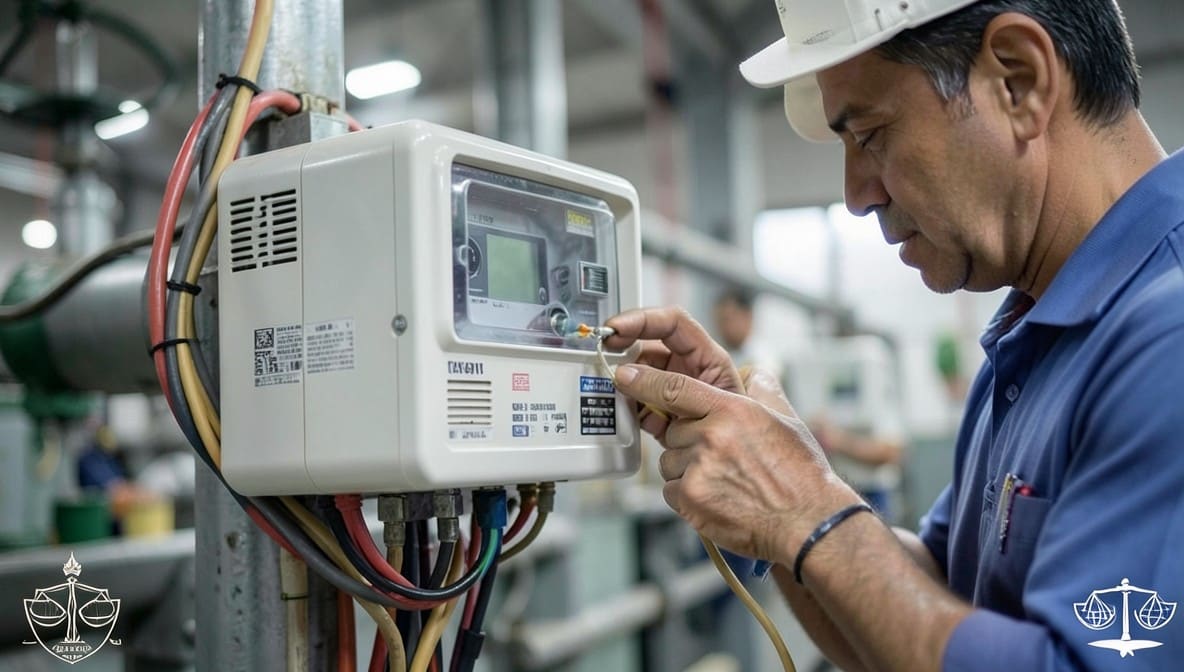
The dispute arose from alleged overbilling by the West Bengal State Electricity Distribution Company Limited (WBSEDCL) to its consumer, Naba Kumar Saha, for the months of October, November, and December 2017. The respondent-complainant alleged that his electricity meter was defective, running at an abnormally high speed even when all appliances were switched off. He reported this issue in writing on 21.08.2017. WBSEDCL installed a Master meter on 12.09.2017 to verify the accuracy of the existing meter (Meter No. 82482979). The readings from 12.09.2017 to 22.09.2017 showed a discrepancy: the existing meter recorded 23 units while the Master meter recorded 14 units. Based on this, WBSEDCL revised the bill for the period 28.06.2017 to 14.10.2017 from Rs. 44,580 to Rs. 25,671. However, the complainant did not pay the revised amount, and his service was subsequently disconnected.
Key Facts
- The complainant, Naba Kumar Saha, resided at Rajnagar, P.S. Raghunathganj, Murshidabad, West Bengal
- He used two lights and one fan at his premises
- He submitted a written complaint to WBSEDCL on 21.08.2017 regarding the defective meter
- WBSEDCL installed a Master meter on 12.09.2017
- Meter readings on 12.09.2017: Existing meter = 6838 units, Master meter = 1530 units
- Meter readings on 22.09.2017: Existing meter = 6861 units, Master meter = 1544 units
- Revised bill dated 17.10.2017 reduced the amount to Rs. 25,671
- The complainant did not pay the revised bill
- Service was disconnected after issuance of disconnection notice
- The complainant filed Consumer Complaint No. CC/225/2017 before the District Commission on 15.03.2017
Procedural History
- 15.03.2017: Consumer Complaint No. CC/225/2017 filed before District Consumer Disputes Redressal Commission, Murshidabad
- 18.04.2022: District Commission allowed the complaint, directing WBSEDCL to issue fresh bills matching previous bills, replace the defective meter, and pay compensation
- 30.06.2023: WBSEDCL filed First Appeal No. SC/19/A/11/2023 before the State Commission, challenging the District Commission’s order on grounds of jurisdictional error and non-exhaustion of statutory remedies
- 08.05.2026: Hearing held before the State Commission
- 19.06.2026: Judgment delivered
The Parties' Positions
For the Appellant (WBSEDCL)
- Argued that the dispute was purely a billing dispute governed by Regulation 3.5 of Notification No. 55/WBERC dated 07.08.2013
- Contended that the complainant failed to approach the Grievance Redressal Officer (GRO) or Central Grievance Redressal Officer (CGRO) as mandated
- Invoked Section 56 of the Electricity Act, 2003 and the Supreme Court’s decision in U.P. Power Corporation Ltd. v. Anis Ahmed to show that consumer forums are not forums of first resort for billing disputes
- Stated that the District Commission ignored statutory procedures and acted beyond its jurisdiction
For the Respondent (Naba Kumar Saha)
- Did not appear or file any written response
- No arguments were presented before the State Commission
Relief Sought
The appellant sought:
- Setting aside of the District Commission’s order dated 18.04.2022
- Declaration that the consumer forum lacked jurisdiction to adjudicate the billing dispute
- Direction to the complainant to exhaust remedies under WBERC Regulations
The Legal Issue
Can a District Consumer Disputes Redressal Commission adjudicate a dispute concerning the correctness of an electricity bill when the Electricity Act, 2003 and WBERC Regulations provide a specific, exclusive grievance redressal mechanism?
Arguments Presented
For the Appellant
The appellant relied on U.P. Power Corporation Ltd. v. Anis Ahmed (2013) 8 SCC 491, which held that the Consumer Protection Act and the Electricity Act operate in parallel but consumer forums are not empowered to determine technical issues like meter accuracy or billing correctness. The appellant further cited Regulation 3.5 of Notification No. 55/WBERC dated 07.08.2013, which mandates that consumers must first approach the Grievance Redressal Officer or Central Grievance Redressal Officer before escalating to the Ombudsman. The appellant emphasized that the complainant neither paid the bill under protest nor approached any designated authority under the Regulation, thereby bypassing the statutorily prescribed procedure. The appellant also relied on Bishnu Ballov Cold Storage Pvt. Ltd. v. WBSEDCL (WPA No. 19159 of 2023), where the Calcutta High Court held that consumer forums are not appropriate fora for billing disputes.
For the Respondent
The respondent did not appear or file any written submissions. No counter-arguments were presented before the State Commission.
The Court's Analysis
The State Commission undertook a detailed analysis of the statutory framework governing electricity billing disputes. It observed that while the complainant qualifies as a consumer under Section 2(7) of the Consumer Protection Act, 2019, the nature of the dispute - billing accuracy and meter defect - is not a deficiency in service under Section 2(11) of the Act, nor does it constitute an unfair trade practice. The Commission emphasized that Regulation 3.5 of the WBERC Notification, framed under Section 181(1)(2)(x) read with Section 50 of the Electricity Act, 2003, has statutory force and prescribes a complete, self-contained mechanism for resolving billing disputes.
"When there is prescribed procedure, the complainant had/has ample opportunity to avail the procedure prescribed therein."
The Court noted that Regulation 3.5.1 allows a consumer to pay the disputed bill under protest, either the amount claimed or the average of the last six months’ charges, and prohibits disconnection during pendency of the grievance. Regulation 3.5.2 further bars penal measures during this period. The complainant, however, did not avail either option. The Commission held that the District Commission erred in assuming jurisdiction to determine meter accuracy, which requires technical expertise beyond the scope of consumer forums. The Court distinguished Anis Ahmed as not permitting consumer forums to act as substitutes for regulatory bodies when a specific statutory remedy exists. The Calcutta High Court’s decision in Bishnu Ballov was cited as binding precedent on the same issue.
The Commission concluded that the District Commission’s order was passed without jurisdiction and in violation of the principle of statutory exclusivity. The absence of any response from the respondent did not alter the legal position.
The Verdict
The appeal is allowed. The impugned order dated 18.04.2022 passed by the District Consumer Disputes Redressal Commission, Murshidabad, in CC/225/2017 is set aside. The complainant is at liberty to approach the Regional Grievance Redressal Officer (RGRO) or Central Grievance Redressal Officer (CGRO) in accordance with Regulation 3.5 of Notification No. 55/WBERC dated 07.08.2013. No order as to costs is made. A copy of this order is to be provided free of cost to the parties and uploaded on the Commission’s website. A copy is also forwarded to the District Commission for information.
What This Means For Similar Cases
Regulatory Remedies Must Be Exhausted First
- Practitioners must advise consumers to first approach the RGRO/CGRO before filing any consumer complaint involving electricity billing disputes
- Filing a complaint directly before a consumer forum without exhausting statutory remedies will result in dismissal on jurisdictional grounds
Consumer Forums Cannot Determine Technical Meter Issues
- Consumer forums lack the technical expertise to assess meter accuracy or validate billing calculations
- Any claim of defective metering must be raised before the licensee’s grievance redressal mechanism, not through consumer litigation
Statutory Notifications Override General Consumer Law
-
Regulations framed under the Electricity Act, 2003, such as WBERC Regulation 3.5, have statutory force and override general provisions of the Consumer Protection Act
-
Courts and tribunals must defer to specialized regulatory frameworks where they exist
-
Always check if a sector-specific regulatory mechanism (e.g., RERA, TRAI, WBERC) governs the dispute before filing a consumer complaint
-
If a provisional payment option is available under regulation, advise the client to use it to avoid disconnection and preserve legal rights