The Andhra Pradesh High Court has affirmed that electricity is a fundamental necessity under Article 21 of the Constitution, and cannot be disconnected from an occupant merely because a civil dispute over title is pending. The judgment establishes a clear boundary between property rights and basic human rights, reinforcing that possession, not ownership, governs access to essential services.
Background & Facts
The Dispute
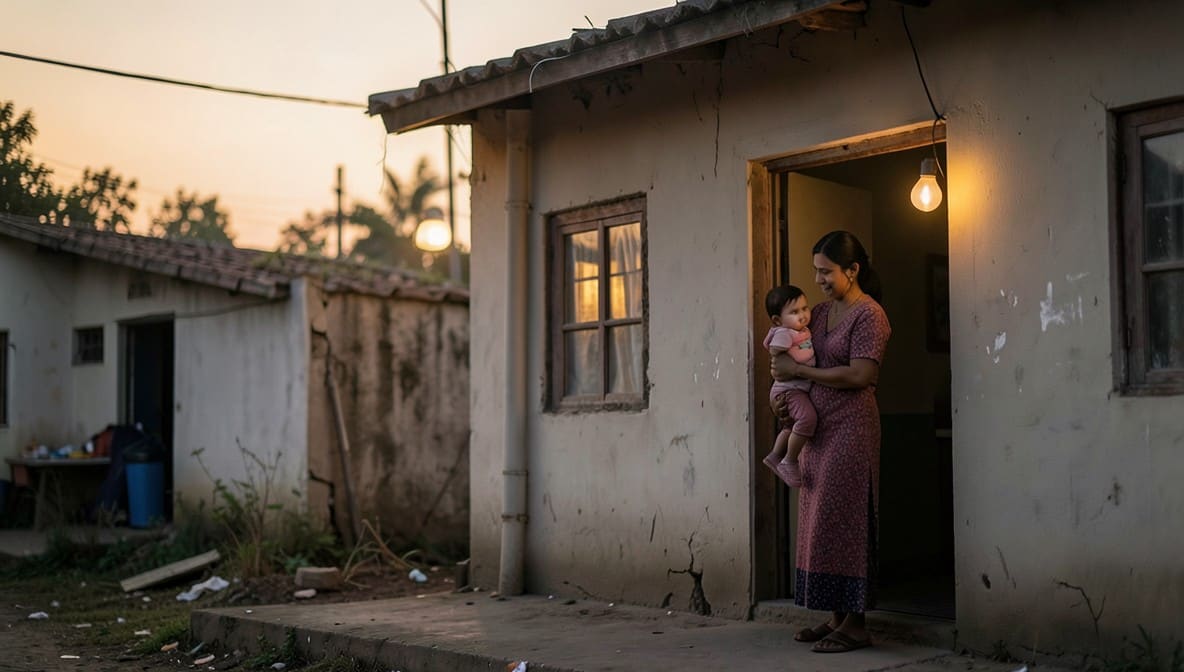
The petitioner, Shaik Shajahan Bee, purchased a plot of 0.01¼ acres in Survey No. 418/1B, N.G.Os Colony, Nandyal, through a Registered Sale Deed dated 19.06.2000. She constructed a building used for both domestic residence and a hotel business. The Nandyal Municipality allotted separate door numbers for commercial and residential use. She obtained two electricity connections: Commercial Service No. 8431205031562 and Domestic Service No. 8431205038915.
The 7th respondent, Shaik Abdul Sardar, claimed ownership of the property and executed a Mortgage Deed with the petitioner to secure a loan. In 2018, the 7th respondent filed O.S. No. 586 of 2018 before the Principal Civil Judge (Junior Division), Nandyal, seeking delivery of vacant possession and payment of alleged lease arrears. An ex parte decree was granted in his favor. The petitioner filed I.A. No. 950 of 2021 under Order IX Rule 13 CPC to set aside the ex parte decree, along with I.A. No. 949 of 2021 seeking condonation of delay. Both applications remain pending.
Separately, the petitioner filed O.S. No. 623 of 2018 seeking a declaration of title, which is also pending with a written statement filed by the 7th respondent.
Key Facts
- The petitioner has been in continuous possession of the property since 19.06.2000.
- The electricity connections were originally registered in the name of the 7th respondent, but the petitioner has been the actual consumer and payer of bills.
- The 7th respondent is the registered owner according to municipal records and pays property taxes.
- On 27.11.2025, the power supply to both connections was disconnected at the request of the 7th respondent.
- The supply was temporarily restored on 28.11.2025 after the petitioner made a representation.
- On 29.12.2025, the 7th respondent again applied for disconnection.
- The petitioner issued a legal notice on 29.12.2025.
- On 30.12.2025, the 1st respondent (Assistant Executive Engineer, APSPDCL) issued a notice calling upon the petitioner to produce court orders or legal documents justifying continued supply.
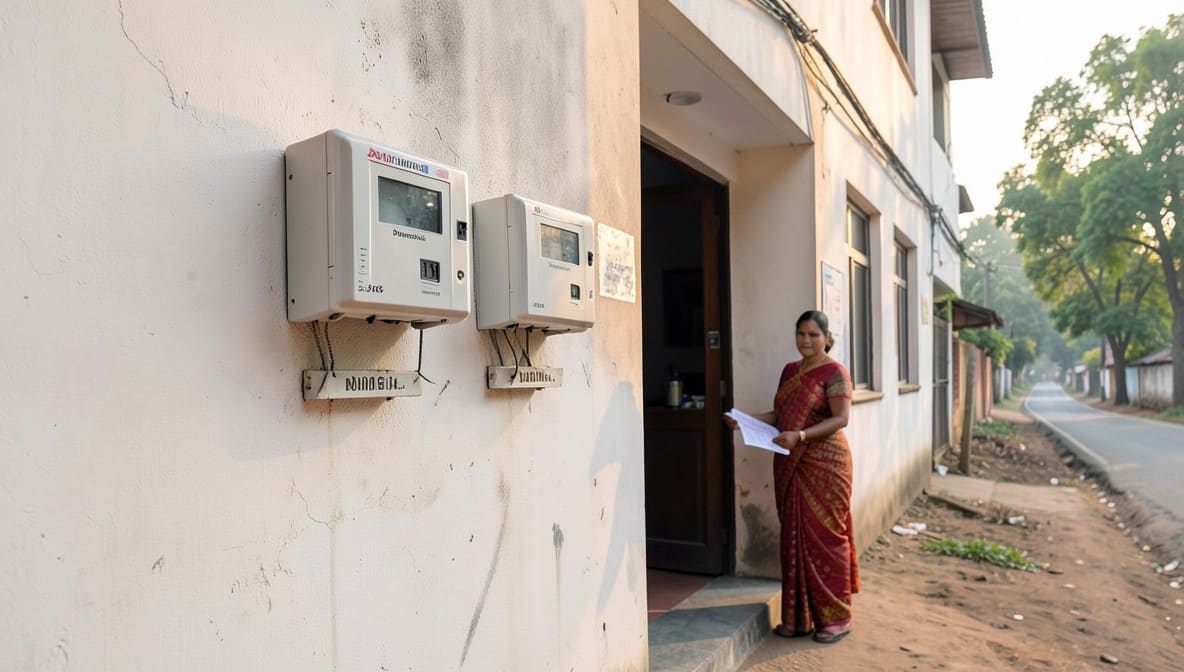
- Power was disconnected again on or about 30.12.2025, and the two smart meters were removed.
- The petitioner has not defaulted on electricity bills.
- The DISCOM authorities did not allege unauthorized connection or non-payment.
Procedural History
- 19.06.2000: Petitioner purchases property via Registered Sale Deed.
- 2018: 7th respondent files O.S. No. 586 of 2018 for possession and arrears.
- 2018: Petitioner files O.S. No. 623 of 2018 for declaration of title.
- 2020: 7th respondent files E.P. No. 1 of 2020 for eviction under ex parte decree.
- 2021: Petitioner files I.A. No. 950/2021 and I.A. No. 949/2021 to set aside ex parte decree.
- 27.11.2025: Power supply disconnected by APSPDCL at 7th respondent’s request.
- 28.11.2025: Supply temporarily restored after petitioner’s representation.
- 29.12.2025: Petitioner issues legal notice.
- 30.12.2025: APSPDCL issues notice demanding legal documents; power disconnected again.
- 24.03.2026: Writ Petition No. 2270 of 2026 decided by the High Court of Andhra Pradesh.
The Parties' Positions
Petitioner: Argues she is the lawful occupant, has paid all bills, and the disconnection is punitive, arbitrary, and violates her rights under Articles 19 and 21. She contends that possession, not title, determines entitlement to electricity.
Respondents (APSPDCL): Claim the disconnection followed due procedure under the Electricity Supply Code, after notice and legal opinion. They argue the petitioner has an alternative remedy under the Electricity Act, 2003.
7th Respondent: Asserts he is the registered owner, pays municipal taxes, and the petitioner is a trespasser. He claims disconnection was necessary to protect his interest from potential liability for unpaid bills.
Relief Sought
The petitioner sought immediate restoration of electricity supply, declaration that the disconnection was arbitrary and violative of constitutional rights, and a direction to the DISCOM authorities not to disconnect supply pending final adjudication of the civil suit.
The Legal Issue
Can a Distribution Company disconnect electricity supply to an occupant who is not in default, solely on the request of a registered owner who has obtained an ex parte decree but has not yet executed it, when the occupant’s possession remains unchallenged by a final court order?
Arguments Presented
For the Petitioner
The petitioner’s counsel argued that electricity is a basic necessity under Article 21, as affirmed by the Supreme Court in Dilip (Dead) through LRs. v. Satish and Others and K.C. Ninan v. Kerala State Electricity Board. He relied on the Delhi High Court’s decision in W.P.(C) No. 18953 of 2025, which held that possession, not title, governs access to utilities. He emphasized that the petitioner has never defaulted on bills, the civil dispute is pending, and no eviction order has been executed. Disconnection, he argued, is a coercive tactic to force eviction without due process.
For the Respondent
The DISCOM authorities contended that they acted in compliance with the Electricity Supply Code and obtained legal opinion before disconnection. They argued that the 7th respondent, as the registered owner, had the right to request disconnection, and the petitioner was given an opportunity to respond. They further argued that the petitioner has an efficacious alternative remedy under the Consumer Grievance Redressal Forum under the Electricity Act, 2003.
The 7th respondent submitted that he is the lawful owner, pays municipal taxes, and the petitioner’s continued occupation is an abuse of process. He warned that if the supply is restored and the petitioner defaults, he would be held liable for arrears, and the DISCOM would be unable to recover costs.
The Court's Analysis
The Court acknowledged that while the 7th respondent is the registered owner and the ex parte decree stands, the execution of that decree has not yet occurred. The Court emphasized that the petitioner remains in actual, peaceful, and continuous possession of the premises, which are used for both domestic and commercial purposes. The Court held that the mere pendency of a civil suit, even with an ex parte decree, does not extinguish the occupant’s right to essential services.
"It is not in dispute that the petitioner is in possession of the subject matter property, which is being used for domestic (residential) and commercial (Hotel) and the electricity is being supplied through separate service connections... irrespective of the fact that the said service connections stands in the name of the 7th respondent."
The Court relied on Dilip (Dead) through LRs. v. Satish and Others, where the Supreme Court held that electricity authorities need only verify occupation, not ownership. It also cited K.C. Ninan, which clarified that the duty to supply under Section 43 of the Electricity Act, 2003, is owed to the occupier. The Court further referenced Chan du Khamaru v. Nayan Malik, which held that pending civil disputes, electricity cannot be denied.
The Court rejected the argument that the alternative remedy under the Electricity Act was efficacious, noting that the harm caused by disconnection - loss of livelihood, health risks, and disruption of business - is immediate and irreparable. The Court observed:
"Mere pendency of a civil litigation cannot be a ground, in the absence of any order restraining/continuation of power supply to the consumer, it cannot be denied."
It also rejected the notion that the DISCOM could act as an enforcer of civil decrees. The Court held:
"...no other actions shall be adopted to drive the occupant to vacate the premises, much less by getting the power supply disconnected."
The Court recognized the 7th respondent’s legitimate concern regarding liability for unpaid bills but found that this could be addressed through a deposit mechanism, not disconnection.
The Verdict
The writ petition was allowed. The Court directed that the petitioner may apply for restoration of supply, and the DISCOM authorities shall restore it within one week of such application, without requiring an NOC from the 7th respondent. As a condition precedent, the petitioner shall deposit six months’ average consumption charges prior to disconnection. The petitioner must pay current monthly bills regularly; failure to pay for two consecutive months shall result in forfeiture of the deposit. Reconnection after subsequent disconnection shall require a fresh deposit of six months’ average charges. The order is without prejudice to the civil litigation. No costs were awarded.
What This Means For Similar Cases
Possession Trumps Title for Essential Services
- Practitioners must argue that occupancy, not registration or title, is the decisive factor for electricity, water, and other basic utilities.
- DISCOMs cannot act as private enforcers of civil decrees; disconnection without a court eviction order is unlawful.
- Legal notices from property owners demanding disconnection are not sufficient grounds for utility cutoffs.
Deposit Mechanism as Equitable Solution
- Courts may impose deposit requirements to protect DISCOMs from liability, but disconnection is not a permissible remedy.
- The six-month deposit rule set here provides a replicable model for balancing consumer rights and utility interests.
- Indemnity bonds are insufficient; structured deposits with clear forfeiture terms are preferred.
Alternative Remedies Are Not Efficacious in Urgent Cases
- The existence of a Consumer Grievance Redressal Forum does not bar writ jurisdiction when fundamental rights are at stake.
- Courts will intervene under Article 21 even where statutory remedies exist, if the harm is immediate and irreversible.
- Writ petitions remain maintainable in cases of utility disconnection affecting livelihood or health.