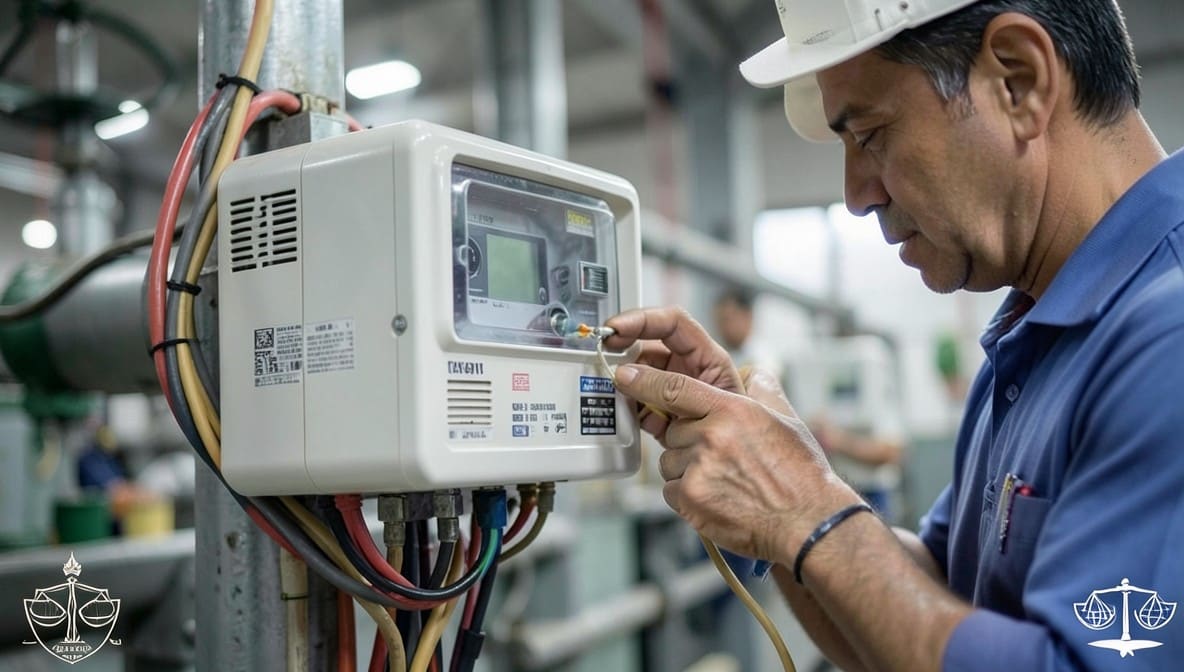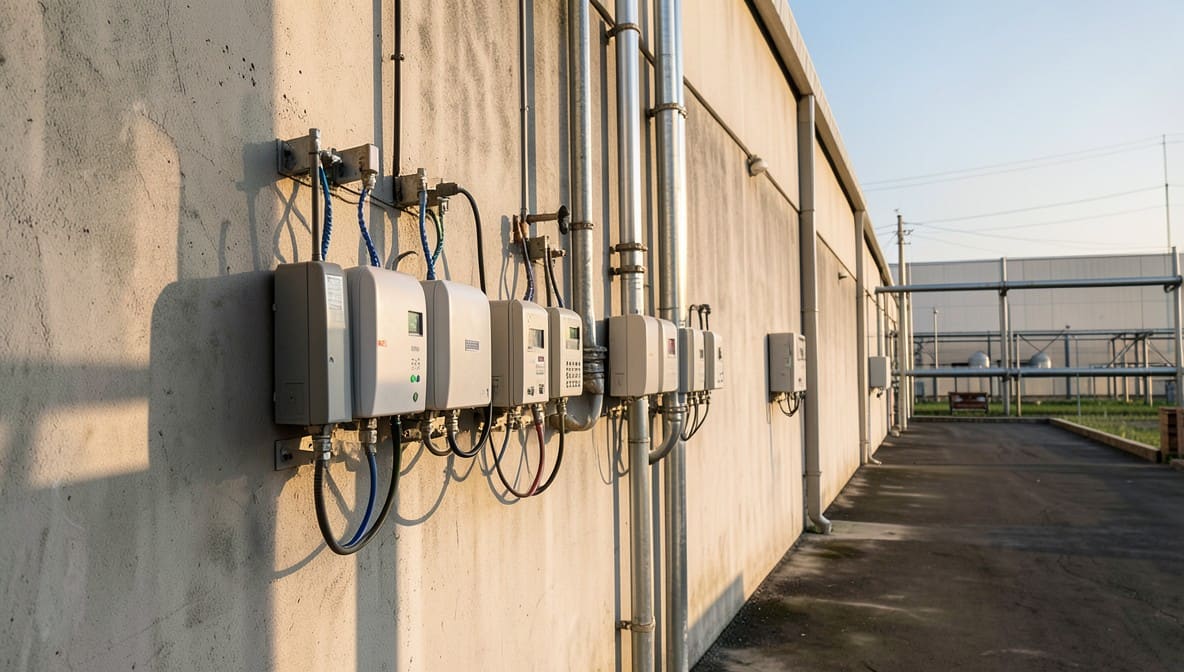
The Bombay High Court has clarified that penalties under Section 126 of the Electricity Act, 2003, cannot be imposed retroactively for the entire duration of electricity supply when unauthorized submeters are installed midway. The judgment establishes a critical boundary between lawful consumption and unauthorized distribution, with direct implications for distribution companies and industrial consumers.
Background & Facts
The Dispute
The dispute arose from the unauthorized use of electricity by M/s. Revive Realty Private Limited (Respondent), which operated a manufacturing unit in Turbhe, Navi Mumbai. The Respondent held a sanctioned electricity connection of 950 KW for industrial use, granted on 8th December 2010, with actual connection established on 8th July 2011. Subsequently, the Respondent installed sub-meters to distribute electricity to two other entities: SBI Global and M/s. Primetals Technologies India Private Limited, without obtaining separate licenses or approvals.
Key Facts
- The entire premises was leased to M/s. Morgan Construction Company Private Limited (later renamed M/s. Primetals Technologies India Private Limited) on 26th November 2010.
- Electricity connection was granted on 31st January 2011 for industrial use by Primetals.
- On 28th July 2016, SBI Global entered into a license agreement with the Respondent for ground, first, and second floors of the premises.
- On 16th January 2017, the Respondent installed separate sub-meters for Primetals and SBI Global.
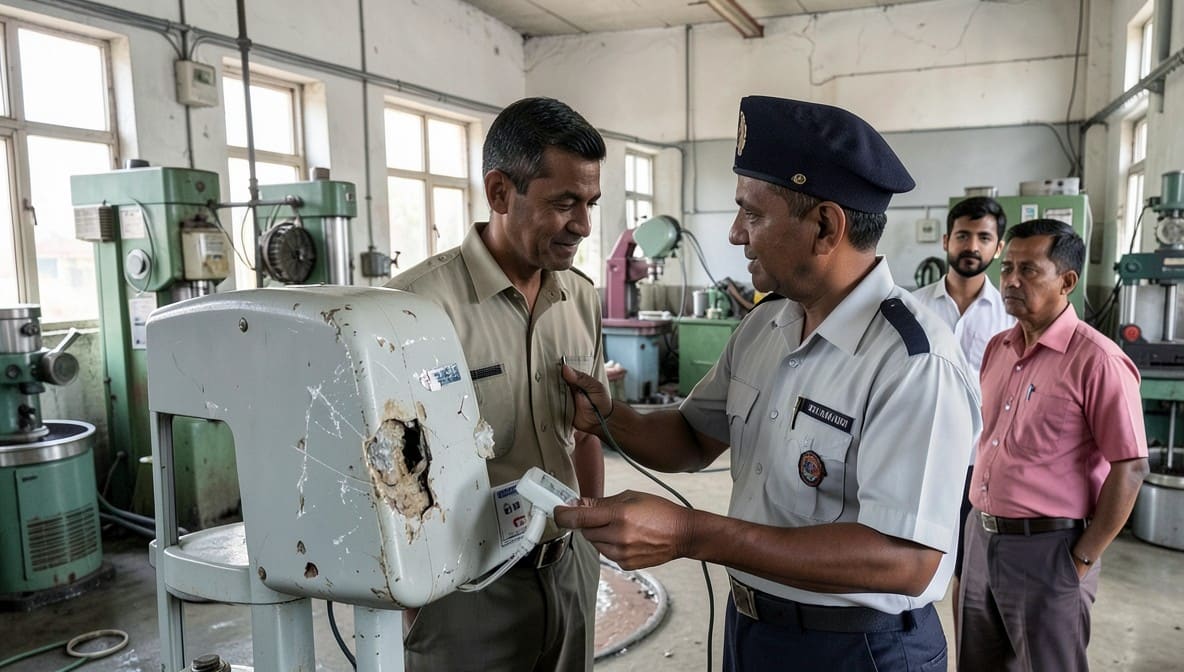
- On 16th November 2017, MSEDCL inspectors discovered the sub-meters and noted that SBI Global was using electricity for commercial purposes under an industrial connection.
- The combined load of all three entities exceeded the sanctioned load of 950 KW, reaching 1048.9 KW.
- On 10th January 2017, the Respondent applied for a tripartite agreement to regularize the arrangement.
- On 3rd November 2018, MSEDCL confirmed the inspection findings and classified the sub-metering as unauthorized distribution.
- On 22nd January 2019, a provisional bill of Rs. 11,37,57,474 was raised for the period July 2011 to November 2018.
- On 20th February 2019, a final assessment order was passed imposing a penalty of Rs. 4,04,31,638 for the period July 2011 to November 2017.
- On 31st October 2022, the Appellate Authority under Section 127 of the Electricity Act set aside the final assessment and directed a revised bill of Rs. 1,46,72,398 for 6,31,940 units, excluding non-tariff components.
Procedural History
- 26th November 2010: Lease of premises to M/s. Morgan Construction Company Private Limited
- 31st January 2011: Electricity connection granted for industrial use
- 28th July 2016: License agreement executed with SBI Global
- 16th January 2017: Sub-meters installed for Primetals and SBI Global
- 16th November 2017: MSEDCL inspection conducted
- 3rd November 2018: Inspection findings confirmed
- 22nd January 2019: Provisional assessment bill issued
- 20th February 2019: Final assessment order issued (Rs. 4,04,31,638)
- 31st October 2022: Appellate Authority sets aside final order and reduces bill to Rs. 1,46,72,398
- 22nd July 2023: Writ Petition No. 11345 of 2023 filed before Bombay High Court
- 23rd March 2026: Judgment reserved
- 26th March 2026: Judgment pronounced
Relief Sought
The Petitioner, MSEDCL, sought to set aside the Appellate Authority’s order dated 31st October 2022 and restore the final assessment order dated 20th February 2019, demanding payment of Rs. 4,04,31,638 with non-tariff components for the entire period from July 2011 to November 2017.
The Legal Issue
The central question was whether Section 126 of the Electricity Act, 2003 permits imposition of penalty for the entire period of electricity supply when unauthorized sub-metering commenced only in January 2017, or whether the penalty is limited to the period after the unauthorized distribution began.
Arguments Presented
For the Petitioner
Mr. Rahul Sinha, counsel for MSEDCL, argued that the installation of sub-meters in January 2017 constituted an unauthorized distribution of electricity under Section 126, and since the Respondent had been in continuous possession of the premises since 2011, the entire consumption from July 2011 to November 2017 should be treated as unauthorized. He relied on Executive Engineer, Southern Electricity Supply Company of Orissa Ltd. v. Sri Seetaram Rice Mill to assert that mens rea is irrelevant under Section 126, and on K. Raheja Corporation v. MERC to argue that any sub-distribution by a consumer is inherently unauthorized. He contended that the Respondent’s conduct amounted to a continuous malpractice from the inception of supply.
For the Respondent
Mr. Akshay Patil, counsel for Revive Realty, argued that from 2011 to 2017, the entire premises was occupied and used by Primetals for sanctioned industrial purposes. The unauthorized act commenced only upon installation of sub-meters in January 2017, when electricity began being diverted to SBI Global for commercial use. He emphasized that the Appellate Authority correctly limited the penalty to the consumption by SBI Global after sub-metering, and that the Assessing Authority had no basis to attribute the entire usage to unauthorized conduct. He further noted that MSEDCL had accepted the Appellate Authority’s order in a communication dated 24th March 2023, rendering the petition maintainable.
The Court's Analysis
The Court undertook a detailed statutory interpretation of Section 126 and its Explanation, which defines unauthorized use as consumption through means not authorized by the licensee. The Court held that while the installation of sub-meters to distribute electricity to third parties constitutes unauthorized use, the penalty under Section 126 cannot be applied retroactively to the entire period of supply.
"The statutory provision makes it evident that the usage of electricity through means which is unauthorised constitutes an unauthorised use of electricity. In the present case, the usage of electricity by SBI Global was by way of a sub meter which constituted unauthorised means. Till the electricity was consumed by M/s. Primetals Technologies Pvt. Ltd., it was a single point supply and upon sub-meters being installed, the Respondent engaged in distribution of electricity which constituted unauthorised use of electricity."
The Court distinguished between lawful consumption and unauthorized distribution. It noted that Primetals, from 2011 to 2017, was the sole consumer and used electricity for the sanctioned industrial purpose. The unauthorized act began only when sub-meters were installed in January 2017 to divert power to SBI Global, which was engaged in commercial activity under an industrial connection.
The Court further held that the Assessing Authority’s failure to identify the specific units consumed via sub-meters rendered the entire-period penalty arbitrary. The Appellate Authority correctly limited the penalty to the consumption by SBI Global after January 2017, as there was no evidence that Primetals’ usage was unauthorized.
The Court also affirmed the Appellate Authority’s decision to exclude non-tariff components from the penalty, citing Section 126(6), which limits the penalty to twice the tariff applicable, excluding additional levies.
The Verdict
The Petition was dismissed. The Court upheld the Appellate Authority’s order dated 31st October 2022, which reduced the penalty from Rs. 4,04,31,638 to Rs. 1,46,72,398, applicable only to the electricity consumed by SBI Global through unauthorized sub-meters after January 2017. The Court confirmed that non-tariff components were rightly excluded and directed that the revised bill be paid within 60 days of the judgment.
What This Means For Similar Cases
Penalty Cannot Be Applied Retroactively to Entire Supply Period
- Practitioners must now calculate penalties under Section 126 only from the date unauthorized sub-metering or distribution commenced, not from the date of original connection.
- Distribution companies must produce specific meter readings or consumption data for the post-unauthorized period to justify penalty calculations.
Sub-Metering Triggers Unauthorized Use, Not Lease Arrangements
- Merely leasing premises to a third party for sanctioned use does not constitute unauthorized use under Section 126.
- Unauthorized use arises only when electricity is redistributed to another entity via sub-meters or other means without a separate license.
Non-Tariff Components Excluded from Section 126 Penalties
- Any penalty under Section 126 must be calculated solely on the basis of tariff rates.
- Levies such as fuel surcharge, wheeling charges, or service taxes cannot be included in the penalty amount.
Documentation Is Critical for Enforcement
- Electricity distribution companies must document the exact date of sub-meter installation and the consumption attributable to unauthorized users.
- Delayed action (e.g., inspection in November 2017 but no penalty until 2019) may weaken the case for retroactive penalties.
Distinction Between Section 126 and Section 135 Maintained
- Section 126 applies to malpractice in consumption (e.g., sub-metering), regardless of intent.
- Section 135 applies to theft of electricity, which requires proof of dishonest intent.
- This judgment reinforces that the two provisions operate on different thresholds.