The Allahabad High Court has reaffirmed a foundational principle of criminal jurisprudence: that no judicial order, even at the stage of summoning or taking cognizance, may be passed mechanically. The quashing of a proforma-based summoning order underscores that procedural integrity is non-negotiable, regardless of the stage of proceedings or the nature of the offence.
Background & Facts
The Dispute
The applicant, Smt. Nanhki Devi, is facing criminal proceedings under Section 138(1)(b) of the Electricity Act, 2003, arising out of Case Crime No. 107 of 2022, registered at Police Station Anti-power Theft, District Chandauli. The proceedings were initiated based on a charge sheet dated 06.03.2025, which led to the issuance of a summoning order by the Additional Session Judge, F.T.C. Ist, Chandauli on 30.08.2025.
Key Facts
- The offence alleged pertains to unauthorized use or theft of electricity under Section 138(1)(b) of the Electricity Act, 2003
- A charge sheet was filed on 06.03.2025
- The summoning order was passed on 30.08.2025
- The applicant challenged the summoning order on grounds of mechanical issuance without judicial application
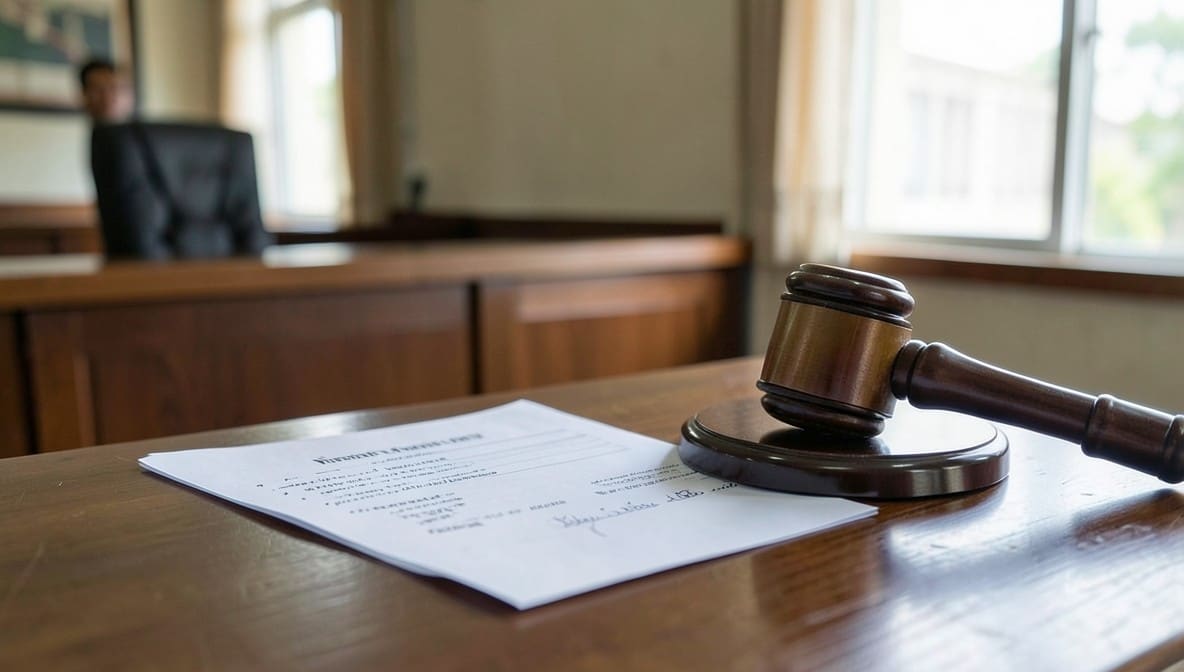
- The order was issued on a pre-printed proforma with handwritten entries for case number, accused name, section, date, and next date
- The presiding officer’s initials were affixed, but no reasoning, analysis, or independent evaluation of the charge sheet was evident
Procedural History
- 06.03.2025: Charge sheet filed by the investigating agency
- 30.08.2025: Summoning order passed by Additional Session Judge, F.T.C. Ist, Chandauli
- 17.04.2026: Application under Section 528 of BNSS filed before the Allahabad High Court seeking quashing of the summoning order and charge sheet
- 29.04.2026: Judgment delivered by the High Court
The Parties' Positions
Applicant (Smt. Nanhki Devi): Contended that the summoning order was mechanically issued on a printed proforma with only blanks filled in by court staff, with no indication that the presiding officer applied judicial mind to the merits of the charge sheet. Relied on Ankit v. State of U.P. to argue that such orders are void ab initio.
Respondent (State of U.P. and others): The Government Advocate and Standing Counsel admitted that the order was passed on a proforma. They did not contest the legal proposition but sought a direction for the lower court to pass a fresh order.
Relief Sought
The applicant sought quashing of the summoning order dated 30.08.2025, the charge sheet dated 06.03.2025, and all proceedings arising from Case No. 980 of 2025, on the ground of violation of natural justice and absence of judicial application.
The Legal Issue
The central question was whether a summoning order under Section 138 of the Electricity Act can be sustained if it is passed on a printed proforma with only handwritten entries and no indication that the presiding officer applied judicial mind to the contents of the charge sheet.
Arguments Presented
For the Appellant/Petitioner
Learned counsel for the applicant relied on Ankit v. State of U.P. (JIC 2010 (1) 432), which held that orders passed on printed proformas without judicial reasoning are invalid. He cited multiple Supreme Court decisions including Deputy Chief Controller Import and Export v. Roshan Lal Agarwal, UP Pollution Control Board v. Mohan Meakins, and Kanti Bhadra v. State of West Bengal, all of which affirm that while detailed reasoning is not mandatory at the cognizance stage, the magistrate must still apply judicial mind. He argued that the order in question was a mere administrative act, not a judicial one, and therefore ultra vires.
For the Respondent/State
The Government Advocate and Additional Government Advocate conceded that the order was passed on a proforma and admitted the absence of judicial application. They did not dispute the legal position laid down in Ankit and accepted that the order was unsustainable. They requested the High Court to direct the lower court to pass a fresh order after applying judicial mind.
The Court's Analysis
The Court examined the certified copy of the summoning order appended as Annexure-1 and found it to be a typed proforma with only case number, name of accused, section, date, and next date filled in by hand. The presiding officer had merely initialed the document, with no indication of review, analysis, or reasoning.
"Although as held by this Court in the case of Megh Nath Guptas & Anr v State of U.P. And Anr, 2008 (62) ACC 826, in which reference has been made to the cases of Deputy Chief Controller Import and Export Vs Roshan Lal Agarwal, 2003 (4) ACC 686 (SC), UP Pollution Control Board Vs Mohan Meakins, 2000 (2) JIC 159 (SC): AIR 2000 SC 1456 and Kanti Bhadra Vs State of West Bengal, 2000 (1) JIC 751 (SC): 2000 (40) ACC 441 (SC), the Magistrate is not required to pass detailed reasoned order at the time of taking cognizance on the charge sheet, but it does not mean that order of taking cognizance can be passed by filling up the blanks on printed proforma. At the time of passing any judicial order including the order taking cognizance on the charge sheet, the Court is required to apply judicial mind and even the order of taking cognizance cannot be passed in mechanical manner."
The Court emphasized that summoning an accused is a serious step that deprives a person of liberty and reputation. Even if the threshold for cognizance is low, the process must reflect independent judicial consideration. The use of proforma orders, even if common, cannot override constitutional and statutory obligations of judicial propriety.
The Court noted that this practice has been repeatedly disapproved by the Supreme Court and this Court, yet continues to persist, indicating a systemic failure in judicial discipline. The conduct of the presiding officer was described as "objectionable and deserves to be deprecated."
The Verdict
The application is allowed. The summoning order dated 30.08.2025 passed by the Additional Session Judge, F.T.C. Ist, Chandauli is quashed. The charge sheet dated 06.03.2025 and all proceedings in Case No. 980 of 2025 are set aside. The Additional Session Judge, F.T.C. Ist, Chandauli is directed to pass a fresh order on the charge sheet after applying judicial mind. The fresh order must reflect independent consideration of the allegations and legal sufficiency of the charge sheet.
What This Means For Similar Cases
Proforma Orders Are Per Se Invalid
- Practitioners must challenge any summoning or cognizance order that lacks reasoning or appears mechanically filled
- A proforma order, even if signed by a judge, is void if no judicial evaluation is evident
- This applies to all criminal proceedings, including those under special statutes like the Electricity Act
Judicial Accountability Is Non-Negotiable
- Courts must maintain records showing individual assessment of each charge sheet
- Advocates should request certified copies of orders and scrutinize them for signs of mechanical issuance
- This judgment empowers defence counsel to seek quashing at the earliest stage, avoiding prolonged litigation
Systemic Reform Required
- The judgment implicitly calls for administrative action against judicial officers who routinely use proformas
- High Courts may now initiate contempt or disciplinary proceedings for repeated violations
- Law clerks or court staff must not be permitted to draft judicial orders, even in minor cases