Topic

demolition order

A demolition order in Indian law is a government directive to remove structures deemed illegal or in violation of building regulations, subject to constitutional protections under Article 21 and procedural fairness.

16 articlesLatest July 2026
Article 226 | Writ Petition for Unauthorised Construction Dismissed Without Exhausting GMDA Act Appeal Remedy : Gauhati HC
Case Law Analysis
|Gauhati High Court

Article 226 | Writ Petition for Unauthorised Construction Dismissed Without Exhausting GMDA Act Appeal Remedy : Gauhati HC

Gauhati High Court reinforces the exhaustion doctrine by dismissing a writ petition challenging a demolition order for unauthorised construction, directing petitioners to first pursue the statutory appeal under the GMDA Act. The ruling underscores that Article 226 cannot be invoked bypassing available statutory remedies, impacting property owners and developers in urban development disputes.

Section 67-A U.P. Revenue Code | Authorities Must Decide Shelter Applications Within 6 Weeks Under Due Process Mandate : Allahabad HC
Case Law Analysis
|Allahabad High Court

Section 67-A U.P. Revenue Code | Authorities Must Decide Shelter Applications Within 6 Weeks Under Due Process Mandate : Allahabad HC

The Allahabad High Court has ruled that demolition of homes cannot proceed until authorities conclusively decide pending applications under Section 67-A of the U.P. Revenue Code, ensuring the right to shelter is protected by enforceable timelines. This binds revenue officials to act with urgency, preventing arbitrary evictions and giving legal teeth to procedural fairness in land disputes.

Section 41(3) U.P. Urban Planning Act | Writ Petition Barred If Statutory Revision Remedy Available : Allahabad HC
Case Law Analysis
|Allahabad High Court

Section 41(3) U.P. Urban Planning Act | Writ Petition Barred If Statutory Revision Remedy Available : Allahabad HC

Allahabad HC reaffirms that writ jurisdiction under Article 226 is barred when an efficacious alternative remedy-such as revision under Section 41(3) of the U.P. Urban Planning Act-exists. The ruling underscores that petitioners must exhaust statutory remedies before approaching constitutional courts, reinforcing the principle of exhaustion of alternative remedies in administrative law disputes.

Article 21 & 300A | No Demolition Without Notice, Survey, or Hearing: Andhra Pradesh HC Stays Arbitrary Panchayat Action
Case Law Analysis
|Andhra Pradesh High Court

Article 21 & 300A | No Demolition Without Notice, Survey, or Hearing: Andhra Pradesh HC Stays Arbitrary Panchayat Action

The Andhra Pradesh High Court ruled that demolition of private property without prior notice, survey, or hearing violates constitutional guarantees under Article 21 and 300A. The court directed authorities to follow due process, reinforcing that arbitrary actions by Panchayat or government bodies are unconstitutional and subject to judicial scrutiny.

Article 21 & Land Acquisition | No Demolition Without Award or Hearing: Karnataka HC Mandates 4-Month Disposal of Representations
Case Law Analysis
|Karnataka High Court

Article 21 & Land Acquisition | No Demolition Without Award or Hearing: Karnataka HC Mandates 4-Month Disposal of Representations

The Karnataka High Court ruled that properties under land acquisition cannot be demolished until landowners' representations are heard and decided within four months. The judgment reinforces that due process under Article 21 requires prior notice, a fair hearing, and an award before any demolition, directly impacting landowners and government authorities involved in infrastructure projects.

Section 331(1) Uttarakhand Municipal Corporation Act | Cosmetic Repairs Like Paint and Putty Cannot Override Structural Danger in Heritage Buildings : Uttarakhand HC
Case Law Analysis
|Uttarakhand High Court

Section 331(1) Uttarakhand Municipal Corporation Act | Cosmetic Repairs Like Paint and Putty Cannot Override Structural Danger in Heritage Buildings : Uttarakhand HC

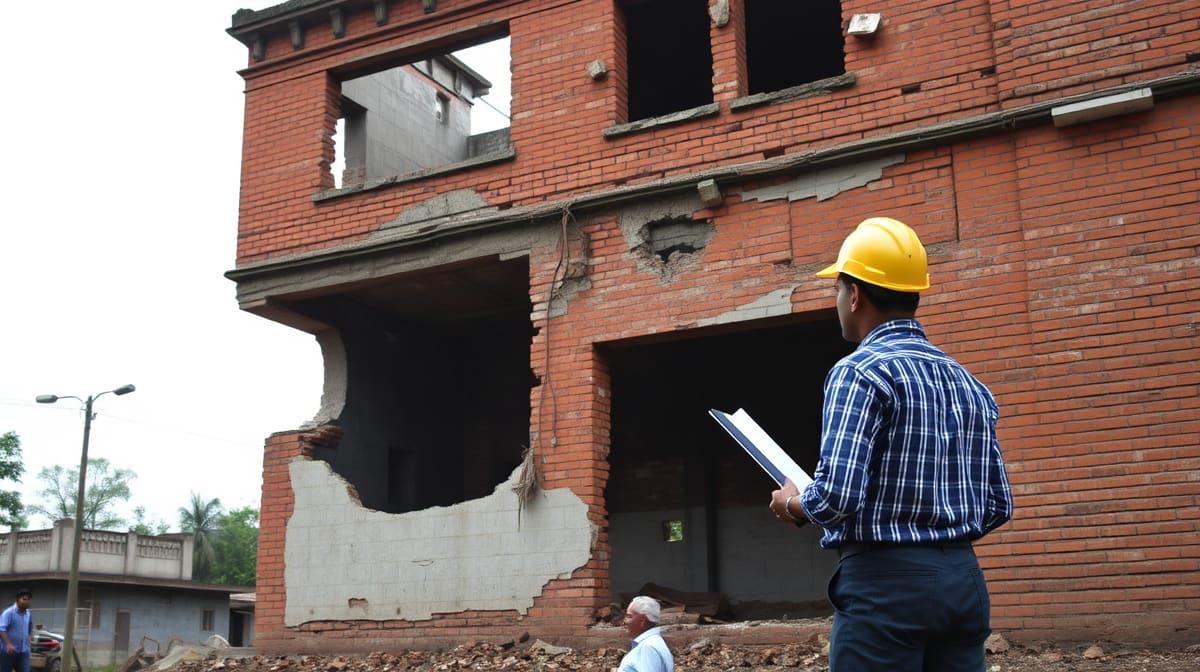
The Uttarakhand High Court has ruled that superficial fixes such as repainting or patching walls do not negate the statutory obligation to demolish a structurally unsound century-old building under Section 331(1) of the UMCA, 1959. This sets a critical precedent for municipal authorities and property owners: safety trumps aesthetics, and heritage status does not exempt dangerous structures from enforcement.

Section 351 MMC Act | Documentary Evidence Overrides Photographic Assumption in Mezzanine Floor Disputes : Bombay HC
Case Law Analysis
|Bombay High Court

Section 351 MMC Act | Documentary Evidence Overrides Photographic Assumption in Mezzanine Floor Disputes : Bombay HC

The Bombay High Court ruled that municipal demolition orders based solely on photographic evidence cannot override documented proof of a pre-existing mezzanine floor. The judgment establishes that factual disputes over structural classification require full trial, protecting property owners from arbitrary enforcement under the Mumbai Municipal Corporation Act and reinforcing procedural fairness in urban development cases.

Article 226 Writ Petition | Locus Standi Limited to Personal Legal Interest; Cannot Challenge Demolition Order Affecting Third Parties : Madras HC
Case Law Analysis
|Madras High Court

Article 226 Writ Petition | Locus Standi Limited to Personal Legal Interest; Cannot Challenge Demolition Order Affecting Third Parties : Madras HC

The Madras High Court ruled that a writ petitioner under Article 226 cannot challenge a demolition order affecting third parties if their own rights are protected by an undertaking. The Court reiterated that relief under Article 226 must be confined to the petitioner's personal legal interest, reinforcing the principle of locus standi in public law remedies.