The National Green Tribunal Western Zone has upheld a demolition order against eight commercial structures built in violation of the Coastal Regulation Zone (CRZ) Notification, rejecting claims of pre-1991 existence and exposing fabricated documentation. The judgment reinforces the strict enforcement of CRZ norms and underscores that procedural irregularities, forged plans, and misrepresentation of survey numbers cannot override environmental protections.
Background & Facts
The Dispute
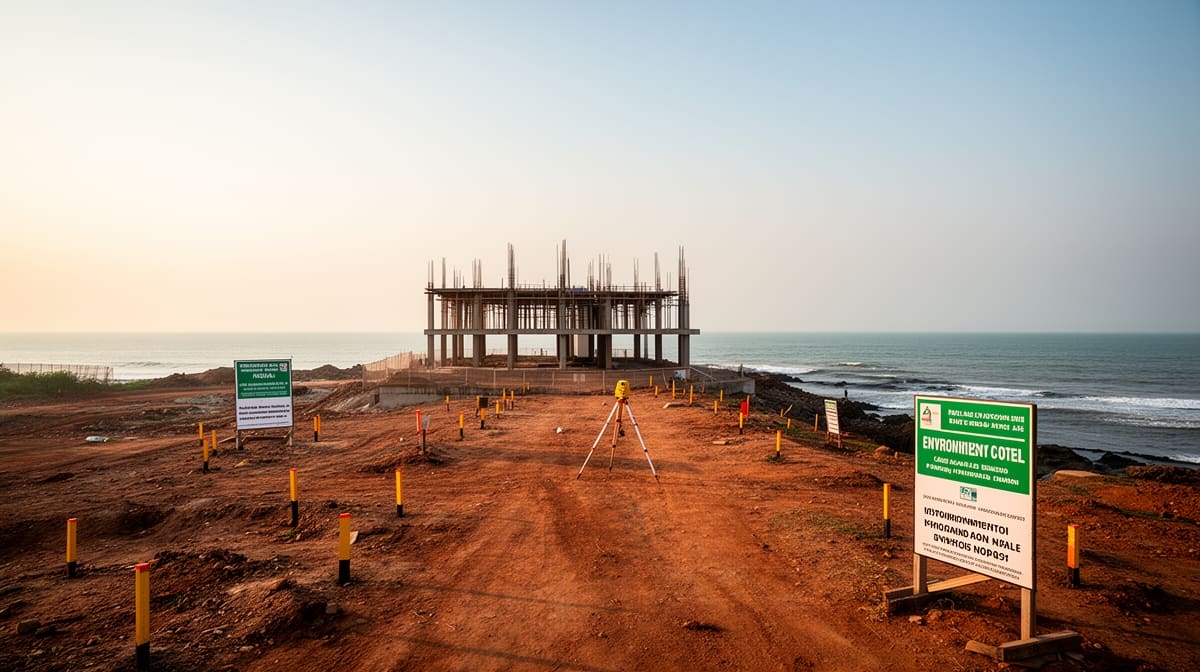
The dispute arose from the construction of eight commercial structures on land bearing Survey No. 119/3 in Morjim Village, Pernem, Goa, located within the CRZ III and Non-Dotage Zone (NDZ) as per the CRZ Notification, 1991. The Goa Coastal Zone Management Authority (GCZMA) issued a Show Cause Notice on 05.11.2024, alleging that the structures were erected without prior approval and in violation of CRZ norms. The complainant, Respondent No. 5 Mr. Anil Prabhakar Naik, alleged that the appellant, Mr. Dilip Mangesh Morje, had misrepresented the survey number, fabricated documents, and misused a 2007 permission for repair to justify illegal construction.
Key Facts
- The property in question is Survey No. 119/3, Morjim Village, Pernem, Goa.
- The appellant claimed the structures predated 1991 and were built by his father, Late Mr. Mangesh R. Morje, who was a Mundkar.
- The appellant submitted documents including:
- An electricity bill dated 28.03.1975 in the name of his father.
- A water connection bill dated 01.01.1981.
- House tax receipts from 1985 - 1986.
- An occupancy certificate dated 1988 bearing Survey No. 119/3-A (a number not in existence until 2008).
- A plan allegedly approved by the Village Panchayat and PWD on 16.04.1988, showing G+3 structure.
- The GCZMA found the 1988 plan to be computer-generated, despite computers not being available in Goa at that time.
- The plan bore no signatures of the owner or engineer.
- The plan referenced Survey No. 119/3-A, which was owned by M/s True Axiz Resort Pvt Ltd, not the appellant.
- The appellant’s mother, Smt. Saraswati M. Morje, had obtained GCZMA permission on 27.09.2007 for repair and renovation of an existing house on Survey No. 119/3.
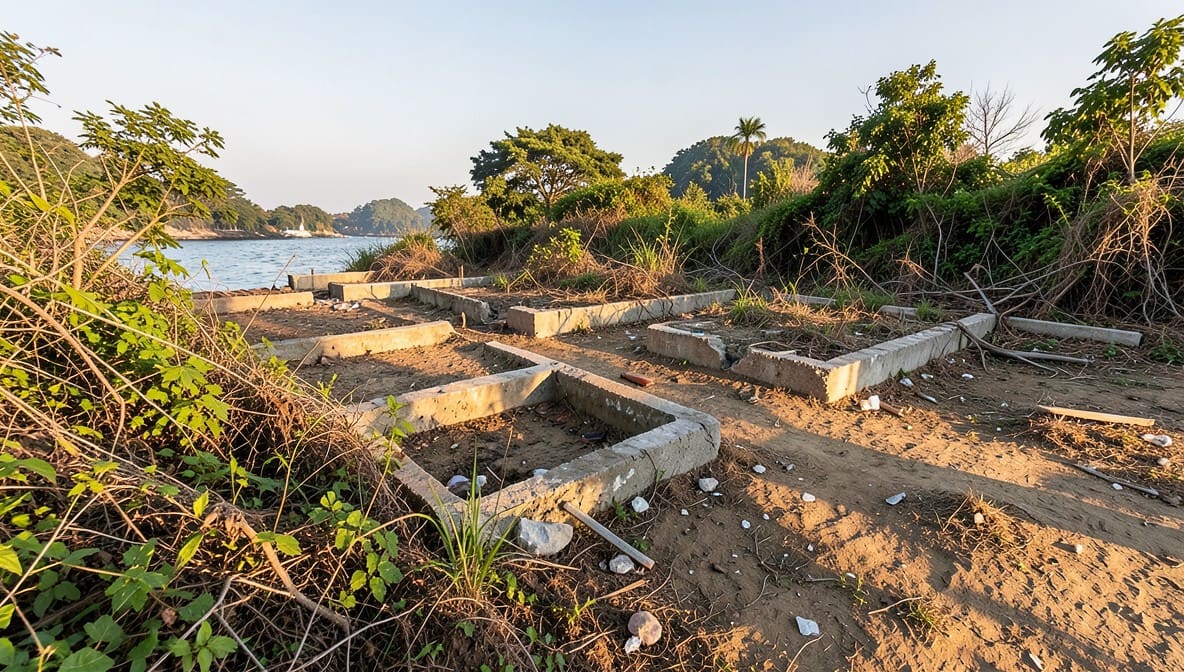
- Site inspection revealed eight structures, all used for commercial purposes, with no evidence of prior habitation or residential use.
- The appellant’s Mundkar certificate was a registration, not a formal declaration of rights.
- The appellant was not present during the site inspection.
Procedural History
- 25.04.2022: Complaint filed by Respondent No. 5 with GCZMA alleging illegal construction.
- 05.11.2024: GCZMA issued Show Cause Notice to the appellant.
- 14.11.2024: GCZMA directed DSLR to demarcate structures falling outside CRZ and granted time for reply.
- 21.11.2024: 421st GCZMA Meeting held; no substantive hearing.
- 10.12.2024: Substantive hearing held; GCZMA rejected appellant’s documents as forged.
- 16.01.2025: GCZMA passed order directing demolition of eight structures and restoration of land.
- 24.04.2026: Appeal heard and dismissed by NGT Western Zone Bench, Pune.
The Parties' Positions
Appellant (Mr. Dilip Mangesh Morje):
- Claimed the structures existed since before 1991.
- Asserted his father was a Mundkar with traditional rights to construct.
- Argued that the 1988 plan was hand-drawn and the computerized appearance was a scanning artifact.
- Contended that electricity, water, and tax records proved continuous habitation.
- Claimed typographical error in survey number on occupancy certificate.
- Invoked Article 21, arguing demolition would violate right to life.
Respondents (GCZMA, Collector, SDO, Village Panchayat, Mr. Anil Prabhakar Naik):
- Denied Mundkar status, citing absence of formal declaration.
- Asserted Survey No. 119/3-A never existed before 2008.
- Alleged the 1988 plan was fabricated, with computer font and missing signatures.
- Stated the 2007 permission was for repair only, not reconstruction.
- Highlighted that the current structures were entirely new, not repairs.
- Emphasized that commercial use in CRZ III without permission is prohibited.
- Argued that tax and utility bills do not prove structural existence or legality.
Relief Sought
The appellant sought quashing of the GCZMA’s demolition order dated 16.01.2025, and requested that the structures be allowed to remain, with recognition of pre-1991 existence and traditional rights under CRZ norms.
The Legal Issue
The central question was whether pre-1991 existence of a structure can be established through documents that are demonstrably forged, inconsistent, or unrelated to the property in question, and whether commercial construction in CRZ III can be justified by claiming traditional rights without formal declaration of Mundkar status or prior CRZ approval.
Arguments Presented
For the Appellant
The appellant’s counsel relied on utility bills (electricity, water, tax), occupancy certificates, and the 1988 plan to establish continuous habitation since before 1991. He argued that the Mundkar status conferred traditional rights to construct and reconstruct dwellings under Goa’s customary land laws. He contended that the GCZMA failed to consider the totality of evidence and that demolition would violate Article 21. He further argued that the plan’s computerized appearance was due to digitization, not fabrication, and that the survey number discrepancy was a clerical error.
For the Respondent
The respondents countered that the 1988 plan was impossible to have been created in 1988 due to absence of computers in Goa. The signature of the owner and engineer was missing, and the plan referenced a non-existent survey number (119/3-A). The GCZMA’s 2007 permission was strictly for repair, not reconstruction. The Mundkar registration was not equivalent to a formal declaration of rights under the Agricultural Tenancy Act, 1964. Utility bills and tax receipts could not prove the existence of the current structures, as they might relate to prior, demolished buildings. The complainant, as the lawful owner of Survey No. 119/3, had never consented to the construction.
The Court's Analysis
The Tribunal conducted a meticulous review of all documents submitted by the appellant. It noted that the plan dated 16.04.1988, which the appellant claimed was the basis for construction, showed an area calculation for G+3 floors (780.61 sq. mtrs) while simultaneously labeling the structure as G+1. This internal inconsistency rendered the plan inherently unreliable.
"The plan cannot be a genuine one because the structure is said to be G+1 Floor while the area is recorded of G+1+2+3 Floor which is incongruous."
The Tribunal further observed that the plan bore computer-generated fonts, despite the absence of computer technology in Goa in 1988. The endorsement by the Assistant Engineer of PWD on the same date as the Village Panchayat’s approval was deemed implausible, as such approvals required fortnightly meetings and formal record-keeping.
The Court held that electricity and water bills, while indicative of occupancy, do not establish the existence of the current structures. The house tax receipt referenced House No. 32, which was not linked to the appellant’s property. The occupancy certificate bearing Survey No. 119/3-A was irrelevant, as that survey number did not exist until 2008 and belonged to a different owner.
The Tribunal rejected the claim of Mundkar rights, noting that mere registration under the Mundkar Act does not equate to a formal declaration of rights. Even if the appellant were a Mundkar, the construction of a G+3 commercial structure in NDZ without CRZ permission was impermissible.
The Court emphasized that the 2007 permission for repair was misused to demolish the original structure and erect eight new commercial buildings. The location, size, and use of the new structures bore no resemblance to the original dwelling.
"The very fact that the nature of the house has changed, the old house is demolished and a new building is standing would clearly prove that the appellant has not obtained fresh permission from the GCZMA."
The Tribunal concluded that the appellant’s documents were not merely flawed but deliberately fabricated to circumvent CRZ regulations. The GCZMA’s findings were fully supported by evidence and the demolition order was legally sound.
The Verdict
The appeal was dismissed. The National Green Tribunal upheld the GCZMA’s order dated 16.01.2025 directing the demolition of all eight commercial structures on Survey No. 119/3, Morjim, Goa. The appellant was directed to demolish the structures within 60 days from the date of judgment and restore the land to its original condition. No costs were awarded to either party.
What This Means For Similar Cases
Fabricated Documents Will Not Sustain Claims of Pre-1991 Existence
- Practitioners must ensure that documents submitted to prove pre-1991 existence are authentic, consistent, and contemporaneous.
- Computer-generated fonts on documents dated before 1990 will be treated as prima facie evidence of forgery.
- Survey number mismatches, especially where the number is demonstrably non-existent, will invalidate claims.
Mundkar Registration ≠ CRZ Exemption
- Merely being registered as a Mundkar does not confer rights to construct beyond permitted limits in CRZ.
- Formal declaration of Mundkarship under the Agricultural Tenancy Act, 1964, is required to claim traditional rights.
- Commercial use in CRZ III remains prohibited regardless of customary status.
Repair Permission Cannot Justify Reconstruction
-
Permissions granted for "repair and renovation" are strictly limited to maintaining the existing plinth area, FSI, and density.
-
Any demolition and replacement constitutes new construction requiring fresh CRZ clearance.
-
Photographic evidence from the time of permission must match the current structure; discrepancies will be fatal to the defense.
-
Always verify survey numbers against revenue records before filing any application.
-
Do not rely on utility bills alone to prove structural existence - corroborate with land records, building permits, or aerial surveys.
-
In CRZ matters, the burden of proving pre-1991 existence lies squarely on the applicant.
-
GCZMA and NGT will not tolerate manipulation of documents - fraudulent submissions may invite penalties under environmental law.