A writ petition under Article 226 cannot be used as a vehicle to challenge administrative orders affecting third parties when the petitioner’s own rights are already safeguarded. The Madras High Court has clarified that legal protection must be confined to the petitioner’s specific interest, rejecting broad-based challenges to demolition permissions that extend beyond their lawful possession.
Background & Facts
The Dispute
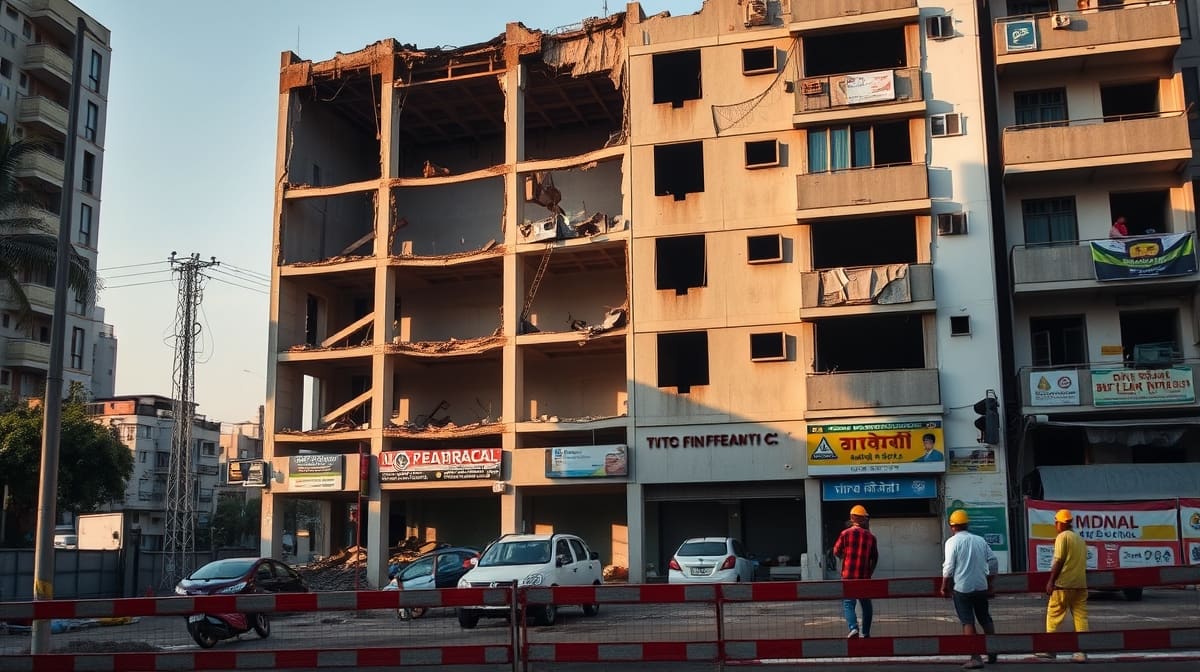
The petitioner, S.R.P. Enterprises, is a sub-tenant occupying a portion of a building targeted for demolition under a permission granted by the Greater Chennai Corporation. The petitioner challenged the demolition sanction issued to the second respondent, Doshi Constructions, arguing that the procedure mandated by the Supreme Court in SLP (Civil) No. 10336 of 2023 had not been followed. The petitioner sought to quash the entire demolition permission, claiming procedural irregularities.
Procedural History
- The petitioner filed Writ Petition No. 7841 of 2026 under Article 226 of the Constitution.
- The first respondent, the Executive Engineer, Town Planning Section, issued the demolition permission.
- The second respondent, Doshi Constructions, sought demolition of the entire structure, including portions occupied by other tenants.
- The petitioner did not seek to challenge the legality of the demolition order per se, but its application to their occupied portion.
Relief Sought
The petitioner sought a writ of certiorari and mandamus to quash the demolition permission and restrain all demolition activities pending the adjudication of a pending civil suit (C.S. No. 574 of 2010).
The Legal Issue
The central question was whether a writ petitioner, who is a sub-tenant, can challenge a demolition order affecting an entire building when their own possession and access are not threatened, and when the respondent has already provided an undertaking to protect their specific interests.
Arguments Presented
For the Petitioner
The petitioner’s counsel argued that the Supreme Court’s directions in SLP (Civil) No. 10336 of 2023 imposed mandatory procedural safeguards before demolition, and that non-compliance rendered the entire permission invalid. They contended that the first respondent’s failure to follow these procedures invalidated the demolition sanction for all occupants, including the petitioner, and that the writ petition was a necessary remedy to prevent irreparable harm.
For the Respondent
The second respondent’s counsel submitted that an unconditional undertaking had been given before the Court, expressly promising not to disturb the petitioner’s peaceful possession, ingress, egress, or amenities. They argued that the petitioner’s interest was fully protected and that the petition was an abuse of process, seeking to litigate rights of other occupants who were not parties to the proceeding.
The Court's Analysis
The Court emphasized that writ jurisdiction under Article 226 is not a substitute for civil litigation and must be exercised with restraint. The petitioner’s grievance was confined to their own occupation as a sub-tenant. The Court noted that the second respondent had provided an unequivocal undertaking, recorded on record, guaranteeing non-interference with the petitioner’s possession and access. This undertaking rendered the petitioner’s immediate fears baseless.
"Any party approaching this Court seeking for protection of his legal right can seek protection only for himself and not on behalf of others."
The Court held that the petitioner could not extend their challenge to the rights of other occupants or to the legality of the demolition order as it pertained to the entire building. The Court distinguished between personal legal rights and generalized public interest, stating that standing in writ petitions is strictly personal. The pending civil suit (C.S. No. 574 of 2010) remained the appropriate forum for resolving broader title or ownership disputes.
The Court further clarified that if other occupants were aggrieved, they were at liberty to file separate petitions. The petitioner’s attempt to obtain a blanket injunction was therefore unsustainable.
The Verdict
The petitioner prevailed on the limited scope of their claim. The Court held that the petitioner’s rights as a sub-tenant are protected by the undertaking, and dismissed the petition insofar as it sought to quash the demolition order for the entire building. The demolition may proceed for other portions, subject to the Court’s specific directions protecting the petitioner’s access and possession.
What This Means For Similar Cases
Writ Relief Is Limited to Personal Rights
- Practitioners must confine writ petitions to the petitioner’s own legal interest; challenges affecting third parties will be dismissed for lack of locus standi.
- An undertaking from a respondent that safeguards the petitioner’s specific rights can render a broader challenge redundant.
Civil Suit Remains Primary Forum for Title Disputes
- Pending civil suits over property ownership or tenancy rights must be exhausted before invoking writ jurisdiction for ancillary relief.
- Writ petitions cannot be used to circumvent civil procedure or to obtain a stay on proceedings already pending in civil courts.
Undertakings Carry Binding Weight in Writ Proceedings
- Unconditional undertakings given before the High Court are treated as judicial admissions and bind the parties.
- Courts will not entertain broad-based challenges when specific, targeted relief is available and accepted by the opposing party.