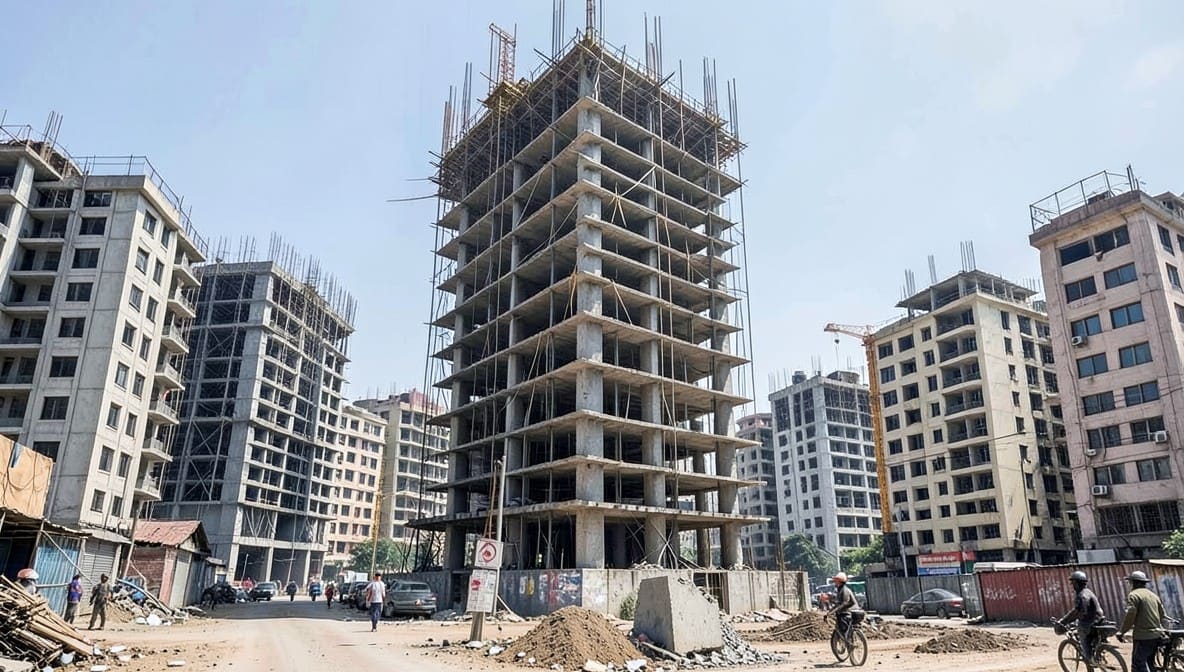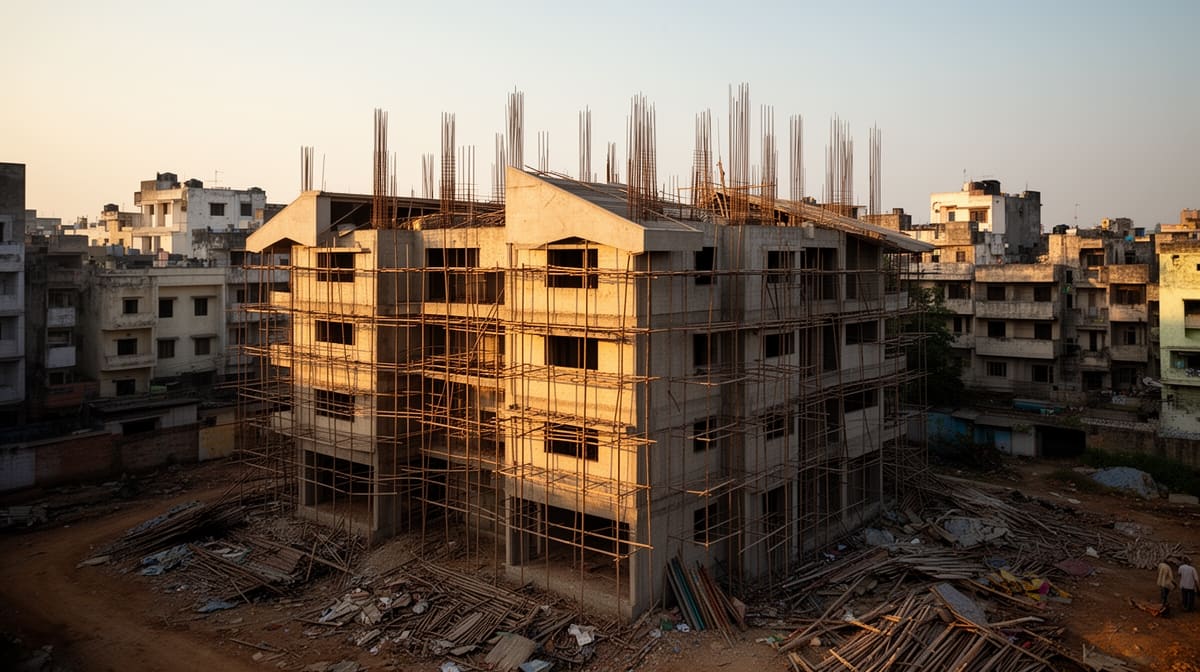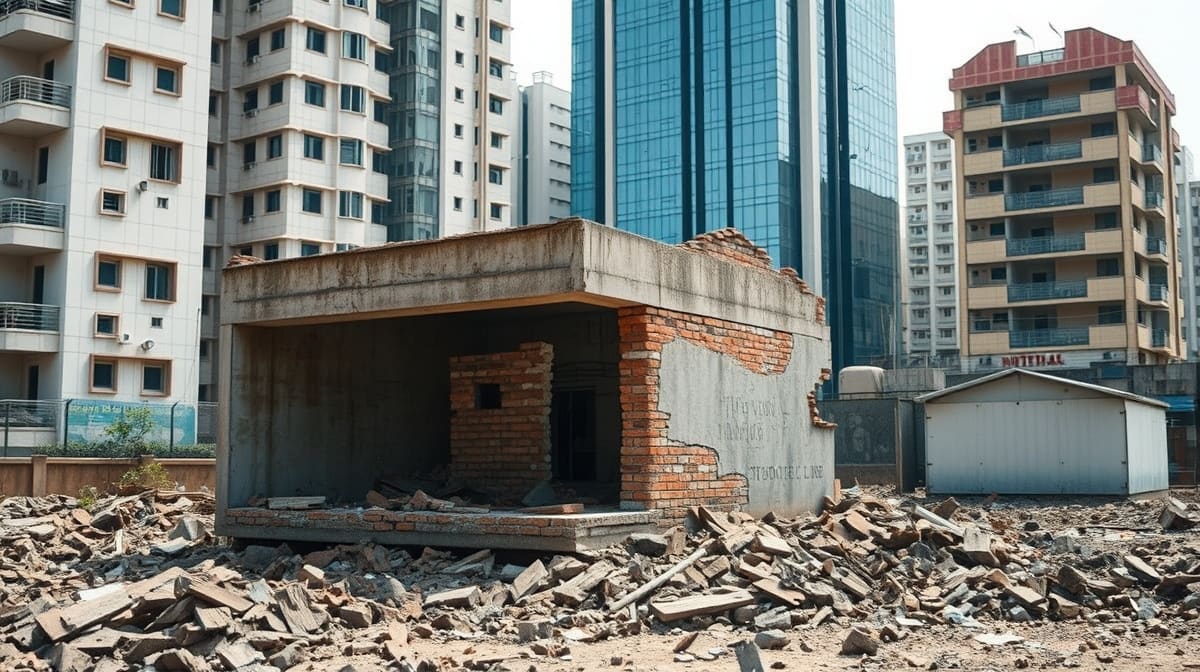
The Bombay High Court has reaffirmed that unauthorised constructions cannot be legitimised merely through municipal assessment records, private agreements, or subsequent repair permissions. In a significant ruling, the Court dismissed a writ petition challenging the demolition of a structure, emphasising that legal sanction under municipal laws is indispensable for claiming protection against demolition.
Background & Facts
The Dispute
The petitioner, a 72-year-old senior citizen, challenged a Stop Work Notice dated 18th January 2024 and an Order dated 1st February 2024 issued by the Municipal Corporation of Greater Mumbai (MCGM). These impugned orders pertained to a room measuring 120 sq. ft. in the Blue Star Crystal Housing Society compound, Borivali (West), Mumbai. The petitioner also challenged the demolition of the room carried out on 2nd February 2024 pursuant to the impugned order.
Key Facts
- The petitioner claimed ownership of the structure based on Sale Deeds dated 13th July 2004 and 5th March 2009.
- He relied on municipal assessment records, water and electricity bills, and a business licence to establish the structure’s legality.
- The petitioner alleged that the structure existed prior to 1961-62 and was acknowledged in a Development Agreement dated 22nd August 2022 by Paradigm Blue Star LLP.
- Due to water-logging concerns, the petitioner sought permission for repairs via a letter dated 18th April 2023. The Executive Engineer informed him on 20th December 2023 that no permission was required for tenantable repairs.
- The petitioner carried out repairs but was issued a Stop Work Notice on 18th January 2024, alleging unauthorised construction beyond the approved plan.
- The petitioner contended that the notice was issued malafide and that he had adhered to the permissible FSI under the Development Control and Promotion Regulations (DCPR 2034).
Procedural History
- 18th January 2024: Stop Work Notice issued by Respondent No. 4.
- 1st February 2024: Impugned Order passed by MCGM.
- 2nd February 2024: Demolition of the structure carried out.
- Writ Petition No. 4542 of 2024: Filed before the Bombay High Court seeking declarations of nullity for the impugned orders and restoration of the structure, along with compensation of Rs. 80 lakhs with 18% interest.
Relief Sought
The petitioner sought:
- A declaration that the Stop Work Notice and Order were null and void.
- Restoration of the demolished room.
- Compensation of Rs. 80 lakhs with 18% interest from Respondent Nos. 1 to 6.
- Initiation of disciplinary proceedings against the concerned officers (Respondent Nos. 4 to 6).
The Legal Issue
The central question was whether the petitioner had produced cogent material to establish that the structure was sanctioned or authorised under applicable municipal laws. Specifically, the Court examined whether municipal assessment records, utility bills, or private agreements could confer legal sanction for an unauthorised construction.
Arguments Presented
For the Petitioner
- The petitioner relied on Sale Deeds, municipal assessment records, and utility bills to establish ownership and legality of the structure.
- He contended that the structure existed prior to 1961-62 and was acknowledged in the Development Agreement and Architect’s Proposal Letter.
- The petitioner argued that the Stop Work Notice was issued without application of mind and with malafide intent to dispossess him.
- He submitted that the repairs carried out were tenantable and within the permissible FSI.
For the Respondents
- The respondents opposed the petition, arguing that the petitioner failed to produce a sanctioned plan or any documentary evidence establishing the structure’s legality.
- They contended that municipal assessment records and utility bills merely indicate occupation or provision of services, not legal sanction.
- The respondents highlighted the discrepancy in the structure’s area (from 120 sq. ft. to 246.92 sq. ft.) and the absence of any sanctioned plan for the enlarged area.
- They submitted that tenantable repairs do not authorise enlargement or reconstruction contrary to sanctioned plans.
The Court's Analysis
The Court conducted a rigorous examination of the petitioner’s claims and the legal principles governing unauthorised constructions:
"Such documents may indicate the existence or occupation of a structure, or the provision of municipal and utility services to it. They do not, by themselves, establish title to the land or demonstrate that the construction was sanctioned or authorised under the applicable planning laws."
The Court observed that the petitioner’s reliance on assessment records was misplaced, as these records did not disclose the area, dimensions, or configuration of the structure assessed prior to 1961. Thus, they could not establish that the current structure corresponded to the one assessed.
The Court further noted that the petitioner did not claim ownership of the land but only of the structure. The Sale Deed relied upon contained a recital acknowledging the existence of a room measuring approximately 120 sq. ft., but this private acknowledgment did not confer municipal sanction or legality upon the structure.
"A private agreement or conveyance recording the existence of a structure does not, by itself, establish that the structure was authorised under the applicable municipal and planning laws."
The Court emphasised that the petitioner failed to produce any sanctioned plan for either the original structure (120 sq. ft.) or the enlarged structure (246.92 sq. ft.). The discrepancy in area remained unexplained, and there was no evidence that the enlargement was sanctioned by the competent authority.
The Court relied on the principles laid down in Laxmi Shetye v MHADA and Sidharam M. Yanagandul v State of Maharashtra, which held that assessment to municipal taxes does not change the unauthorised character of a structure. It further cited Siesta Industrial and Trading Corporation v MCGM, which underscored the responsibility of municipal officers to verify the legality of structures before granting repair permissions.
"Granting reliefs to the Petitioners would only encourage the public perception that one can construct illegally and regularise the same by obtaining such permissions subsequently. It would render the entire object of the legislature to have a planned development and having the Municipal Act nugatory and otiose resulting in illegalities being confirmed and ratified by subsequent repair permissions."
The Court also invoked the doctrine of fraud on the Court, as established in SP Chengalvaraya Naidu v Jagannath & Ors, holding that a litigant who suppresses material facts or misleads the Court is not entitled to any relief. The petitioner’s attempt to rely on private agreements and assessment records to establish legality was deemed an attempt to mislead the Court.
The Verdict
The Bombay High Court dismissed the writ petition. The Court held:
- The Stop Work Notice dated 18th January 2024 and the Order dated 1st February 2024 were not illegal.
- The demolition carried out pursuant to the impugned order was not unlawful.
- The petitioner’s claims for restoration of the structure and compensation of Rs. 80 lakhs were rejected, as they required adjudication of disputed questions of fact beyond the scope of writ jurisdiction.
- The Court declined to impose exemplary costs considering the petitioner’s age (72 years).
- The dismissal does not preclude the petitioner from pursuing civil remedies before the competent forum.
What This Means For Similar Cases
Municipal Sanction Is Non-Negotiable
- Practitioners must advise clients that municipal assessment records, utility bills, or private agreements cannot substitute for legal sanction under planning laws.
- Tenantable repairs do not authorise enlargement, reconstruction, or alteration of a structure beyond its sanctioned dimensions.
Fraud on the Court Has Severe Consequences
- Litigants who suppress material facts or rely on misleading documents risk dismissal of their claims and may face exemplary costs.
- Courts will not entertain claims based on disputed private rights or monetary reliefs in writ jurisdiction if the underlying facts are contentious.
Public Perception and Legislative Intent
- Granting relief in cases of unauthorised constructions would undermine legislative intent and encourage illegal constructions.
- Municipal officers must verify the legality of structures before granting repair permissions to prevent ratification of illegalities.