The Karnataka High Court has reaffirmed that no coercive demolition of property can occur during ongoing land acquisition proceedings before an award is passed or representations are duly considered. This order underscores the constitutional imperative of due process under Articles 226 and 227, ensuring that landowners are not deprived of their rights without procedural fairness.
Background & Facts
The Dispute
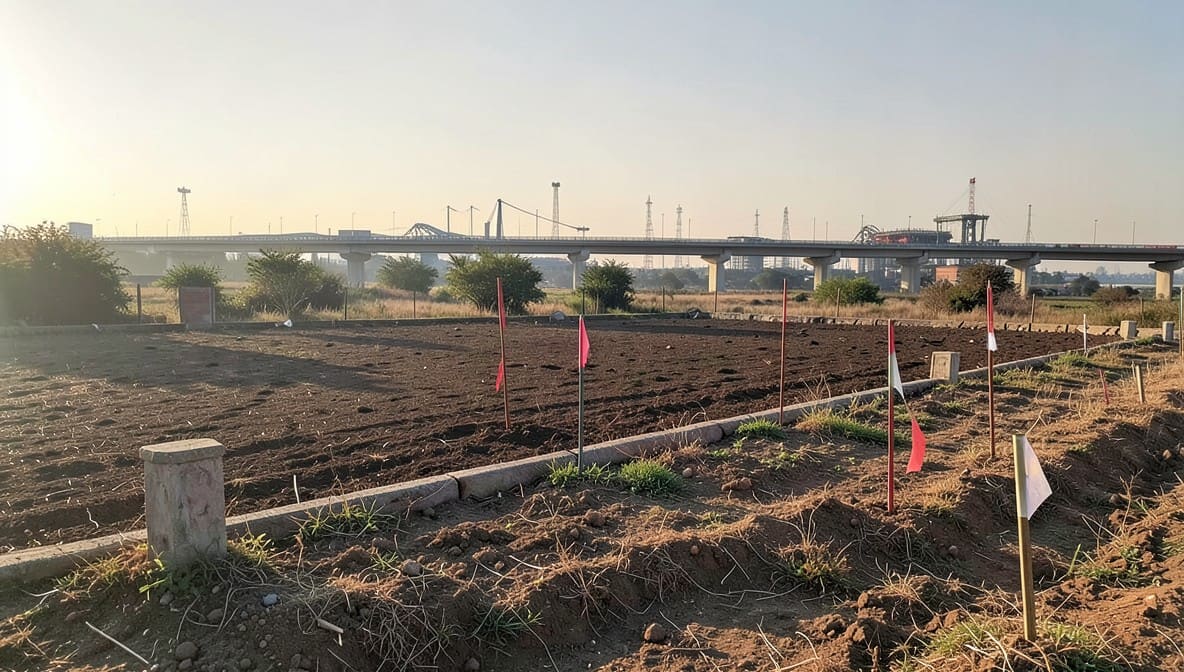
The petitioners, four residents of Malur Town and surrounding areas in Kolar District, Karnataka, own properties that have been identified for acquisition under the National Highway development project from Devanahalli to Hoskote. They allege that despite the acquisition process being incomplete and no compensation award having been issued, the respondent authorities have marked their properties and are preparing to demolish existing structures without notice or hearing.
Key Facts
- The petitioners’ properties are located along the proposed alignment of the National Highway project.
- Photographs submitted with the petition show clear markings on the properties indicating survey and identification for acquisition.
- No formal award under the Land Acquisition Act has been passed as of the date of filing.
- No notice of intent to demolish has been served to any petitioner.
- The petitioners assert that structures on their land - including residential buildings and ancillary constructions - are lawful and have been in existence for years.
- The petitioners fear imminent, unauthorized demolition based on the markings and prior conduct of authorities in similar cases.
Procedural History
- Date of filing: 2026 (exact date not specified in judgment, but petition was filed prior to 05.05.2026)
- 05.05.2026: Writ Petition No. 11528 of 2026 came up for preliminary hearing before the Hon’ble Mr. Justice S. Vishwajith Shetty.
- No prior litigation or interim orders were referenced in the judgment.
The Parties' Positions
Petitioners: Argued that demolition without an award or opportunity to be heard violates Article 21 of the Constitution and the principles of natural justice. They cited photographs as evidence of impending coercive action and sought immediate restraint.
Respondents: Through the Additional Government Advocate, conceded that acquisition proceedings are still in progress. Stated that no demolition has been ordered or initiated. Assured the Court that representations from petitioners, if submitted, would be considered expeditiously and in accordance with law.
Relief Sought
The petitioners sought:
- A writ of mandamus directing the respondents not to demolish their properties without due process;
- Any other relief the Court deemed fit.
The Legal Issue
Can the state authorities proceed to demolish structures on land under acquisition before an award is passed or representations by the landowners are heard and decided?
Arguments Presented
For the Petitioner
The petitioners contended that demolition prior to award or hearing constitutes a violation of Article 21 (right to life and personal liberty, including right to property as a constitutional right) and principles of natural justice. They relied on the settled doctrine that acquisition must follow due process: notice, hearing, and award. The marking of property, they argued, is not a substitute for legal procedure and creates a reasonable apprehension of unlawful action.
For the Respondent
The Additional Government Advocate submitted that no demolition order has been passed and no coercive action is imminent. The acquisition process remains incomplete, and the authorities are bound by statutory procedure under the National Highways Act and Land Acquisition Act. The State assured the Court that any representation submitted by the petitioners would be considered within a reasonable timeframe.
The Court's Analysis
The Court acknowledged the petitioners’ legitimate apprehension based on the marked properties and the history of coercive actions in similar acquisition cases across the State. However, it noted the State’s unambiguous assurance that no demolition is planned at this stage.
"The respondents have made a clear submission that no coercive action is intended until representations are heard and an award is passed. This assurance, placed on record, is accepted by this Court."
The Court emphasized that while the State is not currently acting unlawfully, the risk of arbitrary action remains if petitioners are left without a formal channel to raise grievances. It held that the constitutional guarantee of due process requires not merely the absence of unlawful action, but the presence of a meaningful opportunity to be heard.
The Court further observed that the acquisition process, though statutory, must be conducted with transparency and fairness. The petitioners’ right to be heard is not contingent on the stage of acquisition but is inherent in the rule of law.
The Verdict
The writ petition is disposed of with the following directions:
- The petitioners shall submit a written representation detailing their grievances regarding the acquisition and proposed demolition within two weeks of receiving a certified copy of this order;
- The competent authority shall consider such representation and pass appropriate orders in accordance with law within four months of receipt;
- The respondents are directed not to take any coercive action - including demolition - against the petitioners’ properties or existing structures until the representation is decided or the four-month period expires, whichever is earlier.
What This Means For Similar Cases
Due Process Is Non-Negotiable in Acquisition
- Practitioners must insist on written representations being filed and formally acknowledged in all acquisition cases, even if no demolition notice has been issued.
- Marking of land or survey activity does not justify any physical interference with property.
- Courts will intervene where there is a credible apprehension of unlawful action, even without actual demolition.
Timelines for Disposal of Representations Are Enforceable
-
The four-month deadline set by the Court is binding and creates a clear accountability mechanism.
-
Delay beyond this period may attract contempt proceedings or further writ relief.
-
Landowners should document all submissions and retain proof of delivery to authorities.
-
Always file a representation even if authorities claim no action is planned - this preserves legal rights and creates a record.
-
Photographs and survey markings are admissible evidence of apprehension and should be preserved and submitted with petitions.
-
No demolition can proceed without an award or a reasoned order rejecting a representation.