The Uttarakhand High Court has affirmed that superficial repairs such as painting and wall putty cannot override the statutory duty to demolish a structurally unsound building posing a public safety risk. The judgment reinforces the primacy of engineering assessments by municipal authorities over subjective claims of repair by property owners.
Background & Facts
The Dispute
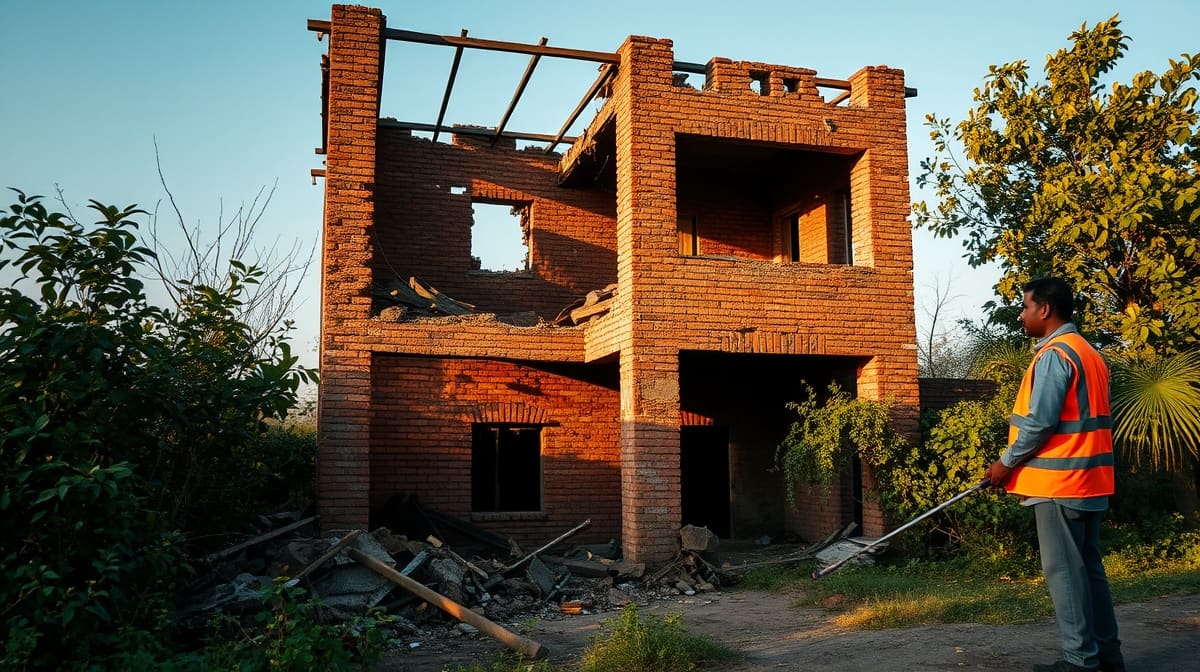
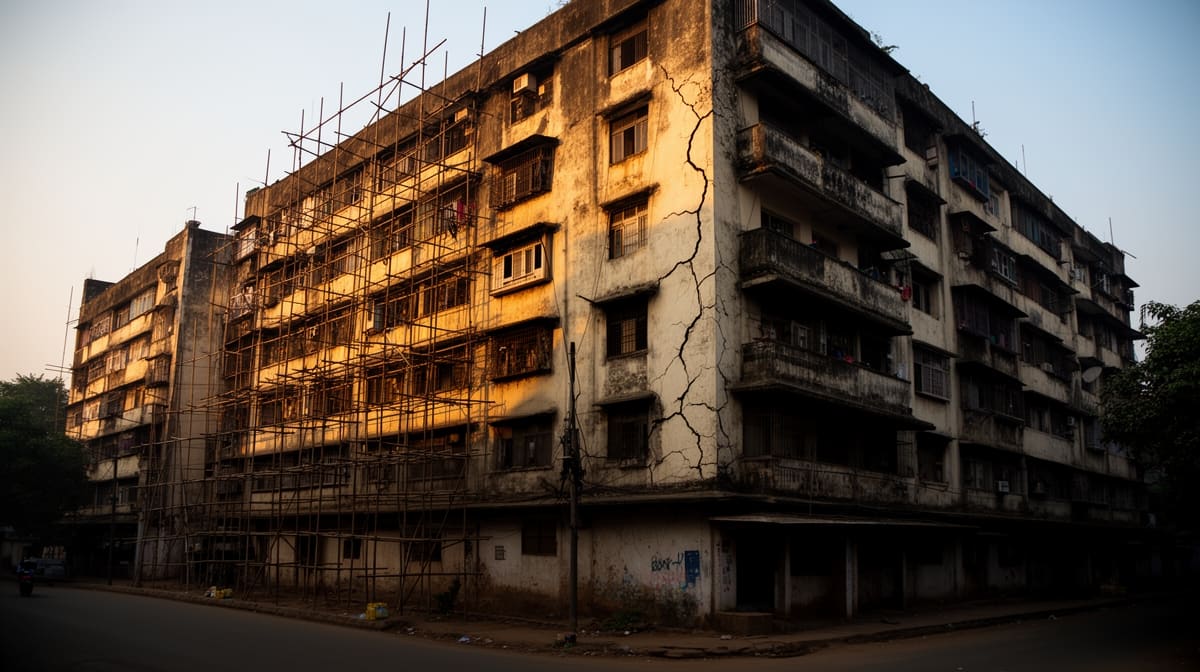
The petitioner, Sh. Saket Bhambri, is the owner of the basement, ground floor, and mezzanine floor of the Mansa Ram Banker’s Building, located at Rajpur Road, Dehradun. The building, over 100 years old, was originally purchased by the petitioner’s father through a registered sale deed dated 16.05.1991. The first and second floors of the building were owned by Tirupati Associates (respondent no.6). Over time, the upper floors deteriorated and were partially demolished. The remaining lower portions - basement and ground floor - were alleged by municipal authorities to be in a ruinous and hazardous condition.
Key Facts
- The building was first identified as hazardous in 2006, when a notice was issued under the Uttarakhand Municipal Corporation Act, 1959.
- On 27.05.2010, the Senior Superintendent of Police, Dehradun, wrote to the Municipal Commissioner, reporting that bricks from the building had fallen onto the Dhara Police Outpost campus, damaging vehicles.
- On 05.07.2019, the Municipal Corporation issued a notice under Section 367 of the Act, prompting the petitioner to claim he had undertaken repairs.
- The petitioner submitted that he had repaired and maintained the basement and ground floor, including applying wall putty and paint to conceal cracks.
- The Municipal Corporation’s engineering team inspected the structure on 10.02.2026 and submitted a report (Annexure-17) stating that:
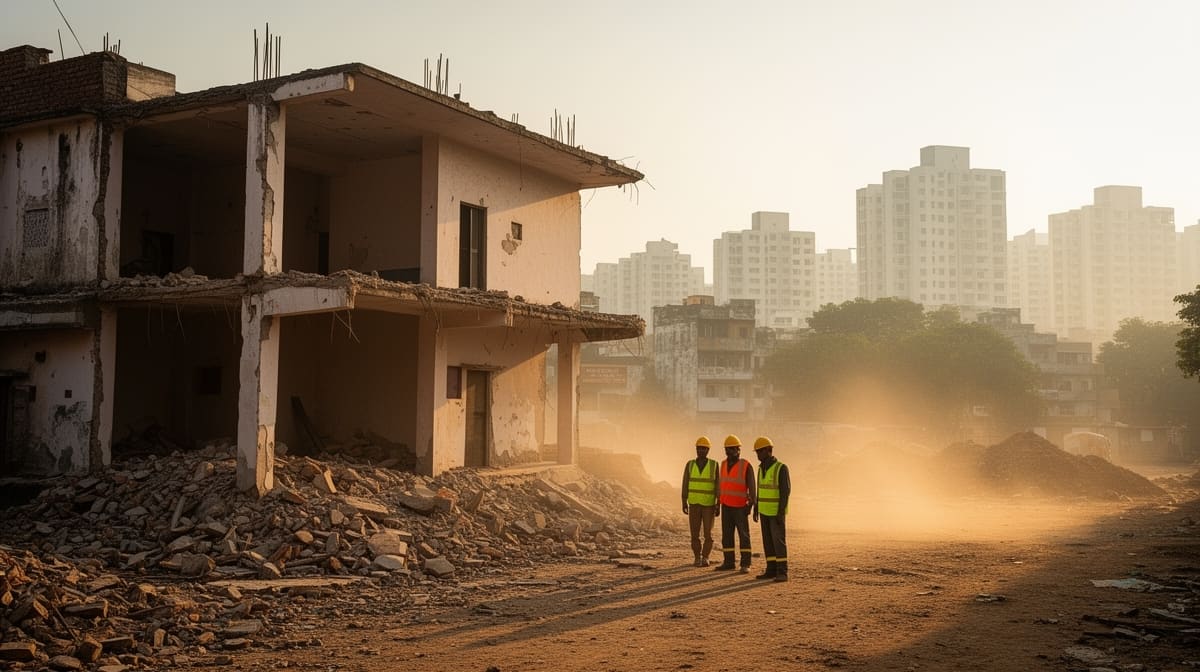
- The first and second floors had been removed.
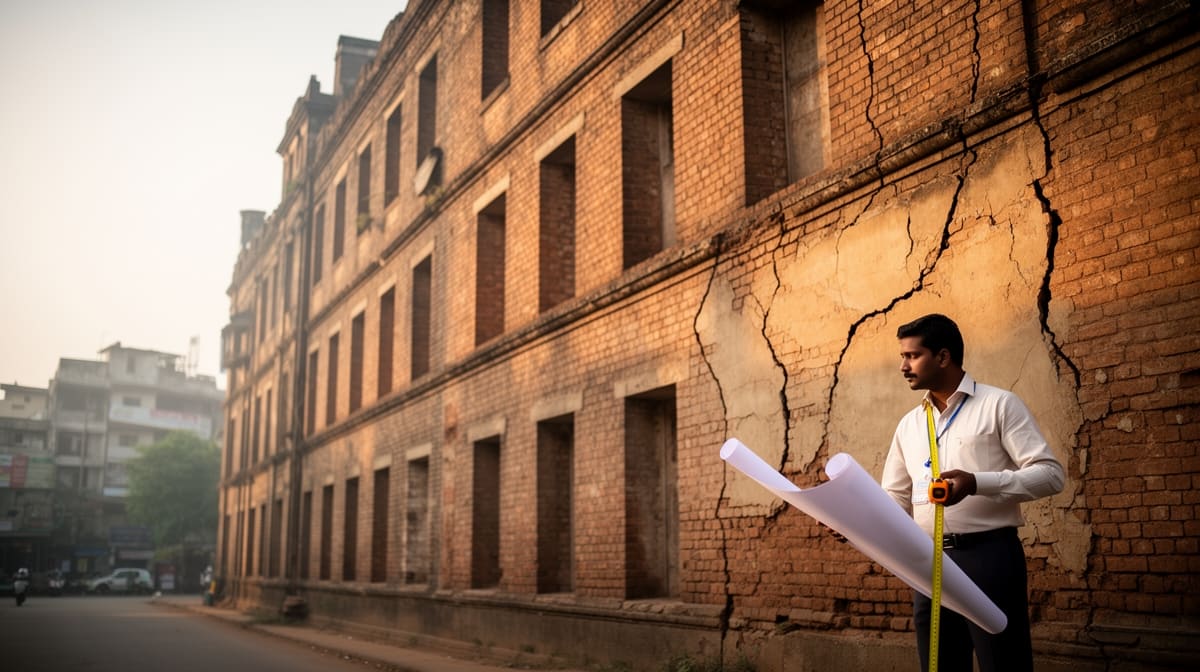
- The remaining structure had visible cracks.
- The petitioner had concealed cracks using putty and paint.
- There was no evidence of structural reinforcement.
- The report was silent on any strengthening, underpinning, or engineering intervention.
Procedural History
- 23.08.2006: First notice issued under the Act, 1959, calling for demolition.
- 27.05.2010: SSP Dehradun’s letter to Municipal Commissioner highlighting danger.
- 05.07.2019: Notice issued under Section 367; petitioner responded claiming repairs.
- 11.07.2025: Tirupati Associates received demolition notice and filed Writ Petition (M/B) No. 883 of 2025.
- 15.07.2025: Tirupati Associates requested Municipal Corporation to demolish the dilapidated portion.
- 09.12.2025: HC disposed of W.P. (M/B) No. 883 of 2025, directing the Municipal Commissioner to decide on the representation.
- 03.01.2026: HC disposed of W.P. (M/B) No. 1131 of 2025, directing the Commissioner to hear the petitioner and decide within six weeks.
- 18.02.2026: Municipal Commissioner issued impugned order under Section 331(1) directing demolition within six weeks.
- 17.04.2026: Petitioner filed the present writ petition challenging the demolition order.
Relief Sought
The petitioner sought quashing of the Municipal Commissioner’s order dated 18.02.2026, and a direction to permit him to retain and further repair the structure, arguing that his repairs had rendered it safe.
The Legal Issue
The central question was whether Section 331(1) of the Uttarakhand Municipal Corporation Act, 1959 permits an owner to avoid demolition of a structurally unsound building through superficial repairs such as painting and wall putty, or whether such measures are legally insufficient to negate the statutory duty to protect public safety.
Arguments Presented
For the Petitioner
The petitioner’s counsel argued that:
- The petitioner had undertaken repair work in response to the 2019 notice under Section 367.
- The application of wall putty and paint demonstrated good faith efforts to maintain the structure.
- The municipal engineers did not physically enter the building during inspection, rendering their report unreliable.
- A private engineer’s report, submitted by the petitioner, attested to the building’s safety.
- The demolition order was disproportionate and violated the right to property.
For the Respondent
The State’s counsel contended that:
- The building had been hazardous since at least 2006 and remained so for two decades.
- The Municipal Corporation’s engineering team, as statutory authorities, submitted a detailed report based on visual inspection and professional judgment.
- The petitioner’s repairs were cosmetic and did not address structural integrity.
- Section 331(1) imposes a mandatory duty on the Municipal Commissioner to act when a structure is likely to fall.
- The presumption of correctness applies to reports by statutory officers unless bad faith is proven.
- Public safety overrides private claims of repair when structural danger is evident.
The Court's Analysis
The Court examined the statutory framework under Section 331(1) of the Uttarakhand Municipal Corporation Act, 1959, which imposes a duty on the Municipal Commissioner to act when any structure is in a ruinous condition or likely to fall and poses danger to the public. The Court emphasized that the provision is not merely permissive but mandatory in nature.
"Every structure becomes weak with the passage of time and also due to vagaries of nature. There is nothing on record to show that structure of the building was reinforced in order to give it new lease of life."
The Court rejected the petitioner’s reliance on paint and putty as evidence of structural safety. It held that such measures are purely aesthetic and do not constitute engineering reinforcement. The Court noted that the report of the Municipal Corporation’s engineers, though not involving physical entry into the basement, was based on observable and professional assessment of visible cracks and concealment tactics.
The Court further held that the presumption of regularity in official acts applies to statutory authorities. Unless bad faith or extraneous motives are established - which the petitioner failed to prove - the report of municipal engineers must be accorded due weight. The Court distinguished the petitioner’s private engineer’s report, stating it could not override the statutory assessment.
The Court also observed that the building’s age - over 100 years - and its continuous state of disrepair since 2006 rendered any claim of recent safety implausible. The fact that the upper floors had already collapsed or been removed further indicated the building’s inherent instability.
"Applying paint on the surface by itself does not provide strength to the structure of the building, unless there is reinforcement provided to the building from within."
The Court declined to substitute its opinion for that of the domain experts within the Municipal Corporation, reaffirming the principle of judicial restraint in matters of technical assessment.
The Verdict
The writ petition was dismissed. The Court upheld the Municipal Commissioner’s order dated 18.02.2026 directing the demolition of the basement and ground floor of the Mansa Ram Banker’s Building within six weeks. The Court found no legal or factual error in the decision, and no grounds for interference. No monetary relief was granted, and no alternative remedy was directed.
What This Means For Similar Cases
Cosmetic Repairs Cannot Override Structural Danger
- Practitioners must advise clients that surface-level repairs like painting, putty, or plastering are legally insufficient to counter a demolition order under Section 331(1).
- Any defense must include documented structural reinforcement - such as underpinning, steel bracing, or engineering certification of load-bearing capacity.
Municipal Engineering Reports Carry Presumptive Validity
- Reports by municipal engineers are presumed correct unless proven to be mala fide or based on extraneous considerations.
- Petitioners must produce credible, contemporaneous engineering reports from recognized institutions to challenge municipal findings.
Public Safety Trumps Property Rights in Structural Hazards
- Courts will prioritize public safety over individual property interests when a structure is demonstrably hazardous.
- Delay in addressing structural decay over decades weakens any claim of recent safety.
- Municipal authorities are under a non-delegable duty to act proactively under Section 331(1).