The Madhya Pradesh High Court has affirmed that once a public authority accepts a bid based on specific contractual terms, it cannot unilaterally alter those terms to the detriment of the successful bidder. This judgment reinforces the principle that tender conditions are binding contractual obligations, not mere administrative suggestions.
Background & Facts
The Dispute
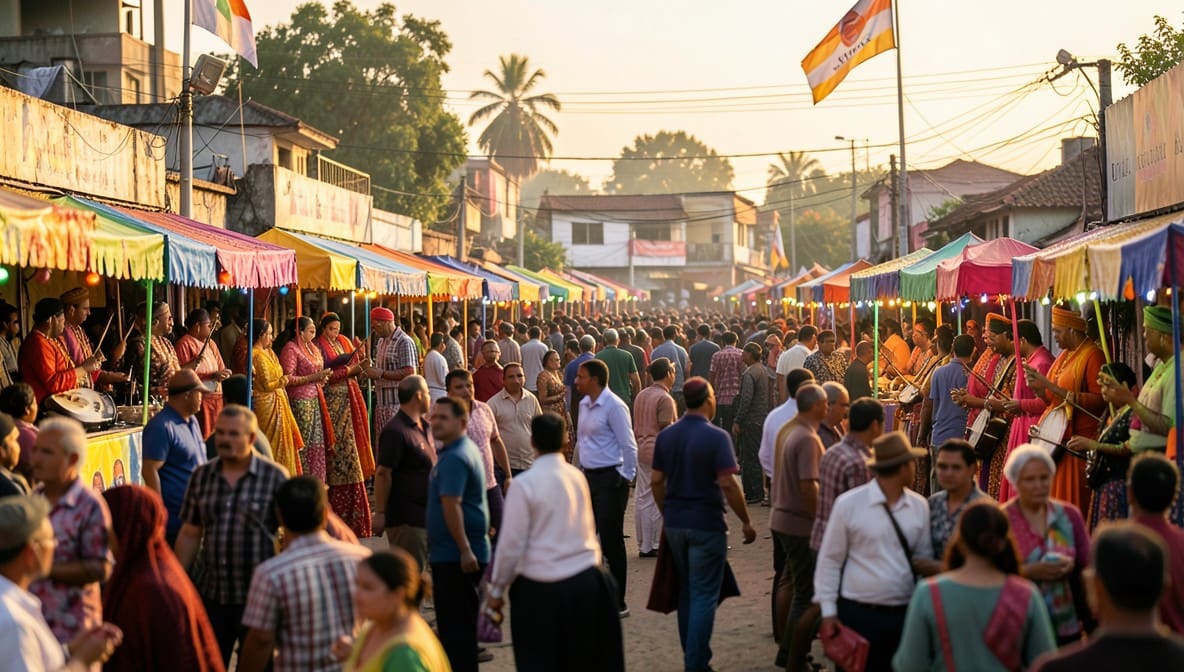
The petitioner, Krishna Enterprises, a proprietorship firm engaged in organizing fairs and trade events, participated in a public tender issued by the Municipal Council, Shivpuri, for the organization and conduct of the Shree Siddheshwar Banganga Mela, 2026. The tender explicitly stipulated that the Mela was to be conducted for a period of 45 days. The petitioner submitted a bid of Rs. 51,11,501, which was accepted by the competent authority. Following acceptance, the petitioner deposited the full bid amount and incurred substantial expenditures on infrastructure, logistics, staffing, and promotional activities in reliance on the 45-day duration.
Key Facts
- The tender document clearly specified a 45-day operational period for the Mela
- The petitioner’s bid of Rs. 51,11,501 was accepted on an unspecified date prior to 04.06.2026
- The petitioner deposited the full bid amount upon acceptance
- The petitioner incurred significant expenditure on stall construction, security, sanitation, entertainment, and marketing
- On 04.06.2026, Respondent No. 3, the Sub-Divisional Officer (SDM), Shivpuri, issued a communication restricting the Mela duration to 22 days
- On 05.06.2026, Respondent No. 4 issued a permission letter permitting the Mela only from 04.06.2026 to 25.06.2026 - a period of 22 days
- The Mela was scheduled to commence on 04.06.2026, meaning 23 days of the contracted period had already been lost by the time of the impugned order
Procedural History
- Prior to 04.06.2026: Tender process completed; petitioner declared successful bidder
- 04.06.2026: SDM, Shivpuri, issued order restricting Mela to 22 days
- 05.06.2026: Permission letter issued by Respondent No. 4 limiting operation to 22 days
- 25.06.2026: Writ Petition No. 21576 of 2026 filed before the High Court of Madhya Pradesh at Gwalior
The Parties' Positions
Petitioner: Argued that the SDM had no statutory authority to alter tender conditions. The Municipal Council, not the SDM, was the competent authority under Section 124(bb) of the Madhya Pradesh Municipalities Act, 1961. The unilateral reduction of duration violated the principles of legitimate expectation and fair dealing under administrative law.
Respondents: Did not contest the factual sequence but argued that logistical constraints and public order concerns necessitated the reduction. No statutory or procedural justification for the SDM’s interference was provided.
Relief Sought
The petitioner sought:
- Setting aside of the order dated 04.06.2026 and permission letter dated 05.06.2026
- Direction to permit operation of the Mela for the full 45 days as per tender conditions
- Extension of the Mela period to compensate for the 23 days already lost
- Any other relief deemed fit by the Court
The Legal Issue
The central question was whether a public authority, having accepted a bid based on specific contractual terms, may unilaterally reduce the duration of a permitted event, and whether the Sub-Divisional Officer possesses statutory authority under the Madhya Pradesh Municipalities Act, 1961 to override tender conditions.
Arguments Presented
For the Petitioner
The petitioner’s counsel relied on the doctrine of legitimate expectation and the binding nature of tender conditions. It was submitted that once the bid was accepted and the petitioner incurred expenditure in reliance on the 45-day term, the terms became contractual obligations. The SDM’s interference was ultra vires Section 124(bb) of the Madhya Pradesh Municipalities Act, 1961, which vests exclusive authority over fairs and exhibitions in the Municipal Council. The petitioner cited K. S. Puttaswamy v. Union of India to emphasize that administrative action must not arbitrarily defeat reasonable expectations created by official conduct.
For the Respondent
The respondents did not dispute the factual sequence or the tender terms. Their counsel offered no statutory basis for the SDM’s action and conceded no procedural compliance. The opposition was largely based on practical difficulties, without invoking any legal provision permitting such curtailment.
The Court's Analysis
The Court examined the nature of the tender process and the statutory framework governing fairs under the Madhya Pradesh Municipalities Act, 1961. It noted that the petitioner had acted in good faith, deposited the full bid amount, and incurred substantial expenditure in reliance on the 45-day term. The Court held that the SDM, as a subordinate officer, had no authority under Section 124(bb) to interfere with the Municipal Council’s contractual obligations.
"If the Municipal Council intended to organize the Mela for the said period and accepted consideration from the petitioner on that basis, then it is the responsibility of the Municipal Council to ensure availability of the land and necessary arrangements for the entire contractual period."
The Court further observed that the petitioner’s legitimate expectation, created by the tender conditions and acceptance of bid, could not be defeated by administrative convenience. The Court rejected the notion that logistical constraints could justify breach of contract. It emphasized that public authorities must honor their contractual commitments, particularly when private parties have acted to their detriment.
The Court declined to adjudicate the merits of land availability or municipal planning but held that the obligation to fulfill the tender terms remained absolute.
The Verdict
The writ petition was allowed. The Court directed the Municipal Council and concerned authorities to immediately secure suitable land - either at the original site or an alternative location - and permit the petitioner to operate the Shree Siddheshwar Banganga Mela for a cumulative total of 45 days. The respondents were ordered to extend all necessary cooperation to enable the petitioner to complete the full contractual period. The Mela was to be permitted to continue beyond 25.06.2026, with no further restriction on duration. The Court made no order on costs.
What This Means For Similar Cases
Tender Terms Are Binding Contracts
- Public authorities cannot unilaterally alter tender conditions after bid acceptance, even if logistical challenges arise
- Once a bidder incurs expenditure in reliance on tender terms, the doctrine of legitimate expectation becomes enforceable
- Administrative convenience cannot override contractual obligations in public procurement
Authority Must Be Statutorily Defined
- Subordinate officers (e.g., SDMs) cannot override powers vested exclusively in statutory bodies (e.g., Municipal Councils)
- Any interference by non-competent authorities is ultra vires and void
- Practitioners must verify statutory delegation of powers before challenging administrative orders
Remedies for Breach of Tender Terms
- Courts will enforce specific performance of tender conditions where feasible
- Extension of time, not monetary compensation, is the preferred remedy when the subject matter (e.g., event duration) is time-sensitive
- Petitioners must demonstrate reliance and expenditure to establish legitimate expectation