Topic

tender law

Tender law in India governs the legal framework for public and private procurement processes, ensuring fairness, transparency, and compliance with statutory and constitutional norms.

22 articlesLatest August 2026
Delay and Laches Bar Non-Participating Bidders' Tender Challenge; Delhi Office/Warehouse Condition Distinguished from Vinishma : SC
Case Law Analysis
|Supreme Court of India

Delay and Laches Bar Non-Participating Bidders' Tender Challenge; Delhi Office/Warehouse Condition Distinguished from Vinishma : SC

The Supreme Court held that non-participating bidders' four-month delay in challenging tender conditions bars relief under the doctrine of delay and laches. It also distinguished Vinishma Technologies on the Delhi office/warehouse requirement, leaving its validity open. The decision safeguards procurement timelines from strategic challenges by non-participants.
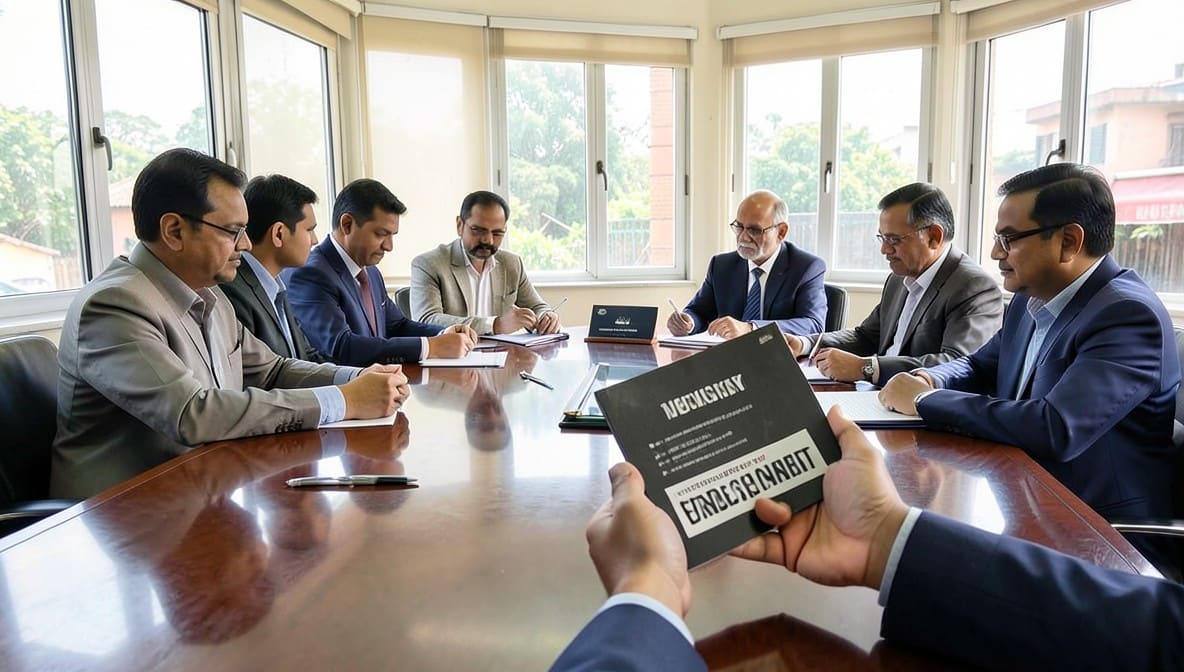
Contractual Forfeiture Invalidated After Blacklisting Revocation | Natural Justice Requires Proportionality in PDS Tenders : MP HC Gwalior
Case Law Analysis
|Madhya Pradesh High Court

Contractual Forfeiture Invalidated After Blacklisting Revocation | Natural Justice Requires Proportionality in PDS Tenders : MP HC Gwalior

The Madhya Pradesh High Court holds that forfeiting a security deposit after revoking a bidder’s blacklisting violates natural justice, as the penalty lacks independent legal basis and becomes punitive without procedural fairness. This ruling protects contractors in public distribution tenders from disproportionate financial consequences when administrative sanctions are withdrawn.

Legitimate Expectation in Public Tenders | Authorities Cannot Unilaterally Reduce Mela Duration After Bidder’s Reliance : MP HC Gwalior
Case Law Analysis
|Madhya Pradesh High Court

Legitimate Expectation in Public Tenders | Authorities Cannot Unilaterally Reduce Mela Duration After Bidder’s Reliance : MP HC Gwalior

The Madhya Pradesh High Court has ruled that once a bidder relies on tender conditions-such as a guaranteed 45-day mela duration-the government cannot arbitrarily shorten it. This reinforces the principle of legitimate expectation in public procurement, protecting contractors who invest time and capital based on official terms, and sets a precedent for enforcing contractual integrity against administrative overreach.

Article 14 & Tender Law | Arbitrary ₹60 Crore Qualification Cap Violates Equality; Karnataka HC Secures ₹29 Crore Reduction : Karnataka HC
Case Law Analysis
|Karnataka High Court

Article 14 & Tender Law | Arbitrary ₹60 Crore Qualification Cap Violates Equality; Karnataka HC Secures ₹29 Crore Reduction : Karnataka HC

Karnataka High Court ruled that an unreasonably high tender qualification threshold (₹60 crore) violates Article 14 by excluding capable bidders. The state's subsequent reduction to ₹29 crore sets a precedent for proportionality in public procurement, ensuring fair competition and constitutional compliance.

RTPP Act Section 15 | Post-Bid Price Negotiations Strictly Prohibited in Open Tenders, Even for Public Interest Savings : Rajasthan HC
Case Law Analysis
|Rajasthan High Court

RTPP Act Section 15 | Post-Bid Price Negotiations Strictly Prohibited in Open Tenders, Even for Public Interest Savings : Rajasthan HC

The Rajasthan High Court has ruled that any post-bid negotiation in open tenders violates Section 15 of the RTPP Act, 2012, regardless of potential cost savings or public interest claims. This reinforces the sanctity of sealed bidding and holds public agencies accountable to transparent procurement standards, affecting all state-owned enterprises and tendering authorities in Rajasthan.

Clause A1 ICDS Tenders | Ownership of Industrial Plot Mandatory; Arbitration Award Not a Disqualifying 'Pending Dispute' : Delhi HC
Case Law Analysis
|Delhi High Court

Clause A1 ICDS Tenders | Ownership of Industrial Plot Mandatory; Arbitration Award Not a Disqualifying 'Pending Dispute' : Delhi HC

Delhi High Court clarifies that state-allotted industrial plots meet the ownership requirement under Clause A1 of ICDS tenders, while arbitration awards in a bidder's favor do not constitute a 'pending dispute' for disqualification. The ruling reinforces tender eligibility criteria under the National Food Security Act, impacting bidders in public nutrition procurement.

Delay and Laches Bar Writ Relief for Non-Participating Bidders in Tender Challenges | Delhi HC Upholds Public Procurement Timelines : Delhi HC
Case Law Analysis
|Delhi High Court

Delay and Laches Bar Writ Relief for Non-Participating Bidders in Tender Challenges | Delhi HC Upholds Public Procurement Timelines : Delhi HC

The Delhi High Court ruled that non-participating bidders cannot challenge tender conditions after a significant delay, as it undermines public interest in timely procurement. The court emphasized that laches-unreasonable delay in seeking legal remedy-bars writ relief, even if tender conditions appear exclusionary or arbitrary.

Legitimate Expectation Yields to Policy Shift | Tender Cancellation Post L-1 Declaration Lawful Under GeM Portal Mandate : CGHC
Case Law Analysis
|Chhattisgarh High Court

Legitimate Expectation Yields to Policy Shift | Tender Cancellation Post L-1 Declaration Lawful Under GeM Portal Mandate : CGHC

Chhattisgarh High Court upholds tender cancellation after L-1 bidder declaration, ruling that bona fide policy shifts toward Government e-Marketplace (GeM) procurement override bidder expectations. The decision clarifies that public authorities may lawfully cancel tenders without prior notice if changes serve public interest and align with statutory procurement reforms.

Rule 20 TN Transparency in Tender Rules | 15-Day Bid Period Mandatory for Tenders Above ₹1 Crore; Non-Compliance Voids Process : Madras HC
Case Law Analysis
|Madras High Court

Rule 20 TN Transparency in Tender Rules | 15-Day Bid Period Mandatory for Tenders Above ₹1 Crore; Non-Compliance Voids Process : Madras HC

Madras High Court rules that public tenders exceeding ₹1 crore must strictly adhere to a 15-day bid submission period under Rule 20 of the Tamil Nadu Transparency in Tender Rules. The Court held that reducing this period without recorded justification renders the tender process void, mandating fresh compliance by 30.06.2026 for affected tenders.

Karnataka Transparency in Public Procurements Act | Proprietorship Firms Cannot Be Arbitrarily Excluded from Tenders : Karnataka HC
Case Law Analysis
|Karnataka High Court

Karnataka Transparency in Public Procurements Act | Proprietorship Firms Cannot Be Arbitrarily Excluded from Tenders : Karnataka HC

The Karnataka High Court ruled that excluding proprietorship firms from public tenders without reasoned justification violates the Karnataka Transparency in Public Procurements Act, 1999. The decision reinforces the principle of equal opportunity and transparency in government procurement, impacting all tendering authorities in the state.