Topic

public procurement

Public procurement in India governs how government entities award contracts through transparent, competitive tender processes regulated by statutes like the General Financial Rules and constitutional principles.

55 articlesLatest September 2026
Mandamus to Invite MSME to Match Lowest Bid Within 15% Band under MSE Purchase-Preference Policy | Public Procurement on GeM : Calcutta HC
Case Law Analysis
|Calcutta High Court

Mandamus to Invite MSME to Match Lowest Bid Within 15% Band under MSE Purchase-Preference Policy | Public Procurement on GeM : Calcutta HC

Calcutta HC directed SAIL to re-invite the MSME petitioner, allowing it to match the lowest-bidder’s price because the bid fell within the 15 % band mandated by the 2012 MSE purchase-preference policy. The court held that not ticking the MSME option on GeM does not defeat eligibility, and a mandamus can compel compliance. The ruling safeguards registered MSMEs in public procurement, ensuring they can compete even if the portal preference box is missed.


Debarment Orders Must Follow Graded Warning Procedure | NHAI Independent Engineer Case : Delhi HC
|Delhi High Court

Debarment Orders Must Follow Graded Warning Procedure | NHAI Independent Engineer Case : Delhi HC

Delhi HC stayed NHAI's debarment of a joint-venture independent engineer because the authority failed to issue the graded warnings required by the contract’s TOR, and a policy circular cannot override the agreement. The ruling obliges NHAI to follow the step-wise warning mechanism in any future debarment, safeguarding consultants from arbitrary exclusion.

Delay and Laches Bar Non-Participating Bidders' Tender Challenge; Delhi Office/Warehouse Condition Distinguished from Vinishma : SC
Case Law Analysis
|Supreme Court of India

Delay and Laches Bar Non-Participating Bidders' Tender Challenge; Delhi Office/Warehouse Condition Distinguished from Vinishma : SC

The Supreme Court held that non-participating bidders' four-month delay in challenging tender conditions bars relief under the doctrine of delay and laches. It also distinguished Vinishma Technologies on the Delhi office/warehouse requirement, leaving its validity open. The decision safeguards procurement timelines from strategic challenges by non-participants.

Prior Experience Not Void on Shareholding Change; Injunction in Unrelated Trademark Case Does Not Affect Tender Eligibility | Delhi HC
Case Law Analysis
|Delhi High Court

Prior Experience Not Void on Shareholding Change; Injunction in Unrelated Trademark Case Does Not Affect Tender Eligibility | Delhi HC

The Delhi High Court dismissed the review petition, holding that an interlocutory injunction in a separate trademark dispute does not disqualify a bidder and that a change in shareholding does not erase the bidder’s earlier project experience required under the tender. This clarifies that eligibility is judged on substantive qualifications, not on unrelated litigation or post-tender ownership changes, impacting all participants in government procurements.

Cancellation of Tender Without Reason Under Section 26(3) of Assam Procurement Act Void | Bidder Awarded : Gauhati HC
Case Law Analysis
|Gauhati High Court

Cancellation of Tender Without Reason Under Section 26(3) of Assam Procurement Act Void | Bidder Awarded : Gauhati HC

The Gauhati High Court nullified a tender cancellation because the authority failed to give reasons as mandated by Section 26(3) of the Assam Procurement Act, 2017, and ordered the contract awarded to the petitioner, the lowest evaluated bidder. The ruling underscores the duty to communicate cancellation reasons, protecting bidders in future procurements.

Contract Termination Damages | State Cannot Recover Without Proving Actual Loss; Security Deposit Must Be Refunded with Interest : Kerala HC
Case Law Analysis
|Kerala High Court

Contract Termination Damages | State Cannot Recover Without Proving Actual Loss; Security Deposit Must Be Refunded with Interest : Kerala HC

The Kerala High Court ruled that the state cannot withhold or claim damages upon contract termination unless it proves actual financial loss, mandating the return of the security deposit with 9% interest. This reinforces the principle that liquidated damages must reflect real harm, not serve as punitive leverage in public procurement - a critical safeguard for contractors.

Store Purchase Manual Mandates Data-Driven Procurement | Kerala HC Directs Digitised Inventory System for Devaswom Board : Kerala HC
Case Law Analysis
|Kerala High Court

Store Purchase Manual Mandates Data-Driven Procurement | Kerala HC Directs Digitised Inventory System for Devaswom Board : Kerala HC

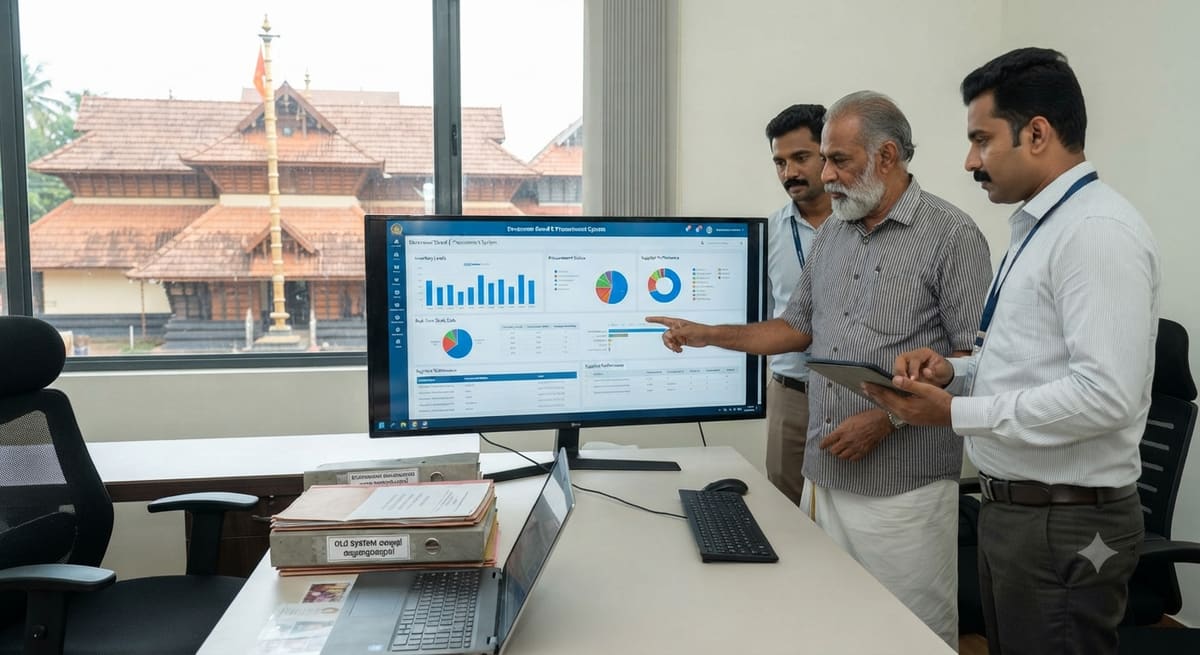
Kerala High Court reinforces Store Purchase Manual provisions, mandating annual procurement estimates based on 3-5 years' consumption data to prevent ad-hoc purchases. The ruling directs the Travancore Devaswom Board to implement a digitised inventory system, ensuring fiscal discipline and transparency in public asset management.

Judicial Review of Tender Conditions | AP HC Limits Scrutiny to Arbitrariness, Not Policy Merits Under Article 14
Case Law Analysis
|Andhra Pradesh High Court

Judicial Review of Tender Conditions | AP HC Limits Scrutiny to Arbitrariness, Not Policy Merits Under Article 14

Andhra Pradesh High Court dismisses writ petitions challenging tender conditions for Balamrutham supply, reinforcing that courts cannot substitute administrative discretion with judicial wisdom unless arbitrariness is proven. The ruling clarifies the scope of judicial review in public procurement under Article 14, impacting contractors and government agencies alike.

RTPP Rules | Shared Infrastructure Presumes Conflict of Interest in Tenders: Rajasthan HC Disqualifies Bid Without Proof of Collusion
Case Law Analysis
|Rajasthan High Court

RTPP Rules | Shared Infrastructure Presumes Conflict of Interest in Tenders: Rajasthan HC Disqualifies Bid Without Proof of Collusion

Rajasthan High Court rules that shared premises, common chartered accountant, and notary between bidders create a rebuttable presumption of conflict of interest under Rule 81(3)(D) of the RTPP Rules, justifying disqualification even without evidence of actual bid rigging. The ruling sets a strict standard for bidder independence in public procurement.

Legitimate Expectation in Public Tenders | Authorities Cannot Unilaterally Reduce Mela Duration After Bidder’s Reliance : MP HC Gwalior
Case Law Analysis
|Madhya Pradesh High Court

Legitimate Expectation in Public Tenders | Authorities Cannot Unilaterally Reduce Mela Duration After Bidder’s Reliance : MP HC Gwalior

The Madhya Pradesh High Court has ruled that once a bidder relies on tender conditions-such as a guaranteed 45-day mela duration-the government cannot arbitrarily shorten it. This reinforces the principle of legitimate expectation in public procurement, protecting contractors who invest time and capital based on official terms, and sets a precedent for enforcing contractual integrity against administrative overreach.

Tender Clause 21.1(g) | Contractual Blacklisting for NSQ Drugs Not Vitiated by Drug Inspectorate Procedural Lapses: Karnataka HC
Case Law Analysis
|Karnataka High Court

Tender Clause 21.1(g) | Contractual Blacklisting for NSQ Drugs Not Vitiated by Drug Inspectorate Procedural Lapses: Karnataka HC

The Karnataka High Court held that a pharmaceutical supplier’s blacklisting for supplying non-standard quality drugs under a government tender clause is valid even if the Drug Inspectorate failed to follow statutory procedures, as long as the supplier received a specific show-cause notice and opportunity to respond in writing. This reinforces that contractual enforcement in public procurement can proceed independently of administrative lapses, setting a critical precedent for tendering authorities and drug manufacturers alike.