Tribunals and Commissions judgments

1770 Tribunals and Commissions judgments explained in plain English: what was decided, the law applied and why it matters. Page 38 of 74.

Section 69C IT Act | Entire Bogus Purchase Amount Taxable Without Proof of Genuineness : ITAT Kolkata
Case Law Analysis
|Income Tax Appellate Tribunal

Section 69C IT Act | Entire Bogus Purchase Amount Taxable Without Proof of Genuineness : ITAT Kolkata

ITAT Kolkata rules that when an assessee fails to prove the existence of suppliers, delivery, or transactional genuineness, the entire purchase amount is taxable as unexplained expenditure under Section 69C. The ruling underscores the burden of proof on taxpayers to substantiate transactions, even with banking evidence, to avoid full disallowance.


Customs Act Section 149 | Self-Assessment Errors Eligible for Rectification & Refund Claims : CESTAT Chennai
Case Law Analysis
|Custom, Excise & Service Tax Tribunal

Customs Act Section 149 | Self-Assessment Errors Eligible for Rectification & Refund Claims : CESTAT Chennai

CESTAT Chennai rules that importers can rectify inadvertent errors in self-assessed Bills of Entry under Section 149 of the Customs Act, enabling refund claims under Section 27. This decision clarifies that non-claim of exemption notifications at the time of assessment does not bar subsequent corrections, offering relief to businesses facing duty overpayment due to oversight.

Section 269SS IT Act | Cash Repayment of Prior Advances Not 'Deposit' Under Section 269SS; Penalty Under Section 271D Invalid Without Natural Justice : ITAT Kolkata
Case Law Analysis
|Income Tax Appellate Tribunal

Section 269SS IT Act | Cash Repayment of Prior Advances Not 'Deposit' Under Section 269SS; Penalty Under Section 271D Invalid Without Natural Justice : ITAT Kolkata

ITAT Kolkata rules that cash repayments of prior advances do not constitute 'deposits' under Section 269SS of the Income Tax Act, setting aside penalties imposed under Section 271D. The Tribunal emphasized the violation of natural justice principles, remanding the case for a fresh hearing with an opportunity for the assessee to present evidence.

Reverse Charge Mechanism Under Service Tax | Foreign Bank Charges on Export Proceeds Exempt from Tax Liability : CESTAT Chennai
Case Law Analysis
|Custom, Excise & Service Tax Tribunal

Reverse Charge Mechanism Under Service Tax | Foreign Bank Charges on Export Proceeds Exempt from Tax Liability : CESTAT Chennai

CESTAT Chennai rules that foreign bank charges deducted from export proceeds do not attract service tax under the reverse charge mechanism, as Indian exporters are not 'service recipients' of such charges. This decision clarifies the scope of taxable services for exporters and prevents double taxation on cross-border banking transactions.

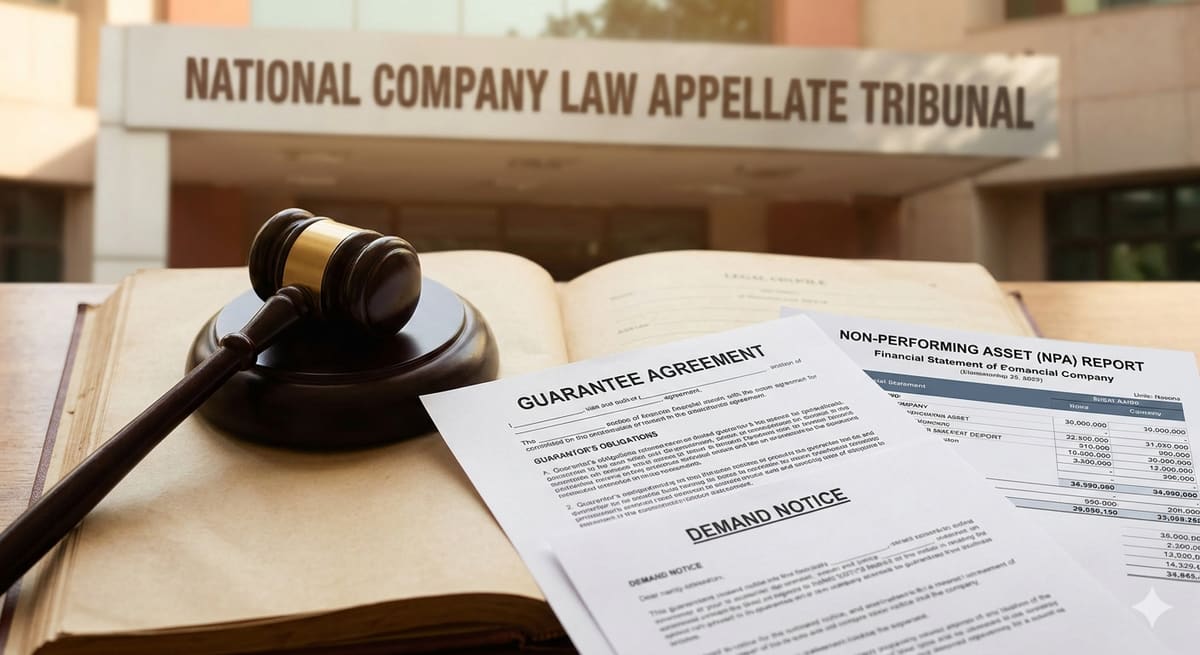
IBC Section 10A | Corporate Guarantor's Default Triggers Only Upon Guarantee Invocation, Not Principal Borrower's NPA : NCLAT
Case Law Analysis
|National Company Law Appellate Tribunal

IBC Section 10A | Corporate Guarantor's Default Triggers Only Upon Guarantee Invocation, Not Principal Borrower's NPA : NCLAT

NCLAT clarifies that a corporate guarantor's liability under the Insolvency and Bankruptcy Code arises solely upon invocation of the guarantee, not the principal borrower's default date. The ruling reinforces Section 10A's moratorium protection, shielding guarantors from insolvency proceedings until the creditor enforces the guarantee deed.

Wetland Rules 2017 | NGT Central Zone Directs Sewage Diversion, Encroachment Removal & Waste Cleanup at Gauri Sarovar : NGT
Case Law Analysis
|National Green Tribunal

Wetland Rules 2017 | NGT Central Zone Directs Sewage Diversion, Encroachment Removal & Waste Cleanup at Gauri Sarovar : NGT

NGT Central Zone Bench mandates compliance with Wetland Rules 2017 by directing sewage diversion, encroachment removal, and solid waste cleanup at Gauri Sarovar in Bhind, MP. The order underscores statutory obligations of local authorities to prevent irreversible ecological damage and public health hazards from untreated sewage and illegal dumping.

NGT Directs Joint Committee Probe | Illegal Sand Mining in Yamuna Violates SSMG-2016 & EMGSM-2020 : NGT
Case Law Analysis
|National Green Tribunal

NGT Directs Joint Committee Probe | Illegal Sand Mining in Yamuna Violates SSMG-2016 & EMGSM-2020 : NGT

The National Green Tribunal has constituted a joint committee to investigate illegal sand mining in the Yamuna riverbed, citing violations of the Sustainable Sand Mining Management Guidelines 2016 and Enforcement & Monitoring Guidelines for Sand Mining 2020. The Tribunal ordered environmental compensation assessment and strict compliance with statutory guidelines, setting a precedent for regulatory enforcement in riverbed mining cases.

Bankruptcy Travel Permission | 'Parallel Run' Clause Must Align with Contractual Validity Period : NCLAT
Case Law Analysis
|National Company Law Appellate Tribunal

Bankruptcy Travel Permission | 'Parallel Run' Clause Must Align with Contractual Validity Period : NCLAT

NCLAT rules that a bankrupt's travel permission under insolvency proceedings cannot be granted based on a lapsed purchase order, clarifying that 'parallel run' clauses require concurrent validity of contractual obligations. This sets a precedent for interpreting travel restrictions tied to active business engagements during personal insolvency.

Section 9 IBC | Joint Venture Partner as Operational Creditor Recognized for Independent Supply Obligations : NCLAT
Case Law Analysis
|National Company Law Appellate Tribunal

Section 9 IBC | Joint Venture Partner as Operational Creditor Recognized for Independent Supply Obligations : NCLAT

NCLAT clarifies that a joint venture partner can initiate insolvency proceedings under Section 9 IBC if its supply obligations are governed by a separate agreement, independent of profit-sharing arrangements. This ruling expands the scope of operational creditors, impacting joint venture contracts and insolvency filings.

Double Taxation Barred Under Service Tax | Franchisee Training Services Cannot Be Taxed Twice Under Same Agreement : CESTAT Chennai
Case Law Analysis
|Custom, Excise & Service Tax Tribunal

Double Taxation Barred Under Service Tax | Franchisee Training Services Cannot Be Taxed Twice Under Same Agreement : CESTAT Chennai

CESTAT Chennai quashed a service tax demand on training services, ruling that double taxation on the same transaction under a franchisee agreement violates legal principles. The tribunal held the show cause notice defective for failing to specify the statutory basis, setting a precedent for franchisee-based service providers against dual tax liabilities.

Judicial Restraint in Policy Matters | NGT Lacks Power to Direct State to Frame Invasive Species Policy : NGT Central Zone
Case Law Analysis
|National Green Tribunal

Judicial Restraint in Policy Matters | NGT Lacks Power to Direct State to Frame Invasive Species Policy : NGT Central Zone

NGT Central Zone Bench holds that framing policies on invasive species like Prosopis juliflora falls within the executive domain, and courts cannot intervene unless arbitrariness or illegality is established. The ruling reinforces the separation of powers, limiting judicial overreach in policy formulation affecting environmental governance.

Section 144 Income Tax Act | ITAT Bangalore Restores Assessment for Fresh Adjudication Citing Natural Justice Due to Assessee’s Health Issues
Case Law Analysis
|Income Tax Appellate Tribunal

Section 144 Income Tax Act | ITAT Bangalore Restores Assessment for Fresh Adjudication Citing Natural Justice Due to Assessee’s Health Issues

ITAT Bangalore condoned a 114-day delay in filing an appeal and restored the assessment to the Assessing Officer, emphasizing that ex-parte additions under Section 144 without considering the assessee’s health constraints violate procedural fairness. The ruling underscores the assessee’s right to submit evidence and mandates fresh adjudication where unexplained income additions were made without proper opportunity.

Section 11 Income Tax Act | Lost Trust Deed Does Not Permanently Disqualify Exemption; Registration Reinstated via Affidavit : ITAT Bangalore
Case Law Analysis
|Income Tax Appellate Tribunal

Section 11 Income Tax Act | Lost Trust Deed Does Not Permanently Disqualify Exemption; Registration Reinstated via Affidavit : ITAT Bangalore

ITAT Bangalore rules that a charitable trust’s exemption under Section 11 cannot be denied solely due to a lost trust deed. The tribunal permits reinstatement of registration through a sworn affidavit and condonation of delay, ensuring trusts are not penalized for procedural lapses beyond their control.

Section 2(42A) Income Tax Act | Holding Period for Capital Assets Begins at Final Allotment, Not Provisional Letter: ITAT Mumbai
Case Law Analysis
|Income Tax Appellate Tribunal

Section 2(42A) Income Tax Act | Holding Period for Capital Assets Begins at Final Allotment, Not Provisional Letter: ITAT Mumbai

ITAT Mumbai rules that the acquisition date for capital gains computation under Section 2(42A) of the Income Tax Act is the date of final, binding allotment and registration, not the issuance of provisional letters. This precedent clarifies the holding period calculation, impacting property transactions and tax liability assessments for taxpayers.

Section 56(2)(viib) IT Act | CCD Conversion Prior to Share Allotment Exempt from Share Premium Taxation : ITAT Delhi
Case Law Analysis
|Income Tax Appellate Tribunal

Section 56(2)(viib) IT Act | CCD Conversion Prior to Share Allotment Exempt from Share Premium Taxation : ITAT Delhi

ITAT Delhi rules that Section 56(2)(viib) of the Income Tax Act applies only when consideration is received in the assessment year of share allotment. Funds received earlier via Compulsorily Convertible Debentures (CCD) conversion do not attract tax on share premium, even if valuation is based on prior balance sheets. The ruling clarifies the timing of receipt for tax applicability under this provision.

Section 9D Central Excise Act | Right to Cross-Examine Witnesses Is Mandatory in Quasi-Judicial Tax Proceedings : CESTAT Chandigarh
Case Law Analysis
|Custom, Excise & Service Tax Tribunal

Section 9D Central Excise Act | Right to Cross-Examine Witnesses Is Mandatory in Quasi-Judicial Tax Proceedings : CESTAT Chandigarh

CESTAT Chandigarh rules that denying an assessee the right to cross-examine witnesses whose statements form the basis of a tax demand violates natural justice and Section 9D of the Central Excise Act. The ruling reinforces procedural safeguards in quasi-judicial proceedings, impacting tax assessments and CENVAT credit disputes.

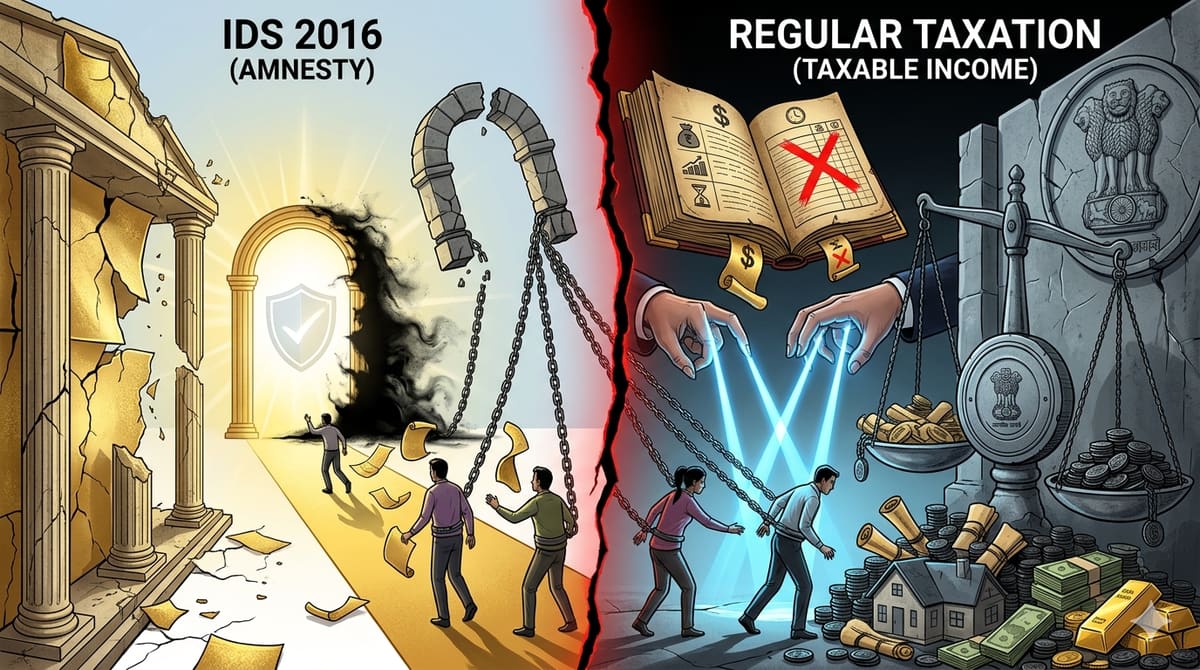
Section 197(b) IDS 2016 | Non-Payment of Tax Voids Amnesty, Income Taxable in Declaration Year : ITAT Delhi
Case Law Analysis
|Income Tax Appellate Tribunal

Section 197(b) IDS 2016 | Non-Payment of Tax Voids Amnesty, Income Taxable in Declaration Year : ITAT Delhi

ITAT Delhi holds that failure to pay tax under the Income Declaration Scheme 2016 within the stipulated time renders the declaration invalid, making the disclosed income taxable in the year of declaration rather than the original assessment year. This ruling underscores the strict compliance requirement for availing amnesty benefits under the scheme.

Section 10(46) IT Act | Pending CBDT Notification Does Not Bar De Novo Assessment: ITAT Mumbai Directs Fresh Adjudication on Exemption Eligibility
Case Law Analysis
|Income Tax Appellate Tribunal

Section 10(46) IT Act | Pending CBDT Notification Does Not Bar De Novo Assessment: ITAT Mumbai Directs Fresh Adjudication on Exemption Eligibility

ITAT Mumbai ruled that the absence of a CBDT notification under Section 10(46) of the Income Tax Act does not preclude a de novo assessment of exemption claims. The Tribunal set aside the denial of exemption and directed fresh adjudication, keeping all grounds open, including the assessee's claim of being a 'State' instrumentality under Article 289. This ruling clarifies that procedural pendency cannot defeat substantive rights to exemption.

Customs Tariff Classification | Integrated Analytical Systems Must Fall Under Chapter 9027, Not 9032 : CESTAT Bangalore Rejects Extended Limitation Without Proof
Case Law Analysis
|Custom, Excise & Service Tax Tribunal

Customs Tariff Classification | Integrated Analytical Systems Must Fall Under Chapter 9027, Not 9032 : CESTAT Bangalore Rejects Extended Limitation Without Proof

CESTAT Bangalore ruled that an aerosol generator forming part of an integrated analytical system must be classified under Customs Tariff Heading 90278090, not 9032. The tribunal rejected the Department's reclassification and held that extended limitation cannot be invoked without concrete proof, setting a precedent for tariff disputes involving integrated systems.

SRO 149 of 1973 | Pay Scale Regularisation Mandatory for Power Employees Under Supreme Court Precedent: CAT Jammu Directs UT Compliance Within Six Weeks
Case Law Analysis
|Central Administrative Tribunal

SRO 149 of 1973 | Pay Scale Regularisation Mandatory for Power Employees Under Supreme Court Precedent: CAT Jammu Directs UT Compliance Within Six Weeks

CAT Jammu bench invokes Supreme Court precedent to mandate pay scale regularisation for power employees under SRO 149 of 1973, directing the UT of J&K to consider their representation within six weeks. The ruling reinforces the legal obligation of administrative authorities to align employee pay scales with established judicial directives, impacting service law compliance for government employees.

Section 148 IT Act | Reassessment Notices Issued Beyond Limitation Period Void Ab Initio: ITAT Delhi Applies Rajeev Bansal Precedent
Case Law Analysis
|Income Tax Appellate Tribunal

Section 148 IT Act | Reassessment Notices Issued Beyond Limitation Period Void Ab Initio: ITAT Delhi Applies Rajeev Bansal Precedent

ITAT Delhi quashes reassessment notices for AYs 2013-14 and 2014-15, ruling that notices issued under the old Section 148 provisions after 31.03.2021 are time-barred. The Tribunal relied on the Supreme Court’s decision in Union of India v. Rajeev Bansal, reinforcing strict compliance with limitation periods in tax reassessment proceedings.

Section 11A(4) Central Excise Act | Extended Limitation Inapplicable Where Department Had Full Knowledge of Transactions : CESTAT Principal Bench
Case Law Analysis
|Custom, Excise & Service Tax Tribunal

Section 11A(4) Central Excise Act | Extended Limitation Inapplicable Where Department Had Full Knowledge of Transactions : CESTAT Principal Bench

CESTAT quashes excise demand and penalties, ruling that extended limitation under Section 11A(4) cannot be invoked if the department was fully aware of the transactions. The judgment reaffirms that suppression of facts must be deliberate for extended limitation to apply, impacting tax assessments where transparency exists.