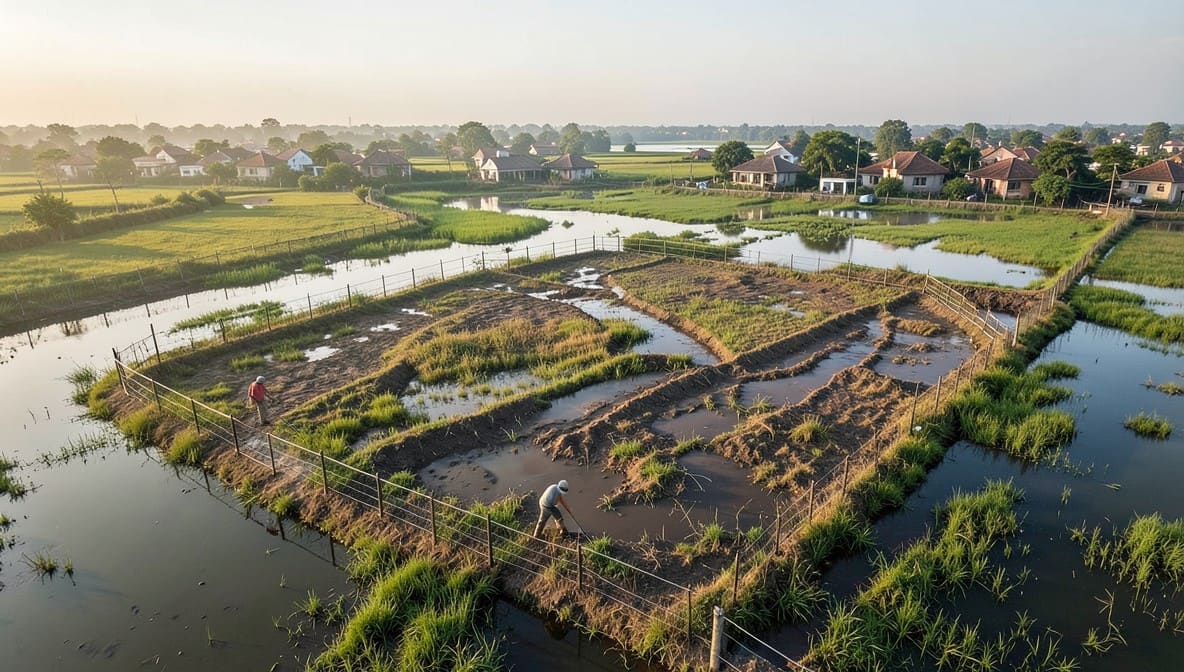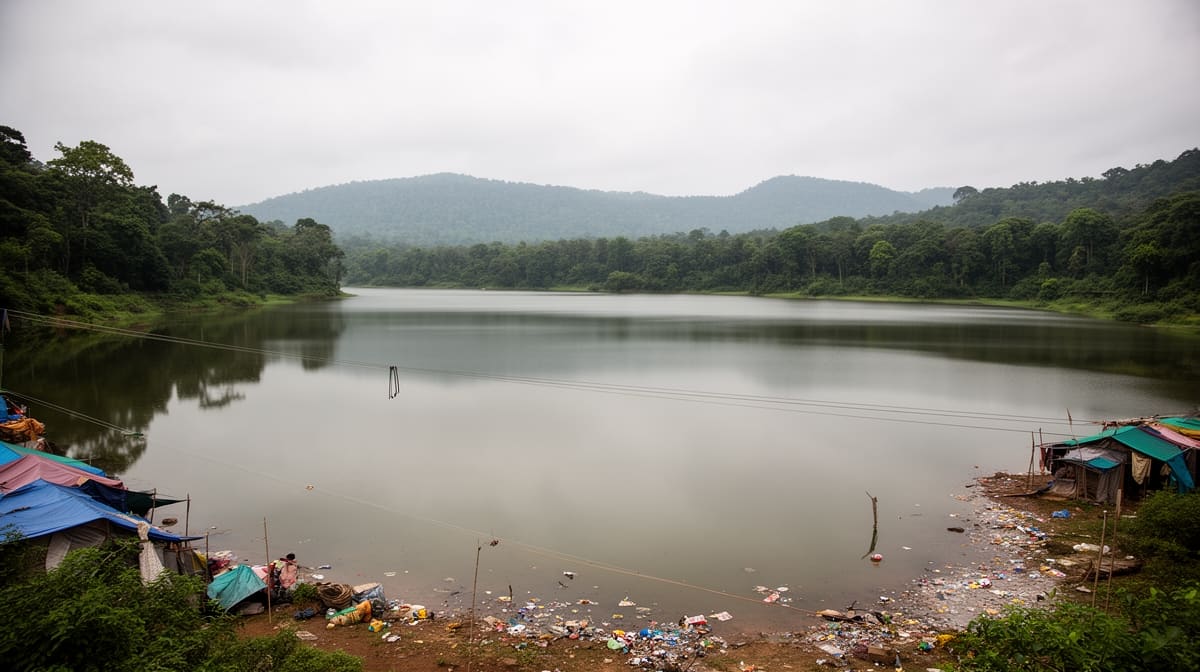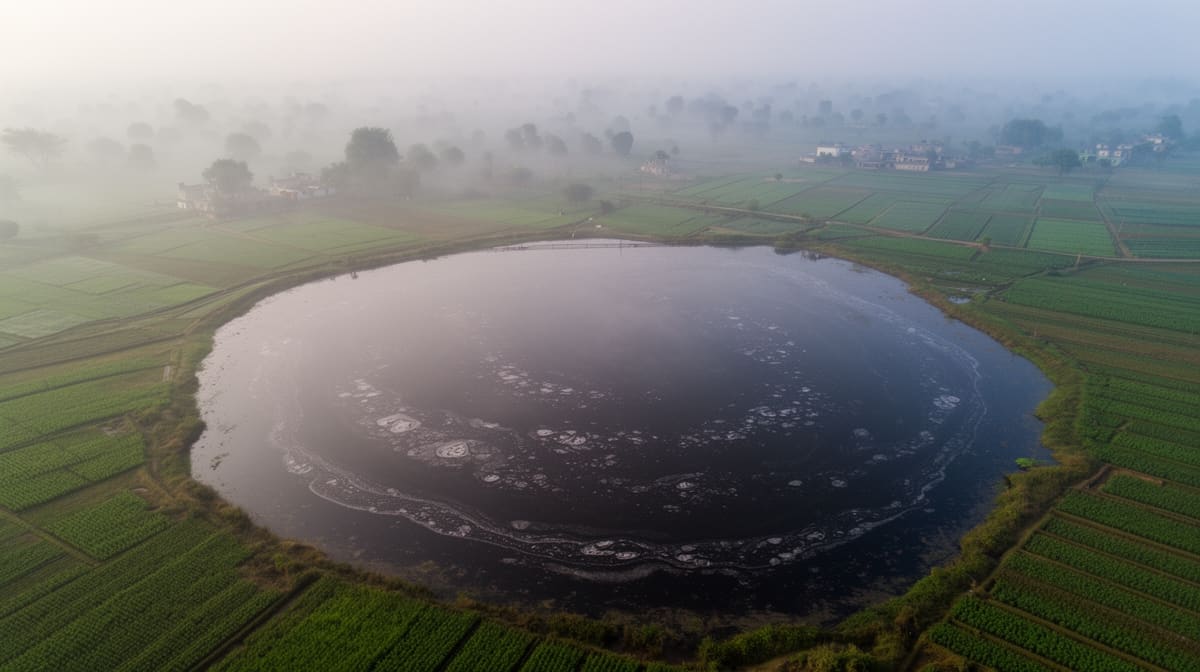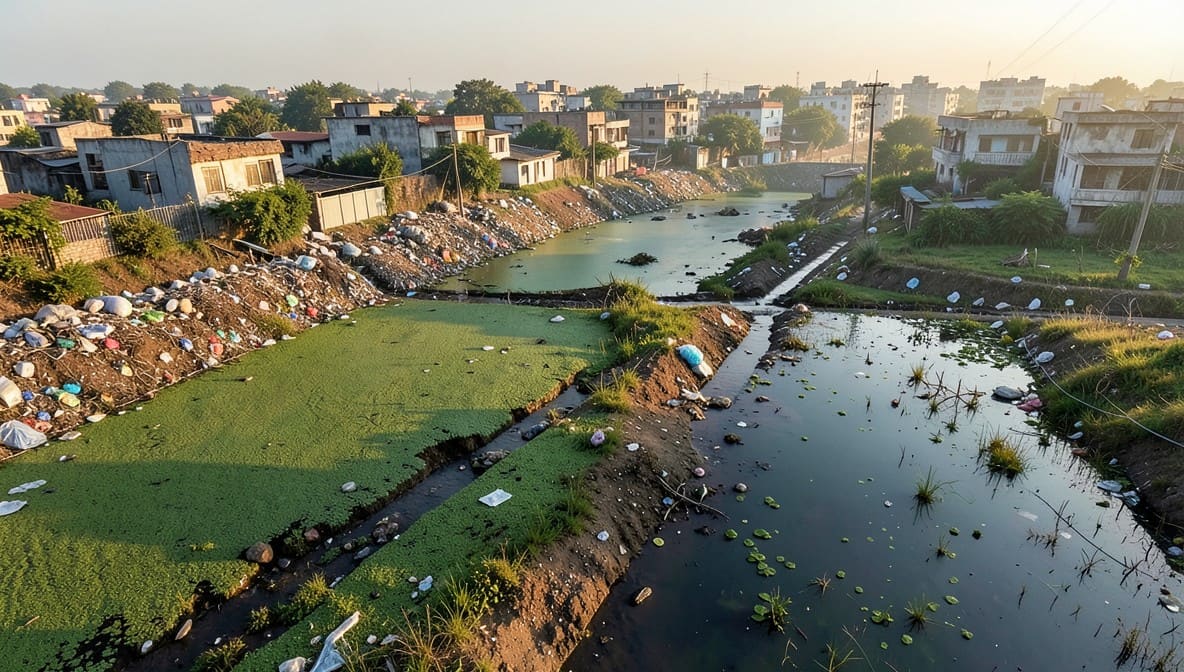
The National Green Tribunal Central Zone has issued a decisive order mandating comprehensive restoration of Gauri Sarovar, a notified wetland in Bhind, Madhya Pradesh, after finding systemic violations of environmental laws through unchecked sewage discharge and illegal solid waste dumping. The judgment reinforces the statutory duty of local authorities to protect wetlands and sets binding timelines for remediation.
Background & Facts
The Dispute
The applicant, Brahmanand, brought this Original Application before the National Green Tribunal highlighting the severe ecological degradation of Gauri Sarovar, a water body located on Survey No. 3793 in Bhind Nagar, Madhya Pradesh. The site, officially designated for agricultural and public use, has been transformed into an illegal dumping ground for municipal solid waste and a receptacle for untreated domestic sewage. The water body, identified as a wetland under the Wetlands (Conservation and Management) Rules, 2017, is suffering from eutrophication, dense water hyacinth infestation, and toxic contamination, posing direct health risks to nearby communities.
Key Facts
- Gauri Sarovar is officially notified as a wetland with Wetland ID: MP002136 and an area of 21.39 hectares, as per the Madhya Pradesh State Wetland Authority portal (Annexure-4)
- The total land area under Survey No. 3793 is 24.69 hectares, with the wetland forming its core
- Four drains - two from Housing Colony, Chakkar Wali Puliya drain, and Dharampuri drain - carry approximately 2160 KLD of untreated sewage from an estimated 20,000 population of Bhind city directly into the water body
- The 12 MLD Sewage Treatment Plant (STP) at Ratnupura, operational since 2015, currently treats only about 7 MLD of sewage, leaving over 1400 KLD untreated
- Municipal solid waste is visibly dumped along the banks of the pond, with no designated disposal mechanism
- Water samples collected on 13.04.2026 from four points (Gauri Sarovar, Nalla near Gauri Sarovar Temple, Nalla near Chaturvedi House, and Nalla at Chakkar Wali Puliya) showed non-compliance with BIS Standard 2296 for surface water quality (Annexure-5 to 8)
- The pond is largely filled with sewage except during monsoon, rendering it ecologically dead
- The Madhya Pradesh Pollution Control Board (MPPCB) issued two letters dated 13.04.2026 and 21.04.2026 to the Chief Municipal Officer, Bhind, seeking action on sewage discharge, encroachment, and waste dumping, but received no response
Procedural History
- 04.05.2026: Original Application No. 59/2026(CZ) filed before the National Green Tribunal Central Zone, Bhopal
- 04.05.2026: Tribunal directed MPPCB to inspect the site and submit a factual report
- 04.05.2026: MPPCB submitted inspection report with observations and annexures
- 04.05.2026: Tribunal heard arguments from both parties and passed order
The Parties' Positions
The applicant contended that the State of Madhya Pradesh, MPPCB, and Municipal Council, Bhind, had failed in their statutory obligations under the Environment Protection Act, 1986 and the Wetlands (Conservation and Management) Rules, 2017. The respondents did not dispute the factual findings but sought time to file a formal reply.
Relief Sought
The applicant sought immediate cessation of illegal dumping and sewage discharge, removal of encroachments, cleaning of the water body, installation of fencing, and implementation of a restoration plan under the Wetland Rules, 2017.
The Legal Issue
The central question was whether the discharge of untreated sewage and dumping of municipal solid waste into a notified wetland constitutes a violation of Rule 4 of the Wetlands (Conservation and Management) Rules, 2017, and what remedial measures the National Green Tribunal may mandate to enforce compliance.
Arguments Presented
For the Applicant
The applicant relied on Rule 4 of the Wetlands (Conservation and Management) Rules, 2017, which explicitly prohibits: (i) discharge of untreated sewage and industrial effluents; (ii) dumping of solid waste; (iii) encroachment; and (iv) conversion of wetlands for non-wetland uses. The applicant argued that the observed conditions at Gauri Sarovar were clear, documented violations of these prohibitions. Reference was made to the Tribunal’s prior jurisprudence in M.C. Mehta v. Union of India and T.N. Godavarman Thirumulpad v. Union of India to underscore the duty of the state to protect ecologically sensitive areas.
For the Respondent
The respondents, represented by counsel for MPPCB and the Municipal Council, did not contest the factual findings. The Municipal Council sought additional time to file a reply, indicating no substantive opposition to the Tribunal’s proposed directions. The MPPCB acknowledged its monitoring role but emphasized the need for coordinated action by the local municipal authority.
The Court's Analysis
The Tribunal conducted a rigorous review of the inspection report, water quality analysis, and statutory obligations under the Wetlands Rules, 2017. It noted that the wetland had been officially notified and that the violations were not merely incidental but systemic and ongoing. The Tribunal emphasized that Rule 4 is not directory but mandatory, and its breach triggers immediate remedial action.
"The discharge of untreated sewage and dumping of solid waste into a notified wetland is not merely an administrative lapse - it is a statutory offence under the Wetlands Rules, 2017, and a violation of the fundamental right to a healthy environment under Article 21 of the Constitution."
The Tribunal rejected the notion that the existence of a partially functional STP absolves the authorities of their duty to prevent untreated effluent from entering the wetland. It held that the STP’s capacity must be fully utilized, and diversion of all sewage streams must be engineered to prevent contamination. The Tribunal also affirmed that encroachments must be removed within a strict timeframe, and demarcation by the Revenue Department is a prerequisite for lawful protection.
The Tribunal further held that the absence of a response to MPPCB’s notices does not absolve the Municipal Council of liability. The duty to protect wetlands is non-delegable and imposes a positive obligation on all concerned authorities.
The Verdict
The applicant succeeded. The Tribunal directed:
- The Collector and Chief Executive Officer, Municipal Council, Bhind, to ensure no discharge of untreated sewage, dumping of solid waste, encroachment, or conversion of the wetland within 30 days
- Identification, demarcation, and removal of encroachments within 30 days, with compliance report and personal affidavit filed on the NGT website
- Preparation and implementation of a time-bound plan to divert all sewage drains to the 12 MLD STP via pumping station, or alternate treatment method
- Removal of existing municipal solid waste and water hyacinth from Gauri Sarovar
- Installation of fencing/railing in unprotected areas
- Preparation and implementation of a comprehensive restoration and conservation plan under the Wetlands Rules, 2017
- Demarcation and survey of the pond area by the Revenue Department
- MPPCB to monitor compliance and take legal action, with Action Taken Report to be filed within three weeks
The matter is listed for further hearing on 04.08.2026.
What This Means For Similar Cases
Wetland Notification Triggers Absolute Prohibitions
- Practitioners must treat any notified wetland as a legally protected zone under Rule 4 of the Wetlands Rules, 2017 - no exceptions for urban development or infrastructure projects
- Any discharge of sewage or dumping of waste into such areas is a per se violation, regardless of scale or intent
Municipal Authorities Bear Primary Responsibility
- Local bodies cannot evade liability by citing lack of funds or infrastructure
- The Tribunal’s directive to divert sewage via pumping station establishes that technical feasibility is not a defense to statutory duty
- Failure to respond to pollution control board notices constitutes negligence and invites direct enforcement
Compliance Must Be Documented and Verified
- Personal affidavits and online submission of compliance reports are now mandatory for environmental orders
- Courts and tribunals will not accept verbal assurances; proof of action is required
- Revenue Department involvement in demarcation is now a procedural prerequisite for enforcement
Monitoring Is a Continuous Obligation
- State Pollution Control Boards must conduct periodic monitoring - not just respond to complaints
- Non-compliance triggers independent legal action under the Environment Protection Act, 1986