Karnataka High Court judgments

570 Karnataka High Court judgments explained in plain English: what was decided, the law applied and why it matters. Page 16 of 24.

Article 21 | Speedy Trial Right Overrides Gravity of Offence: Bail Granted in Murder Case After 4-Year Delay : Karnataka HC
Case Law Analysis
|Karnataka High Court

Article 21 | Speedy Trial Right Overrides Gravity of Offence: Bail Granted in Murder Case After 4-Year Delay : Karnataka HC

Karnataka High Court ruled that an accused's right to speedy trial under Article 21 prevails over the gravity of the offence, granting bail in a Section 302 IPC case where only 9 of 35 witnesses were examined after nearly four years. The ruling reinforces that prolonged trial delays, even in serious offences, can justify bail under Section 439 CrPC.


Section 11 PCA & KPSC Acts | Perishable Goods Seizure Cannot Be Indefinite Pending Investigation: Karnataka HC
Case Law Analysis
|Karnataka High Court

Section 11 PCA & KPSC Acts | Perishable Goods Seizure Cannot Be Indefinite Pending Investigation: Karnataka HC

Karnataka High Court rules that seized animal skins, being perishable, must be partially released to licensed traders despite ongoing investigations under the Prevention of Cruelty to Animals Act and Karnataka Prevention of Slaughter and Preservation of Cattle Act. The judgment balances investigative interests with the economic rights of traders, setting a precedent for handling time-sensitive goods seizures.

Section 55 KP Act | Externment Orders Void Without Strict Proof of Witness Unwillingness & Enumerated Offences : Karnataka HC
Case Law Analysis
|Karnataka High Court

Section 55 KP Act | Externment Orders Void Without Strict Proof of Witness Unwillingness & Enumerated Offences : Karnataka HC

Karnataka High Court sets aside an externment order, ruling that authorities must rigorously establish all statutory ingredients-including witness unwillingness and specific offences-before invoking preventive measures. The judgment reinforces judicial scrutiny over executive orders affecting personal liberty under the Karnataka Police Act.

Section 439 CrPC | 10-Year Trial Delay Without Fault of Accused Violates Constitutional Right to Speedy Trial : Karnataka HC
Case Law Analysis
|Karnataka High Court

Section 439 CrPC | 10-Year Trial Delay Without Fault of Accused Violates Constitutional Right to Speedy Trial : Karnataka HC

Karnataka High Court grants bail under Section 439 CrPC in a murder case after a decade-long trial delay, holding that prolonged incarceration without trial completion violates Article 21. The ruling applies the Supreme Court's precedent in Union of India v. K.A. Najeeb, reinforcing that even serious offences cannot justify indefinite pre-trial detention when delays are not attributable to the accused.

Emergency Parole for Medical Emergency | Humanitarian Grounds Override Speculative Police Objections : Karnataka HC
Case Law Analysis
|Karnataka High Court

Emergency Parole for Medical Emergency | Humanitarian Grounds Override Speculative Police Objections : Karnataka HC

Karnataka High Court grants 15-day emergency parole to a convict to attend to his son's critical medical condition, rejecting a police report alleging potential nuisance without material evidence. The ruling underscores that humanitarian considerations must prevail over procedural objections when medical emergencies are substantiated.

Anticipatory Bail Under BNS | Mother Not Vicariously Liable for Son's Sexual Assault Without Prima Facie Role : Karnataka HC
Case Law Analysis
|Karnataka High Court

Anticipatory Bail Under BNS | Mother Not Vicariously Liable for Son's Sexual Assault Without Prima Facie Role : Karnataka HC

Karnataka High Court granted anticipatory bail to a mother accused alongside her son in a BNS sexual assault case, holding that mere familial relationship does not establish prima facie involvement. The court imposed weekly reporting and a Rs. 2,00,000 bond, reinforcing that vicarious liability requires active participation or knowledge under criminal law.

Section 8 POCSO Act | Non-Penetrative Acts Without Medical or Victim Corroboration Insufficient for Conviction : Karnataka HC
Case Law Analysis
|Karnataka High Court

Section 8 POCSO Act | Non-Penetrative Acts Without Medical or Victim Corroboration Insufficient for Conviction : Karnataka HC

Karnataka High Court quashed POCSO proceedings where the victim retracted allegations and medical evidence showed no penetration or sexual contact, holding that mere kissing does not meet the statutory threshold under Sections 4 or 8 of the POCSO Act. The ruling underscores that non-penetrative acts require corroborative evidence to sustain prosecution under the Act.

BNS Section 108 | Delayed FIR & Absence of Dying Declaration Justify Bail in Abetment of Suicide Case : Karnataka HC
Case Law Analysis
|Karnataka High Court

BNS Section 108 | Delayed FIR & Absence of Dying Declaration Justify Bail in Abetment of Suicide Case : Karnataka HC

Karnataka High Court grants bail in a BNS Section 108 case, emphasizing that a delayed FIR (lodged by the deceased's brother only after her death) and the absence of a dying declaration weaken the prosecution's case. The ruling underscores that bail may be granted where direct evidence of abetment is lacking, provided the accused complies with conditions ensuring investigation integrity.

Anticipatory Bail | No Active Role or Presence at Crime Scene Justifies Bail in Dowry Death Case Under Section 482 BNSS : Karnataka HC
Case Law Analysis
|Karnataka High Court

Anticipatory Bail | No Active Role or Presence at Crime Scene Justifies Bail in Dowry Death Case Under Section 482 BNSS : Karnataka HC

The Karnataka High Court granted anticipatory bail to a sister-in-law accused in a dowry death case, holding that mere inclusion in the FIR without evidence of active participation, presence at the crime scene, or direct acts of cruelty is insufficient to deny bail. This reinforces that Section 482 BNSS protects individuals from arbitrary arrest when their involvement is passive and disconnected from the alleged violence, setting a critical precedent for non-perpetrator family members in dowry-related prosecutions.

CCA Rules Rule 10(1)(d) | Prima Facie Evidence of Gross Dereliction Requires Individualized Fault, Not Just Event Occurrence : Karnataka HC
Case Law Analysis
|Karnataka High Court

CCA Rules Rule 10(1)(d) | Prima Facie Evidence of Gross Dereliction Requires Individualized Fault, Not Just Event Occurrence : Karnataka HC

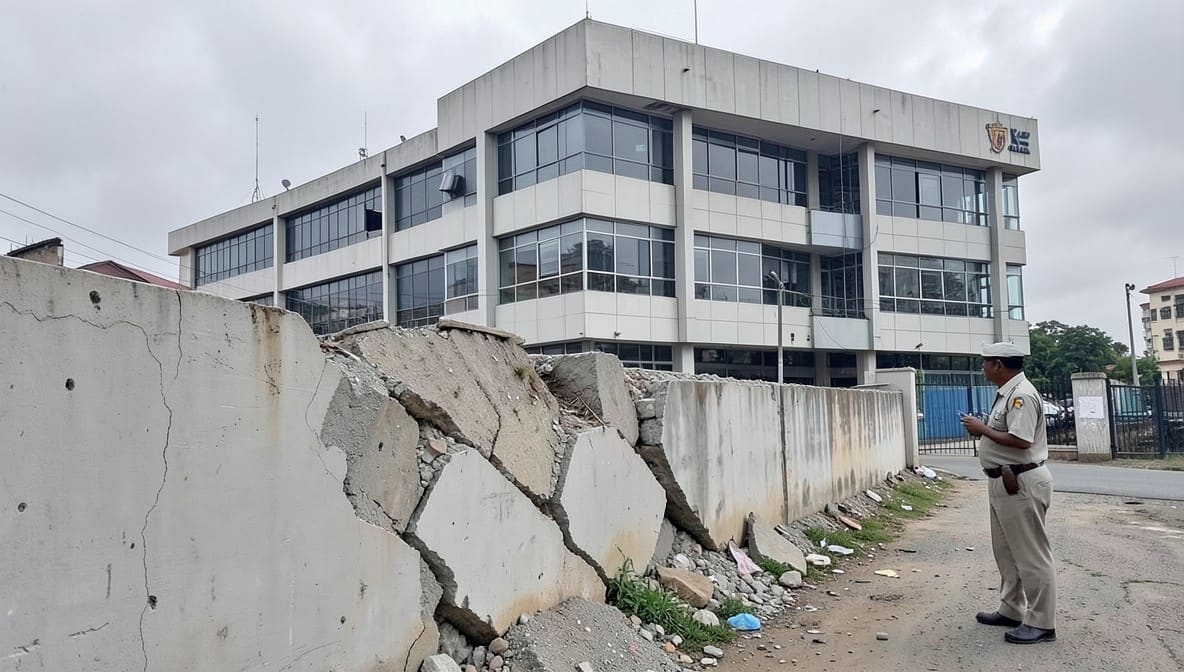
The Karnataka High Court held that the collapse of a compound wall alone cannot trigger suspension under the CCA Rules without documented evidence linking the officer to personal negligence. This ruling reinforces that administrative discipline must be grounded in individual accountability, not structural failures, protecting public servants from automatic liability for systemic or environmental incidents.

Karnataka Prisons Manual 2021 | Emergency Parole Mandated for Spousal Surgery When Denial Violates Article 21 : Karnataka HC
Case Law Analysis
|Karnataka High Court

Karnataka Prisons Manual 2021 | Emergency Parole Mandated for Spousal Surgery When Denial Violates Article 21 : Karnataka HC

The Karnataka High Court has ruled that denying emergency parole to a convicted prisoner for his wife’s urgent surgery, based on unsubstantiated health fears, violates Article 21 and the Karnataka Prisons Manual 2021. This sets a critical precedent for humanitarian parole in medical crises, affirming that prisoners’ rights to family and health cannot be arbitrarily overridden by speculative administrative concerns.

Article 22(5) | Preventive Detention Invalid If Documents Not Provided in Detenue’s Known Language: Karnataka HC
Case Law Analysis
|Karnataka High Court

Article 22(5) | Preventive Detention Invalid If Documents Not Provided in Detenue’s Known Language: Karnataka HC

The Karnataka High Court quashed a Goondas Act detention order because the detenue, literate only in Kannada, was served critical documents in English and illegible copies, violating his constitutional right to make an effective representation. This ruling establishes that language accessibility is not a formality but a mandatory safeguard under Article 22(5), affecting all preventive detention cases involving linguistic minorities in Karnataka.

Article 227 | Challenging Consent Orders After Voluntary Agreement Constitutes Abuse of Process : Karnataka HC
Case Law Analysis
|Karnataka High Court

Article 227 | Challenging Consent Orders After Voluntary Agreement Constitutes Abuse of Process : Karnataka HC

Karnataka High Court dismisses a writ petition under Article 227, ruling that a party cannot challenge a visitation order after voluntarily agreeing to its terms. The court held that such a challenge undermines judicial process and renders the Family Court's consent order enforceable, reinforcing the sanctity of mutual agreements in custody matters.

Natural Justice | Blacklisting Without Personal Hearing Despite Counsel's Appearance Violates Audi Alteram Partem: Karnataka HC
Case Law Analysis
|Karnataka High Court

Natural Justice | Blacklisting Without Personal Hearing Despite Counsel's Appearance Violates Audi Alteram Partem: Karnataka HC

The Karnataka High Court has struck down a two-year contractor blacklisting for violating the right to be heard, even when counsel appeared, ruling that mere representation is no substitute for a meaningful opportunity to respond. The court ordered fresh proceedings with a mandatory 15-day reply window and a two-month deadline for a reasoned order, setting a new standard for procedural fairness in public tender disputes.

Section 10 Essential Commodities Act | Director Cannot Be Prosecuted Unless Company Is First Arraigned as Accused: Karnataka HC
|Karnataka High Court

Section 10 Essential Commodities Act | Director Cannot Be Prosecuted Unless Company Is First Arraigned as Accused: Karnataka HC

The Karnataka High Court held that under Section 10 of the Essential Commodities Act, a corporate director cannot be prosecuted for fertilizer violations unless the company itself is named as an accused party. This clarifies the threshold for vicarious liability under the Fertilizer Control Order, shielding officers from automatic criminal exposure when the corporate entity remains uncharged.

Section 438 CrPC | Mere Fund Transfer from Co-Accused’s Relative Does Not Establish Criminal Liability for Anticipatory Bail : Karnataka HC
Case Law Analysis
|Karnataka High Court

Section 438 CrPC | Mere Fund Transfer from Co-Accused’s Relative Does Not Establish Criminal Liability for Anticipatory Bail : Karnataka HC

The Karnataka High Court granted anticipatory bail to a petitioner labeled Accused No. 3 despite no direct allegations, FIR, or evidence linking him to the offense, holding that financial transactions with a co-accused’s sibling, absent any active role or intent, cannot substitute for criminal proof. This reinforces that arbitrary designation in charge sheets cannot override the constitutional right to liberty under Section 438 CrPC, setting a critical precedent for individuals caught in overbroad investigations.

NDPS Act Section 25 | Mere Proximity of Contraband in Parked Vehicle Without Knowledge Does Not Establish Offence: Karnataka HC
Case Law Analysis
|Karnataka High Court

NDPS Act Section 25 | Mere Proximity of Contraband in Parked Vehicle Without Knowledge Does Not Establish Offence: Karnataka HC

The Karnataka High Court held that recovering narcotics from a vehicle parked near an accused’s property, without evidence the accused knew of or consented to its presence, cannot sustain a charge under Section 25 of the NDPS Act. This reinforces that constructive possession requires active control or awareness, not just physical closeness - a critical safeguard for innocent property owners caught in drug enforcement dragnets.

Section 483 BNSS | Bail Mandatory When Eyewitnesses Turn Hostile and Prosecution Evidence Collapses: Karnataka HC
Case Law Analysis
|Karnataka High Court

Section 483 BNSS | Bail Mandatory When Eyewitnesses Turn Hostile and Prosecution Evidence Collapses: Karnataka HC

Karnataka High Court grants bail under Section 483 BNSS, holding that continued detention violates personal liberty when key eyewitnesses fail to support the prosecution's case. The ruling reinforces that bail is not punitive and must be granted where evidence disintegrates, setting a precedent for similar cases under the new criminal laws.