The Karnataka High Court has clarified that suspension of a government officer under the CCA Rules requires specific prima facie evidence of gross dereliction against the officer personally - not merely the occurrence of an adverse event. This ruling reinforces procedural safeguards in disciplinary actions and redefines the threshold for invoking suspension powers.
Background & Facts
The Dispute
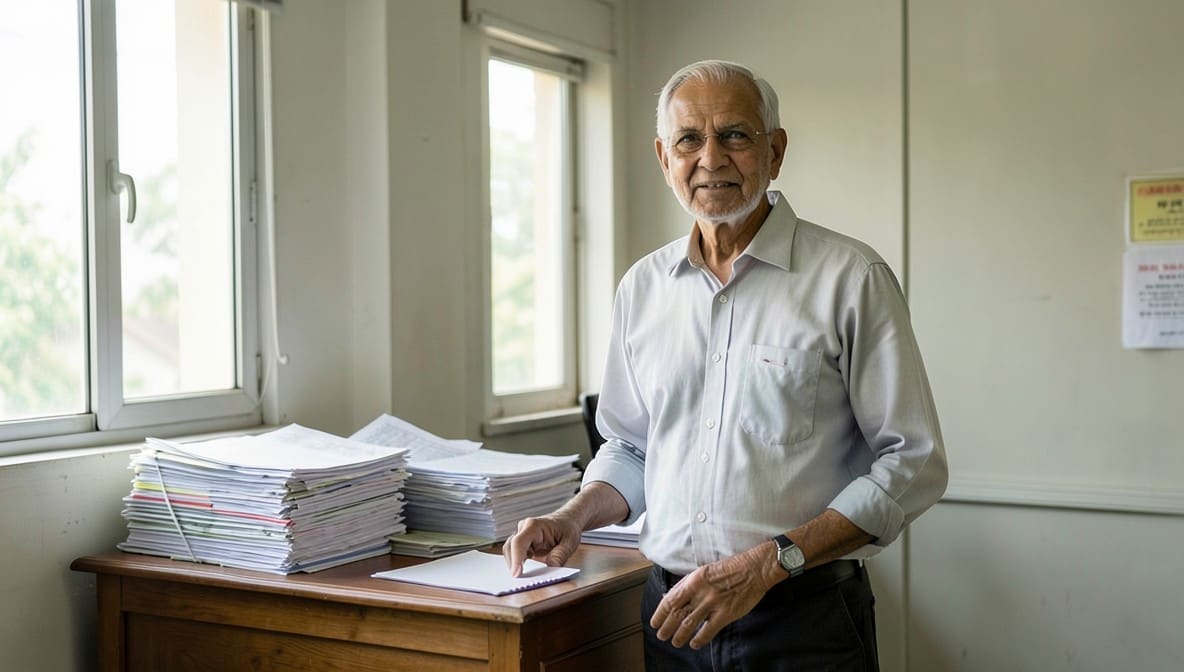
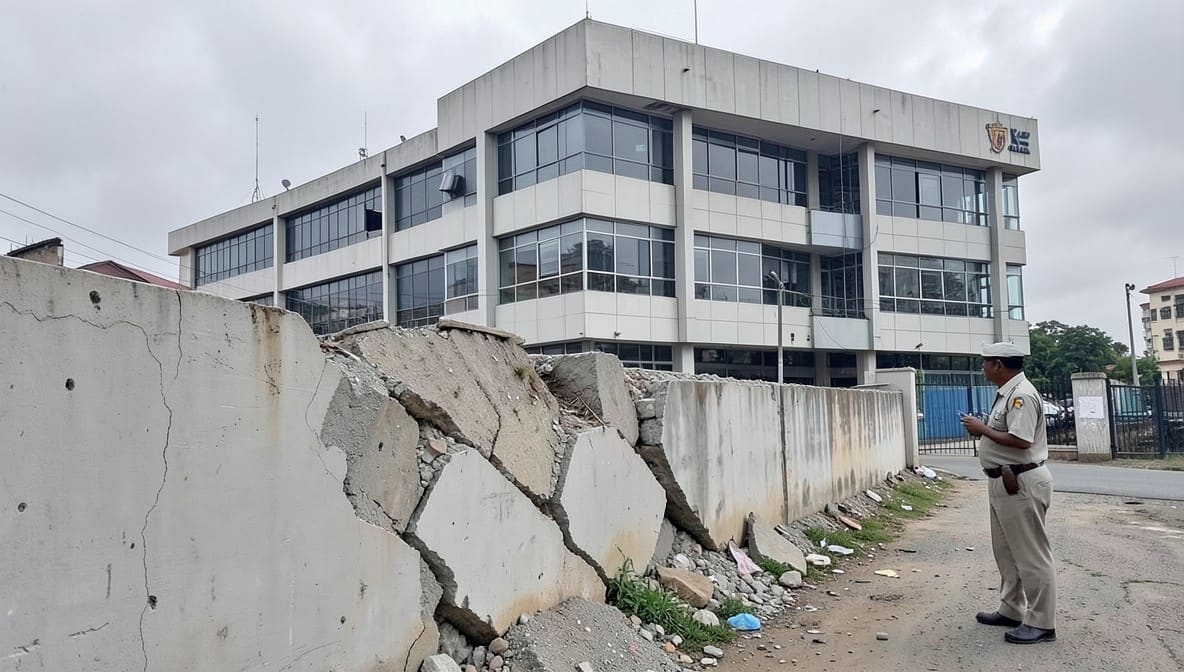
The petitioner, M. B. Nagaraj, Executive Engineer in the Health and Family Welfare Department, was suspended from service on 01.05.2026 under Clause (d) of sub-rule (1) of Rule 10 of the Karnataka Civil Services (Classification, Control and Appeal) Rules, 1957 (CCA Rules). The suspension followed the collapse of a compound wall at a government facility under his supervision. The respondents contended that this incident, by itself, constituted prima facie evidence of gross dereliction of duty warranting suspension.
Key Facts
- The petitioner has been serving as Executive Engineer since his regularization on 01.12.2010
- The compound wall collapse occurred at a government premises in Bengaluru on or before 30.04.2026
- No formal inquiry report, site inspection record, or technical assessment implicating the petitioner was available at the time of suspension
- The Public Works Department constituted two investigative bodies on 02.05.2026: (i) a local investigation team comprising the Deputy Commissioner, Bangalore Urban, and Tahsildar, Yelahanka; and (ii) a technical committee of PW Department officers to submit a report within seven days
- The suspension order (No. Aa Ku Ka 171 CGIM 2026) cited no specific act, omission, or documented failure by the petitioner
- The petitioner had no prior disciplinary history
Procedural History
- 01.05.2026: Suspension order issued by Principal Secretary, Department of Health and Family Welfare Services
- 02.05.2026: Investigative committees constituted by Public Works Department
- 05.05.2026: Petitioner filed Application No. 2561 of 2026 before the Karnataka State Administrative Tribunal (KSAT), seeking interim stay of suspension
- 06.05.2026: KSAT dismissed the interim stay application, holding that an ongoing investigation justified withholding interim relief
- 10.05.2026: Writ Petition No. 15660 of 2026 filed before the Karnataka High Court under Articles 226 and 227 of the Constitution
- 21.05.2026: Hearing before Division Bench of Karnataka High Court
Relief Sought
The petitioner sought:
- Quashing of the KSAT order dated 06.05.2026
- Stay and setting aside of the suspension order dated 01.05.2026
- Any other relief deemed just and equitable by the Court
The Legal Issue
The central question was whether the mere occurrence of a structural failure - without any recorded evidence of personal negligence or dereliction by the officer - constitutes prima facie evidence of gross dereliction of duty under Clause (d) of Rule 10(1) of the CCA Rules.
Arguments Presented
For the Petitioner
Learned Senior Counsel P. S. Rajagopal relied on State of Haryana v. Dinesh Singh (2024) 13 SCC 357 to argue that suspension under Clause (d) requires a documented, case-specific prima facie finding of gross dereliction against the officer. He emphasized that the word "him" in the rule mandates individualized evidence, not circumstantial association with an incident. He contended that no report, inspection record, or admission of fault existed at the time of suspension, rendering the order legally unsustainable.
For the Respondent
The Additional Government Advocate (AGA) argued that the collapse of a compound wall under the petitioner’s supervision was, by itself, sufficient to raise a presumption of negligence. He submitted that the gravity of the incident - potentially endangering public safety - justified immediate suspension pending investigation, and that the rule does not require a completed inquiry before suspension.
The Court's Analysis
The Division Bench undertook a textual and contextual interpretation of Clause (d) of Rule 10(1) of the CCA Rules, which permits suspension where there is "prima facie evidence of gross dereliction of duty" against the officer. The Court observed that the phrase "against him" is not merely procedural but substantive: it demands a nexus between the officer’s conduct and the alleged dereliction.
"The usage of the word 'him' would indicate that such evidence is required insofar as the officer who is proposed to be suspended and not the event itself."
The Court rejected the notion that an event alone - no matter how serious - can substitute for evidence of personal fault. The collapse of a compound wall, while tragic, is an outcome that may arise from multiple causes: design flaws, material degradation, third-party interference, or supervisory lapses by others. Absent any report, inspection note, or documented failure attributable to the petitioner, the order lacked the minimal evidentiary foundation required by law.
The Court further noted that the respondents had themselves initiated two investigative bodies precisely because no prima facie case had been established at the time of suspension. This admission undermined the very basis of the suspension order.
The Court held that suspension is a drastic measure, and its invocation must be preceded by a reasoned application of mind, not a reflexive reaction to an incident. The Tribunal’s refusal to grant interim relief was based on an erroneous premise - that an ongoing investigation justified withholding stay. The Court clarified that the existence of an investigation does not validate an unlawful suspension.
The Verdict
The writ petition succeeded. The Court set aside both the Karnataka State Administrative Tribunal’s order dated 06.05.2026 and the suspension order dated 01.05.2026. The petitioner is reinstated with all consequential benefits, including back wages and service credit. The respondents are granted liberty to initiate disciplinary proceedings under Clause (d) of Rule 10(1) of the CCA Rules upon receipt of the investigative committee’s report, provided such action is based on documented prima facie evidence of personal gross dereliction.
What This Means For Similar Cases
Suspension Requires Personalized Evidence, Not Event-Based Assumptions
- Practitioners must now challenge suspensions grounded solely on incidents occurring under an officer’s jurisdiction
- The burden lies on the authority to produce specific, documented evidence linking the officer to gross dereliction - not merely to the location or project
- Suspension orders lacking any reference to acts, omissions, or prior warnings are vulnerable to quashing
Investigative Committees Cannot Validate Pre-emptive Suspension
- Formation of inquiry bodies after suspension does not cure the illegality of the suspension order
- Authorities must wait for findings before invoking suspension powers under Clause (d)
- Suspension cannot be used as a tool to pressure officers during investigations
Judicial Scrutiny of Administrative Discretion Is Strengthened
- Courts will now closely examine whether the word "him" in disciplinary rules has been meaningfully applied
- The State of Haryana v. Dinesh Singh precedent is now binding on all state administrative tribunals and high courts
- Officers may seek immediate relief under Article 226 if suspension is issued without a reasoned, evidence-based order