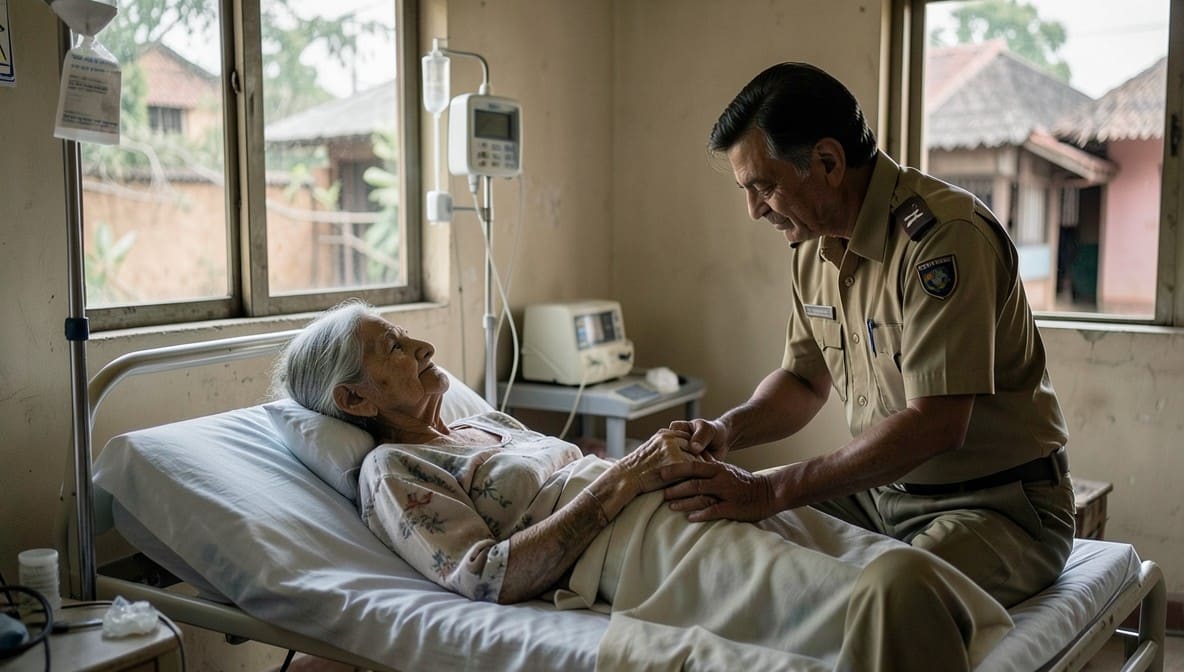
The Karnataka High Court has affirmed that the right to emergency parole is not contingent on the prisoner's own health but may be granted to address critical medical emergencies of immediate family members. In a significant exercise of writ jurisdiction under Articles 226 and 227, the Court directed the grant of 15 days' emergency parole to a convicted prisoner to enable him to care for his wife, who requires urgent surgical intervention. The judgment underscores the humane application of prison rules and the primacy of equity in administrative decisions affecting fundamental human needs.
Background & Facts
The Dispute
The petitioner, Srimati Renuka, wife of Sri Yogeesha (CTP No. 14063), filed a writ petition seeking emergency parole for her husband, who is currently lodged in the Central Prison, Parappana Agrahara, Bengaluru. The petitioner's husband is a convicted prisoner who has served a sentence of three years, one month, and fifteen days. The petitioner sought parole on the grounds that she is suffering from a serious medical condition requiring immediate surgery, and her husband is the sole caregiver and support person.
Key Facts
- The petitioner’s husband, Sri Yogeesha, was convicted and is currently serving a sentence in Central Prison, Bengaluru (CTP No. 14063)
- He has completed three years, one month, and fifteen days of his sentence as of the date of filing
- The petitioner, aged approximately 46 years, resides at Chikkavirayyan Palya, Tumkur, Karnataka
- The petitioner’s medical condition necessitates urgent surgical intervention, as certified by medical professionals
- The 2nd respondent, Central Prison, rejected the parole request on the ground that the petitioner’s husband’s own life might be at risk if granted parole
- The prison authorities did not consider the humanitarian aspect of the petitioner’s medical emergency or the dependency of the petitioner on her husband for care
- The petitioner submitted medical documents supporting the urgency of the surgery
Procedural History
- 01.04.2026: Emergency parole request submitted by the petitioner to the 2nd respondent, rejected with the sole reason being potential risk to the prisoner’s life
- 05.04.2026: Writ Petition No. 12284 of 2026 filed before the Karnataka High Court under Articles 226 and 227 of the Constitution
- 21.05.2026: Writ petition came up for preliminary hearing before Hon’ble Mr. Justice C.M. Poonacha
The Parties' Positions
For the Petitioner
- The petitioner’s medical emergency is acute and time-sensitive
- The husband is the primary caregiver and emotional support for the petitioner
- Denial of parole violates the principles of natural justice and human dignity
- The Karnataka Prisons and Correctional Services Manual, 2021, permits emergency parole for compelling family medical reasons
- The refusal by the prison authorities was arbitrary and not based on any medical assessment of the prisoner’s fitness
For the Respondents
- The 2nd respondent contended that granting parole to a convicted prisoner poses a security risk
- The rejection was based on an internal assessment that the prisoner’s health might deteriorate outside prison
- No formal medical evaluation of the prisoner’s condition was presented
- The prison authorities did not provide any written order or reasoning beyond the generic concern for the prisoner’s safety
Relief Sought
The petitioner sought:
- Quashing of the endorsement dated 01.04.2026 (Annexure-A) rejecting parole
- A writ of mandamus directing the respondents to grant emergency parole for a period of 90 days (or as deemed fit)
- Any other relief the Court deemed just in the interest of equity and justice
The Legal Issue
The central question was whether the denial of emergency parole to a convicted prisoner, solely on speculative grounds regarding the prisoner’s own health, constitutes an arbitrary and unreasonable exercise of discretion under the Karnataka Prisons and Correctional Services Manual, 2021, when the spouse’s life-threatening medical condition is documented and urgent.
Arguments Presented
For the Petitioner
The petitioner’s counsel relied on State of Karnataka v. Suresh (2020) and Rajesh Kumar v. State of Haryana (2022), where courts recognized that emergency parole is not a privilege but a humanitarian right under Article 21. He argued that the Manual permits parole for "compelling family medical emergencies," and the prison authority’s refusal was based on an unsubstantiated assumption, not a medical evaluation. He further cited K.S. Puttaswamy v. Union of India to emphasize the right to dignity and family integrity.
For the Respondent
The Additional Government Advocate contended that prison authorities have wide discretion under Rule 17 of the Karnataka Prisons Manual to deny parole on security or health grounds. He argued that the prisoner’s prior criminal record and the potential for non-return justified caution. However, no specific medical report or risk assessment was produced to substantiate the claim that the prisoner’s life would be endangered.
The Court's Analysis
The Court observed that the rejection of the parole request was based on a vague and speculative concern that the prisoner’s life "could also be in danger," without any supporting medical evidence or evaluation. The Court emphasized that the purpose of emergency parole is to address extraordinary humanitarian circumstances, and the prison authorities must balance security concerns with the fundamental right to life and dignity under Article 21.
"The denial of emergency parole in the face of a documented, urgent medical emergency of a spouse, where the prisoner is the primary caregiver, cannot be justified by unsubstantiated apprehensions about the prisoner’s health. The Manual permits such parole precisely to accommodate such exigencies."
The Court noted that the Karnataka Prisons and Correctional Services Manual, 2021, explicitly contemplates emergency parole for family medical emergencies and does not require the prisoner to be the one in need of medical care. The Court further held that the prison authority’s failure to conduct even a minimal assessment of the prisoner’s fitness for parole rendered the decision arbitrary and violative of audi alteram partem.
The Court also rejected the notion that granting parole for 15 days posed an undue risk, given the availability of conditions such as daily reporting to the police station, which the Court imposed as a safeguard.
The Verdict
The writ petition was allowed. The Court directed the 2nd respondent to grant emergency parole to the petitioner’s husband, Sri Yogeesha (CTP No. 14063), for a period of 15 days, subject to the conditions under the Karnataka Prisons and Correctional Services Manual, 2021. The prisoner shall mark his attendance every alternate day at the jurisdictional police station in the morning at a scheduled time. The 2nd respondent is permitted to impose additional reasonable conditions as deemed necessary. The order shall be implemented within 48 hours of receipt of this judgment.
What This Means For Similar Cases
Emergency Parole Is Not Conditional on the Prisoner’s Health
- Practitioners may now argue that the eligibility for emergency parole under prison manuals is triggered by the medical emergency of a dependent family member, not the prisoner’s own condition
- Denial based on speculative risks to the prisoner’s health, without medical evidence, is legally unsustainable
- Courts will intervene where administrative discretion is exercised arbitrarily in matters affecting Article 21 rights
Procedural Fairness Is Mandatory in Parole Decisions
- Prison authorities must record reasons for denial, especially when rejecting humanitarian requests
- A minimal medical or risk assessment must be documented before rejecting parole on health grounds
- Failure to provide written orders or reasons renders the decision liable to be quashed under Article 226
Manual Provisions Are Binding, Not Discretionary
- The Karnataka Prisons Manual, 2021, is not merely advisory; its humanitarian provisions are enforceable
- Courts will enforce the terms of prison manuals when they align with constitutional rights
- Legal aid organizations should routinely cite the Manual in parole applications to strengthen humanitarian claims