The Karnataka High Court recently addressed a writ petition seeking the quashing of an FIR and the release of a seized truck and animal skin, holding that licensed traders are entitled to the disposal of perishable goods pending investigation. The judgment underscores the balance between lawful trade and criminal proceedings, particularly when seized materials are subject to decay.
Background & Facts
The Dispute
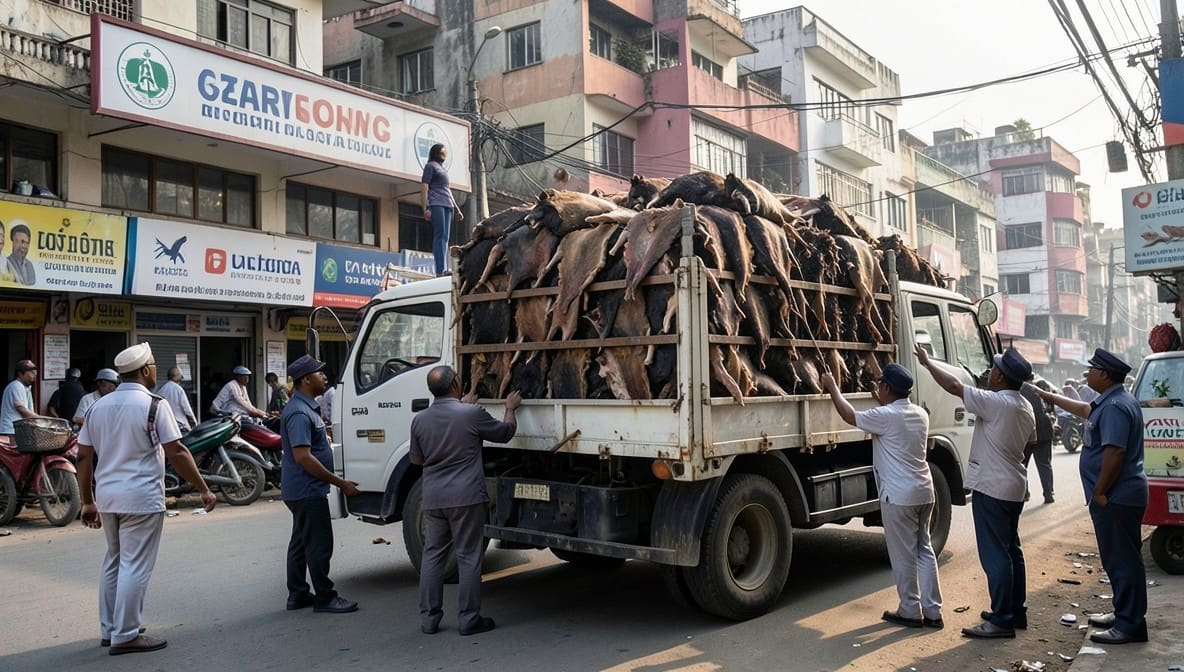
The petitioners, comprising a licensed trader of animal skin (M/s. H.K. and Company), the truck owner (Mr. Ravi Boobathi), and the driver (Vadivelu), were accused of offences under Section 11 of the Prevention of Cruelty to Animals Act, 1960 (PCA Act), Sections 4 and 12 of the Karnataka Prevention of Slaughter and Preservation of Cattle Act, 2020 (KPSC Act), and Section 325 of the Bharatiya Nyaya Sanhita, 2023 (BNS). The dispute arose when the petitioners were transporting animal skin in a truck bearing registration No. AP-39/TZ-1999, which was seized by the police along with the skin.
Key Facts
- The petitioner No. 1 (M/s. H.K. and Company) holds a valid license for trading animal skin.
- On an unspecified date, the petitioners were transporting animal skin in a truck owned by petitioner No. 2 (Mr. Ravi Boobathi).
- The truck and skin were seized by the police under Crime No. 134/2026 registered at Sub-Urban Police Station, Dharwad.
- The seized skin, valued at approximately Rs. 19 lakhs, is perishable and subject to rapid decay.
- The truck, valued at Rs. 10 lakhs, was also seized in connection with the alleged offences.
- The petitioners contended that the transportation was lawful under the license and that the offences alleged were not attracted.
Procedural History
- FIR Registration: Crime No. 134/2026 was registered for offences under the PCA Act, KPSC Act, and BNS.
- Seizure: The truck and animal skin were seized by the police.
- Writ Petition: The petitioners filed WP No. 104494 of 2026 under Articles 226 and 227 of the Constitution of India and Section 528 of the Bharatiya Nagarik Suraksha Sanhita (BNSS) seeking:
- Quashing of the FIR and complaint.
- Release of the seized truck and animal skin.
- Police protection for lawful traders and action against the complainant for abusing the process of court.
Relief Sought
The petitioners sought:
- Quashing of the FIR registered under Crime No. 134/2026.
- Release of the truck (AP-39/TZ-1999) and the seized animal skin.
- Direction to the police to provide protection to traders from exploitation by anti-social elements.
- Registration of a complaint against the complainant for abusing the legal process.
The Legal Issue
The central question before the Court was whether the petitioners, as licensed traders, were entitled to the release of seized perishable goods (animal skin) and the truck pending investigation, despite the registration of an FIR for alleged violations of the PCA Act, KPSC Act, and BNS.
Arguments Presented
For the Petitioners
- The petitioners contended that the transportation of animal skin was lawful under the license issued to petitioner No. 1.
- The offences alleged under the PCA Act, KPSC Act, and BNS were not attracted as the petitioners were engaged in a lawful trade.
- The seized skin is perishable and subject to decay, which would result in a total loss of value if not released.
- The truck, being an essential asset for the business of petitioner No. 2, should be released to prevent undue hardship.
For the Respondents
- The State, represented by the High Court Government Pleader, opposed the petition, arguing that the petitioners had violated the provisions of the PCA Act, KPSC Act, and BNS.
- The investigation should proceed, and the seized materials should remain in custody until the conclusion of the investigation or trial.
The Court's Analysis
The Court examined the contentions and the records placed before it, focusing on the following key aspects:
-
Ownership and License: The petitioner No. 1 claimed to be the lawful owner of the seized animal skin, transported under a valid license. The Court noted that the license was prima facie valid and that there was no third-party claim over the seized materials.
-
Perishable Nature of Seized Goods: The Court observed that the seized animal skin is perishable and subject to rapid decay. If the skin were to remain in custody until the conclusion of the investigation or trial, it would perish and become useless, causing irreparable loss to the petitioner.
-
Balance of Interests: The Court emphasized the need to balance the interests of the petitioners with the requirements of the investigation. While the investigation should proceed, the petitioners should not be deprived of their property indefinitely, especially when the materials are perishable.
-
Conditions for Release: The Court held that the seized materials could be released subject to certain conditions to ensure their availability for trial, if necessary. The petitioners were directed not to dispute the seizure during the trial and to furnish sureties for the value of the seized goods.
"The records placed before the Court would reveal that the animal skins are seized from the petitioners’ custody while transporting the same in a truck bearing registration No. AP-39/TZ-1999. This fact is not disputed by the petitioners. The petitioner No. 1 claims that they were lawfully transporting the animal skin under the duly issued license. This being the position, seized animal skin has to be released in favour of the petitioner No. 1 as he claims to be the owner and there is no third party claim, and admittedly said materials are seized from his custody."
"It is also not in dispute that the seized animal skin is a perishable material and subject to speedy decay. If the seized skin is ordered to be kept in the custody until conclusion of investigation or any trial pursuant to the report, the seized animal skin would perish and would be of no use for anyone."
The Verdict
The Court allowed the petition in part and passed the following directions:
-
Release of Animal Skin: Petitioner No. 1 (M/s. H.K. and Company) is permitted to sell the seized animal skin but must place the invoice relating to the sale transaction before the Trial Court.
-
Release of Truck: The seized truck bearing registration No. AP-39/TZ-1999 is to be released in favour of petitioner No. 2 (Mr. Ravi Boobathi), subject to the following conditions:
- Petitioner No. 2 shall not alienate or alter the truck until the conclusion of the investigation or any further proceedings.
- If petitioner No. 2 intends to sell the truck, he must seek appropriate orders from the Trial Court.
-
Non-Dispute of Seizure: Petitioner Nos. 1 and 2 shall not dispute the seizure of the animal skin during the trial.
-
Surety: Petitioner No. 1 shall furnish surety for Rs. 19 lakhs (the value of the seized skin), and petitioner No. 2 shall furnish surety for Rs. 10 lakhs (the value of the truck) before the release of the seized materials.
-
Observations: The Court clarified that its observations are confined to the present order and should not be construed as reflecting on the merits of the complaint or the defence of the petitioners.
What This Means For Similar Cases
Perishable Goods and Lawful Trade
- The judgment establishes that licensed traders are entitled to the release of perishable goods seized during investigation, provided they comply with conditions such as furnishing sureties and not disputing the seizure during trial.
- Practitioners should argue for the release of perishable goods by highlighting the irreparable loss that would result from prolonged custody, especially when the goods are subject to decay.
Conditions for Release
- Courts may impose conditions to ensure the availability of seized goods for trial, such as:
- Furnishing sureties for the value of the seized goods.
- Prohibiting alienation or alteration of the seized property.
- Requiring the petitioner to place invoices or transaction records before the Trial Court.
Investigation vs. Property Rights
- The judgment underscores that investigations should not unduly deprive individuals of their property rights, particularly when the seized materials are perishable. However, the Court stopped short of quashing the FIR, allowing the investigation to proceed.
- This sets a precedent that partial relief can be granted even while criminal proceedings are ongoing, balancing the interests of justice and the rights of the accused.