The Karnataka High Court has reaffirmed that preventive detention under the Goondas Act is void if the detenue is denied the ability to understand the grounds of detention in a language they comprehend. This judgment underscores that procedural compliance under Article 22(5) is not a formality but a constitutional imperative.
Background & Facts
The Dispute
The petitioner, a relative of Sagar Lakkundi, filed this writ petition challenging the legality of his preventive detention under the Karnataka Prevention of Dangerous Activities, Bootleggers, Drug Offenders, Gamblers, Goondas, Immoral Trafficking Offenders, Slum Grabbers and Video or Audio Pirates Act, 1985 (Goondas Act). The detention was based on allegations that the detenue was a habitual offender with a history of violent crimes, and that his continued activities posed a threat to public order.
Key Facts
- The detenue, Sagar Lakkundi, is aged 28 years, a resident of Sadashivnagar, Old Hubballi, and identified as a "Gowndi" by occupation.
- He has been listed as a "rowdy-sheeter" by the Old Hubballi Police Station.
- Eight criminal cases were cited against him between 2019 and 2025, including offences under Sections 307, 323, 324, 504, 506 of IPC and Sections 109, 115(2), 118(1), 351, 352, 190 of Bharatiya Nyaya Sanhita, 2023.
- The detention order (No. CP/MAG-2/HD/09/2025-26) was passed by Respondent No.1 (Commissioner of Police) on 02.06.2025.
- The order was approved by Respondent No.2 (Government of Karnataka) on 09.06.2025.
- The order was confirmed by Respondent No.2 on 18.07.2025.
- The grounds of detention stated that the detenue had studied only up to the second standard in Kannada medium and was able to read only Kannada.
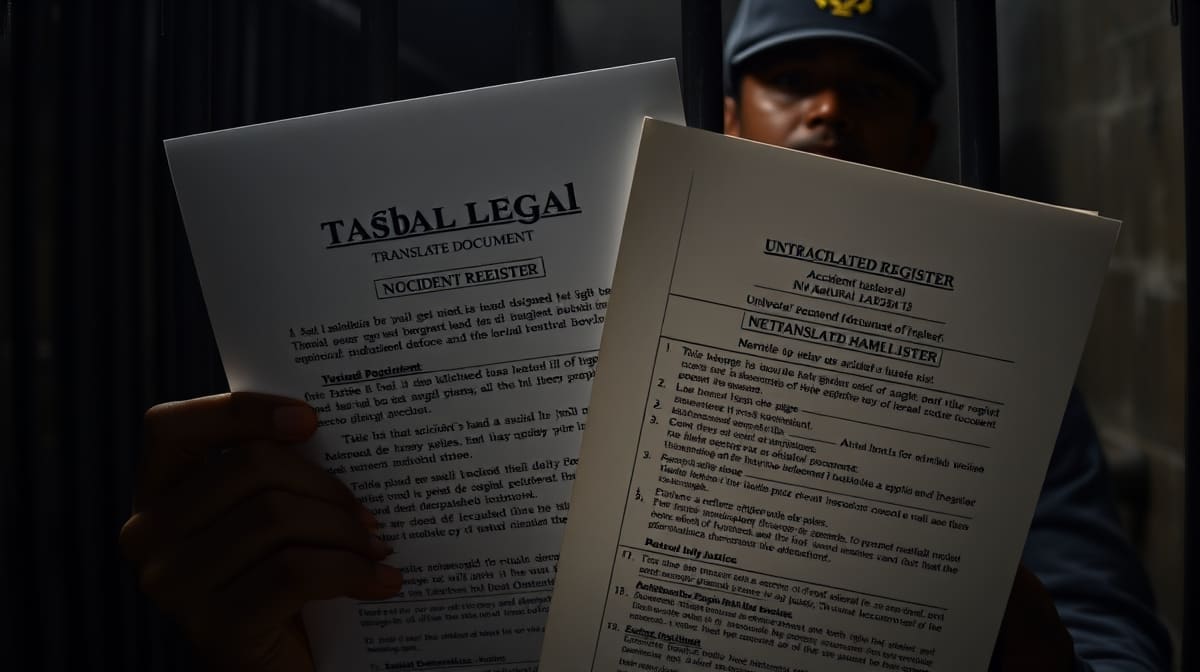
- The documents relied upon by the detaining authority were furnished to the detenue in English and some were illegible.
- No translated copies in Kannada were provided.
- The detenue was not given an opportunity to effectively challenge the grounds due to language and legibility barriers.
Procedural History
- 02.06.2025: Detention order passed by Commissioner of Police, Hubballi-Dharwad.
- 09.06.2025: Order approved by Government of Karnataka, Home Department.
- 18.07.2025: Order confirmed by Government of Karnataka.
- 19.01.2026: Writ Petition filed before the High Court of Karnataka, Dharwad Bench.
- 19.05.2026: Petition heard and reserved for judgment.
- 21.05.2026: Judgment pronounced.
The Parties' Positions
For the Petitioner
The petitioner contended that the detention order was invalid because:
- The documents relied upon by the authorities were provided in English, despite the detenue being literate only in Kannada.
- Several documents were illegible, rendering them unusable for preparing a meaningful representation.
- This violated the detenue’s fundamental right under Article 22(5) of the Constitution to make an effective representation.
- The authorities failed to rebut these claims in their counter-affidavit.
- The delay in hearing the petition, caused by repeated adjournments sought by the State, risked rendering the petition infructuous as the detention order was set to expire on 02.06.2026.
For the Respondent
The State contended that:
- The detention order was passed after due application of mind.
- The detenue had a long record of criminal activity, justifying preventive detention.
- All procedural requirements under the Goondas Act were followed.
- No specific objection was raised by the detenue regarding language or legibility before the Advisory Board.
Relief Sought
The petitioner sought:
- Quashing of the detention order dated 02.06.2025, approval order dated 09.06.2025, and confirmation order dated 18.07.2025.
- Immediate release of the detenue.
- Costs of litigation.
The Legal Issue
The central question was whether Article 22(5) of the Constitution requires the detaining authority to provide documents relied upon in a language the detenue can read and in legible form, and whether failure to do so vitiates the detention order.
Arguments Presented
For the Petitioner
The petitioner relied on Harikisan v. State of Maharashtra and State of Manipur v. Buyamayum Abdul Hanan to argue that the right to effective representation under Article 22(5) is meaningless if the detenue cannot comprehend the grounds or documents. The failure to provide Kannada translations and legible copies deprived the detenue of a fair opportunity to contest his detention. The petitioner also cited Bhupinder Singh v. Union of India and Union of India v. Ranu Bhandari to establish that the detaining authority must supply legible, intelligible copies of all material relied upon, regardless of whether the detenue had prior knowledge of them.
For the Respondent
The State argued that the procedural requirements under the Goondas Act were satisfied, and that the detenue’s criminal record justified the detention. It did not dispute the language or legibility issues but claimed these were not material since the detenue did not formally object before the Advisory Board. The State failed to produce any evidence rebutting the petitioner’s claims regarding illegibility or lack of translation.
The Court's Analysis
The Court conducted a rigorous analysis of Article 22(5) and its interpretation by the Supreme Court. It emphasized that preventive detention, while constitutionally permissible, is an extraordinary power that must be exercised within strict procedural safeguards. The right to make an effective representation is not a procedural technicality but a substantive constitutional guarantee.
"If the detained person is conversant with the English language, he will naturally be in a position to understand the gravamen of the charge against him... But to a person who is not so conversant with the English language, in order to satisfy the requirements of the Constitution, the detenue must be given the grounds in a language which he can understand, and in a script which he can read, if he is a literate person."
The Court held that the detenue’s literacy in Kannada alone, as explicitly stated in the detention order, made the provision of English documents a violation of his rights. The Court further noted that the illegibility of some documents compounded the violation, rendering the detenue’s ability to respond effectively impossible.
"Supply of illegible copies of documents which have been relied upon by the detaining authority indeed has deprived him in making an effective representation and denial thereof will hold the order of detention illegal and not in accordance with the procedure contemplated under law."
The Court rejected the State’s argument that the detenue did not formally object before the Advisory Board, holding that the burden lies with the State to ensure compliance with constitutional safeguards. The failure to provide intelligible, translated documents was not a mere irregularity but a fundamental breach of Article 22(5).
The Court also noted the urgency of the matter, as the detention order was set to expire on 02.06.2026, and the petition had been pending since 19.01.2026 due to avoidable delays by the State. This further justified immediate intervention.
The Verdict
The writ petition was allowed. The Court quashed the detention order dated 02.06.2025, the approval order dated 09.06.2025, and the confirmation order dated 18.07.2025. The respondents were directed to set the detenue at liberty forthwith, unless he was required in any other case. The Registry was directed to communicate the operative portion of the order to the Superintendent of Central Prison, Dharwad, immediately. No costs were awarded.
What This Means For Similar Cases
Language Accessibility Is Non-Negotiable
- Practitioners must now insist that all detention orders include translated copies of documents in the detenue’s known language, especially when literacy is explicitly stated in the order.
- Failure to provide translations, even if the detenue is not formally asked for a preferred language, constitutes a fatal flaw under Article 22(5).
Legibility Is a Constitutional Minimum
- Illegible documents, whether due to poor printing, photocopying, or scanning, cannot be considered compliant with constitutional safeguards.
- Courts will not accept vague assertions by the State that documents were "provided" - the quality and intelligibility of the documents are subject to judicial scrutiny.
Delay in Hearing Can Render Detention Unlawful
-
Courts will treat prolonged delays in hearing writ petitions challenging detention as a factor aggravating the illegality, especially when the detention period is time-bound.
-
Practitioners should move for urgent listing and cite Harikisan and Manipur to compel immediate adjudication.
-
Always request and document the language proficiency of the detenue at the earliest stage.
-
If documents are received in English or are illegible, immediately file a written representation to the detaining authority and preserve proof of receipt.
-
In writ petitions, plead Article 22(5) as the primary ground, not merely as an ancillary argument.