High Courts judgments

10232 High Courts judgments explained in plain English: what was decided, the law applied and why it matters. Page 93 of 427.

Parole Conditions | Personal Bond Alone Sufficient for Female Convicts; Surety Requirement Violates Gender Equality : Rajasthan HC
Case Law Analysis
|Rajasthan High Court

Parole Conditions | Personal Bond Alone Sufficient for Female Convicts; Surety Requirement Violates Gender Equality : Rajasthan HC

The Rajasthan High Court has ruled that requiring female convicts to furnish sureties for parole is discriminatory and unconstitutional, affirming that a personal bond alone satisfies legal requirements. This sets a binding precedent for prison reform and gender-sensitive application of parole laws across India, directly impacting thousands of incarcerated women.


NDPS Act Section 483 BNSS | Interim Bail Granted for Terminal Illness of Sole Caregiver Father : Rajasthan HC
Case Law Analysis
|Rajasthan High Court

NDPS Act Section 483 BNSS | Interim Bail Granted for Terminal Illness of Sole Caregiver Father : Rajasthan HC

The Rajasthan High Court granted 45-day interim bail to an accused under the NDPS Act because he is the only adult male caregiver for his father with terminal lymphoproliferative cancer, and no other family member can provide daily medical support. This ruling reinforces Article 21’s humanitarian dimension in bail jurisprudence, setting a precedent for caregivers in non-heinous drug cases where family dependency is absolute and irreplaceable.

Doctrine of Election | Pensioners Who Retain Pre-Revised Commutation Cannot Claim Differential Value Under Rule 10, CCS Rules, 1981 : Rajasthan HC
Case Law Analysis
|Rajasthan High Court

Doctrine of Election | Pensioners Who Retain Pre-Revised Commutation Cannot Claim Differential Value Under Rule 10, CCS Rules, 1981 : Rajasthan HC

Pensioners who elected to retain their pre-7th CPC commuted value forfeit the right to later claim differential payments arising from subsequent pension revisions. This ruling enforces the Doctrine of Election, preventing double recovery and ensuring finality in pension benefits under the CCS (Commutation) Rules, 1981 - directly impacting thousands of central government retirees seeking retroactive adjustments.

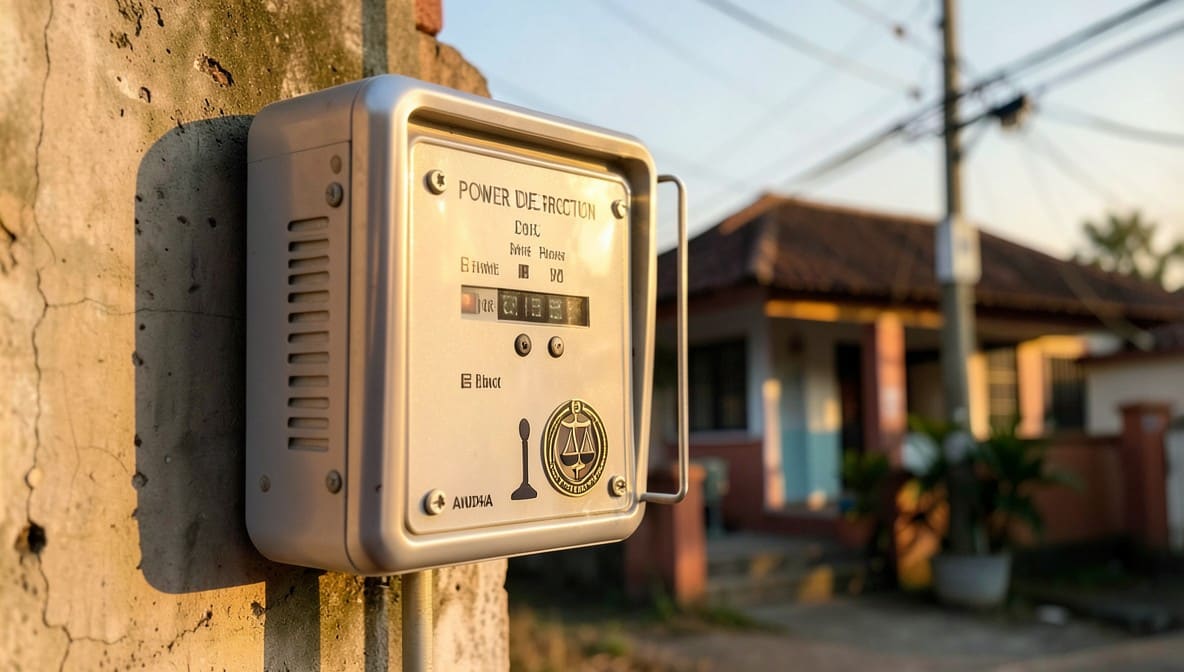
Electricity Act 2003 Section 56 | Mandatory Notice & Hearing Before Disconnection; AP HC Upholds Consumer Rights Under Articles 14 & 21
Case Law Analysis
|Andhra Pradesh High Court

Electricity Act 2003 Section 56 | Mandatory Notice & Hearing Before Disconnection; AP HC Upholds Consumer Rights Under Articles 14 & 21

Andhra Pradesh High Court reinforces that electricity disconnection without adhering to statutory notice and hearing under Section 56 of the Electricity Act 2003 violates constitutional rights. The ruling mandates strict compliance with procedural safeguards, ensuring consumers are protected from arbitrary disconnections by distribution companies.

NDPS Act Section 20(b)(ii)(B) | Intermediate Quantity Ganja Seizure + Criminal Antecedents Justify Bail Denial Despite Small Quantity Precedents : Andhra Pradesh HC
Case Law Analysis
|Andhra Pradesh High Court

NDPS Act Section 20(b)(ii)(B) | Intermediate Quantity Ganja Seizure + Criminal Antecedents Justify Bail Denial Despite Small Quantity Precedents : Andhra Pradesh HC

Andhra Pradesh High Court rules that 2.17 kg ganja seizure-falling under 'intermediate quantity'-coupled with criminal antecedents, overrides small quantity bail precedents like Arnesh Kumar. The judgment emphasizes societal harm and investigation stage as decisive factors, setting a stricter threshold for bail in narcotics cases.

Section 438 CrPC + Dowry Prohibition Act | Anticipatory Bail Granted Despite Serious Allegations When Accused’s Role Remains Unproven: Karnataka HC
Case Law Analysis
|Karnataka High Court

Section 438 CrPC + Dowry Prohibition Act | Anticipatory Bail Granted Despite Serious Allegations When Accused’s Role Remains Unproven: Karnataka HC

Karnataka High Court rules that anticipatory bail cannot be denied solely on the gravity of dowry harassment allegations if the accused’s direct involvement is not established. The judgment underscores that cooperation with investigation and lack of direct evidence weigh in favor of bail, even under the Dowry Prohibition Act and Bharatiya Nyaya Sanhita.

Section 127 MRTP Act | Land Reservation Lapses Automatically After 12-Year Inaction & Purchase Notice: Bombay HC (Aurangabad Bench)
Case Law Analysis
|Bombay High Court

Section 127 MRTP Act | Land Reservation Lapses Automatically After 12-Year Inaction & Purchase Notice: Bombay HC (Aurangabad Bench)

Bombay High Court reaffirms that land reservations under Section 127 of the MRTP Act lapse by operation of law if authorities fail to acquire or develop the land within 12 years of a valid purchase notice. Landowners are entitled to de-reservation without being forced to accept Transferable Development Rights (TDR), protecting their property rights against administrative inaction.

Section 304-A IPC | Sentence Reduced to Six Months for Negligent Driving Causing Death; Delayed Identification Validated Through Vehicle Records and Absence of Denial : Karnataka HC
Case Law Analysis
|Karnataka High Court

Section 304-A IPC | Sentence Reduced to Six Months for Negligent Driving Causing Death; Delayed Identification Validated Through Vehicle Records and Absence of Denial : Karnataka HC

The Karnataka High Court upheld conviction under Section 304-A IPC for negligent driving resulting in death, reducing the sentence from one year to six months while setting aside the merged Section 279 IPC charge. It affirmed that delayed victim identification is legally sufficient when corroborated by vehicle registration details and the accused’s failure to deny involvement, reinforcing evidentiary standards in road accident prosecutions.

Agreement to Sell Does Not Confer Standing in Partition Suit | Decree for Specific Performance Required Before Impleadment: Karnataka HC (Dharwad)
Case Law Analysis
|Karnataka High Court

Agreement to Sell Does Not Confer Standing in Partition Suit | Decree for Specific Performance Required Before Impleadment: Karnataka HC (Dharwad)

The Karnataka High Court holds that a buyer under an agreement to sell cannot implead as a party in a partition suit involving the vendor’s property unless they first obtain a decree for specific performance. This clarifies that equitable rights under contract are not sufficient to intervene in ownership disputes - only a judicially enforced title grants standing, protecting co-owners from speculative claims.

Umadevi Principles | 33-Year Casual Worker Entitled to Regularization Despite State Rule Requiring 5-Year Service by 1993 : Andhra Pradesh HC
Case Law Analysis
|Andhra Pradesh High Court

Umadevi Principles | 33-Year Casual Worker Entitled to Regularization Despite State Rule Requiring 5-Year Service by 1993 : Andhra Pradesh HC

The Andhra Pradesh High Court ruled that continuous, unblemished service of over three decades in a sanctioned post justifies regularization as a one-time constitutional remedy, even when state rules impose stricter eligibility criteria. This sets a critical precedent for long-serving casual and time-scale workers across state-funded institutions, affirming that service duration trumps procedural barriers when fundamental rights to livelihood are at stake.

Motor Accident Compensation | Fracture Union Does Not Erase Residual Disability or Loss of Amenities: Karnataka HC
Case Law Analysis
|Karnataka High Court

Motor Accident Compensation | Fracture Union Does Not Erase Residual Disability or Loss of Amenities: Karnataka HC

The Karnataka High Court has ruled that even after fracture union, residual disability and diminished quality of life entitle claimants to enhanced compensation for pain, suffering, and conveyance costs. This clarifies that medical recovery alone cannot override the enduring impact of injury on daily living, affecting thousands of MACT claimants seeking fair redress.

Package Insurance Policy | Cleaner Entitled to Full Compensation Despite Misstated Owner Name; Loss of Earning Capacity Must Reflect Functional Impairment, Not Rigid Formulae : Karnataka HC
Case Law Analysis
|Karnataka High Court

Package Insurance Policy | Cleaner Entitled to Full Compensation Despite Misstated Owner Name; Loss of Earning Capacity Must Reflect Functional Impairment, Not Rigid Formulae : Karnataka HC

The Karnataka High Court awarded Rs. 9.37 lakh to a truck cleaner injured in an accident, ruling that package insurance policies cover non-driver personnel even when the vehicle owner’s name is incorrectly recorded. It held that loss of earning capacity must be calculated based on actual functional impairment and vocational disruption, not mechanical multipliers, setting a precedent for informal sector workers in motor accident claims.

Order XIV Rule 2 CPC | Res Judicata Decided as Preliminary Issue Without Oral Evidence When Pleadings Disclose Prior Litigation: Karnataka HC (Dharwad)
|Karnataka High Court

Order XIV Rule 2 CPC | Res Judicata Decided as Preliminary Issue Without Oral Evidence When Pleadings Disclose Prior Litigation: Karnataka HC (Dharwad)

The Karnataka High Court permits courts to decide res judicata as a preliminary issue without oral evidence when pleadings conclusively establish identity of parties, subject matter, and prior adjudication. This streamlines decade-old partition suits by preventing redundant litigation, benefiting parties facing prolonged property disputes and reinforcing judicial efficiency under civil procedure.

Section 65, Indian Evidence Act | Xerox Copy Admissible When Original Is Lost in Court Custody, No Tampering Proven : Karnataka HC
Case Law Analysis
|Karnataka High Court

Section 65, Indian Evidence Act | Xerox Copy Admissible When Original Is Lost in Court Custody, No Tampering Proven : Karnataka HC

The Karnataka High Court ruled that a xerox copy of an agreement of sale can be admitted as secondary evidence under Section 65 of the Indian Evidence Act when the original is lost due to court staff negligence, provided there is no evidence of tampering. This sets a critical precedent for property litigants facing evidentiary loss through systemic administrative failure, reinforcing that procedural lapses by courts do not automatically bar reliance on authenticated duplicates.

Section 151 CPC | Failure to Amend Cause Title After Impleadment Is Ministerial, Not Fatal: Karnataka HC (Dharwad)
Case Law Analysis
|Karnataka High Court

Section 151 CPC | Failure to Amend Cause Title After Impleadment Is Ministerial, Not Fatal: Karnataka HC (Dharwad)

The Karnataka High Court has ruled that omitting a consequential amendment to the cause title after impleadment is a mere ministerial oversight, not a ground to dismiss a Section 151 application. This clarifies that procedural technicalities cannot override substantive justice in property disputes, empowering litigants to correct clerical errors without risking dismissal of their claims.

Registered Exchange Deed Defines Property Boundaries | Municipal Authorities Cannot Override with Unregistered Communications: Karnataka HC
Case Law Analysis
|Karnataka High Court

Registered Exchange Deed Defines Property Boundaries | Municipal Authorities Cannot Override with Unregistered Communications: Karnataka HC

The Karnataka High Court has ruled that a registered exchange deed conclusively establishes property boundaries, and municipal bodies cannot unilaterally alter them through unregistered notices or permit encroachments on designated public roads. This reinforces that documented title trumps administrative convenience, protecting landowners from arbitrary municipal overreach in urban planning disputes.

GO 18.03.2011 | Successor Entitled to 40% Developed Land in BDA Acquisition; Administrative Inaction Violates Article 21 : Karnataka HC
Case Law Analysis
|Karnataka High Court

GO 18.03.2011 | Successor Entitled to 40% Developed Land in BDA Acquisition; Administrative Inaction Violates Article 21 : Karnataka HC

The Karnataka High Court has ruled that a legal successor to a landowner under BDA acquisition is entitled to 40% developed land as mandated by Government Order 18.03.2011, and that prolonged administrative delay in implementing this benefit violates the constitutional right to fair compensation under Article 21. This sets a binding precedent for all successors in BDA-led projects across Bengaluru, compelling timely implementation of statutory land allotment rights.

Article 226 | Non-Participant in Tender Process Lacks Locus Standi to Challenge Conditions: Andhra Pradesh HC
Case Law Analysis
|Andhra Pradesh High Court

Article 226 | Non-Participant in Tender Process Lacks Locus Standi to Challenge Conditions: Andhra Pradesh HC

The Andhra Pradesh High Court ruled that a non-participant in a tender process cannot challenge its conditions under Article 226, especially when the petition is filed after a 7-year delay, rendering it barred by laches. This reinforces the principle that locus standi in tender disputes is restricted to actual participants, limiting judicial review of public procurement decisions.

Habeas Corpus | Detenu’s Voluntary Return Terminates Proceedings Under Article 226 : Karnataka HC
Case Law Analysis
|Karnataka High Court

Habeas Corpus | Detenu’s Voluntary Return Terminates Proceedings Under Article 226 : Karnataka HC

The Karnataka High Court ruled that a habeas corpus petition under Article 226 is disposed of once the detenu, a married woman, expresses willingness to return to her husband, ending custody. The ruling underscores that personal liberty claims under habeas corpus are extinguished upon voluntary reconciliation, even without formal judicial determination of unlawful detention.

Section 482 CrPC | FIR Quashed When Prosecution Relies Solely on Uncorroborated Co-Accused Statement : Bombay HC (Aurangabad Bench)
Case Law Analysis
|Bombay High Court

Section 482 CrPC | FIR Quashed When Prosecution Relies Solely on Uncorroborated Co-Accused Statement : Bombay HC (Aurangabad Bench)

Bombay High Court rules that an FIR under Sections 328, 272, 273, and 34 IPC cannot stand if the prosecution's case rests exclusively on a co-accused's statement without independent material evidence. The judgment reinforces the principle that corroboration is essential for sustaining criminal proceedings where accusations lack substantive proof.

Section 12 DV Act | Bigamy & Emotional Abuse Constitute Domestic Violence Justifying Maintenance & Compensation: Karnataka HC
Case Law Analysis
|Karnataka High Court

Section 12 DV Act | Bigamy & Emotional Abuse Constitute Domestic Violence Justifying Maintenance & Compensation: Karnataka HC

Karnataka High Court affirms Rs. 20,000/month maintenance and Rs. 3,00,000 compensation under the Domestic Violence Act, ruling that bigamy and sustained emotional abuse qualify as domestic violence even if prior litigation attained finality. The judgment reinforces that economic relief under Section 12 is not barred by res judicata when new acts of violence emerge.

MTP Act Section 3(2) | Medical Termination Beyond 24 Weeks Permissible for Minor Rape Survivor on Medical Board Opinion Under Article 21 : Karnataka HC
Case Law Analysis
|Karnataka High Court

MTP Act Section 3(2) | Medical Termination Beyond 24 Weeks Permissible for Minor Rape Survivor on Medical Board Opinion Under Article 21 : Karnataka HC

Karnataka High Court allows medical termination of a 25-week pregnancy for a minor sexual assault survivor, holding that reproductive autonomy under Article 21 overrides statutory limits when a Medical Board certifies safety. The ruling sets a precedent for victim-centric interpretations of the MTP Act, mandating compensation, counselling, and care under the Victim Compensation Scheme.