The Karnataka High Court has clarified the legal boundaries between rash driving under Section 279 IPC and culpable homicide not amounting to murder under Section 304-A IPC, emphasizing that where death results from negligence, the lesser offence merges into the more serious one. The judgment also underscores judicial discretion in sentencing for accidental deaths, particularly when the accused is a wage-earning driver with no intent to harm.
Background & Facts
The Dispute
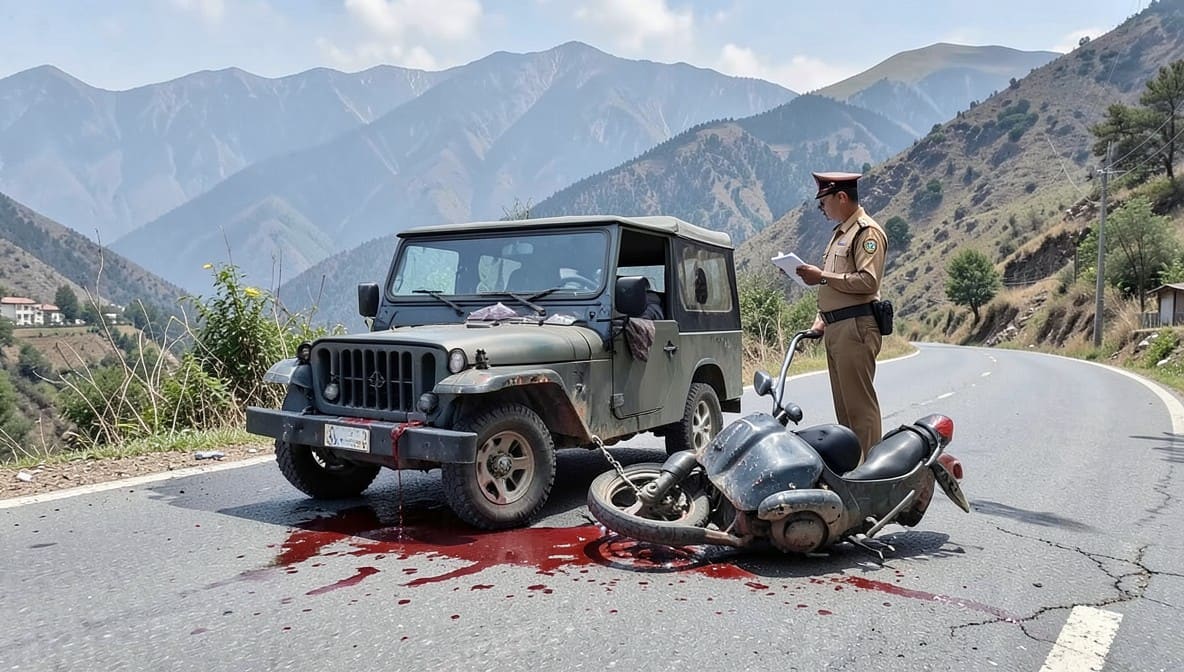
The petitioner, Allabakash S/o Late Hyder Sab, a lorry driver aged 47, was charged with causing the death of Shivanna, a 58-year-old man, on 03.07.2016 at approximately 7:30 p.m. near Thipperudraswamy Temple on the road between Pavagada and Chitradurga. The incident occurred when the lorry bearing registration number KA-27-A-286, driven by the petitioner, struck Shivanna while he was walking alongside two eyewitnesses, P.W.1 and P.W.2. Shivanna sustained grievous head injuries and succumbed to them at the scene.
Key Facts
- The accident occurred on 03.07.2016 at 7:30 p.m. near Thipperudraswamy Temple, Pavagada Taluk, Shivamogga District.
- P.W.1 and P.W.2 were walking with the deceased at the time of the incident.
- The lorry did not stop after the collision and continued moving toward Chitradurga.
- P.W.2 observed the vehicle’s registration number using the rear headlights and immediately reported the incident to local authorities.
- The vehicle was apprehended approximately 2 - 3 kilometers away at Nagappanahalli Gate.
- The petitioner was identified by P.W.1 and P.W.2 at the police station three days after the accident.
- The petitioner did not dispute that he was driving the vehicle on the date of the accident.
- No cross-examination was conducted to challenge the identification or the testimony of P.W.1 and P.W.2.
- The petitioner did not lead any defence evidence.
- The petitioner’s 313 statement was a general denial without specific rebuttal.
- Photographs submitted by the petitioner show him suffering from a chronic ailment requiring ongoing treatment.
Procedural History
- 03.07.2016: Accident occurred.
- 04.07.2016: FIR registered by P.W.1 under Sections 279, 304-A IPC and Section 187 of the Motor Vehicles Act.
- 15.09.2016: Charge sheet filed by Pavagada Police.
- 09.10.2019: Trial Court (Principal Civil Judge and JMFC, Pavagada) convicted the petitioner under Sections 279, 304-A IPC and Section 187 of the IMV Act. Sentenced to one year rigorous imprisonment under Section 304-A IPC, with a fine of Rs. 8,000, and lesser sentences for other offences to run concurrently.
- 09.09.2022: First Appellate Court (IV Additional District and Sessions Judge, Madhugiri, hearing Crl. A. No. 5019/2019) confirmed the conviction and sentence after reassessing evidence.
- 22.07.2022: Criminal Revision Petition No. 1534 of 2022 filed before the Karnataka High Court.
- 17.06.2026: Judgment delivered by Justice H.P. Sandesh.
Relief Sought
The petitioner sought quashing of the conviction and sentence under Sections 279 and 304-A IPC and Section 187 of the IMV Act, arguing lack of identification, absence of corroborative evidence, and humanitarian grounds due to his medical condition.
The Legal Issue
The central question was whether the conviction under Section 279 IPC could stand alongside Section 304-A IPC when death resulted from the same act of rash driving, and whether the sentence of one year was proportionate given the accidental nature of the incident and the petitioner’s status as a wage-earning driver.
Arguments Presented
For the Petitioner
Counsel argued that P.W.1 and P.W.2 did not witness the driver at the time of the accident, making the identification after three days unreliable. He contended that the absence of direct visual identification at the scene rendered the evidence insufficient for conviction. He further submitted that the petitioner’s chronic illness and low socioeconomic status as a daily wage driver warranted leniency. He relied on State of Karnataka v. Suresh to argue that identification after delay without corroboration is inherently suspect.
For the Respondent
The High Court Government Pleader contended that the eyewitnesses’ testimony was consistent and credible. They had clearly stated the vehicle number, which led to its apprehension, and the petitioner never denied driving the vehicle on that day. The prosecution established a clear chain of events: the accident, the failure to stop, the identification via vehicle number, and subsequent identification of the driver. The State argued that revisional jurisdiction cannot be used to reappreciate evidence unless there is a patent illegality.
The Court's Analysis
The Court examined the evidence of P.W.1 and P.W.2 with due deference to the findings of the Trial and Appellate Courts. It acknowledged that while the eyewitnesses did not see the driver’s face at the moment of impact, they observed the vehicle’s registration number under the headlights and reported it immediately. The vehicle was stopped within minutes at Nagappanahalli Gate, and the petitioner was identified three days later without any challenge during cross-examination.
"The fact that the driver did not stop the vehicle at the spot is not disputed and penal provision is also invoked to that effect."
The Court held that the identification process, though delayed, was corroborated by the vehicle’s registration number and the petitioner’s failure to deny driving the vehicle. The absence of cross-examination on key points rendered the testimony credible.
Crucially, the Court addressed the legal principle of merger of offences. It observed that Section 279 IPC (rash driving) is a lesser offence that merges into Section 304-A IPC (causing death by negligence) when death is the direct consequence of the same act. The Trial Court erred in convicting under both provisions.
"The ingredients of offence under Section 279 of IPC merges with the serious offence under Section 304-A of IPC... the offence invoked under Section 279 of IPC requires to be set aside."
Regarding sentencing, the Court noted the accident occurred in 2016, nearly a decade prior, and that the petitioner was not the owner but a wage-earning driver. The Court emphasized that Section 304-A IPC is not a crime of intent but of negligence, and the sentence must reflect proportionality. The one-year sentence, while legally permissible, was excessive in the context of an accidental death and the petitioner’s circumstances.
The Verdict
The criminal revision petition was allowed in part. The conviction and sentence under Section 279 IPC were set aside. The conviction under Section 304-A IPC was confirmed, but the sentence was reduced from one year to six months. The conviction under Section 187 of the Motor Vehicles Act was upheld. The petitioner was directed to serve the six-month sentence unless already served, and the fine of Rs. 8,000 remained unchanged.
What This Means For Similar Cases
Merger of Section 279 IPC into Section 304-A IPC Is Mandatory
- Practitioners must argue that where death results from rash driving, Section 279 IPC cannot be independently prosecuted - it is absorbed by Section 304-A IPC.
- Convictions under both sections in the same case are legally unsustainable and must be challenged on appeal.
Identification After Delay Is Not Fatal If Corroborated
- Delayed identification is not automatically invalid if supported by objective evidence (e.g., vehicle number, location, absence of denial).
- Cross-examination silence on key facts strengthens prosecution testimony.
Sentencing in Negligence Cases Must Reflect Proportionality
-
Courts must consider the accidental nature of the act, the accused’s socioeconomic status, and time elapsed since the incident.
-
A sentence of one year for a wage-earning driver in a non-intentional death may be excessive; six months is a more proportionate norm.
-
Medical condition may not override conviction but can justify sentence reduction.
-
Always distinguish between intent and negligence in road accident cases.
-
In appeals, prioritize merger arguments before challenging identification.
-
For sentencing, present evidence of the accused’s livelihood, age, and post-accident conduct to seek leniency.