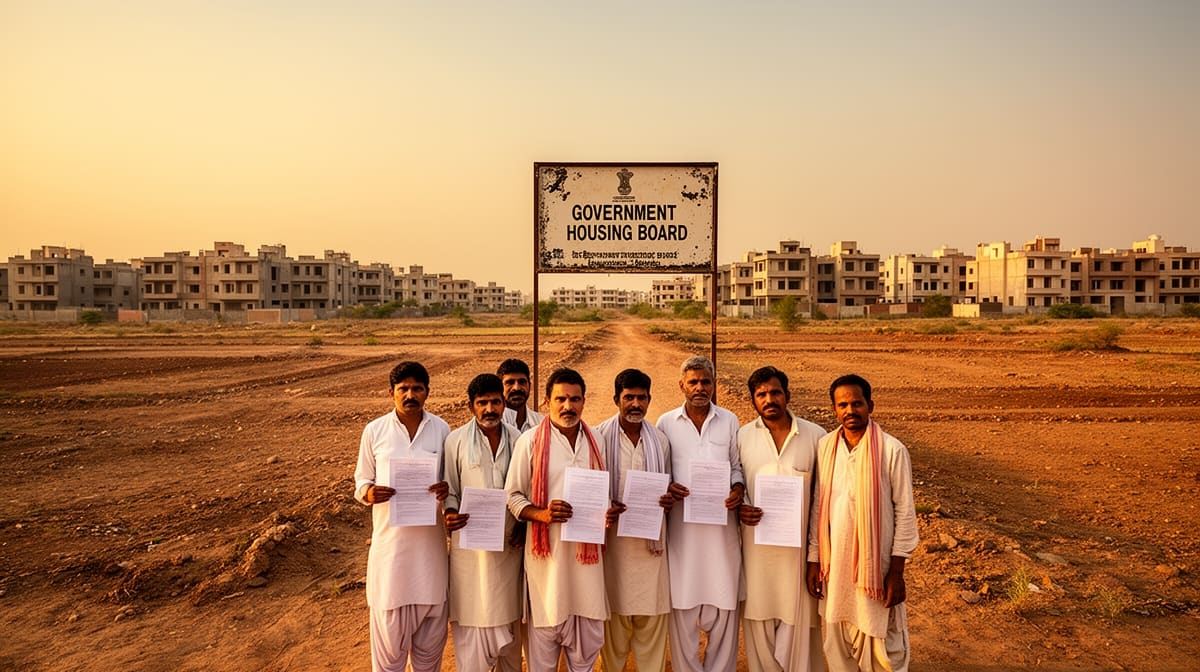
The Karnataka High Court has clarified that a legal successor who obtains title to acquired land through a civil suit is entitled to have her representations for compensation and land allotment considered under the applicable government policy, even if the original owner is no longer alive. The Court emphasized procedural fairness and adherence to settled principles of land acquisition jurisprudence.
Background & Facts
The Dispute
The petitioner, Smt. B.K. Renuka, is the legal successor to a property in Bengaluru that was acquired by the Bangalore Development Authority (BDA) under the Bangalore Development Authority Act. She succeeded to the title through a decree in O.S. No. 23/2022, which established her ownership rights over the land previously held by the original owner. Following the acquisition, she submitted multiple representations seeking compensation and the benefit of 40% allotment of developed land as provided under Government Order dated 18.03.2011. These representations, dated 07.12.2024, 07.04.2025, and 14.05.2025, were not substantively addressed by the respondents.
Key Facts
- The original landowner’s property was acquired by the BDA for urban development purposes
- The petitioner obtained a decree in O.S. No. 23/2022, establishing her as the lawful successor
- The Government Order dated 18.03.2011 (Annexure-Q) provides for 40% allotment of developed land to landowners whose property is acquired
- The petitioner submitted three representations (Annexure-P, P1, P2) seeking implementation of GO 18.03.2011
- No formal response or decision was issued by the BDA or the Special Land Acquisition Officer
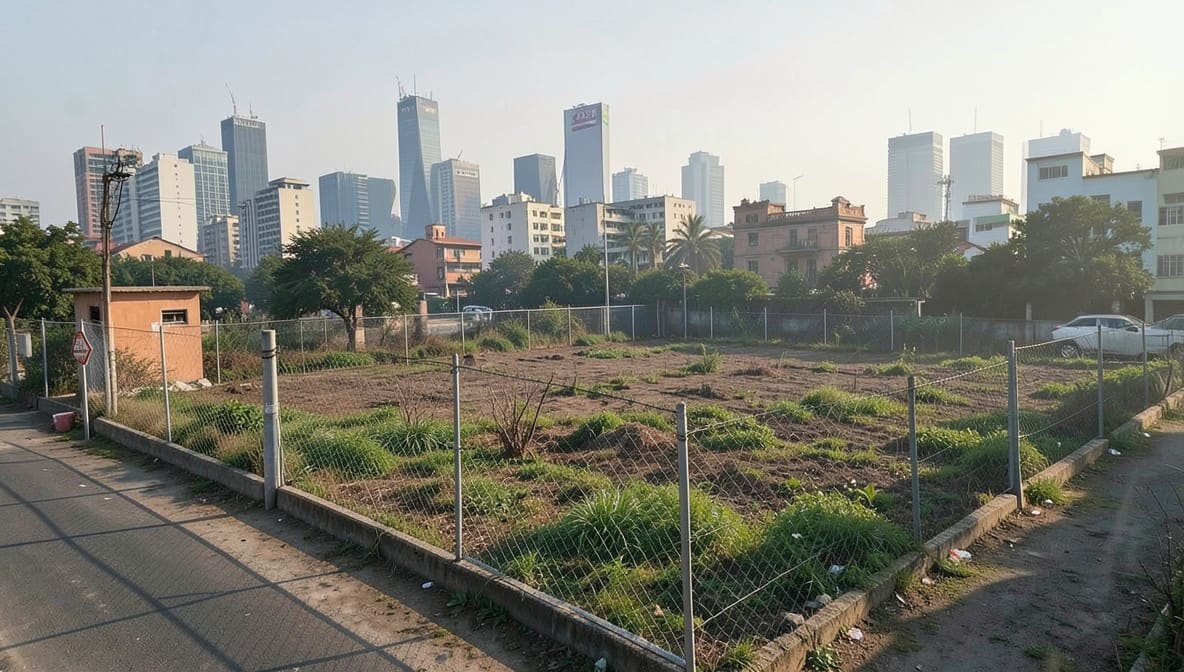
- The vacant sites in question remain unencumbered as of the date of the judgment
Procedural History
- O.S. No. 23/2022: Civil suit filed by petitioner against original owner; decree obtained establishing title
- 07.12.2024: First representation submitted to BDA and Special Land Acquisition Officer
- 07.04.2025: Second representation filed, reiterating claim under GO 18.03.2011
- 14.05.2025: Third representation submitted, highlighting non-response and urgency
- 2025: Writ Petition No. 38390 of 2025 filed before the Karnataka High Court under Articles 226 and 227
- 17.06.2026: Hearing before Justice E.S. Indiresh; order passed
Relief Sought
The petitioner sought:
- Direction to the BDA and Special Land Acquisition Officer to consider her representations dated 07.12.2024, 07.04.2025, and 14.05.2025
- Allotment of 40% of the developed land in her favor as per Government Order dated 18.03.2011
- A directive to preserve the vacant sites without creating any third-party interest or encumbrance until final decision
The Legal Issue
The central question was whether a legal successor, who has established title to acquired land through a civil court decree, is entitled to have her representations for compensation and 40% land allotment under Government Order dated 18.03.2011 considered by the BDA, and whether the failure to respond constitutes a violation of her rights under Article 14 and Article 21 of the Constitution.
Arguments Presented
For the Petitioner
The petitioner’s counsel argued that the petitioner, as the lawful successor, stands in the shoes of the original landowner and is entitled to all benefits under GO 18.03.2011. He relied on the Supreme Court’s decision in V. Chadrasekaran and another v. Administrative Officer and others to assert that succession rights in land acquisition cases must be recognized, and administrative inaction cannot defeat statutory or policy-based entitlements. He emphasized that the representations were clear, timely, and supported by a court decree.
For the Respondent
The respondents did not contest the petitioner’s succession rights but argued that the representations were pending administrative consideration and that the matter required technical evaluation of land records and development plans. They submitted that no final decision had been taken, and therefore no violation of rights had occurred.
The Court's Analysis
The Court observed that the petitioner had successfully established her title through a judicial decree, thereby becoming the rightful claimant to compensation and benefits under the applicable policy. The Court noted that the respondents had not provided any reason for the prolonged inaction on the three representations, which were submitted over a period of five months.
"The petitioner, having succeeded to the property through a decree of a competent court, cannot be denied the benefit of the Government Order merely because the original owner is no longer alive. Administrative delay cannot be a shield against legitimate claims."
The Court further held that the Government Order dated 18.03.2011, being a policy directive issued for the benefit of landowners, must be interpreted in a manner that upholds substantive justice. The Court directed the respondents to consider the representations in light of V. Chadrasekaran, which affirms that succession rights in land acquisition cases are protected under the rule of law.
The Court also emphasized the need to preserve the status quo of the vacant sites to prevent any third-party encroachment or alienation, which would prejudice the petitioner’s potential claim.
The Verdict
The writ petition was disposed of with directions. The respondents are directed to consider the petitioner’s representations dated 07.12.2024, 07.04.2025, and 14.05.2025 within three months from the date of receipt of a certified copy of this order. The respondents shall not create any encumbrance or third-party interest over the vacant sites until such consideration is complete. The petitioner’s claim for 40% allotment under GO 18.03.2011 shall be evaluated in accordance with law and the precedent in V. Chadrasekaran v. Administrative Officer.
What This Means For Similar Cases
Succession Rights Are Protected in Land Acquisition
- Practitioners representing successors in land acquisition cases must now assert that a court decree establishing title automatically confers the right to claim compensation and policy benefits
- Administrative authorities cannot refuse to entertain claims on the ground that the original owner is deceased
- The V. Chadrasekaran precedent must be cited in all such matters to reinforce the principle of succession continuity
Inaction by Authorities Constitutes Arbitrariness
- Delay exceeding six months in responding to representations in land acquisition matters may now be challenged as violative of Article 14
- Petitioners may seek mandatory directions for timely disposal of representations under Article 226
- All representations must be recorded and responded to in writing, with reasons, to avoid judicial intervention
Preservation of Vacant Land Is Mandatory
- Authorities must maintain the status quo of acquired but undeveloped land until final decision is rendered
- Any attempt to transfer, lease, or encumber such land during pendency of claims is now legally impermissible
- Courts may issue interim injunctions ex parte if there is evidence of imminent alienation