High Courts judgments

10239 High Courts judgments explained in plain English: what was decided, the law applied and why it matters. Page 95 of 427.

Suspension Valid Without Charge-Sheet If Enquiry Is Explicitly Contemplated | Service Law: Allahabad HC
Case Law Analysis
|Allahabad High Court

Suspension Valid Without Charge-Sheet If Enquiry Is Explicitly Contemplated | Service Law: Allahabad HC

The Allahabad High Court has ruled that a suspension order remains lawful even if the charge-sheet has not been served, provided the order clearly initiates a departmental enquiry and ensures expeditious disposal with subsistence allowance. This protects public servants from indefinite suspension while upholding administrative discipline, setting a critical precedent for departmental proceedings across state services.


NDPS Act Section 20(b)(ii)(C) | Bail Granted Despite Commercial Quantity and Prior Antecedents Due to 201 Days of Judicial Custody Without Interrogation : Andhra Pradesh HC
Case Law Analysis
|Andhra Pradesh High Court

NDPS Act Section 20(b)(ii)(C) | Bail Granted Despite Commercial Quantity and Prior Antecedents Due to 201 Days of Judicial Custody Without Interrogation : Andhra Pradesh HC

The Andhra Pradesh High Court held that 201 days of judicial custody without custodial interrogation, combined with fixed residences and no flight risk, overrides the presumption against bail under NDPS Act for commercial quantities and prior antecedents. This reinforces that prolonged pre-trial detention without investigative necessity triggers Article 21 protections, setting a critical precedent for accused persons in drug cases facing extended pre-trial incarceration.

Street Vendors Act, 2014 | Licensee May Change Goods Sold After Original Supplier Ceases Operations; Cancellation Violates Right to Livelihood : Bombay HC
Case Law Analysis
|Bombay High Court

Street Vendors Act, 2014 | Licensee May Change Goods Sold After Original Supplier Ceases Operations; Cancellation Violates Right to Livelihood : Bombay HC

The Bombay High Court has ruled that cancelling a street vendor’s license solely because their original supplier stopped business violates the right to livelihood under the Street Vendors Act, 2014. Municipal authorities must permit vendors to switch to new goods within four weeks, recognizing vending as a dynamic livelihood, not a static contractual arrangement tied to a single supplier.

Section 483(2) BNSS | Complainant's Absence After Notice Does Not Bar Bail Hearing in POCSO Cases: Allahabad HC
Case Law Analysis
|Allahabad High Court

Section 483(2) BNSS | Complainant's Absence After Notice Does Not Bar Bail Hearing in POCSO Cases: Allahabad HC

The Allahabad High Court held that once the complainant is duly notified of a bail application, their physical absence does not invalidate the hearing under Section 483(2) BNSS. This clarifies that procedural compliance, not presence, governs bail proceedings in POCSO cases, reinforcing due process even when victim participation is limited by trauma or logistical barriers.

CPC Section 24 | Custodial Convenience of Minor Children Overrides Spousal Geographical Preference in Matrimonial Case Transfer : Karnataka HC
Case Law Analysis
|Karnataka High Court

CPC Section 24 | Custodial Convenience of Minor Children Overrides Spousal Geographical Preference in Matrimonial Case Transfer : Karnataka HC

The Karnataka High Court ordered transfer of a divorce petition to Bellary where the wife and two minor children reside, holding that the welfare and daily custodial needs of children outweigh the respondent’s convenience in Bangalore. This reinforces that child-centric interests are decisive under Section 24, not merely procedural or economic factors, setting a clear precedent for family courts handling interstate matrimonial disputes.

Section 125 CrPC | Dowry Harassment Constitutes Sufficient Cause for Separation Justifying Maintenance, Even If Wife Resides Voluntarily : Allahabad HC
|Allahabad High Court

Section 125 CrPC | Dowry Harassment Constitutes Sufficient Cause for Separation Justifying Maintenance, Even If Wife Resides Voluntarily : Allahabad HC

The Allahabad High Court affirmed that a wife’s separation due to dowry-related cruelty qualifies as 'sufficient cause' under Section 125 CrPC, negating the husband’s defense of unjustified desertion. This reinforces that judicial scrutiny of marital conduct must prioritize lived reality over technical compliance, protecting vulnerable spouses from being penalized for fleeing abuse.

Anticipatory Bail | Daily Police Attendance Imposed in Mutual Property Dispute FIRs Violates Proportionality: Karnataka HC
Case Law Analysis
|Karnataka High Court

Anticipatory Bail | Daily Police Attendance Imposed in Mutual Property Dispute FIRs Violates Proportionality: Karnataka HC

The Karnataka High Court struck down the condition requiring daily police attendance for accused in mutual property dispute FIRs, ruling it imposes disproportionate hardship on non-criminal agricultural families with no prior antecedents. This sets a critical precedent for tailoring bail conditions to the nature of the dispute and the accused’s social context, not procedural formality.

Section 304 Part-II IPC | Throttling in Sudden Quarrel Over Minor Debt Lacks Intention to Kill, Distinguishes from Murder: Andhra Pradesh HC
Case Law Analysis
|Andhra Pradesh High Court

Section 304 Part-II IPC | Throttling in Sudden Quarrel Over Minor Debt Lacks Intention to Kill, Distinguishes from Murder: Andhra Pradesh HC

The Andhra Pradesh High Court reduced a murder conviction to culpable homicide not amounting to murder, holding that throttling during a heated argument over Rs. 100, without premeditation or weapon use, cannot establish the necessary intent for Section 302 IPC. This reinforces that sudden quarrels, even involving lethal force, may fall under Section 304 Part-II if the act is impulsive and not driven by a design to cause death - a critical distinction for defense lawyers and trial courts handling domestic altercations.

Section 62 & 351(1) BNSS + Section 12 POCSO | Regular Bail Granted When Custody Exceeds 8 Months and No Rape Allegation Exists: Karnataka HC (Dharwad)
Case Law Analysis
|Karnataka High Court

Section 62 & 351(1) BNSS + Section 12 POCSO | Regular Bail Granted When Custody Exceeds 8 Months and No Rape Allegation Exists: Karnataka HC (Dharwad)

The Karnataka High Court granted regular bail to an accused under BNSS and POCSO after eight months of pre-trial detention, emphasizing that mere attempt at sexual contact without rape allegations, coupled with prolonged custody and completed investigation, negates the need for continued detention. This sets a critical precedent for bail eligibility in non-penetrative sexual offence cases where the victim’s statement does not invoke Section 376-equivalent provisions.

Article 21 | Prolonged Pre-Trial Detention Without Trial Progression, Even in Homicide Cases, Justifies Regular Bail: Karnataka HC
Case Law Analysis
|Karnataka High Court

Article 21 | Prolonged Pre-Trial Detention Without Trial Progression, Even in Homicide Cases, Justifies Regular Bail: Karnataka HC

The Karnataka High Court granted regular bail to two accused after five years in custody, holding that unexplained trial delays combined with hostile witnesses and no criminal history violate the right to speedy trial under Article 21. This reinforces that gravity of offence cannot override constitutional protections when justice is unduly stalled, setting a critical precedent for accused in non-bailable homicide cases facing systemic delays.

Motor Vehicles Act | Married Daughters Entitled to Loss of Dependency Compensation Without Proving Financial Dependence: Karnataka HC
Case Law Analysis
|Karnataka High Court

Motor Vehicles Act | Married Daughters Entitled to Loss of Dependency Compensation Without Proving Financial Dependence: Karnataka HC

The Karnataka High Court has ruled that married daughters of a deceased road accident victim are entitled to compensation for loss of dependency under the Motor Vehicles Act, even if they were not financially dependent on the deceased. This clarifies that familial status, not economic contribution, triggers the right to claim - significantly expanding protection for women heirs in accident compensation cases.

Section 543 Companies Act | Technological Obsolescence Does Not Constitute Misfeasance; Liability Limited to Unaccounted Loans with Interest from Winding-Up Date : Karnataka HC
Case Law Analysis
|Karnataka High Court

Section 543 Companies Act | Technological Obsolescence Does Not Constitute Misfeasance; Liability Limited to Unaccounted Loans with Interest from Winding-Up Date : Karnataka HC

The Karnataka High Court has ruled that mere book-value discrepancies arising from technological obsolescence cannot ground a claim of misfeasance against directors under Section 543 of the Companies Act, 1956. Liability is confined solely to unaccounted loans of Rs.24,022 with 6% interest from the winding-up date, clarifying that accounting adjustments alone do not equate to misconduct by directors in liquidation proceedings.

Section 21 Legal Services Authorities Act | Courts Cannot Review Validity of Lok Adalat Awards Once Recorded: Karnataka HC
Case Law Analysis
|Karnataka High Court

Section 21 Legal Services Authorities Act | Courts Cannot Review Validity of Lok Adalat Awards Once Recorded: Karnataka HC

The Karnataka High Court has affirmed that once a compromise is recorded by a Lok Adalat, its validity cannot be challenged in judicial review proceedings, reinforcing the finality of such awards as statutory decrees. This shields parties from re-litigation and strengthens the credibility of alternative dispute resolution as a binding, court-endorsed mechanism for civil settlements.

Section 148A IT Act | Denial of Hearing on Section 80P Claim Violates Natural Justice; Assessment Quashed: Karnataka HC
Case Law Analysis
|Karnataka High Court

Section 148A IT Act | Denial of Hearing on Section 80P Claim Violates Natural Justice; Assessment Quashed: Karnataka HC

The Karnataka High Court quashed an income tax assessment against an agricultural co-operative society for failing to afford it a hearing on its claim for exemption under Section 80P, reinforcing that procedural fairness is non-negotiable even in faceless assessments. The ruling mandates that tax authorities must entertain substantive claims under special exemptions before finalizing assessments, protecting cooperative societies from arbitrary demand notices and bank freezes.

EPF Act Section 11(2) | First Charge Does Not Extend to Partner’s Separate Property Even if Pledged as Loan Security : Karnataka HC
Case Law Analysis
|Karnataka High Court

EPF Act Section 11(2) | First Charge Does Not Extend to Partner’s Separate Property Even if Pledged as Loan Security : Karnataka HC

The Karnataka High Court held that the Employees' Provident Fund Organisation cannot recover dues from a partner’s personal property unless all firm assets have been exhausted under Section 8B. This protects partners’ private assets from automatic liability for business debts, reinforcing the separation between firm and personal liability under labour law.

Section 353 IPC | Conviction Vitiates Without Corroboration of Public Servant’s Testimony When Eyewitnesses Contradict Assault Allegations : Karnataka HC
Case Law Analysis
|Karnataka High Court

Section 353 IPC | Conviction Vitiates Without Corroboration of Public Servant’s Testimony When Eyewitnesses Contradict Assault Allegations : Karnataka HC

The Karnataka High Court overturned a conviction under Section 353 IPC, holding that the uncorroborated testimony of a public servant, especially when contradicted by multiple eyewitnesses denying assault or threats, cannot sustain a criminal conviction. This reinforces the evidentiary standard that even serious offenses against public servants require independent verification to meet the burden of proof beyond reasonable doubt.

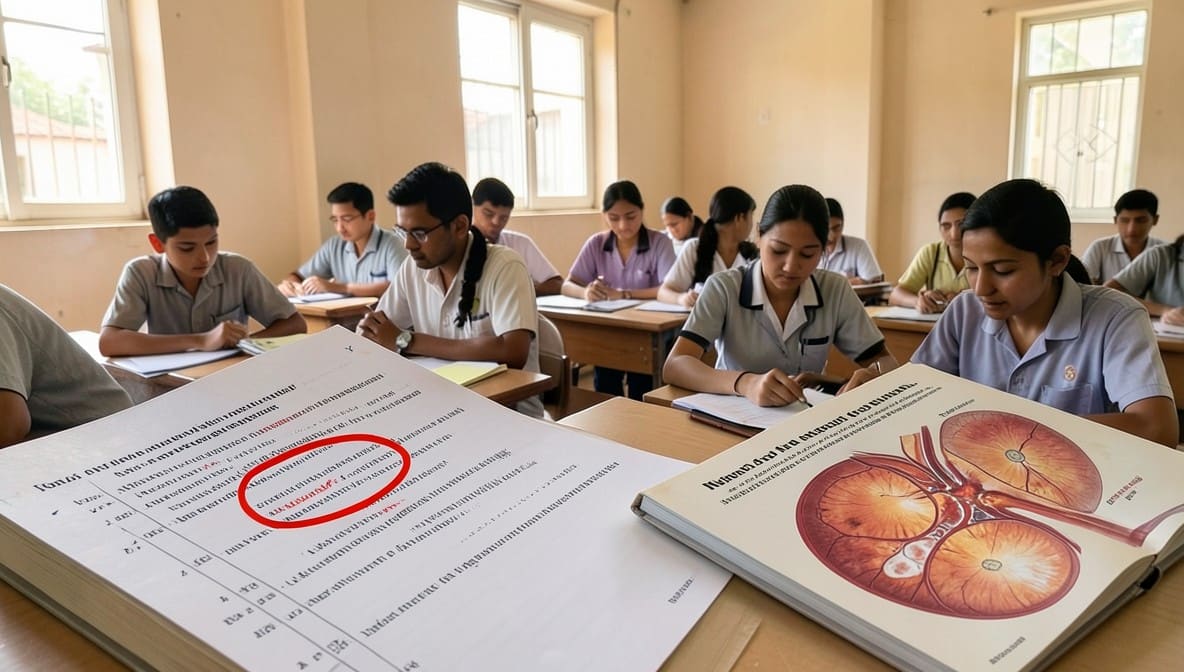
Prescribed Textbook Authority Overrides Answer Key Discrepancy | MBBS Exam Re-evaluation Mandated: Andhra Pradesh HC
Case Law Analysis
|Andhra Pradesh High Court

Prescribed Textbook Authority Overrides Answer Key Discrepancy | MBBS Exam Re-evaluation Mandated: Andhra Pradesh HC

Andhra Pradesh High Court rules that when a dispute arises between an answer key and prescribed textbooks, the latter prevails for academic fairness. The court directed re-evaluation of MBBS exam papers where the neurosensory retina layers question conflicted with standard texts, ensuring students are not penalized for adhering to official curriculum.

Section 70 Karnataka Co-operative Societies Act | Disputed Voters List Must Be Adjudicated Under Statutory Mechanism, Not Writ Petition : Karnataka HC
Case Law Analysis
|Karnataka High Court

Section 70 Karnataka Co-operative Societies Act | Disputed Voters List Must Be Adjudicated Under Statutory Mechanism, Not Writ Petition : Karnataka HC

The Karnataka High Court ruled that disputes over co-operative society voters' lists must be resolved under Section 70 of the Karnataka Co-operative Societies Act, 1959, rather than through writ petitions. The court emphasized that statutory adjudication ensures timely resolution under Section 71(5), protecting the integrity of co-operative elections.

Section 9 Arbitration Act | Dissenting Members Cannot Be Evicted Until Full IOD & Contractual Conditions Met: Bombay HC
|Bombay High Court

Section 9 Arbitration Act | Dissenting Members Cannot Be Evicted Until Full IOD & Contractual Conditions Met: Bombay HC

Bombay HC clarifies that dissenting members of a cooperative housing society cannot be compelled to vacate premises under a redevelopment agreement until the developer obtains Full IOD and fulfills all contractual conditions. The court held that mere submission of Consenting Member Declarations does not override the statutory safeguards for dissenting members, ensuring interim relief under Section 9 of the Arbitration Act.

ACPS Second Promotion After 24 Years | Autonomous Body Employees Entitled to Benefits If Funded Internally: Bombay HC Aurangabad Bench
Case Law Analysis
|Bombay High Court

ACPS Second Promotion After 24 Years | Autonomous Body Employees Entitled to Benefits If Funded Internally: Bombay HC Aurangabad Bench

Bombay High Court holds that employees of autonomous bodies like WALMI are entitled to the second Assured Career Progression Scheme (ACPS) promotion after 24 years of service, provided the funding is internal. The court quashed the State’s order for salary differential recovery and mandated arrears release within six months, reinforcing natural justice in career progression schemes.

Equal Pay for Equal Work | Contractual NHM Ambulance Drivers Entitled to Regular Pay Scale & Regularization Under State GR: Bombay HC Aurangabad Bench
Case Law Analysis
|Bombay High Court

Equal Pay for Equal Work | Contractual NHM Ambulance Drivers Entitled to Regular Pay Scale & Regularization Under State GR: Bombay HC Aurangabad Bench

Bombay High Court Aurangabad Bench rules that contractual ambulance drivers under the National Health Mission with over 14 years of service must be paid at the regular pay scale and considered for regularization, reinforcing the principle of equal pay for equal work. The judgment mandates compliance with the State Government Resolution dated 04/12/2024, ensuring wage parity and procedural fairness for long-term contractual employees.

MCS Act Section 32 | Rs.2/Page Document Inspection Right Enforceable; Writ Jurisdiction Barred for FIR, Section 88 Enquiry, or Office-Bearer Removal : Bombay HC
Case Law Analysis
|Bombay High Court

MCS Act Section 32 | Rs.2/Page Document Inspection Right Enforceable; Writ Jurisdiction Barred for FIR, Section 88 Enquiry, or Office-Bearer Removal : Bombay HC

Bombay HC affirms co-operative society members' statutory right to inspect documents at Rs.2/page under Section 32 of the Maharashtra Co-operative Societies Act. However, writ petitions cannot bypass statutory remedies for FIR registration, Section 88 enquiries, or removal of office-bearers, reinforcing the exhaustion doctrine for co-operative disputes.

Contempt of Court Under Sections 10-12 | Issuing Notices Alone Insufficient for Judicial Compliance; Willful Disobedience Attracts Fine & Costs : Andhra Pradesh HC
Case Law Analysis
|Andhra Pradesh High Court

Contempt of Court Under Sections 10-12 | Issuing Notices Alone Insufficient for Judicial Compliance; Willful Disobedience Attracts Fine & Costs : Andhra Pradesh HC

The Andhra Pradesh High Court ruled that mere issuance of notices does not constitute compliance with judicial orders. Willful disobedience of a final court directive-even without malice-amounts to contempt, warranting imposition of fines and costs on public officials. The judgment underscores that administrative inaction post-notice violates judicial authority and mandates tangible enforcement of orders.