The Karnataka High Court has significantly enhanced compensation in a motor accident claim, clarifying that tribunals must account for residual disability, loss of amenities, and ongoing care costs even after fracture union. This judgment reinforces the principle that compensation under the Motor Vehicles Act must reflect the full spectrum of non-monetary losses suffered by victims.
Background & Facts
The Dispute
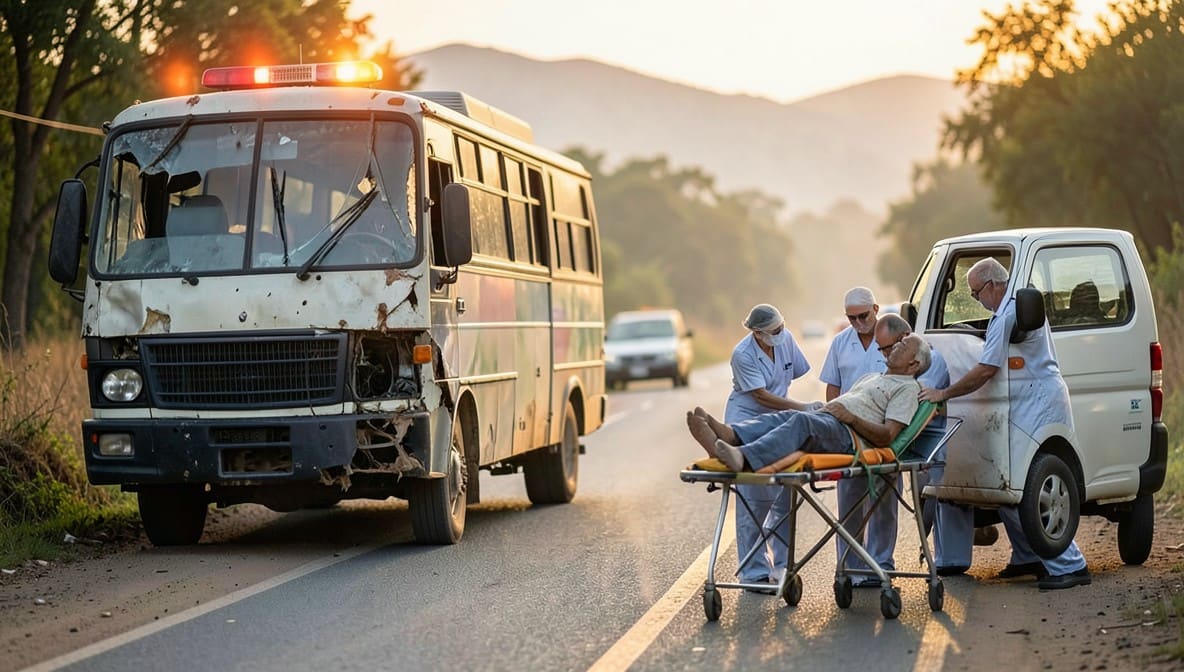
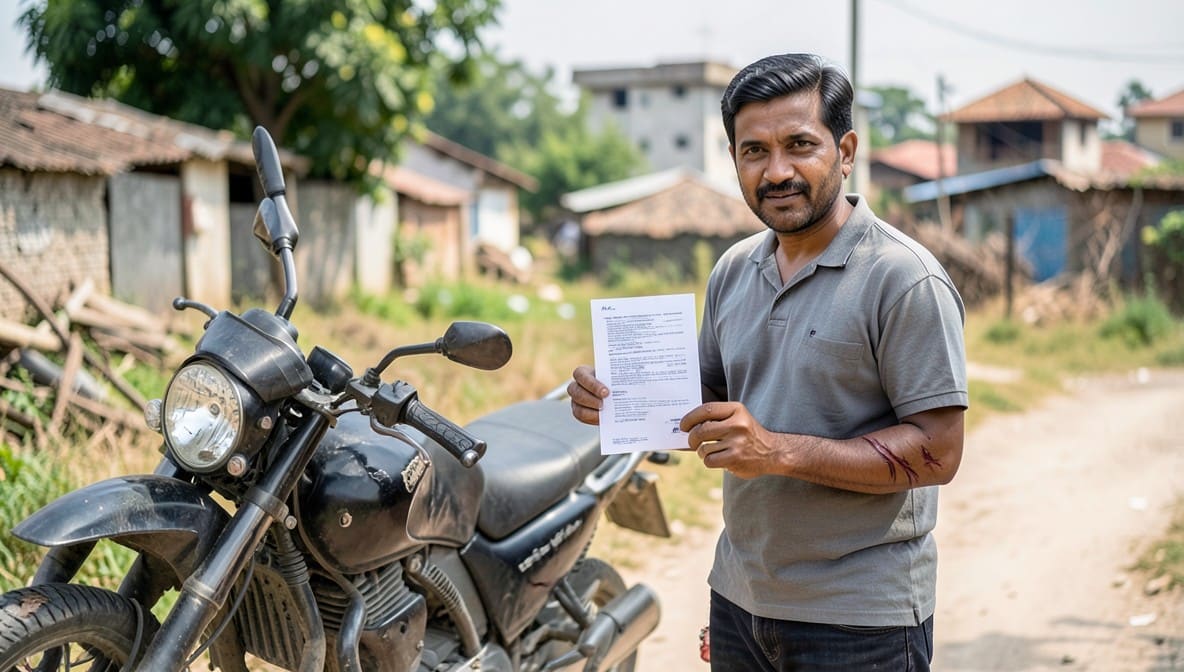
The appellant, Sanganna s/o Shivayogeppa Kerur, aged 53, was a wholesale business owner operating under the name "Sri Veerabhadreshwar Agency" in Bagalkot. On 13.07.2023 at approximately 11:30 p.m., he was travelling in a private vehicle (KA-29/N-8870) on the Hubballi - Navalagund Highway when it was struck by a NWKRTC bus (KA-29/F-1170) driven in a rash and negligent manner. The collision resulted in severe injuries requiring immediate hospitalization and surgical intervention.
Key Facts
- The accident occurred on 13.07.2023 near Kusugal village on Hubballi - Navalagund Highway
- The appellant was admitted to KIMS Hospital, Hubballi, on the night of the accident
- He was subsequently treated as an inpatient at Vasanad Hospital, Bagalkot, from 14.07.2023 to 18.07.2023
- He underwent surgery for a comminuted fracture of the right proximal humerus, involving internal fixation with implants
- Medical bills totaling Rs.1,02,000/- were submitted and accepted by the Tribunal
- A disability certificate (Ex.P10) issued by the treating physician assessed 10% disability of the upper limb
- The appellant was earning Rs.50,000/- per month from his wholesale business
- The driver of the NWKRTC bus was charged under Section 304A IPC; the charge sheet (Ex.P6) was not challenged by the respondent
- No independent evidence was adduced by the respondent to establish contributory negligence by the appellant or the driver of the private vehicle
Procedural History
- 13.07.2023: Accident occurred
- 14.07.2023: Appellant admitted to Vasanad Hospital, Bagalkot
- 18.07.2023: Discharged from hospital after surgery
- 08.05.2024: Judgment and award passed by II Additional Senior Civil Judge and MACT, Bagalkot, in MVC No.46/2024, awarding Rs.2,60,310/-
- 17.06.2024: Miscellaneous First Appeal No.102262 of 2024 filed before the Karnataka High Court, Dharwad Bench
- 04.06.2026: Appeal heard and reserved
- 17.06.2026: Judgment pronounced by Division Bench
Relief Sought
The appellant sought enhancement of compensation on the grounds that:
- The Tribunal failed to adequately appreciate the medical evidence of permanent disability
- No compensation was awarded for loss of amenities
- The award for pain and suffering and conveyance expenses was inadequate
- The notional income and multiplier were correctly applied but overall compensation remained insufficient
The Parties' Positions
For the Appellant
- Relied on medical records and testimony of PW-2 (treating physician) to establish permanent functional impairment
- Argued that the 3% disability assessment by the Tribunal was arbitrary and inconsistent with the 10% upper limb disability certified by the doctor
- Contended that loss of amenities and ongoing discomfort post-fracture union warranted additional compensation
- Submitted that the Tribunal’s award under pain and suffering and conveyance heads was below the norm for such injuries
For the Respondent (NWKRTC)
- Supported the Tribunal’s award as reasonable and proportionate
- Argued that the claimant’s business continued post-accident, indicating no total loss of earning capacity
- Maintained that no evidence was presented to substantiate higher medical expenses or additional care costs
- Opposed enhancement on grounds of lack of quantifiable proof
Relief Sought
The appellant sought enhancement of compensation to reflect:
- Increased award for pain and suffering
- Compensation for loss of amenities
- Additional amount for transportation, nourishment, conveyance and attendant charges
- Retention of all other heads as awarded by the Tribunal
The Legal Issue
The central questions were: (i) whether the compensation awarded by the Motor Accident Claims Tribunal was inadequate in light of the nature of injuries and residual disability; and (ii) whether compensation for loss of amenities and enhanced pain and suffering should be granted despite fracture union.
Arguments Presented
For the Appellant
The appellant’s counsel relied on the medical evidence of PW-2, who confirmed a comminuted proximal humerus fracture requiring surgical fixation and persistent post-operative stiffness and pain. It was argued that the Tribunal’s failure to award compensation for loss of amenities was a legal error, as established in Sarla Verma v. Delhi Transport Corporation. The counsel contended that the 3% disability assessment was inconsistent with the 10% upper limb disability certified by the doctor and that the Tribunal’s award under pain and suffering and conveyance heads was below the standard for such injuries. The claimant’s continued inability to perform daily activities involving the right shoulder was emphasized as a basis for enhanced compensation.
For the Respondent
The respondent’s counsel supported the Tribunal’s findings, arguing that the claimant’s business was operational post-accident and that the medical evidence did not justify a higher disability percentage. It was submitted that the Tribunal had correctly applied the multiplier of 11 and notional income of Rs.15,000/- per month, and that the award of Rs.50,000/- for pain and suffering was within acceptable limits. No independent evidence was produced to dispute the Tribunal’s findings on medical expenses or conveyance costs.
The Court's Analysis
The Court affirmed the Tribunal’s finding of negligence on the part of the NWKRTC driver, noting that the charge sheet had not been challenged and no evidence was adduced to establish contributory negligence by the claimant. The Court held that the burden of disproving negligence lay with the respondent, which had not discharged it.
Regarding disability, the Court noted that while the treating physician assessed 10% disability of the upper limb, the Tribunal had reduced it to 3% of the whole body. The Court found this reduction to be reasonable, as the claimant’s business did not require heavy physical exertion and there was no evidence of complete loss of earning capacity. The Court stated: "The fracture has united, and the claimant continues to carry on his business. A 3% disability assessment is not arbitrary in this context."
The Court, however, found the Tribunal’s award under the heads of pain and suffering, loss of amenities, and conveyance expenses to be inadequate. It observed: "The claimant underwent major surgery, remained hospitalized, and continues to experience stiffness and restriction in movement. These are not transient inconveniences but enduring impairments affecting quality of life."
The Court distinguished between fracture union and functional recovery, holding that union does not negate residual disability. It relied on K. Srinivas v. M.V. K. Srinivas to affirm that loss of amenities must be compensated even when physical healing is complete. The Court enhanced pain and suffering from Rs.50,000/- to Rs.80,000/-, awarded Rs.30,000/- for loss of amenities, and increased conveyance and attendant charges from Rs.25,000/- to Rs.35,000/-. The Court emphasized that these heads are not discretionary but mandatory components of just compensation under the Motor Vehicles Act.
The Verdict
The appeal was allowed in part. The judgment and award dated 08.05.2024 were modified. The claimant is entitled to a total compensation of Rs.3,30,310/-, enhanced from Rs.2,60,310/-. The enhanced amount comprises Rs.80,000/- for pain and suffering, Rs.30,000/- for loss of amenities, and Rs.35,000/- for transportation, nourishment, conveyance and attendant charges. The compensation shall carry interest at 6% per annum from the date of the petition until realization. The NWKRTC shall deposit the enhanced compensation with accrued interest within six weeks of receiving a certified copy of this judgment, after which the amount shall be released upon due identification of the claimant.
What This Means For Similar Cases
Loss of Amenities Is a Mandatory Head of Compensation
- Practitioners must now explicitly plead and substantiate loss of amenities in every MACT claim involving permanent injury, even if the fracture has united
- The Court has clarified that loss of amenities is distinct from pain and suffering and must be awarded independently
- Failure to award this head constitutes a legal error warranting appellate interference
Disability Assessment Must Reflect Functional Impact, Not Just Medical Diagnosis
- Medical certificates indicating limb-specific disability must be correlated with the claimant’s occupation and daily activities
- Tribunals may reduce whole-body disability percentages, but must provide reasoned justification
- A 10% upper limb disability does not automatically translate to 10% whole-body disability, but cannot be arbitrarily reduced without considering functional impairment
Enhanced Awards for Non-Monetary Losses Are Now the Norm
- Awards under pain and suffering, loss of amenities, and conveyance must reflect the enduring nature of injuries
- The Court’s enhancement of Rs.70,000/- across three heads signals a shift toward more realistic compensation for non-economic losses
- Practitioners should cite Sarla Verma and this judgment to argue for higher awards in cases involving upper limb injuries, surgeries, and prolonged recovery