High Courts judgments

10232 High Courts judgments explained in plain English: what was decided, the law applied and why it matters. Page 92 of 427.

Rafiq Masih Doctrine | No Recovery of Overpayment from Class-III Employees Without Fault: HP HC
Case Law Analysis
|Himachal Pradesh High Court

Rafiq Masih Doctrine | No Recovery of Overpayment from Class-III Employees Without Fault: HP HC

The Himachal Pradesh High Court barred recovery of erroneous overpayments from Class-III employees, even when no fault is attributed to them, reinforcing the Supreme Court’s Rafiq Masih ruling. The judgment mandates refund with interest if recovery is delayed, protecting lower-grade employees from financial hardship due to administrative errors.


POCSO Act Section 6 | Minor’s Consent Irrelevant for Bail; Prolonged Custody & Cooperation Justify Relief Under Section 439 CrPC : Karnataka HC
Case Law Analysis
|Karnataka High Court

POCSO Act Section 6 | Minor’s Consent Irrelevant for Bail; Prolonged Custody & Cooperation Justify Relief Under Section 439 CrPC : Karnataka HC

Karnataka High Court rules that while a minor’s consent is legally invalid under POCSO Act, bail may still be granted if the accused has undergone prolonged custody and cooperated with investigation. The ruling underscores that bail considerations under Section 439 CrPC must balance statutory strictures with individual liberty, even in heinous offences.

Article 14 & Service Law | Notional Promotion Date Discrimination Violates Equality; HP HC Directs Actual Promotion Benefits from Date of Charge Assumption : HP HC
Case Law Analysis
|Himachal Pradesh High Court

Article 14 & Service Law | Notional Promotion Date Discrimination Violates Equality; HP HC Directs Actual Promotion Benefits from Date of Charge Assumption : HP HC

The Himachal Pradesh High Court ruled that denying actual promotion benefits while granting them to similarly situated employees constitutes discrimination under Article 14. The court directed regularization from the date of assuming charge, ensuring full consequential benefits including pay arrears and seniority, reinforcing equality in employment.

Section 28A Land Acquisition Act | 6-Month Deadline for Disposal of Enhanced Compensation Applications: Bombay HC
|Bombay High Court

Section 28A Land Acquisition Act | 6-Month Deadline for Disposal of Enhanced Compensation Applications: Bombay HC

The Bombay High Court has mandated that Land Acquisition Officers must decide pending Section 28A applications for enhanced compensation within six months, ending decades-long delays that denied landowners timely justice. This directive ensures enforceable timelines for statutory remedies under the 1894 Act, directly impacting thousands of pending claims across Maharashtra.

Condonation of Delay | False Pleadings Disentitle Equitable Relief Under Maharashtra Co-operative Societies Act : Bombay HC
Case Law Analysis
|Bombay High Court

Condonation of Delay | False Pleadings Disentitle Equitable Relief Under Maharashtra Co-operative Societies Act : Bombay HC

The Bombay High Court has ruled that submitting false or misleading statements in a condonation of delay application automatically disqualifies a party from claiming equitable relief under the Maharashtra Co-operative Societies Act. This sets a critical precedent for cooperative housing disputes, where procedural integrity now overrides substantive claims when deception is proven.

Section 14A(2) SC/ST Act + Section 351(2) BNS | Minors Without Direct Allegations or Weapon Use Entitled to Anticipatory Bail : Karnataka HC
Case Law Analysis
|Karnataka High Court

Section 14A(2) SC/ST Act + Section 351(2) BNS | Minors Without Direct Allegations or Weapon Use Entitled to Anticipatory Bail : Karnataka HC

Karnataka High Court rules that minors accused under the SC/ST Act and Bharatiya Nyaya Sanhita are entitled to anticipatory bail if no direct allegations or weapon involvement are proven, especially after charge sheet filing. The ruling reinforces safeguards against custodial interrogation for juvenile appellants in atrocity cases.

Bharatiya Nyaya Sanhita Section 318(4) | Bail Granted in Trust Property Disputes Where Case Rests Solely on Documentary Evidence: Bombay HC (Aurangabad)
Case Law Analysis
|Bombay High Court

Bharatiya Nyaya Sanhita Section 318(4) | Bail Granted in Trust Property Disputes Where Case Rests Solely on Documentary Evidence: Bombay HC (Aurangabad)

The Bombay High Court has ruled that custodial detention is unnecessary in cases where trust property disputes are substantiated by documentary evidence and no independent criminal intent is established, effectively limiting criminal prosecution to cases beyond civil boundary disputes. This sets a critical precedent for protecting trustees and managers from weaponized criminal complaints in civil matters.

Criminal Antecedents Alone Cannot Deny Anticipatory Bail Under BNS & FSS Act | Bombay HC (Nagpur Bench)
Case Law Analysis
|Bombay High Court

Criminal Antecedents Alone Cannot Deny Anticipatory Bail Under BNS & FSS Act | Bombay HC (Nagpur Bench)

The Bombay High Court has ruled that prior criminal history, without evidence of flight risk or threat to investigation, cannot be the sole ground to reject anticipatory bail under the Bharatiya Nyaya Sanhita and Food Safety Act. This reinforces the Supreme Court’s stance in Ayub Khan and protects accused persons from automatic denial based on past charges - even when facing serious non-bailable offences.

Public Contract Payments | Undisputed Running Bills Must Be Paid Within Two Weeks Under Writ Jurisdiction: Bombay HC
Case Law Analysis
|Bombay High Court

Public Contract Payments | Undisputed Running Bills Must Be Paid Within Two Weeks Under Writ Jurisdiction: Bombay HC

The Bombay High Court has mandated that state departments must release undisputed running bills to contractors within two weeks, or face judicial consequences. This ruling reinforces contractual fairness in public infrastructure projects and protects contractors from financial collapse due to administrative delay, directly safeguarding public interest and project continuity.

Natural Justice | Denial of Cross-Examination Must Be Proven, Not Presumed; Declined Opportunity ≠ Denied Right : Bombay HC
Case Law Analysis
|Bombay High Court

Natural Justice | Denial of Cross-Examination Must Be Proven, Not Presumed; Declined Opportunity ≠ Denied Right : Bombay HC

The Bombay High Court clarified that in disciplinary proceedings, a mere refusal to exercise an offered chance to cross-examine does not amount to a violation of natural justice - the burden lies on the employee to prove actual denial, not assume it. This sets a critical precedent for universities and public employers handling service disputes, reinforcing that procedural fairness requires active assertion, not passive assumption.

Natural Justice | Distress Warrant for Maintenance Arrears Cannot Be Cancelled Without Notice to Debtor: Bombay HC
Case Law Analysis
|Bombay High Court

Natural Justice | Distress Warrant for Maintenance Arrears Cannot Be Cancelled Without Notice to Debtor: Bombay HC

The Bombay High Court has ruled that cancelling a distress warrant for maintenance arrears without serving notice to the recipient violates fundamental principles of natural justice. This sets a critical precedent for family courts: financial recovery orders must follow due process, even when dealing with persistent defaulters, ensuring procedural fairness overrides summary disposal.

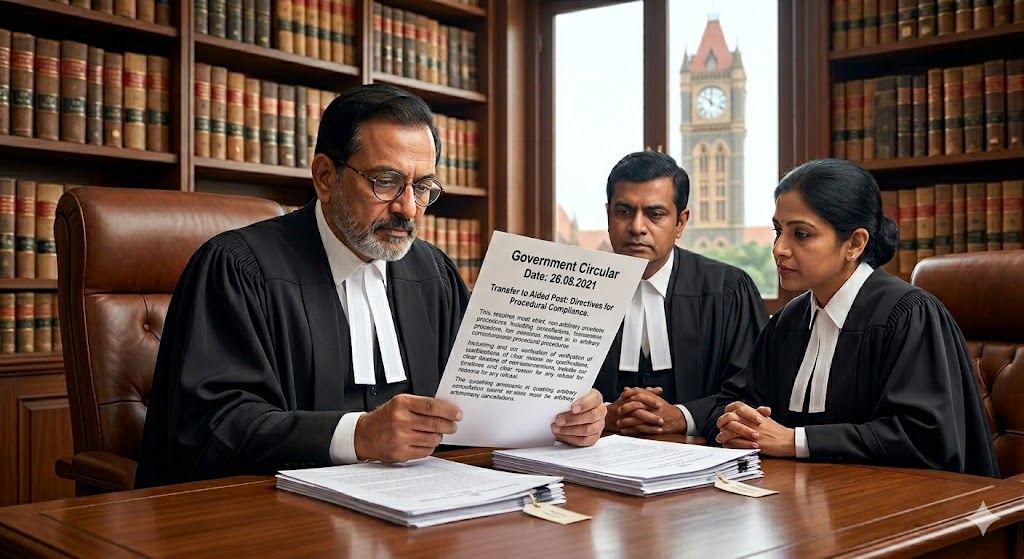
Government Circular 26.08.2021 | Transfer to Aided Post Requires Strict Procedural Compliance; Bombay HC Quashes Arbitrary Cancellation : Bombay HC
Case Law Analysis
|Bombay High Court

Government Circular 26.08.2021 | Transfer to Aided Post Requires Strict Procedural Compliance; Bombay HC Quashes Arbitrary Cancellation : Bombay HC

The Bombay HC has invalidated the cancellation of a teacher’s transfer to an aided post, holding that authorities must strictly follow the procedural safeguards mandated by Government Circular 26.08.2021. This ruling binds all educational institutions in Maharashtra to prioritize documented qualifications and transparent process over discretionary decisions, safeguarding service rights in public education appointments.

Matrimonial Property Recovery | Gold and Cash Given at Marriage Recoverable Even Without Explicit Entrustment If Misused: Kerala HC
Case Law Analysis
|Kerala High Court

Matrimonial Property Recovery | Gold and Cash Given at Marriage Recoverable Even Without Explicit Entrustment If Misused: Kerala HC

The Kerala High Court ruled that gold ornaments and cash gifted during marriage can be reclaimed if proven misused, even in the absence of formal entrustment - establishing that delivery and subsequent diversion for personal use suffice to create a legal obligation to return. This clarifies the evidentiary standard for spouses seeking recovery of marital gifts in breakdowns, empowering petitioners to rely on circumstantial proof over contractual formalities.

Section 138 NI Act | Compounding After Conviction Permits Acquittal: Kerala HC
Case Law Analysis
|Kerala High Court

Section 138 NI Act | Compounding After Conviction Permits Acquittal: Kerala HC

The Kerala High Court has ruled that a mutually settled compromise between parties in a cheque bounce case overrides a prior conviction, entitling the accused to acquittal even after judicial findings of guilt. This affirms that Section 138 offences, being compoundable by nature, allow settlement to extinguish criminal liability at any stage, reshaping litigation strategy for commercial disputes.

Parole Grant Based on Prison Conduct & Probation Officer Recommendation Overrides Police Objections | Kerala HC
Case Law Analysis
|Kerala High Court

Parole Grant Based on Prison Conduct & Probation Officer Recommendation Overrides Police Objections | Kerala HC

The Kerala High Court ruled that satisfactory prison behavior and a positive recommendation from the probation officer are decisive factors in granting parole, even when police raise objections. This reinforces the rehabilitative intent of India’s parole system and empowers correctional authorities to prioritize reform over punitive suspicion.

Anticipatory Bail | Absence of Injury Certificate Undermines Seriousness of Assault Allegations Under BNS Section 118(1): Bombay HC (Aurangabad Bench)
Case Law Analysis
|Bombay High Court

Anticipatory Bail | Absence of Injury Certificate Undermines Seriousness of Assault Allegations Under BNS Section 118(1): Bombay HC (Aurangabad Bench)

The Bombay High Court granted anticipatory bail where no injury certificate was produced to substantiate assault claims under BNS Section 118(1), establishing that procedural gaps in medical evidence can critically weaken the prosecution’s case. This ruling reinforces proportionality in bail decisions and signals that courts will not presume gravity from uncorroborated allegations alone, benefiting accused persons in non-fatal assault cases.

Transit Bail Under BNSS Section 482 | Kerala HC Affirms Power to Shield Accused from Inter-State Arrest Pending Jurisdictional Application : Kerala HC
Case Law Analysis
|Kerala High Court

Transit Bail Under BNSS Section 482 | Kerala HC Affirms Power to Shield Accused from Inter-State Arrest Pending Jurisdictional Application : Kerala HC

The Kerala High Court has recognized its authority to grant transit bail under BNSS Section 482 when an accused faces imminent inter-state arrest, protecting personal liberty while mandating that the accused approach the jurisdictional court within three weeks. This ruling clarifies that territorial limits do not bar interim relief when immediate arrest would cause irreparable harm, setting a vital precedent for accused persons caught in jurisdictional gaps across India.

Cryptocurrency Receipts Alone Cannot Establish Criminal Intent Under BNSS | Pre-Arrest Bail Granted: Kerala HC
Case Law Analysis
|Kerala High Court

Cryptocurrency Receipts Alone Cannot Establish Criminal Intent Under BNSS | Pre-Arrest Bail Granted: Kerala HC

The Kerala High Court has ruled that mere receipt of cryptocurrency funds, without corroborating evidence of intent or active participation in fraud, is insufficient to deny pre-arrest bail under the Bharatiya Nagarik Suraksha Sanhita. This sets a critical precedent for digital asset cases, protecting individuals from automatic criminalization based solely on transactional patterns in cyber fraud investigations.

BNSS Section 483 | Bail Granted When Investigation Concludes and No Flight Risk Exists: Kerala HC
Case Law Analysis
|Kerala High Court

BNSS Section 483 | Bail Granted When Investigation Concludes and No Flight Risk Exists: Kerala HC

The Kerala High Court has ruled that continued judicial custody is unjustified once the investigation in a Kerala Abkari Act case is complete and the accused poses no risk of flight, even with prior similar offences. This reinforces that bail under BNSS Section 483 must be assessed on current procedural posture, not past conduct alone, benefiting accused in non-violent economic offences nearing trial.

Pre-Arrest Bail Granted Under BNSS Section 482 When No Prima Facie Link Established Between Partners and Deposit Scheme Fraud : Kerala HC
Case Law Analysis
|Kerala High Court

Pre-Arrest Bail Granted Under BNSS Section 482 When No Prima Facie Link Established Between Partners and Deposit Scheme Fraud : Kerala HC

The Kerala High Court granted pre-arrest bail to three senior citizen partners in a deposit scheme case, holding that mere partnership in a firm does not equate to criminal liability without evidence of active involvement or intent. This ruling reinforces that liability under the Banning of Unregulated Deposit Schemes Act must be individually proven, protecting innocent associates from indiscriminate arrest.

Consumer Protection Act Section 2(1)(g) | Manufacturer and Dealer Jointly Liable for 58-Day Extended Warranty Repair Delay: Maharashtra State Commission
Case Law Analysis
|Bombay High Court

Consumer Protection Act Section 2(1)(g) | Manufacturer and Dealer Jointly Liable for 58-Day Extended Warranty Repair Delay: Maharashtra State Commission

The Maharashtra State Consumer Commission held that both the car manufacturer and authorized dealer are jointly liable for deficiency in service when an extended warranty repair takes 58 days, awarding ₹3 lakh for loss of use and mental agony. This sets a critical precedent: warranty obligations are not delegated away - both parties remain accountable for service failures under the Consumer Protection Act.

Section 3(1)(r) SC/ST (POA) Act | Public Humiliation of SC Student by Teacher Bars Anticipatory Bail: Kerala HC
Case Law Analysis
|Kerala High Court

Section 3(1)(r) SC/ST (POA) Act | Public Humiliation of SC Student by Teacher Bars Anticipatory Bail: Kerala HC

The Kerala High Court has held that intentional public humiliation of a Scheduled Caste student by a teacher constitutes a heinous act under Section 3(1)(r) of the SC/ST (POA) Act, rendering anticipatory bail inapplicable. This ruling reinforces that institutional caste-based abuse, even without physical violence, triggers the Act’s strict bail bar - sending a clear signal to educational institutions and public servants.

Section 4 Probation of Offenders Act | Elderly Accused Convicted of Temple Theft Granted Probation Over Imprisonment Due to Age and Health: Kerala HC
Case Law Analysis
|Kerala High Court

Section 4 Probation of Offenders Act | Elderly Accused Convicted of Temple Theft Granted Probation Over Imprisonment Due to Age and Health: Kerala HC

The Kerala High Court substituted a two-year prison sentence with probation under Section 4 of the Probation of Offenders Act, 1958, for a 46-year-old accused convicted of stealing a temple idol, recognizing advanced age and health as compelling mitigating factors. This ruling reinforces that non-violent property offenses by elderly offenders may warrant rehabilitative over punitive sentencing, setting a precedent for compassionate judicial discretion in similar cases.