Custom, Excise & Service Tax Tribunal judgments

454 Custom, Excise & Service Tax Tribunal judgments explained in plain English: what was decided, the law applied and why it matters. Page 13 of 19.

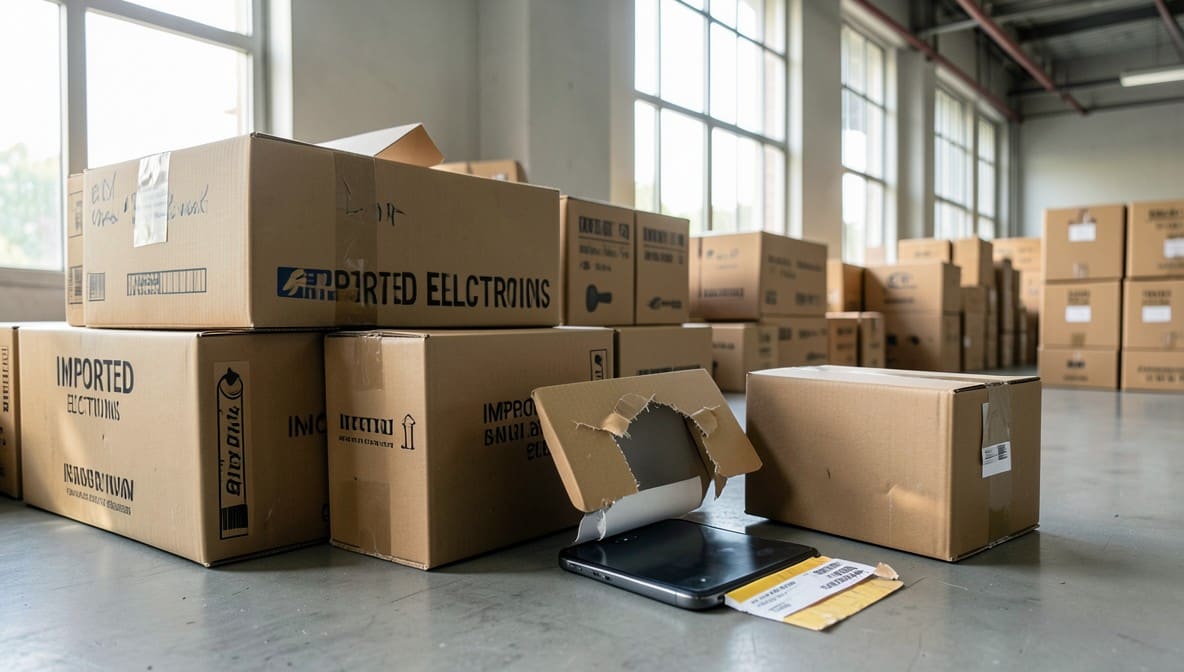
Post-Import MRP Alterations by Distributors Do Not Trigger CVD Liability Against Importers | Corporate Veil Doctrine Applied : CESTAT Hyderabad
Case Law Analysis
|Custom, Excise & Service Tax Tribunal

Post-Import MRP Alterations by Distributors Do Not Trigger CVD Liability Against Importers | Corporate Veil Doctrine Applied : CESTAT Hyderabad

CESTAT Hyderabad rules that importers cannot be held liable for additional customs duty under CVD when independent distributors later alter MRP labels after clearance. The decision shields importers from retrospective liability arising from downstream commercial actions, reinforcing the separation between importation and post-clearance pricing decisions under the Customs Tariff Act.


Section 67(2) Finance Act | Service Tax on Real Estate Agent Services Must Be Computed on Gross Amount Inclusive of Tax: CESTAT Chennai
Case Law Analysis
|Custom, Excise & Service Tax Tribunal

Section 67(2) Finance Act | Service Tax on Real Estate Agent Services Must Be Computed on Gross Amount Inclusive of Tax: CESTAT Chennai

CESTAT Chennai ruled that service tax liability for real estate agent services must be calculated on the gross amount inclusive of tax under Section 67(2) of the Finance Act. The tribunal remanded the case for fresh adjudication, allowing the appellant to submit additional evidence, clarifying the computation methodology for tax professionals and real estate service providers.

Finance Act 1994 | Government Grant-in-Aid for Capital Expenditure Not Taxable as Service Consideration : CESTAT
Case Law Analysis
|Custom, Excise & Service Tax Tribunal

Finance Act 1994 | Government Grant-in-Aid for Capital Expenditure Not Taxable as Service Consideration : CESTAT

CESTAT rules that reimbursement of capital expenditure under government grant-in-aid schemes does not constitute 'consideration' for taxable services under Section 66E(e) of the Finance Act, 1994. The decision clarifies that such grants, even with counter-obligations, are not subject to service tax under the reverse charge mechanism, providing relief to businesses availing government subsidies.

CRCL Test Reports Sufficient for Customs Tariff Classification Without Additional Evidence: CESTAT Ahmedabad
Case Law Analysis
|Custom, Excise & Service Tax Tribunal

CRCL Test Reports Sufficient for Customs Tariff Classification Without Additional Evidence: CESTAT Ahmedabad

CESTAT Ahmedabad ruled that Central Revenues Control Laboratory (CRCL) test reports alone are adequate for determining customs tariff classification, remanding the case for re-determination. The decision underscores that importers cannot be denied duty exemptions solely due to procedural lapses in sharing test reports if the substantive findings are conclusive.

Section 108 Customs Act | Electronic Evidence Must Comply With Statutory Procedures to Sustain Duty Demand: CESTAT Hyderabad
Case Law Analysis
|Custom, Excise & Service Tax Tribunal

Section 108 Customs Act | Electronic Evidence Must Comply With Statutory Procedures to Sustain Duty Demand: CESTAT Hyderabad

CESTAT Hyderabad quashed a differential duty demand and penalties, ruling that electronic evidence like emails and statements under Section 108 of the Customs Act must strictly adhere to statutory compliance, including the right to cross-examination. The decision underscores that procedural lapses in evidence collection vitiate the validity of duty demands, impacting importers and customs authorities alike.

Section 111(d) Customs Act | High Sea Sales via State Trading Enterprises Valid Despite Foreign Trade Policy Restrictions : CESTAT Ahmedabad
Case Law Analysis
|Custom, Excise & Service Tax Tribunal

Section 111(d) Customs Act | High Sea Sales via State Trading Enterprises Valid Despite Foreign Trade Policy Restrictions : CESTAT Ahmedabad

CESTAT Ahmedabad rules that imports of Technical Grade Urea through State Trading Enterprises under high sea sales do not violate the Foreign Trade Policy, even without a DGFT license. The tribunal set aside confiscation and penalty orders, clarifying that such transactions are permissible under Section 111(d) of the Customs Act, impacting importers relying on high sea sales mechanisms.

Section 123 Customs Act | Revenue Must Prove Foreign Origin of Goods for Confiscation: CESTAT Kolkata Sets Aside Penalty
Case Law Analysis
|Custom, Excise & Service Tax Tribunal

Section 123 Customs Act | Revenue Must Prove Foreign Origin of Goods for Confiscation: CESTAT Kolkata Sets Aside Penalty

CESTAT Kolkata ruled that the Revenue failed to discharge its burden under Section 123 of the Customs Act to establish the foreign origin of seized peas, leading to the quashing of confiscation and penalty. The judgment reinforces that confiscation under the Customs Act requires strict proof of foreign origin, not mere suspicion.

Rule 26 Central Excise Rules | Mens Rea Mandatory for Penalty: CESTAT Sets Aside Penalty for Lack of Knowledge Proof
Case Law Analysis
|Custom, Excise & Service Tax Tribunal

Rule 26 Central Excise Rules | Mens Rea Mandatory for Penalty: CESTAT Sets Aside Penalty for Lack of Knowledge Proof

CESTAT rules that penalties under Rule 26 of the Central Excise Rules, 2002 cannot be imposed without establishing the assessee's knowledge or reasonable belief of confiscation liability. The tribunal emphasized that show cause notices must explicitly allege mens rea, failing which penalties are unsustainable. This ruling reinforces due process protections for businesses dealing with excisable goods.

Section 65(105)(zzzz) Finance Act | Residential Lease to Company Exempt from Service Tax Even If Occupied by Director: CESTAT Chennai
Case Law Analysis
|Custom, Excise & Service Tax Tribunal

Section 65(105)(zzzz) Finance Act | Residential Lease to Company Exempt from Service Tax Even If Occupied by Director: CESTAT Chennai

CESTAT Chennai rules that renting immovable property for residential use-even if leased to a company and occupied by its managing director-falls under the statutory exemption from service tax under Section 65(105)(zzzz) of the Finance Act. The ruling clarifies that the nature of use, not the lessee’s identity, determines tax liability, offering relief to property owners and corporate lessors.

Central Excise Duty | Job Worker, Not Principal, Liable for Duty on Contract Manufactured Goods Under Section 3 : CESTAT
Case Law Analysis
|Custom, Excise & Service Tax Tribunal

Central Excise Duty | Job Worker, Not Principal, Liable for Duty on Contract Manufactured Goods Under Section 3 : CESTAT

CESTAT clarifies that excise duty liability under Section 3 of the Central Excise Act rests with the job worker undertaking actual manufacturing, not the principal supplying raw materials. The ruling shields principals from duty demands where job workers avail area-based exemptions, impacting contract manufacturing agreements across industries.

Mega Exemption Notification | Payment via Sister Concern Does Not Invalidate Service Tax Exemption for Sub-Contractors : CESTAT
Case Law Analysis
|Custom, Excise & Service Tax Tribunal

Mega Exemption Notification | Payment via Sister Concern Does Not Invalidate Service Tax Exemption for Sub-Contractors : CESTAT

CESTAT rules that sub-contractors providing exempted works contract services to government authorities remain eligible for service tax exemption under Notification No. 25/2012, even if payments are routed through a sister concern. The ruling clarifies that the exemption hinges on the nature of the service, not the payment channel, offering relief to sub-contractors in similar arrangements.

Central Excise Act | Panchnama & Section 9D Compliance Mandatory for Admissibility: CESTAT Sets Aside Demand for Procedural Lapses
Case Law Analysis
|Custom, Excise & Service Tax Tribunal

Central Excise Act | Panchnama & Section 9D Compliance Mandatory for Admissibility: CESTAT Sets Aside Demand for Procedural Lapses

CESTAT ruled that excise demands are unsustainable if Panchnamas are unverified or Section 14 statements remain unexamined, reinforcing strict adherence to procedural standards under the Central Excise Act. The judgment underscores that evidentiary compliance is non-negotiable for adjudication, impacting manufacturers and revenue authorities alike.

CVD/SAD Credit on Imported Software Cannot Be Recovered as Excise Duty | CESTAT Chennai Bars Jurisdictional Overreach by Central Excise : CESTAT
Case Law Analysis
|Custom, Excise & Service Tax Tribunal

CVD/SAD Credit on Imported Software Cannot Be Recovered as Excise Duty | CESTAT Chennai Bars Jurisdictional Overreach by Central Excise : CESTAT

CESTAT Chennai rules that Central Excise authorities lack jurisdiction to challenge Customs classification of imported software, as CVD/SAD credit cannot be treated as excise duty. The ruling protects importers from retrospective demands based on disputed classifications, reinforcing the finality of Customs assessments.

FOR Contracts | Freight & Insurance Charges Must Be Included in Assessable Value for Central Excise Duty : CESTAT Hyderabad Overturns Prior Rulings
Case Law Analysis
|Custom, Excise & Service Tax Tribunal

FOR Contracts | Freight & Insurance Charges Must Be Included in Assessable Value for Central Excise Duty : CESTAT Hyderabad Overturns Prior Rulings

CESTAT Hyderabad rules that under Free-On-Rail (FOR) contracts, freight and insurance charges form part of the assessable value for Central Excise Duty when the sale concludes at the buyer’s premises. This decision sets a precedent for excise valuation, impacting manufacturers and suppliers under similar contractual terms.

Voluntary Service Tax Payment Before SCN Bars Penalties Under Sections 78 & 77 | CESTAT Hyderabad Upholds Penalty Waiver for Bonafide Disclosure
Case Law Analysis
|Custom, Excise & Service Tax Tribunal

Voluntary Service Tax Payment Before SCN Bars Penalties Under Sections 78 & 77 | CESTAT Hyderabad Upholds Penalty Waiver for Bonafide Disclosure

CESTAT Hyderabad ruled that voluntary payment of service tax and interest before issuance of a Show Cause Notice (SCN), coupled with a bonafide belief and no suppression of facts, invalidates penalties under Sections 78 and 77 of the Finance Act. The decision reinforces the principle that proactive compliance can shield taxpayers from punitive measures, offering relief to businesses under the Reverse Charge Mechanism.

Section 73(1) Finance Act 1994 | Extended Limitation Period for Service Tax Demands Requires Proof of Wilful Suppression with Intent to Evade : CESTAT Chennai
Case Law Analysis
|Custom, Excise & Service Tax Tribunal

Section 73(1) Finance Act 1994 | Extended Limitation Period for Service Tax Demands Requires Proof of Wilful Suppression with Intent to Evade : CESTAT Chennai

CESTAT Chennai sets aside a service tax demand as time-barred, ruling that the extended limitation period under Section 73(1) of the Finance Act 1994 mandates proof of wilful suppression with intent to evade tax, not mere non-payment or procedural lapses. The decision underscores the high evidentiary threshold for tax authorities to invoke extended limitation periods against assessees.

Unregistered Technical Know-How Not an 'Intellectual Property Right Service' Under Service Tax Law : CESTAT Hyderabad
Case Law Analysis
|Custom, Excise & Service Tax Tribunal

Unregistered Technical Know-How Not an 'Intellectual Property Right Service' Under Service Tax Law : CESTAT Hyderabad

CESTAT Hyderabad ruled that payments for unregistered technical know-how from foreign entities do not qualify as 'Intellectual Property Right Services' (IPRS) under service tax law, exempting such transactions from tax liability. The tribunal also clarified that Cenvat credit could not be used for reverse charge liability on such services prior to 01.07.2012, impacting businesses relying on foreign technical collaborations.

Natural Justice in Tax Proceedings | CESTAT Quashes Service Tax Demand Beyond Show Cause Notice Scope : Principal Bench
Case Law Analysis
|Custom, Excise & Service Tax Tribunal

Natural Justice in Tax Proceedings | CESTAT Quashes Service Tax Demand Beyond Show Cause Notice Scope : Principal Bench

CESTAT rules that a service tax demand cannot be confirmed under a different taxable head than the one proposed in the Show Cause Notice, reinforcing the principles of natural justice. The decision sets a precedent limiting tax authorities' ability to expand demand classifications post-notice, impacting contractors and service providers under the Finance Act, 1994.

Service Tax Liability | Conversion from Proprietorship to Partnership Requires Fresh Show Cause Notice: CESTAT Quashes ₹69.7 Lakh Demand
Case Law Analysis
|Custom, Excise & Service Tax Tribunal

Service Tax Liability | Conversion from Proprietorship to Partnership Requires Fresh Show Cause Notice: CESTAT Quashes ₹69.7 Lakh Demand

CESTAT rules that a partnership firm cannot be held liable for service tax demands arising from its predecessor proprietorship without a fresh show cause notice. The decision underscores the legal distinction between entities, protecting businesses from retrospective tax liabilities post-conversion.

Works Contract Service Taxable Only Under Specific Category Post-01.06.2007: CESTAT Hyderabad Bars Vivisection of Composite Contracts
Case Law Analysis
|Custom, Excise & Service Tax Tribunal

Works Contract Service Taxable Only Under Specific Category Post-01.06.2007: CESTAT Hyderabad Bars Vivisection of Composite Contracts

CESTAT Hyderabad ruled that composite works contracts cannot be taxed under 'Construction of Complex Service' and barred demands where show cause notices were repeatedly issued, citing the precedent in L&T Ltd. v. CST. The decision reinforces that pre-2007 contracts lacking a specific taxable category cannot be retrospectively taxed, offering relief to developers engaged in integrated township projects.

CENVAT Credit Admissible for Factory Expansion Post-01.04.2011 | Deletion of 'Setting Up' from Definition Clarified : CESTAT Chennai
Case Law Analysis
|Custom, Excise & Service Tax Tribunal

CENVAT Credit Admissible for Factory Expansion Post-01.04.2011 | Deletion of 'Setting Up' from Definition Clarified : CESTAT Chennai

CESTAT Chennai rules that CENVAT credit on input services for expanding an existing manufacturing facility remains admissible even after the deletion of 'setting up' from the definition post-April 2011. The ruling clarifies that expansion does not constitute a new establishment, ensuring continuity in credit eligibility for manufacturers.

Service Tax Exemption for CRS/GDS Incentives to Air Travel Agents | CESTAT Clarifies Non-Taxability Under Business Auxiliary Service
Case Law Analysis
|Custom, Excise & Service Tax Tribunal

Service Tax Exemption for CRS/GDS Incentives to Air Travel Agents | CESTAT Clarifies Non-Taxability Under Business Auxiliary Service

CESTAT Chandigarh rules that incentives paid by Computer Reservation Systems/Global Distribution Systems (CRS/GDS) to air travel agents do not constitute taxable 'Business Auxiliary Service' under Service Tax law. The ruling provides relief to travel agents by exempting such payments from tax liability, while also clarifying the treatment of fuel surcharges, abatement, and CENVAT credit rules.