The Customs, Excise and Service Tax Appellate Tribunal (CESTAT) Chennai has clarified that CENVAT credit on services used for expanding an existing manufacturing facility remains admissible even after the deletion of the phrase 'setting up of a factory' from Rule 2(l) of the CENVAT Credit Rules, 2004. The ruling affirms that statutory definitions must be interpreted according to their substantive scope, not narrowed by omission from inclusive clauses, and reinforces the principle that limitation periods cannot be extended retroactively in the absence of fraud or suppression.
Background & Facts
The Dispute
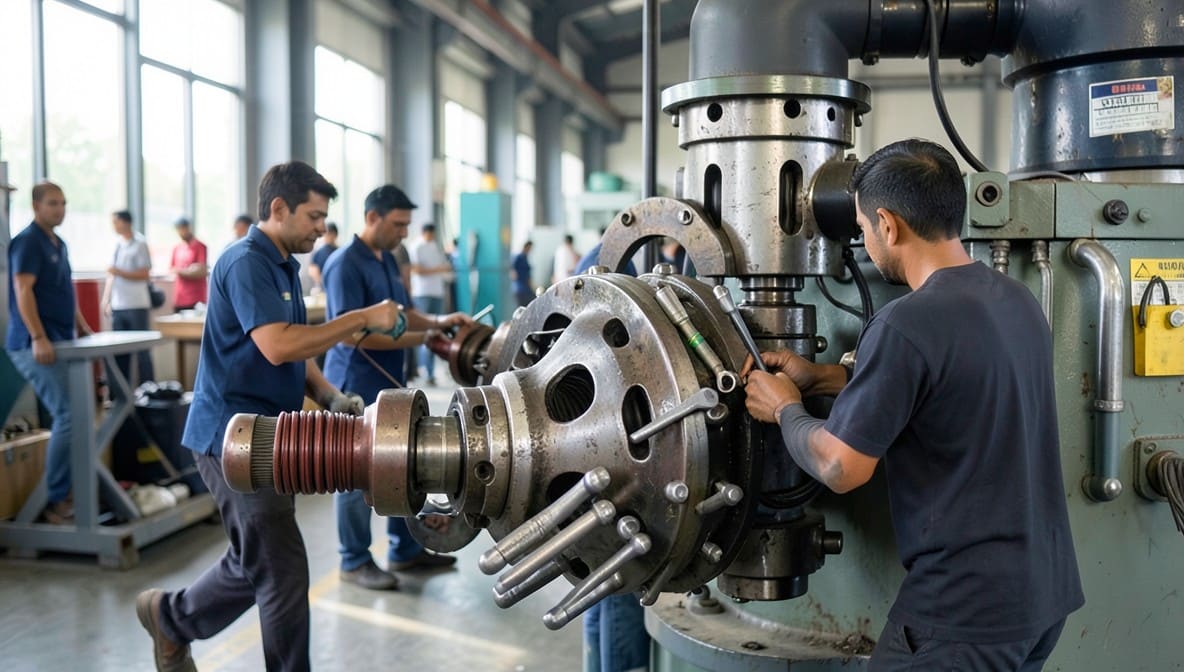
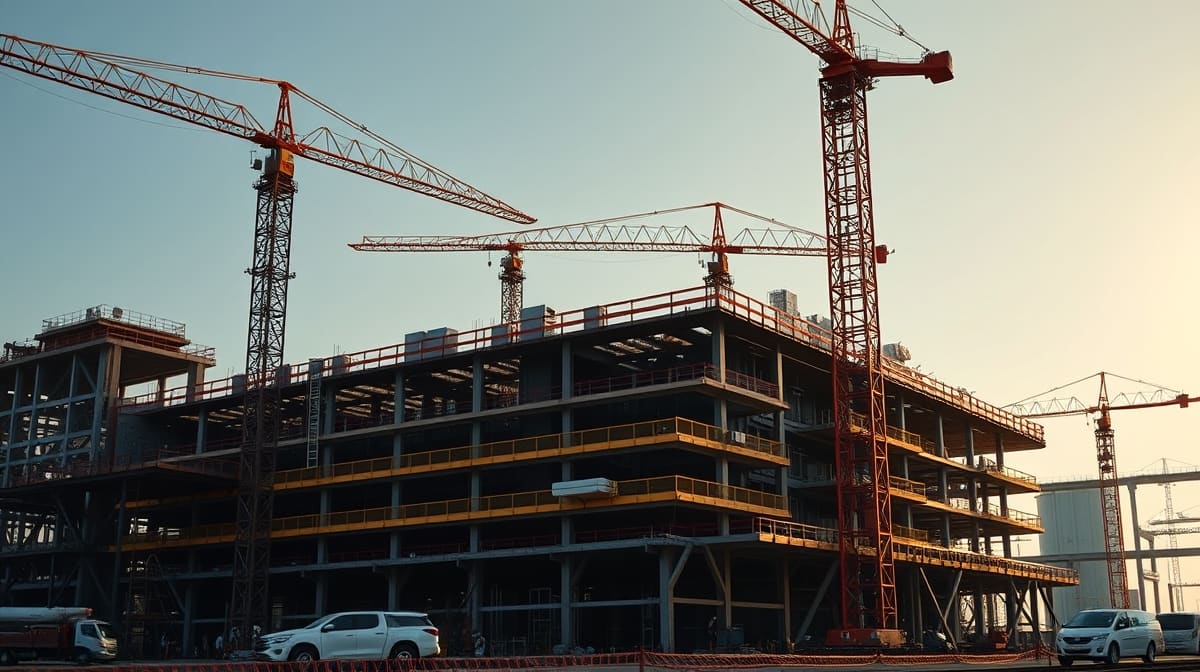
M/s. Komatsu India (P) Ltd., a manufacturer of dump trucks and hydraulic excavators, availed CENVAT credit of Service Tax amounting to ₹84,08,342/- on erection, commissioning, installation, consulting engineering, and manpower supply services rendered between October 2014 and June 2015. These services were utilized for the expansion of its existing manufacturing facility in Oragadam, Kanchipuram, to increase production capacity for hydraulic excavators. The Revenue denied the credit, asserting that the services fell under the excluded category of 'setting up of a factory', which had been removed from the inclusive definition of 'input service' under Rule 2(l) of the CENVAT Credit Rules, 2004 with effect from 01.04.2011.
Key Facts
- The appellant had been engaged in manufacturing dump trucks since before 2014 and held valid Central Excise registration.
- The expansion project involved installation of new machinery and infrastructure adjacent to the existing plant, not construction of a new factory.
- The services availed included: erection and commissioning of plant and machinery, consulting engineering services, and manpower supply for operationalization.
- Credit was claimed under Rule 3 of the CENVAT Credit Rules, 2004, supported by valid tax invoices and recorded in statutory CENVAT registers and ER-1 returns.
- No allegation of suppression, fraud, or wilful misstatement was made in the Show Cause Notice.
- The appellant had filed ST-3 returns regularly during the period.
Procedural History
- October 2014 to June 2015: Period of availing CENVAT credit on disputed services.
- 02.11.2016: Show Cause Notice issued proposing denial of ₹84,08,342/- credit, interest under Section 11AA, and penalty of ₹5,00,000/- under Rule 15(1) read with Section 11AC.
- 18.05.2017: Order-in-Original passed by Commissioner (Appeals) confirming denial of credit and imposing penalty.
- 29.12.2017: Order-in-Appeal No. 506/2017 by Commissioner of GST & Central Excise (Appeals-II) upheld the denial of credit but set aside the demand for interest.
- 07.10.2025: Hearing before CESTAT Chennai.
- 30.03.2026: Final Order No. 40446/2026 issued by CESTAT Chennai.
The Parties' Positions
For the Appellant
- Argued that the services were used for expansion of an existing, operational factory, not for 'setting up' a new one.
- Emphasized that the main limb of Rule 2(l) continues to cover services used directly or indirectly in or in relation to manufacture of final products.
- Relied on judicial precedents holding that the word 'includes' enlarges, not restricts, the definition.
- Contended that the exclusion clause applies only to construction, civil structures, foundation work, or works contracts - none of which were involved.
- Asserted that the Show Cause Notice issued on 02.11.2016 was beyond the one-year limitation period under Section 11A(1) as it stood pre-14.05.2016.
For the Respondent
- Maintained that deletion of 'setting up of a factory' from the inclusive portion of Rule 2(l) implied legislative intent to exclude all services related to factory expansion.
- Argued that erection, commissioning, and manpower supply services were inseparable from civil construction and thus fell within the exclusion.
- Contended that the due date of ST-3 returns should be treated as the relevant date for limitation.
- Asserted that the appellant's interpretation was inconsistent with the amended rule's purpose.
Relief Sought
The appellant sought: (1) setting aside of the impugned order dated 29.12.2017; (2) restoration of CENVAT credit of ₹84,08,342/-; (3) cancellation of penalty of ₹5,00,000/-; and (4) deletion of interest demand.
The Legal Issue
The central question was whether CENVAT credit on services used for expansion of an existing manufacturing facility remains admissible post-01.04.2011, despite the deletion of the phrase 'setting up of a factory' from the inclusive portion of Rule 2(l) of the CENVAT Credit Rules, 2004, and whether the demand is barred by limitation under Section 11A of the Central Excise Act, 1944.
Arguments Presented
For the Appellant
The appellant relied on the Supreme Court’s decision in Ramala Sahkari Chini Mills Ltd. v. CCE to argue that the word 'includes' in a definition clause enlarges the scope of the main provision and does not restrict it. The deletion of 'setting up of a factory' from the inclusive list could not, therefore, be construed as narrowing the main limb of Rule 2(l), which continues to cover services used directly or indirectly in or in relation to manufacture. The appellant cited multiple Tribunal decisions - including Pepsico India Holdings Pvt. Ltd., Supreme Industries Ltd., and Hindalco Industries Ltd. - all holding that expansion-related services qualify as input services if not expressly excluded. The appellant further argued that the Show Cause Notice issued on 02.11.2016 was beyond the one-year limitation period under Section 11A(1), as the credit was availed between October 2014 and June 2015, and no suppression or fraud was alleged. The limitation period, they contended, must be computed from the date of availment, not from the due date of ST-3 returns.
For the Respondent
The Revenue contended that the deletion of 'setting up of a factory' from the inclusive definition reflected a legislative intent to exclude services related to factory expansion from eligibility for CENVAT credit. It argued that erection, commissioning, and manpower supply services were functionally integrated with civil construction and thus fell within the exclusion clause for 'construction of building or civil structure'. The Revenue further asserted that the due date of ST-3 returns should be treated as the relevant date for computing limitation, thereby bringing the Show Cause Notice within time. It maintained that the appellant’s interpretation would defeat the purpose of the amendment and create a loophole for claiming credit on non-qualifying services.
The Court's Analysis
The Tribunal conducted a detailed statutory interpretation of Rule 2(l) of the CENVAT Credit Rules, 2004. It observed that the main limb of the definition - 'any service used directly or indirectly, in or in relation to manufacture of final products' - remained unchanged after 01.04.2011. The deletion of 'setting up of a factory' from the inclusive list was not a substantive amendment but a clarificatory one. The Court emphasized that the Supreme Court in Ramala Sahkari Chini Mills Ltd. had unequivocally held that the word 'includes' in a definition clause is expansive and does not limit the scope of the main provision. The Tribunal noted that the exclusion clause under Rule 2(l) specifically targets 'construction services, civil structures, foundation work, or works contract services' - none of which were involved here. The services in question were for installation and operationalization of machinery, not for building infrastructure.
"The expression 'includes' is generally used to enlarge the meaning of words or phrases occurring in the body of the statute. Its omission from the inclusive portion cannot be construed as legislative intent to curtail the amplitude of the substantive part."
The Court further held that the limitation period under Section 11A(1) was one year as it stood during the relevant period (pre-14.05.2016), and the Show Cause Notice issued on 02.11.2016 was beyond this period. The credit was availed between October 2014 and June 2015, making the latest possible date for initiating proceedings 30.06.2016. The Revenue failed to invoke the extended two-year period under Section 11A(2), as there was no allegation of suppression, fraud, or wilful misstatement. The Court relied on Cosmic Dye Chemical v. CCE and Padmini Products v. CCE to affirm that mere interpretational disputes do not constitute suppression. The Revenue’s reliance on the ST-3 return due date as the relevant date for limitation was rejected as legally untenable.
The Tribunal concluded that since the demand failed on both merits and limitation, the penalty under Rule 15(1) and interest under Section 11AA were unsustainable.
The Verdict
The appeal was allowed. The CESTAT set aside the Order-in-Appeal dated 29.12.2017 and held that CENVAT credit of ₹84,08,342/- availed by the appellant on erection, commissioning, installation, consulting engineering, and manpower supply services is admissible under Rule 2(l) read with Rule 3 of the CENVAT Credit Rules, 2004. The demand for interest under Section 11AA and penalty of ₹5,00,000/- under Rule 15(1) read with Section 11AC were cancelled. The order directed consequential relief, if any, in accordance with law.
What This Means For Similar Cases
Expansion Services Qualify as Input Services
- Practitioners can now confidently argue that services for modernization, capacity enhancement, or expansion of an existing plant qualify as 'input services' under Rule 2(l), provided they are not construction-related.
- The burden shifts to the Revenue to prove that the services fall within the specific exclusions - not to prove they fall outside the main definition.
- Merely labeling services as 'factory setup' is insufficient; the factual nexus to manufacture must be examined.
Limitation Must Be Computed from Date of Availment
- In CENVAT credit disputes, the relevant date for limitation under Section 11A is the date of credit availed, not the due date of ST-3 returns.
- The Revenue must invoke the extended limitation period under Section 11A(2) with specific allegations of suppression or fraud; mere delay or interpretational dispute does not suffice.
- Show Cause Notices issued beyond one year (pre-14.05.2016) without invoking extended period are time-barred.
Judicial Precedents Are Binding on Interpretation
- The consistent view of Tribunals across India post-2011 reinforces that statutory definitions must be interpreted purposively.
- Practitioners should cite Ramala Sahkari Chini Mills Ltd. and the cited Tribunal decisions in all cases involving Rule 2(l) disputes.
- The exclusion clause must be strictly construed - any ambiguity must be resolved in favor of the assessee.