The Customs, Excise and Service Tax Appellate Tribunal (CESTAT), Ahmedabad, has remanded a case for re-determination of assessable value while holding that test reports from the Central Revenue Control Laboratory (CRCL) are adequate for determining classification under the Customs Tariff Act, 1975. The judgment underscores the primacy of scientific evidence in tariff disputes and clarifies the scope of adjudication in remand proceedings, particularly when new grounds are raised for the first time on appeal.
Background & Facts
The Dispute
The respondent, Om Siddh Vinayak Impex Pvt Ltd, a unit operating in Kandla Special Economic Zone (SEZ), imported 25,603.2 kg of synthetic fabric on 25.09.2003 under Bill of Entry No. 2376. The goods were declared as "100% polyester plain dyed fabrics" and classified under Customs Tariff Heading (CTH) 54075290, with an assessable value of Rs. 8,45,572. The respondent claimed duty exemption under Notification No. 137/2000-Cus dated 19.10.2000, which exempts goods imported into India for manufacture by SEZ units.
Key Facts
- Samples drawn on 13.10.2003 were tested by CRCL Kandla, which reported texturized yarn content of 60-63.5% (below the 85% threshold required for CTH 54075290).
- The Bill of Entry was provisionally assessed on 10.02.2004, and goods were cleared.
- Final assessment order dated 09.03.2007 denied exemption under Notification No. 137/2000-Cus and confirmed differential duty of Rs. 71,57,744.
- The respondent appealed to the Commissioner (Appeals), who set aside the order on 20.03.2008 for non-compliance with principles of natural justice, directing a speaking order after remand.
- Remand proceedings commenced with a show cause notice dated 18.12.2008, culminating in an Order-in-Original dated 12.11.2015 by the Deputy Commissioner. This order:
- Rejected the declared classification (CTH 54075290) and reclassified the goods under CTH 54078290.
- Enhanced the assessable value to Rs. 20,66,877.
- Confirmed differential duty of Rs. 71,57,744 with interest.
- The Commissioner (Appeals) set aside the order on 11.05.2016, holding that the test reports were inadequate and that the department had doubted the CRCL findings.
- Revenue appealed to CESTAT, challenging the Commissioner (Appeals)’s order.
Procedural History
- 25.09.2003: Import of synthetic fabric under Bill of Entry No. 2376.
- 13.10.2003: Samples sent to CRCL Kandla for testing.
- 10.02.2004: Provisional assessment of Bill of Entry.
- 09.03.2007: Final assessment order denying exemption and confirming differential duty.
- 20.03.2008: Commissioner (Appeals) sets aside order for non-compliance with natural justice.
- 18.12.2008: Show cause notice issued for remand proceedings.
- 12.11.2015: Deputy Commissioner passes Order-in-Original reclassifying goods and confirming duty.
- 11.05.2016: Commissioner (Appeals) allows respondent’s appeal.
- 07.10.2025: Hearing before CESTAT.
- 07.04.2026: CESTAT passes final order remanding the matter.
The Parties' Positions
For the Appellant (Revenue)
- The respondent violated Notification No. 137/2000-Cus by importing goods not permitted under its Letter of Permission (LOP) dated 30.01.2002, which allowed only reprocessing of old/used clothes, not import of new fabrics.
- The respondent lacked manufacturing infrastructure, possessing only rag-cutting and bailing machines, as admitted by its directors during investigation.
- The imported goods were diverted to the domestic market under CTH 6309/631090 (old/used clothes) without processing, evading duty.
- The CRCL test reports were conclusive, showing 60-63.5% texturized yarn (below the 85% threshold for CTH 54075290), justifying reclassification under CTH 54078290.
- The Commissioner (Appeals) erred in holding that the department doubted the test reports, as no retest request was made until February 2014, when samples were no longer available.
For the Respondent
- The LOP permitted manufacture of readymade garments from fabrics, not just reprocessing of old clothes, as misinterpreted by Revenue.
- The assessing officer doubted the CRCL test reports and sent samples to the Textile Committee, Mumbai, for retesting, as recorded on the Bill of Entry.
- The show cause notice dated 18.12.2008 did not invoke DRI’s investigation findings (e.g., diversion of goods, lack of infrastructure), which cannot be raised for the first time on appeal.
- Relied on precedents:
- Commissioner of Customs, Mumbai v. Toyo Engineering India Ltd (2006 (201) ELT 513 (SC)): New grounds cannot be raised for the first time in second appeal.
- Precision Rubber Industries (P) Ltd (2016 (334) ELT 577 (SC)): New case cannot be made after rejecting proposed sub-headings in show cause notice.
- Rajasthan Fasteners Pvt. Ltd (2013 (292) ELT 466 (CESTAT Delhi)): Revenue cannot make a new case in absence of specific allegations in show cause notice.
- Conneqt Business Solution Ltd (2025 (392) ELT 334 (Telangana HC)): Upheld by Supreme Court (2025 (392) ELT 315 (SC)).
Relief Sought
- Revenue: Set aside the Commissioner (Appeals)’s order and uphold the Deputy Commissioner’s order confirming duty of Rs. 71,57,744 with interest.
- Respondent: Dismiss Revenue’s appeal and uphold the Commissioner (Appeals)’s order allowing the appeal.
The Legal Issue
The Tribunal addressed the following questions:
- Whether the CRCL test reports were adequate to determine the classification of the imported goods?
- Whether the enhancement of assessable value was justified?
- Whether the Order-in-Original dated 12.11.2015 was beyond the scope of the show cause notice?
- Whether the benefit of Notification No. 137/2000-Cus was available to the respondent?
Arguments Presented
For the Appellant (Revenue)
- The CRCL test reports were conclusive and unambiguous, showing 60-63.5% texturized yarn, which disqualified the goods from classification under CTH 54075290 (requiring ≥85% texturized yarn).
- The respondent diverted goods to the domestic market without processing, violating SEZ norms and disentitling them to duty exemption.
- The LOP permitted only reprocessing of old clothes, not import of new fabrics for garment manufacturing.
- The Commissioner (Appeals) erred in holding that the test reports were inadequate, as the respondent never contested the CRCL findings until February 2014, when samples were unavailable.
For the Respondent
- The assessing officer doubted the CRCL test reports and sent samples to the Textile Committee, as recorded on the Bill of Entry.
- The show cause notice did not invoke DRI’s investigation findings, which cannot be raised for the first time on appeal.
- The LOP permitted manufacture of readymade garments from fabrics, and Revenue misinterpreted it to exclude new fabrics.
- The Order-in-Original was beyond the scope of the show cause notice, which did not allege diversion or lack of infrastructure.
The Court's Analysis
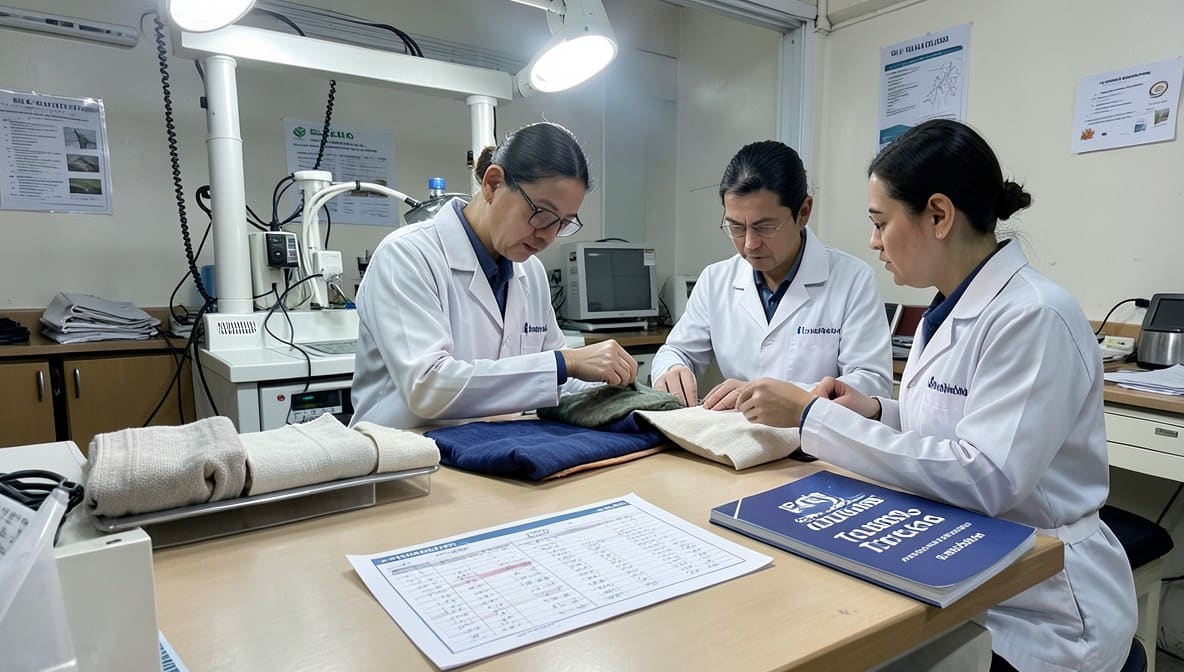
The Tribunal examined the CRCL test reports, which detailed the composition, texture, weight per meter, and yarn type of the imported goods. The reports showed 60-63.5% texturized yarn, which fell short of the 85% threshold required for classification under CTH 54075290. The Tribunal held:
"The test reports given by CRCL Kandla gives composition of goods and thus, it is adequate to determine classification of imported goods."
The Tribunal rejected the Commissioner (Appeals)’s finding that the test reports were inadequate, noting:
- The assessing officer’s remark on the Bill of Entry (suggesting doubt) did not constitute a formal rejection of the CRCL reports.
- The respondent never contested the CRCL findings until February 2014, when samples were no longer available.
- The request for retesting was made 11 years after import, raising suspicions about its bona fides.
On classification, the Tribunal agreed with the Deputy Commissioner that the goods were correctly classifiable under CTH 54078290 (for fabrics with <85% synthetic filaments).
On valuation, the Tribunal noted that the assessable value was redetermined based on comparable imports by other SEZ units. However, it held that the department must first reject the transaction value and provide relied-upon data to the respondent before finalizing valuation. The matter was remanded for re-determination of value with directions to:
- Provide the respondent with copies of invoices/data relied upon for valuation.
- Afford the respondent full opportunity to contest the valuation.
On Notification No. 137/2000-Cus, the Tribunal observed a discrepancy in the LOP, which ambiguously listed both raw materials and finished goods in the same column. The Tribunal directed the Deputy Commissioner to seek clarification from the Development Commissioner on whether the respondent was permitted to import fresh fabrics for garment manufacturing. If permitted, the respondent must prove it had the necessary infrastructure for processing fabrics.
The Tribunal agreed with the respondent that the Order-in-Original was beyond the scope of the show cause notice, which did not invoke DRI’s investigation findings (e.g., diversion of goods, lack of infrastructure). It directed the Deputy Commissioner to ignore these aspects during re-adjudication.
The Verdict
The Tribunal allowed the appeal by way of remand, directing the Deputy Commissioner, Kandla SEZ, to:
- Seek clarification from the Development Commissioner on whether the respondent’s LOP permitted import of fresh fabrics for garment manufacturing.
- Re-determine the assessable value of the goods after:
- Rejecting the transaction value (if justified).
- Providing the respondent with copies of relied-upon invoices/data.
- Affording the respondent oral and written submissions.
- Finalize the matter within six months from the date of receipt of the order.
- Ignore DRI’s investigation findings (e.g., diversion of goods, lack of infrastructure) as they were not invoked in the show cause notice.
What This Means For Similar Cases
Test Reports Are Conclusive Unless Timely Contested
- CRCL test reports are presumptively adequate for determining classification under the Customs Tariff Act.
- Doubts about test reports must be raised promptly, not after 11 years (as in this case), especially when samples are no longer available.
- Retest requests made after prolonged delays may be rejected if samples are unavailable or the matter is under adjudication.
Valuation Must Follow Procedural Safeguards
- Transaction value can only be rejected after providing relied-upon data (e.g., invoices of comparable imports) to the importer.
- Remand proceedings must afford the importer full opportunity to contest valuation, including oral and written submissions.
- Comparative valuation must be based on goods of similar quality and characteristics, with supporting evidence.
Scope of Adjudication Is Limited to Show Cause Notice
- New grounds (e.g., diversion of goods, lack of infrastructure) cannot be raised for the first time on appeal if not invoked in the show cause notice.
- Precedents such as Toyo Engineering and Precision Rubber bar Revenue from expanding the scope of adjudication beyond the show cause notice.
- Investigation findings (e.g., DRI reports) must be explicitly invoked in the show cause notice to be considered in adjudication.
SEZ Permissions Require Clarity
- Letters of Permission (LOPs) must clearly specify permitted raw materials and finished goods to avoid ambiguity.
- Ambiguous LOPs may lead to remand proceedings for clarification from the Development Commissioner.
- SEZ units must prove infrastructure and compliance with LOP conditions to avail duty exemptions under Notification No. 137/2000-Cus.