In a significant ruling on the burden of proof under the Customs Act, 1962, the Customs, Excise and Service Tax Appellate Tribunal (CESTAT), Kolkata, set aside the confiscation of a vehicle and imposition of penalty on the appellant, holding that the Revenue failed to establish that the seized goods were of foreign origin. The judgment underscores that for non-notified goods, the onus lies squarely on the Revenue to prove their foreign origin before confiscation or penalties can be imposed.
Background & Facts
The Dispute
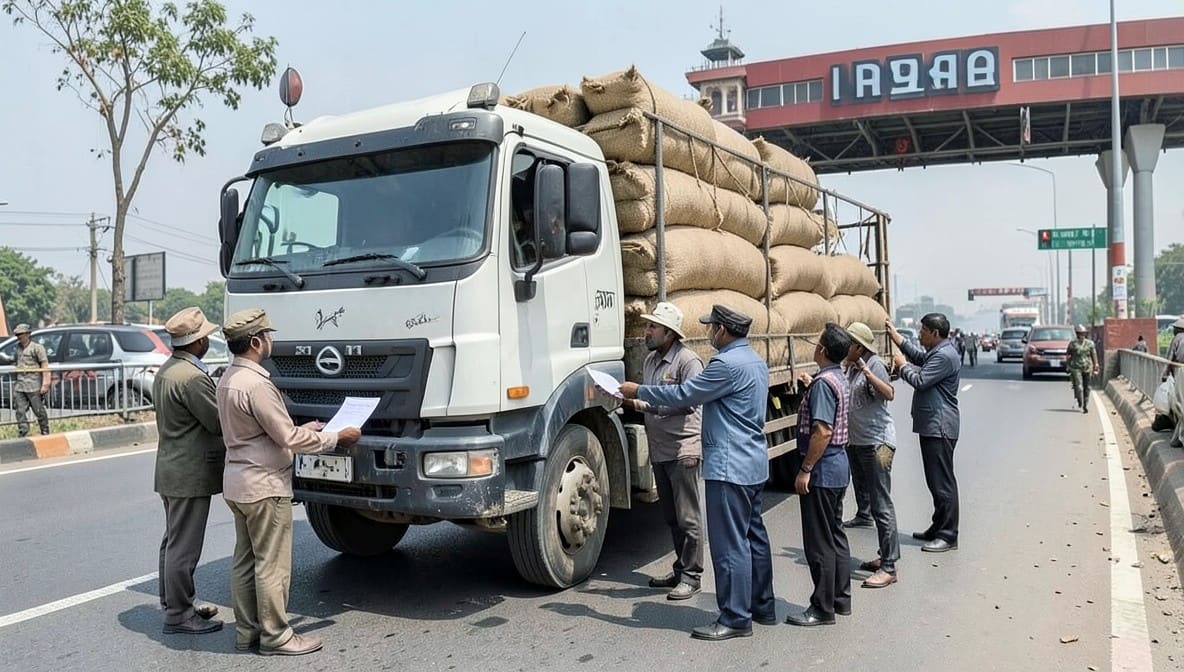
The appellant, Smt. Kanchan Devi, owner of vehicle No. BR01GH-9594, was intercepted by customs authorities on 05.10.2020 near Maithi Toll Plaza, Darbhanga Road. The vehicle was transporting 100 jute bags of green peas and yellow peas, weighing 4,300 kgs. The driver, Shri Niraj Choudhary, produced an invoice (No. 367 dated 05.10.2020) from M/s. Gupta Gaila Bhandar, describing the goods as "Khesari Packet 100x50" valued at Rs. 1,75,000, with a "Tax Free" stamp. The vehicle was seized under Section 110 of the Customs Act, 1962, on suspicion that the peas were of foreign origin.
Key Facts
- 05.10.2020: Vehicle intercepted near Maithi Toll Plaza; driver produced invoice for "Khesari Packet" valued at Rs. 1,75,000
- Goods recovered: 100 jute bags of green peas/yellow peas, total weight 4,300 kgs
- Driver’s statement: Admitted transporting Nepali peas for extra money; used driving licence of his brother, Shri Chandan Kumar
- Vehicle ownership: Registered in the name of the appellant, Smt. Kanchan Devi, with business handled by her husband, Shri Chandan Kumar
- Market opinion: Two traders opined the peas appeared to be of foreign origin, priced between Rs. 60-70 per kg
- Documents recovered: Toll plaza receipts, Form-23, road permit, insurance papers, and an invoice from M/s. Subodh Dal Mill
Procedural History
- 05.10.2020: Vehicle seized under Section 110 of the Customs Act
- Post-seizure: Summons issued; statements of driver and appellant recorded
- Show Cause Notice: Issued for confiscation of vehicle and imposition of penalty under Section 112(b)
- Adjudication: Vehicle confiscated; redemption fine of Rs. 2,45,073 imposed under Section 125; penalty of Rs. 25,000 imposed under Section 112(b)
- 19.06.2023: Commissioner (Appeals) upheld the adjudication order
- 06.04.2026: Present appeal heard by CESTAT, Kolkata
Relief Sought
The appellant sought setting aside of the confiscation order and penalty, contending that the Revenue failed to prove the foreign origin of the seized goods.
The Legal Issue
The central question was whether the Revenue could confiscate a vehicle and impose penalties under Sections 125 and 112(b) of the Customs Act, 1962, without proving that the goods transported were of foreign origin, especially when the goods were not notified under Section 123 of the Act.
Arguments Presented
For the Appellant
Though no formal arguments were presented (as none appeared for the appellant), the crux of the appellant’s potential contention would have been:
- The goods (peas) were not notified under Section 123 of the Customs Act, shifting the burden of proof to the Revenue
- The Revenue failed to adduce any documentary or expert evidence to establish the foreign origin of the peas
- The confiscation and penalty were arbitrary, as no smuggling or intent to evade duty was proven
For the Respondent
Shri Ashwini Kr. Choudhary, Authorized Representative for the Revenue, argued:
- The peas appeared to be of foreign origin based on market opinion
- The driver’s statement indicated prior transportation of Nepali peas
- The absence of valid documents for the goods justified confiscation and penalty under Sections 110, 125, and 112(b) of the Customs Act
The Court's Analysis
The CESTAT critically examined the Revenue’s case and held:
-
Burden of Proof: The Tribunal reiterated that for goods not notified under Section 123, the onus lies on the Revenue to prove their foreign origin. The mere opinion of traders or the driver’s statement was insufficient to discharge this burden.
"As the subject goods are not notified goods under Section 123 of the Customs Act, 1962, the onus lies on the Revenue to prove that the goods in question are of foreign origin, which the Revenue has failed to do."
-
Lack of Evidence: The Tribunal noted that no documentary evidence, forensic report, or expert opinion was produced to establish that the peas were smuggled or of foreign origin. The Revenue’s reliance on circumstantial evidence (market opinion, driver’s statement) was held inadequate.
-
Confiscation and Penalty: Since the Revenue failed to prove the foreign origin of the goods, the confiscation of the vehicle under Section 125 and the imposition of penalty under Section 112(b) were unsustainable. The Tribunal emphasized that confiscation and penalties cannot be imposed based on suspicion alone.
The Verdict
The CESTAT allowed the appeal, setting aside the impugned order dated 19.06.2023. The key outcomes were:
- Confiscation of the vehicle under Section 125 was quashed
- Redemption fine of Rs. 2,45,073 was set aside
- Penalty of Rs. 25,000 imposed under Section 112(b) was annulled
- Consequential relief was granted to the appellant
What This Means For Similar Cases
The Burden of Proof Lies on the Revenue for Non-Notified Goods
- Section 123 of the Customs Act creates a rebuttable presumption for notified goods, but for non-notified goods, the Revenue must prove foreign origin beyond suspicion
- Practitioners must argue that market opinion, driver statements, or circumstantial evidence are insufficient to discharge this burden
- The judgment reinforces that confiscation and penalties cannot be imposed without concrete evidence
Procedural Safeguards Must Be Followed
- Expert reports or forensic evidence should be adduced to prove foreign origin
- Documentary evidence (e.g., import invoices, bills of entry) is critical to establish smuggling
- Show Cause Notices must clearly articulate the basis for alleging foreign origin, failing which they may be challenged
Implications for Vehicle Owners and Transporters
- Vicarious liability under the Customs Act cannot be imposed without proof of knowledge or connivance
- Owners of vehicles can challenge confiscation if the Revenue fails to establish the foreign origin of goods
- Drivers’ statements alone are insufficient to implicate owners unless corroborated by other evidence