Chhattisgarh High Court judgments

498 Chhattisgarh High Court judgments explained in plain English: what was decided, the law applied and why it matters. Page 13 of 21.

Legitimate Expectation Doctrine | Third Time-Bound Pay Scale After 30 Years Mandatory Under State Circulars : CGHC
Case Law Analysis
|Chhattisgarh High Court

Legitimate Expectation Doctrine | Third Time-Bound Pay Scale After 30 Years Mandatory Under State Circulars : CGHC

Chhattisgarh High Court rules that state circulars granting time-bound pay scales after 10, 20, and 30 years of service create enforceable legitimate expectations. The court directs authorities to decide a Patwari’s claim for the third increment within three months, reinforcing that administrative promises must be honored under Article 14.

Section 482 CrPC | Custodial Confession Without Corroboration or Independent Evidence Abuses Process: Chhattisgarh HC Quashes FIR
Case Law Analysis
|Chhattisgarh High Court

Section 482 CrPC | Custodial Confession Without Corroboration or Independent Evidence Abuses Process: Chhattisgarh HC Quashes FIR

Chhattisgarh High Court rules that a prosecution relying solely on a custodial confession-without independent evidence or recovery-violates fair trial principles and constitutes abuse of process under Section 482 CrPC. The judgment underscores that co-accused statements made in police custody lack evidentiary value unless corroborated by material proof, setting a precedent for safeguarding accused rights in criminal proceedings.

Section 257 CLRC | Civil Courts Retain Jurisdiction Over Encroachment Disputes Despite Construction : CGHC
Case Law Analysis
|Chhattisgarh High Court

Section 257 CLRC | Civil Courts Retain Jurisdiction Over Encroachment Disputes Despite Construction : CGHC

Chhattisgarh High Court clarifies that civil courts are not barred from adjudicating encroachment disputes under Section 257 of the Chhattisgarh Land Revenue Code, even if construction exists, provided title is established via patta and revenue records. The ruling reinforces that demarcation reports remain admissible as evidence even without the defendant's presence, ensuring property owners can seek redressal without revenue authority intervention.

Section 25 Hindu Succession Act | Murder Conviction Does Not Disqualify Widow from Inheriting Husband’s Property : Chhattisgarh HC
Case Law Analysis
|Chhattisgarh High Court

Section 25 Hindu Succession Act | Murder Conviction Does Not Disqualify Widow from Inheriting Husband’s Property : Chhattisgarh HC

Chhattisgarh High Court clarifies that disqualification under Section 25 of the Hindu Succession Act applies only to inheritance from the victim’s estate, not the husband’s property. The ruling underscores that a widow’s conviction for murder does not bar her from claiming her share in her deceased husband’s assets, impacting succession disputes involving criminal convictions.

Article 300A | Unauthorized Partial Land Use Demands Compensation Even for Minimal Encroachment : Chhattisgarh HC
Case Law Analysis
|Chhattisgarh High Court

Article 300A | Unauthorized Partial Land Use Demands Compensation Even for Minimal Encroachment : Chhattisgarh HC

The Chhattisgarh High Court has ruled that even minor unauthorized use of private land-such as 0.12 dismil for canal construction-constitutes a violation of the right to property under Article 300A, mandating compensation regardless of scale. This sets a critical precedent for landowners facing incremental encroachments by public authorities without formal acquisition proceedings.

CCA Rules 1966 | 'Dies Non' for Prolonged Absence Without Departmental Inquiry Violates Procedural Fairness : CGHC
Case Law Analysis
|Chhattisgarh High Court

CCA Rules 1966 | 'Dies Non' for Prolonged Absence Without Departmental Inquiry Violates Procedural Fairness : CGHC

Chhattisgarh High Court rules that treating 609 days of absence as 'dies non' without a departmental inquiry under CCA Rules 1966 constitutes a major penalty, entitling the employee to full salary, increments, and pension benefits. The judgment reinforces that procedural fairness mandates a formal inquiry before imposing such penalties on government servants.

FIR Omission of Accused’s Name Despite Complainant’s Knowledge Raises Reasonable Doubt: Chhattisgarh HC Acquits Under SC/ST Act
Case Law Analysis
|Chhattisgarh High Court

FIR Omission of Accused’s Name Despite Complainant’s Knowledge Raises Reasonable Doubt: Chhattisgarh HC Acquits Under SC/ST Act

Chhattisgarh High Court ruled that omission of an accused’s name in the FIR-despite the complainant’s knowledge of their identity-creates reasonable doubt, warranting acquittal even in SC/ST Act cases. The judgment reinforces that evidence consistency is critical for conviction, particularly where initial reports fail to attribute roles.

Street Vendors Act 2014 | Eviction Without Alternative Relocation Violates Right to Livelihood : Chhattisgarh HC
Case Law Analysis
|Chhattisgarh High Court

Street Vendors Act 2014 | Eviction Without Alternative Relocation Violates Right to Livelihood : Chhattisgarh HC

Chhattisgarh High Court reinforces that street vendors cannot be evicted without guaranteed alternative relocation, holding that such actions violate the Street Vendors (Protection of Livelihood and Regulation of Street Vending) Act, 2014. The ruling mandates compliance with municipal undertakings and prior judicial precedents, ensuring procedural fairness and livelihood protection for vendors.

Section 318(4) BNS | No Prima Facie Fraud Where SIMs Issued Under Digital KYC Without Recovery or Direct Intent: Chhattisgarh HC
Case Law Analysis
|Chhattisgarh High Court

Section 318(4) BNS | No Prima Facie Fraud Where SIMs Issued Under Digital KYC Without Recovery or Direct Intent: Chhattisgarh HC

The Chhattisgarh High Court granted regular bail to a SIM distributor accused of issuing 48 fake SIMs, holding that mere distribution under authorized POS systems, with compliance of digital KYC and no recovery of fraudulent devices, does not establish direct fraudulent intent under Section 318(4) BNS. This clarifies the boundary between administrative facilitation and criminal culpability in telecom fraud cases, protecting distributors from overbroad prosecution.

MISA Detention Alone Insufficient for Samman Nidhi Eligibility | Criminal Antecedents Disqualify Claim : Chhattisgarh HC
Case Law Analysis
|Chhattisgarh High Court

MISA Detention Alone Insufficient for Samman Nidhi Eligibility | Criminal Antecedents Disqualify Claim : Chhattisgarh HC

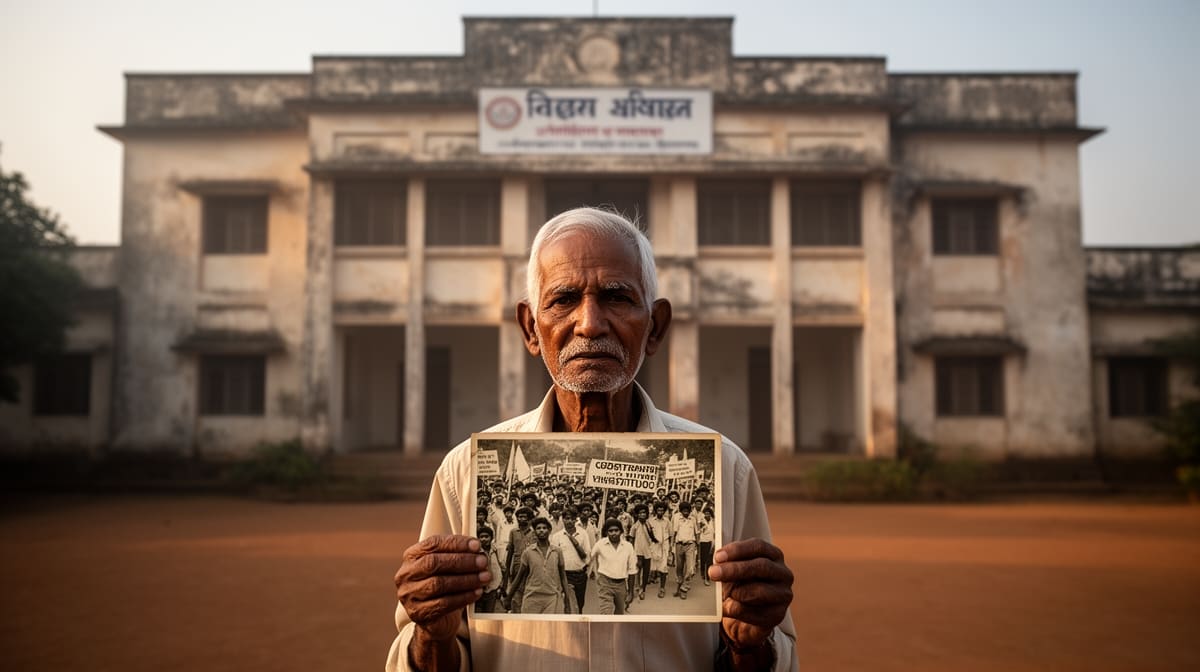
Chhattisgarh High Court rules that detention under MISA during the Emergency does not automatically qualify an individual for Samman Nidhi benefits if criminal antecedents exist, even without conviction. The ruling underscores that administrative discretion in welfare schemes may override political detention claims where past conduct is questionable.

Section 69 BNS | Consensual Relationship Without Fraudulent Intent at Intercourse Not Punishable : Chhattisgarh HC Grants Anticipatory Bail
Case Law Analysis
|Chhattisgarh High Court

Section 69 BNS | Consensual Relationship Without Fraudulent Intent at Intercourse Not Punishable : Chhattisgarh HC Grants Anticipatory Bail

Chhattisgarh High Court rules that a consensual relationship, even if followed by refusal to marry, does not attract penal provisions under Section 69 of Bharatiya Nagarik Suraksha Sanhita unless fraudulent intent is proven at the time of intercourse. The court granted anticipatory bail, emphasizing that post-relationship conduct alone cannot establish criminal liability.

Section 483 BNS | Mere Possession of Knife Without Proof of Intent Insufficient for Arms Act Bail Denial : Chhattisgarh HC
Case Law Analysis
|Chhattisgarh High Court

Section 483 BNS | Mere Possession of Knife Without Proof of Intent Insufficient for Arms Act Bail Denial : Chhattisgarh HC

Chhattisgarh High Court grants regular bail under Sections 25 and 27 of the Arms Act, ruling that mere possession of a knife without evidence of criminal intent fails to establish a prima facie case. The court held that prior criminal antecedents cannot override the absence of substantive evidence, reinforcing bail principles under the Bharatiya Nagarik Suraksha Sanhita.

Scheduled Tribe Certification by Lineage | Blood Relation Must Be Documented, Not Assumed : Chhattisgarh HC
Case Law Analysis
|Chhattisgarh High Court

Scheduled Tribe Certification by Lineage | Blood Relation Must Be Documented, Not Assumed : Chhattisgarh HC

The Chhattisgarh High Court has ruled that claiming Scheduled Tribe status through a relative requires concrete documentary proof of blood lineage - mere acceptance of a relative’s tribal identity is insufficient. This sets a strict evidentiary standard for caste certification authorities, impacting thousands of applicants relying on familial claims without verifiable genealogical records.

Article 300A | Physical Land Utilization Without Award Triggers Compensation Right : CGHC Mandates 30-Day Decision & 6-Month Payment
Case Law Analysis
|Chhattisgarh High Court

Article 300A | Physical Land Utilization Without Award Triggers Compensation Right : CGHC Mandates 30-Day Decision & 6-Month Payment

Chhattisgarh High Court ruled that mere physical use of land for public projects-even if omitted from the acquisition award-activates the constitutional right to compensation under Article 300A. The court directed authorities to decide delayed claims within 30 days and disburse payment within six months of demarcation, reinforcing due process for landowners deprived of property without formal acquisition.

Clause 6A, 2016 Chhattisgarh Compassionate Appointment Policy | Family Member in Govt Service Bars Eligibility Regardless of Financial Hardship : CGHC
Case Law Analysis
|Chhattisgarh High Court

Clause 6A, 2016 Chhattisgarh Compassionate Appointment Policy | Family Member in Govt Service Bars Eligibility Regardless of Financial Hardship : CGHC

The Chhattisgarh High Court has ruled that under Clause 6A of the 2016 compassionate appointment policy, the mere existence of any family member employed in government service disqualifies all other dependents - even if they are financially unsupported. This strict interpretation closes judicial discretion and impacts hundreds of families seeking employment relief after the death of a government employee.

Section 20(b)(ii)(B) NDPS Act | Undue Trial Delay & Low Contraband Quantity Justify Sentence Reduction to Time Served : Chhattisgarh HC
Case Law Analysis
|Chhattisgarh High Court

Section 20(b)(ii)(B) NDPS Act | Undue Trial Delay & Low Contraband Quantity Justify Sentence Reduction to Time Served : Chhattisgarh HC

Chhattisgarh High Court reduces a 5-year sentence to time served (1 year 9 months) for possession of 2kg cannabis, emphasizing proportionality where undue procedural delay and sub-commercial quantity mitigate punishment. The ruling underscores judicial discretion in balancing retribution with fairness in NDPS cases.

Section 20(b)(ii)(B) NDPS Act | First-Time Offender’s 3-Year RI Reduced to Time Served on Rehabilitation Grounds: Chhattisgarh HC
Case Law Analysis
|Chhattisgarh High Court

Section 20(b)(ii)(B) NDPS Act | First-Time Offender’s 3-Year RI Reduced to Time Served on Rehabilitation Grounds: Chhattisgarh HC

The Chhattisgarh High Court commuted a three-year rigorous imprisonment sentence to time served for a first-time offender under the NDPS Act, prioritizing rehabilitation over retribution as mandated by Mohammad Giasuddin. This ruling reinforces that payment of fine alone is insufficient - the offender’s personal circumstances and lack of prior record must drive sentencing under Section 20(b)(ii)(B), setting a clearer standard for trial courts across the state.

Section 498A IPC | Genuine Matrimonial Compromise Justifies Quashing Under Section 482 CrPC : Chhattisgarh HC
Case Law Analysis
|Chhattisgarh High Court

Section 498A IPC | Genuine Matrimonial Compromise Justifies Quashing Under Section 482 CrPC : Chhattisgarh HC

Chhattisgarh High Court quashed proceedings under Section 498A IPC after the parties settled their matrimonial dispute, holding that a bona fide compromise overrides non-compoundability to prevent abuse of process. The ruling reinforces the court's power under Section 482 CrPC to intervene in cases where continuation of proceedings would be oppressive or unjust.

Recruitment Policy | Temporary Covid-19 Health Workers Entitled to 10 Bonus Marks Under Chhattisgarh Scheme : CGHC
Case Law Analysis
|Chhattisgarh High Court

Recruitment Policy | Temporary Covid-19 Health Workers Entitled to 10 Bonus Marks Under Chhattisgarh Scheme : CGHC

Chhattisgarh High Court upholds the entitlement of temporary health workers to 10 bonus marks for six months of Covid-19 service, rejecting the state's argument that only permanent employees qualify. The ruling reinforces equal treatment under recruitment policies, directly impacting thousands of temporary workers in public health recruitment.

Article 300A | State Occupation of Private Land Without Due Process or Compensation Violates Constitutional Right : CGHC
Case Law Analysis
|Chhattisgarh High Court

Article 300A | State Occupation of Private Land Without Due Process or Compensation Violates Constitutional Right : CGHC

Chhattisgarh High Court rules that the state cannot take possession of private land without following acquisition procedures or paying compensation, as it violates Article 300A. The court directed demarcation within 30 days and mandated compensation within five months if possession is confirmed, reinforcing property rights against arbitrary state action.